Los Angeles is investing $40 million to fully rebuild the Griffith Park Pool — closed since 2020 — with a 50-meter competition pool, a new training pool, and a restored 1927 Spanish Colonial Revival pool house, targeting completion by mid-2029.
By Debbie Pisaro | Los Feliz Real Estate Specialist | March 2026
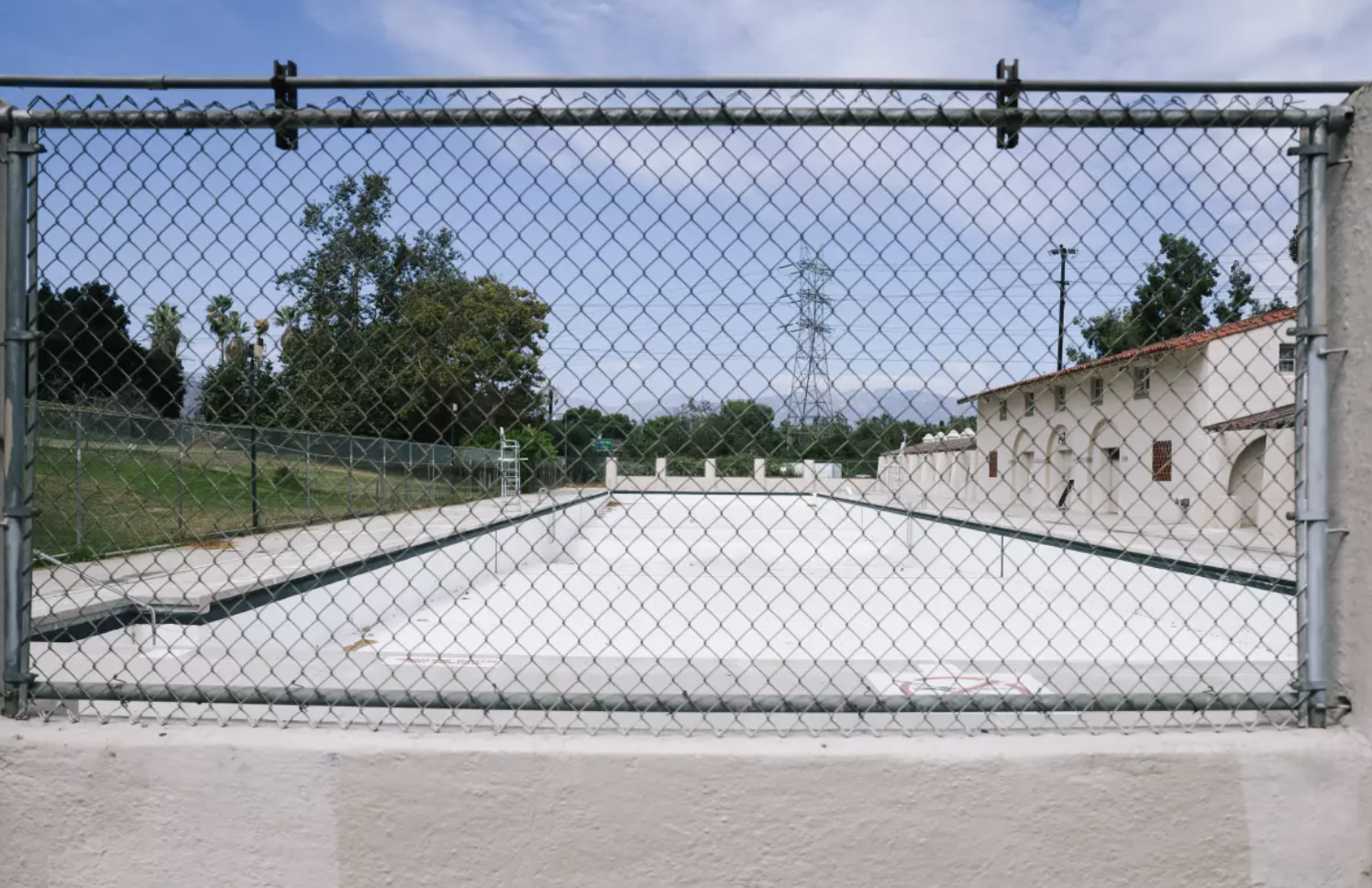
If you've driven past the corner of Riverside Drive and Los Feliz Boulevard lately, you've seen it — the chain-link fence, the empty basin, the beautiful 1927 Spanish Colonial Revival pool house sitting dry and silent behind it all.
The Griffith Park Municipal Plunge has been closed since 2020. And for anyone who lives in Los Feliz, who grew up here, or who chose this neighborhood in part because of what Griffith Park means to daily life — that closure has been a quiet loss.
That's about to change.
Last week, the City of Los Angeles unveiled plans to fully rebuild the Griffith Park Pool — not patch it, not band-aid it, but tear out the failing structure and build something new, substantial, and designed to last for another century. The price tag is approximately $40 million. The target completion date is mid-2029. And the scope of what's planned is genuinely exciting.
Here's what you need to know — and why it matters if you're thinking about buying or selling a home in Los Feliz.
What Happened to the Griffith Park Pool?
The Municipal Plunge opened in 1927, the same era that gave Los Feliz its Spanish Colonial Revival mansions, its Craftsman bungalows, and the architectural character that still defines the neighborhood today. For decades it was the largest outdoor pool in Southern California — a grand, public gesture at the edge of one of the country's great urban parks.
In 2020, pandemic closures shut it down. When the city tried to refill it afterward, they discovered what anyone paying attention had suspected: the foundation had cracked, and the pool no longer held water. Rather than attempt a repair that wouldn't last, city engineers made the call to start over.
That decision set off a multi-year planning process that culminated last Thursday night in a community open house at the Griffith Park Visitor Center — where about 50 Los Feliz residents showed up to hear what's coming.
What's Being Built
Architecture firm Perkins Eastman — the same firm that led the expansion of Griffith Observatory from 2002 to 2006 — is designing the new complex. Here's what the plans call for:
A 50-meter competition pool. Full Olympic length, year-round use. This makes Griffith Park one of the only public facilities in Los Angeles with a proper competition-grade pool.
A 25-yard training pool with a gentle ADA-compliant slope — meaning true accessibility for all ages and abilities, including children just learning to swim and older adults who need a gradual entry.
A fully modernized pool house — with the Spanish Colonial Revival exterior preserved. Inside: a new elevator, updated accessibility features, energy efficiency upgrades, and a gender-neutral bathhouse with private changing rooms.
The 1927 exterior stays. The interior gets rebuilt for 2029 and beyond.
The Timeline — Realistic but Ambitious
City officials were candid at the meeting. The schedule as presented runs roughly 40 months from now:
Construction documents: 6 months
Permits: 5 months
Contractor selection: 5 months
Construction: 18 months
Project close-out: 6 months
If everything goes according to plan, the rebuilt pool opens around July 2029.
City engineer Ohaji Abdallah told attendees directly: "I expect this to be about $40 million" — acknowledging that costs have increased from an earlier $28M estimate due to soft costs and current market conditions. Officials also noted the project faces real complications: the proximity of the 405 freeway and the Los Angeles River make logistics complex, haul routes for demolition trucks are still being finalized, and construction funding will compete with other city priorities.
The honest read: 2029 is the goal, not the guarantee. But the planning is further along than it has ever been, the design firm is under contract, and the community meeting signals that this is moving.
Why This Matters for Los Feliz Real Estate
I want to be direct about something: public infrastructure investment is one of the clearest signals of long-term neighborhood value.
When a city commits $40 million to rebuild a historic landmark — not just patch it, but rebuild it to competition grade — it is making a statement about the neighborhood it sits in. Griffith Park is already one of the defining amenities that makes Los Feliz one of the most desirable places to live in Los Angeles. A world-class aquatic facility at its edge makes that argument even stronger.
For buyers who are on the fence about Los Feliz vs. other Eastside neighborhoods, this is exactly the kind of tangible, irreversible quality-of-life investment that tips the scales. A 50-meter competition pool within walking distance of Laughlin Park and The Oaks is not a small thing.
For sellers, it's a narrative point. "Your backyard is Griffith Park, and by the time the new owners' kids are old enough to swim lessons, there will be a rebuilt public pool four minutes from the front door." That's a real selling story.
And for the neighborhood as a whole — Los Feliz has always justified its pricing through lifestyle. Griffith Park. The Observatory. The Village. The architecture. The trails. The schools. A functioning, beautiful public pool is a piece of that lifestyle that has been missing for five years. Its return closes a gap that buyers have noticed and sellers have had to work around.
The Architecture Connection
There's something worth noting about who is designing this rebuild.
Perkins Eastman — previously known as Pfeiffer Partners — is the firm that transformed Griffith Observatory into the experience it is today. That renovation, completed in 2006, is widely considered one of the most successful public restoration projects in Los Angeles history. The firm preserved the Art Deco exterior while modernizing everything inside, and the result is a landmark that feels both historic and contemporary.
They are being asked to do the same thing here: preserve the 1927 Spanish Colonial Revival shell while rebuilding the interior for a new century.
For a neighborhood that cares as deeply about architectural integrity as Los Feliz does — a neighborhood with more than 50 Historic-Cultural Monuments and some of the most significant residential architecture in California — the choice of this firm is the right one. They understand the difference between renovation and replacement. They know how to honor the bones of a building while making it work for the next hundred years.
What Happens in the Meantime
Construction is not expected to begin until late 2026 at the earliest, and the site will remain fenced through the entire build. The nearby Los Feliz Nursery School — which sits close to the pool — was a specific concern raised by residents at the meeting, and planners said they are working through construction staging to minimize disruption.
In the meantime, the nearest city-run pools for Los Feliz residents are in Echo Park, Hollywood, and Glassell Park.
If you have questions or want to submit comments on the design, the city has set up a dedicated email: griffithparkpool@lacity.org
What I'm Watching
As someone who has lived and worked in this neighborhood for over two decades, I've watched the pool fence go up, stay up, and quietly become part of the landscape. Its absence has been felt — in the summers especially, when Griffith Park fills up and the one amenity that could handle real volume sits empty behind chain link.
The $40M rebuild is real momentum. The design firm is the right choice. The community showed up last Thursday, which matters more than people realize — engaged neighborhoods get funded projects over neighborhoods that don't.
I'm watching the budget process closely. I'm watching contractor selection. And when this pool opens, I'll be writing about it again — because it will be one of the best things that has happened to this neighborhood in a long time.
If you want to talk about what this means for your specific home, your block, or your plans to buy in Los Feliz — that's exactly the kind of conversation I love to have.
Explore the Los Feliz neighborhood guide →
Frequently Asked Questions
-
The city's current target is mid-2029, approximately 40 months from the start of the rebuild process. The timeline depends on permit approvals, contractor selection, and available funding. City officials describe the schedule as "ambitious but achievable."
-
City engineers have estimated the full rebuild at approximately $40 million, up from an earlier estimate of $28 million due to increased soft costs and current construction market conditions.
-
When the city attempted to refill the pool after COVID-19 closures in 2020, workers discovered the foundation had cracked so severely it could no longer hold water. Engineers determined a full rebuild was necessary rather than a repair.
-
The rebuilt complex will feature a 50-meter competition pool, a 25-yard training pool with an ADA-compliant gradual slope entry, a modernized pool house with gender-neutral changing facilities, improved accessibility throughout, and energy efficiency upgrades — while preserving the 1927 Spanish Colonial Revival exterior of the pool house.
-
Public infrastructure investment at this scale is generally a positive signal for surrounding neighborhoods. A fully rebuilt, year-round competition-grade aquatic facility adjacent to Griffith Park strengthens one of Los Feliz's core lifestyle amenities — proximity to the park — and adds a tangible quality-of-life asset that buyers actively consider.
-
The Griffith Park Pool is located at the corner of Riverside Drive and Los Feliz Boulevard, at the eastern edge of Griffith Park in Los Feliz, Los Angeles 90027.
-
Perkins Eastman is leading the design. The firm previously led the highly acclaimed renovation and expansion of Griffith Observatory from 2002 to 2006, when it was known as Pfeiffer Partners.
-
The City of Los Angeles has set up a dedicated email for community feedback: griffithparkpool@lacity.org
Note: The LA Times published the primary report on this story on March 20, 2026. That article is behind a paywall — the sources linked above are open-access and cover the same community meeting and project details.