• Home
    • Culture
    • Los Feliz Calendar
    • Los Feliz Places
  • Home Valuation
  • Buying
  • Selling
    • Los Feliz HCM guide
    • Historic-Cultural Monuments (HCMs) in Los Feliz
    • Los Feliz
    • Explore Los Feliz
    • Laughlin Park — Los Feliz’s Exclusive Gated Community
    • The Oaks — Los Feliz Hillside Neighborhood
    • Choosing a Los Feliz Neighborhood
    • Los Feliz Architectural Map
  • Los Feliz Stories
  • About
  • Contact
Menu

Los Feliz Living & Real Estate

  • Home
  • Culture
    • Culture
    • Los Feliz Calendar
    • Los Feliz Places
  • Home Valuation
  • Buying
  • Selling
  • HCMS
    • Los Feliz HCM guide
    • Historic-Cultural Monuments (HCMs) in Los Feliz
  • Los Feliz Locations
    • Los Feliz
    • Explore Los Feliz
    • Laughlin Park — Los Feliz’s Exclusive Gated Community
    • The Oaks — Los Feliz Hillside Neighborhood
    • Choosing a Los Feliz Neighborhood
    • Los Feliz Architectural Map
  • Los Feliz Stories
  • About
  • Contact
×

What are Historic-Cultural Monuments in Los Feliz? Historic-Cultural Monuments (HCMs) are properties officially designated by the City of Los Angeles for their architectural, historic, or cultural significance. Los Feliz holds more than sixty designated HCMs, including works by Frank Lloyd Wright, Richard Neutra, Lloyd Wright, R.M. Schindler, Gregory Ain, John Lautner, Paul R. Williams, Wallace Neff, and Edward Fickett, alongside historic bridges, century-old trees, and cultural landmarks that have shaped the neighborhood for more than a hundred years.

From Frank Lloyd Wright's textile-block masterpiece on Glendower Avenue to Richard Neutra's steel-frame icon on Dundee Drive, the Los Feliz HCM list reads like an architectural history of early twentieth-century Los Angeles. We are documenting every one of them, with a new architectural profile added every other Tuesday.

For a full guide to HCM designation, the Mills Act, and what buying a historic home in Los Feliz actually involves, start with the Los Feliz HCM buyer's guide.


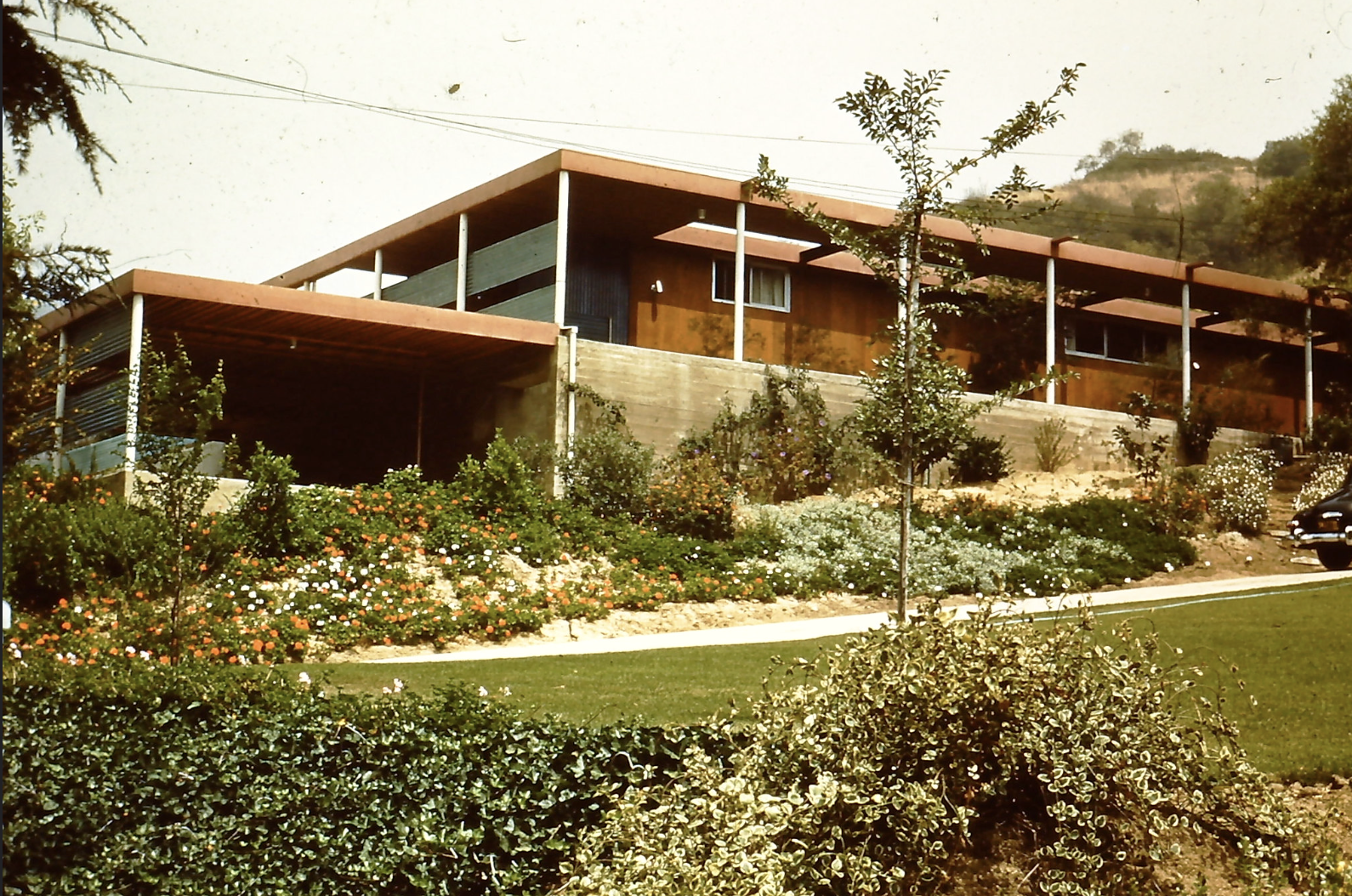
The Ernst House by Gregory Ain at 5670 Holly Oak Drive, a 1937 modernist home on a hillside lot in the Los Feliz Oaks neighborhood of Los Angeles

The Ernst House: Gregory Ain in the Los Feliz Oaks

Debbie Pisaro June 6, 2026
Los Feliz · Historic-Cultural Monument

HCM #840. Gregory Ain's 1937 hillside modernist house in the Los Feliz Oaks, a short walk from the very first house he ever built.

By Debbie PisaroLos Feliz Living
June 6, 2026
HCM Series11 min read
#840
Designated 2006Gregory Ain · 1937 · Holly Oak Drive, Los Feliz Oaks

What is the Ernst House in Los Feliz?

The Ernst House at 5670 Holly Oak Drive is a 1937 modernist residence designed by architect Gregory Ain in the Los Feliz Oaks. It is Los Angeles Historic-Cultural Monument No. 840, designated in 2006, and one of two Ain houses standing a few doors apart on the same Los Feliz street. Built into a hillside lot with canyon views, it is an early, intact example of the open, glass-forward modernism Ain spent his career refining.

The House

Holly Oak Drive climbs into the Los Feliz Oaks in a slow curve, and on the uphill side, set back behind mature trees and a run of meandering paths, sits a low modernist house that most drivers never notice. That is partly the point. Gregory Ain did not design the Ernst House to announce itself from the street. He designed it to open up once you are inside it, to the light, to the canyon, to the slope it is built into.

Ain finished the house in 1937 for Ansalem A. Ernst, a paper salesman who appears in the 1940 census as a married man in his mid fifties, born in Kansas. It was built by Shy Kaplan. None of that sounds like the makings of a landmark, and that ordinariness is exactly what Ain cared about. He spent his life designing serious modern architecture for people who were not millionaires, and the Ernst House is one of the earliest places in Los Angeles where you can still see him doing it.

What makes the address remarkable is the neighbor. Twenty eight numbers down the same street, at 5642 Holly Oak Drive, stands the Edwards House, the first home Gregory Ain ever built. Two Ain houses, one year apart, on one Los Feliz block, both now designated Historic-Cultural Monuments. There is no other street in the city quite like it.

The Architect

Who was Gregory Ain?

Gregory Ain, who lived from 1908 to 1988, was a Los Angeles modernist who trained under Richard Neutra and worked for a time with Rudolph Schindler before opening his own practice in 1935. He devoted his career to what he called the common architectural problems of common people, which meant well made modern homes for working and middle class families rather than one off commissions for the wealthy.

That conviction made him one of the most quietly radical architects of his generation. His 1948 Mar Vista Tract in West Los Angeles was the first FHA approved modernist tract development in Southern California. In 1950, the Museum of Modern Art in New York built one of his houses in its sculpture garden, and that same year FBI director J. Edgar Hoover labeled him the most dangerous architect in America for his belief that good housing was a social good. The two reputations, celebrated designer and political target, ran side by side for the rest of his life.

The Ernst House comes from the very start of that story. By 1937 Ain had only just left the orbit of his two mentors, and the house shows both of them. The discipline of the plan and the long bands of glass come from Neutra. The warmth, the way the angles and interior geometry respond to the hillside rather than fighting it, comes from Schindler. For readers who want the full arc of Ain's career, Debbie Pisaro has written a complete profile of Gregory Ain in Los Angeles.

The Design

Reading the house

The Ernst House is built down its hillside lot rather than across it, so the architecture reveals itself in stages. An under lit entryway leads into a main level living room with high ceilings, expansive walls of glass, and a dual level fireplace, opening onto an outdoor deck that puts the canyon directly into the room. The relationship between inside and outside is the whole idea, and it is handled with a lightness that was rare in 1937.

The kitchen retains its original cabinetry and a breakfast nook framed on a panoramic view. On the lower level, the bedroom suites carry the same logic down the slope, with large windows and direct outdoor access that keep every room tied to the setting. The materials are honest and restrained, the proportions careful, and the footprint modest at a little over 2,000 square feet. This is a small house that lives large, which was always Ain's signature.

Architectural historians have long read the Ernst House as Ain's most Schindler influenced design, an unusual house whose use of large glass areas and its dramatized indoor outdoor connection echo the work Schindler was doing in the late 1920s and early 1930s. It sits in the architectural record alongside Ain's other early houses in Esther McCoy's writing on the second generation of Los Angeles modernists, in the standard Gebhard and Winter guides to the city's architecture, and in the Gregory Ain papers at UC Santa Barbara. A fuller catalog of his built work is kept by the USModernist archive.

The Ernst House by the numbers
1937
Completed
designed by Gregory Ain for Ansalem A. Ernst, built by Shy Kaplan
#840
HCM number
designated a Los Angeles Historic-Cultural Monument in 2006
2,082
Square feet
three bedrooms on an 8,385 square foot hillside lot in the Los Feliz Oaks
$1.66M
Last recorded sale
sold in November 2016, having traded only a handful of times in its history
Ain did not design the Ernst House to be seen from the street. He designed it to open once you were inside it.
Provenance

A short chain of owners

Part of what keeps an Ain home intact is how rarely it changes hands. The Ernst House has had only a few owners across nearly nine decades. It stayed with the original family for many years, sold in 1994 to John Kevin Laffey, and traded again in 2016. That kind of slow, careful ownership is the reason the original cabinetry, the fireplace, and the glass survive in a market that often erases exactly these features.

For a buyer or a seller, provenance is the first question on any home attributed to Gregory Ain, not the last. Informal attributions circulate, and they are often wrong. The good news with the Ernst House is that the documentation is unusually clean, from the City's monument file to the Los Feliz Improvement Association's record of the house, which makes both the attribution and the original condition straightforward to verify. Debbie Pisaro treats that verification as the starting point of any conversation about an architectural home in Los Feliz.

Buyer's note

Historic-Cultural Monument status in Los Angeles does not freeze a house in place. It chiefly governs exterior alterations and opens the door to a Mills Act contract, which can reduce annual property tax substantially in exchange for a maintenance commitment. Interior updates are generally permitted. For a designated home like the Ernst House, that combination protects the architecture and rewards the owner.

Why It Matters

What an Ain home means in Los Feliz

Los Feliz has always drawn buyers who care about architecture, from the Ennis House on Glendower to the Hollyhock House above Barnsdall Park, and the hillside streets of the Los Feliz Oaks hold a remarkable share of it. The Ernst House belongs to that lineage, and its value rests on the same three forces that hold every significant Ain home: scarcity, designation, and design integrity. Ain built relatively few houses, his career was cut short by the blacklist, and the survivors that keep their original fabric are genuinely rare. Designation adds protection rather than restriction, which is why the question of whether historic designation affects home value in Los Feliz comes up so often.

Designation adds a financial dimension that conventional homes cannot match. A Mills Act contract on a monument like this one can change the math of long term ownership, and that is before accounting for the simple fact that a documented, well preserved Gregory Ain house in the Los Feliz Oaks answers to a small and loyal pool of buyers. Debbie Pisaro has written about how to price an architectural home in Los Angeles, and as a Los Feliz real estate agent and one of the best Los Angeles historic and architectural real estate agents, she spends most of her time in architectural and historic homes, where the right buyer recognizes what a house like the Ernst House actually is.

If you want to see how the Ernst House sits among its neighbors, its closest companion is two doors away. Read about the Edwards House, Gregory Ain's first commission, and the Ennis House by Frank Lloyd Wright a little higher on the hill, or browse the full run of Los Feliz historic homes. For statewide architectural work, Debbie's brokerage is Coastline 840.

View on the Los Feliz map
Frequently Asked Questions

Who designed the Ernst House in Los Feliz?

The Ernst House was designed by Los Angeles modernist architect Gregory Ain and completed in 1937 for Ansalem A. Ernst. It stands at 5670 Holly Oak Drive in the Los Feliz Oaks and was built by Shy Kaplan.

Is the Ernst House a Historic-Cultural Monument?

Yes. The Ernst House is Los Angeles Historic-Cultural Monument No. 840, designated in 2006. The designation primarily protects the exterior and original character of the house and makes the property eligible to apply for a Mills Act contract.

Where is the Ernst House located?

The Ernst House is at 5670 Holly Oak Drive in the Los Feliz Oaks, the hillside pocket of Los Feliz in Los Angeles. The Edwards House, also by Gregory Ain, stands a few doors away at 5642 Holly Oak Drive.

What architectural style is the Ernst House?

It is an early modernist house. Architectural historians read it as one of Ain's most Schindler influenced designs, with large areas of glass and a strong indoor to outdoor connection, set on a hillside lot to take in the canyon views.

How big is the Ernst House?

Public records describe the Ernst House as roughly 2,082 square feet with three bedrooms, on an 8,385 square foot lot. The scale is deliberately modest, which was central to Ain's belief in well designed homes for ordinary families.

Is the Ernst House for sale?

The Ernst House is a private residence and is not generally on the market. It last recorded a sale in November 2016 and has changed hands only a few times in its history. Significant Ain homes in Los Feliz often trade quietly rather than through the open market.

What is the Mills Act and does the Ernst House qualify?

The Mills Act is a California program that lets owners of designated historic properties receive a reduced property tax assessment in exchange for a commitment to preserve the home. As a Los Angeles Historic-Cultural Monument, the Ernst House is the kind of property eligible to pursue a Mills Act contract.

Are there other Gregory Ain houses in Los Feliz?

Yes. The Edwards House at 5642 Holly Oak Drive, Ain's first built commission, stands on the same street and is Historic-Cultural Monument No. 260. Two designated Ain houses on a single Los Feliz block is unique in the city.

Who do I talk to about buying or selling an architectural home in Los Feliz?

Debbie Pisaro is a Los Feliz real estate agent and the founder of Coastline 840 who specializes in architectural, historic, and design forward homes. She works with buyers and sellers of Gregory Ain, Richard Neutra, Rudolph Schindler, and Frank Lloyd Wright properties across Los Feliz and Los Angeles.

Considering an architectural home in Los Feliz?
Talk to Debbie

Twenty four years in Los Angeles real estate, and an independent, boutique brokerage built around the landmark architectural and historic homes that define Los Feliz. Debbie Pisaro would be glad to talk it through, from provenance to Mills Act.

Get in touch
✦ ✦ ✦
Los Feliz. Hyperlocal. Insider voice.
Comment
Petitfils Residence 2441 Vermont Avenue 4519 Cockerham Drive Los Feliz

Petitfils Residence: Wallace Neff's 1926 Spanish Colonial Revival in Los Feliz | HCM #916

Debbie Pisaro May 26, 2026
Sources: Los Feliz Improvement Association, City of Los Angeles Office of Historic Resources, SPF:architects project records, Charles J. Fisher historian records, Pacific Coast Architect (September 1927), Wikipedia (Wallace Neff biographical records), Huntington Library Wallace Neff archival materials.

What is the Petitfils Residence and why does it matter to Los Feliz?

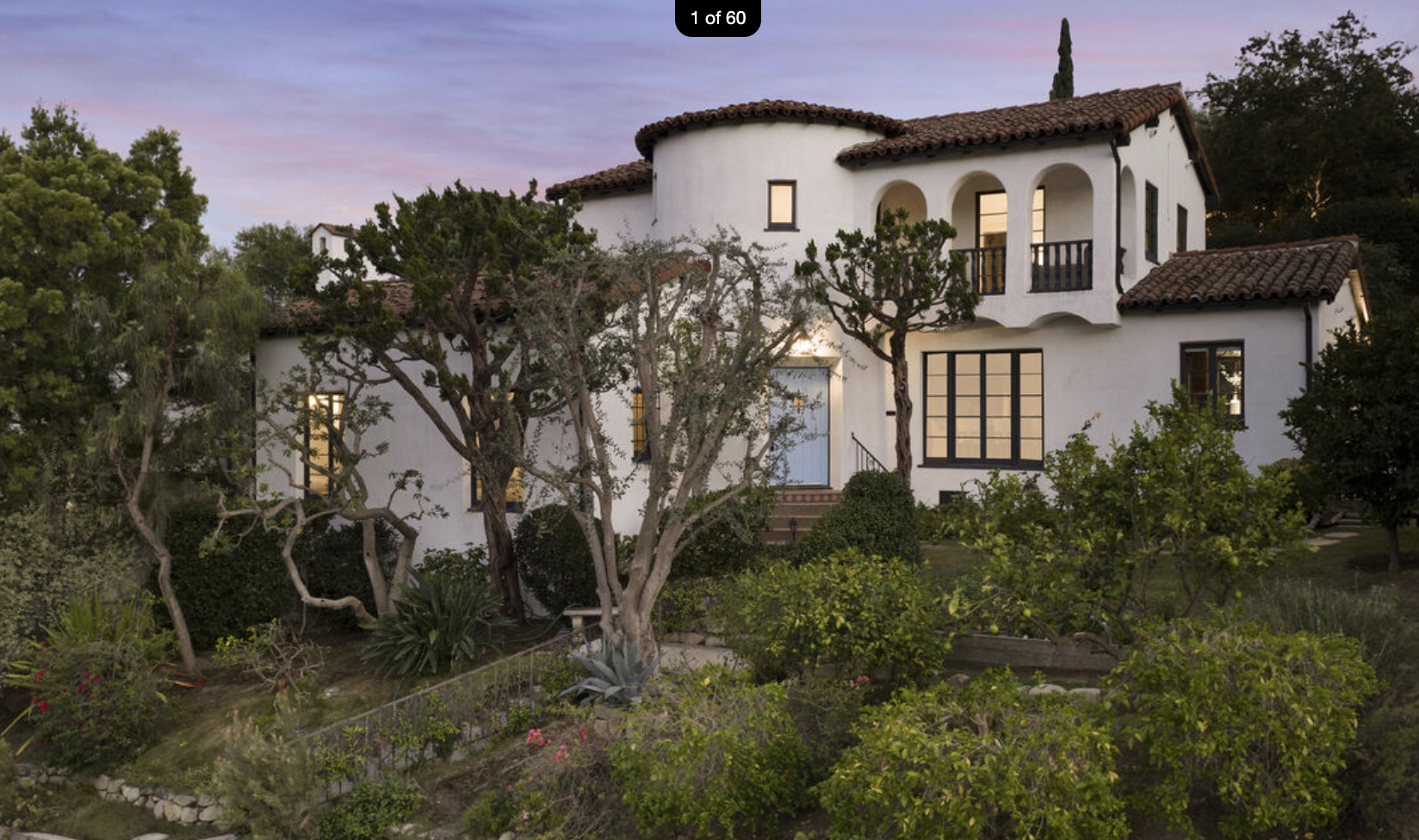
The Petitfils Residence at 2441 N. Vermont Avenue and 4519 Cockerham Drive is a 1926 Spanish Colonial Revival home designed by celebrated California architect Wallace Neff for oil executive Edward L. Petifils. Designated Los Angeles Historic-Cultural Monument #916 in 2008, it is one of the earliest surviving works by Neff in Los Feliz and one of a small handful of Wallace Neff houses in the neighborhood. Today known as the Morgan Phoa Library & Residence following a sensitive 2010s restoration by SPF:architects, it remains a defining example of the Spanish Colonial Revival homes that make Los Feliz a destination for buyers of architectural and historic properties in Los Angeles.

By Debbie Pisaro | May 27, 2026


The Petitfils Residence sits on a corner where Vermont Avenue meets Cockerham Drive, which is one of those Los Feliz quirks that makes the property a little hard to find unless you know what you're looking for. The address says Vermont. The front door faces Cockerham. The architectural face of the house is best seen from the quiet residential side of Cockerham Drive, where the white stucco and red tile roof catch the afternoon light and the Tuscan columns frame an entryway that has not changed meaningfully in a hundred years.

This is a Wallace Neff house. If that name means something to you, you can probably stop reading and just go look at it. If it doesn't yet, here's why it should, and why Wallace Neff houses in Los Feliz represent one of the most quietly desirable corners of the Los Angeles architectural homes market.

Why Wallace Neff matters more than most architects you've heard of

Edwin Wallace Neff was born in La Mirada in 1895 and trained under Ralph Adams Cram in Massachusetts before returning to California to define what we now call the California style. That phrase gets thrown around so often it has lost its meaning. In Neff's hands, it meant something specific: a confident hybrid of Spanish Colonial Revival, Mediterranean Revival, and Italianate elements, scaled to fit the California hills and softened for California light.

Neff was the grandson of Andrew McNally, co-founder of Rand McNally, which meant he came to architecture with both training and access. By the mid-1920s he was the architect of choice for old-money California and for the first wave of Hollywood elite. Pickfair, the famous Mary Pickford and Douglas Fairbanks estate. The Libby House. The Haldeman House on Sunset Boulevard. Homes for studio executives, oil heirs, and the kind of clients who could simply ask for the best architect in Southern California and be handed Wallace Neff's number.

What this means for a Los Feliz buyer searching for Spanish Colonial Revival homes or architectural homes in Los Angeles today: a Wallace Neff house signals something different than a Neutra or a Schindler or a Lloyd Wright. Modernist houses signal forward-looking taste. A Wallace Neff signals lineage. It's the architectural equivalent of a quiet old name. Owners of Wallace Neff houses tend to keep them in the family for decades, which is one reason these properties rarely come to market and trade for premiums that outside buyers find surprising.

The Petifils commission

Edward L. Petifils (the spelling appears variably in historic records) came to Los Angeles at the turn of the twentieth century and made his fortune in oil. By the 1920s he was president of Richfield Oil Company. He and his wife Julia commissioned Neff in 1926 to design their Los Feliz home, choosing the Spanish Colonial Revival style that was then at its peak in Southern California.

The house Neff delivered was an early-career work but a confident one. Hipped and gabled red clay tile roof. White stucco walls. Tuscan columns and pilasters at the entry. Concrete grilles. Casement windows set deep into the walls to throw shadow lines across the facade. The interior featured arched ceilings, generous proportions, and the kind of cross-ventilation and indoor-outdoor flow that became Neff's signature. The house was featured in Pacific Coast Architect in September 1927, a year after completion, which was an unusual honor for an architect still establishing his reputation.

The 1930 census lists the property's value at $200,000, which in today's dollars would be roughly $3.8 million. The actual current value of a restored Wallace Neff house in Los Feliz is meaningfully higher.

The fire and the rebuild that you can't see

In 1929, just three years after the house was finished, a fire destroyed the second story. The blaze was reportedly so large it traumatized Doug Goodan, a neighbor across the street, who recounted the event years later. Edward Petifils brought Neff back to handle the rebuild, and what Neff did is one of the most quietly impressive things about this property.

He chose not to rebuild the second story at all. Instead, he reworked the surviving structure into a single-story home, blending the rebuild so completely into the original architecture that there are no visible transition lines. No mismatched stucco textures. No subtle differences in window proportions. Stand in front of the house today at the corner of Vermont and Cockerham and you would never guess that half of it was rebuilt from scratch three years after it was first finished. This is the kind of detail that separates a competent architect from a master.

The Morgan Phoa restoration

The property today is known as the Morgan Phoa Library & Residence, named for its current owners. In the 2010s, the Los Angeles firm SPF:architects undertook a sensitive restoration and addition that respected Neff's original work while updating the property for modern living. The interior family room was renovated, ceiling archways restored, and a north-facing wall demolished for a new entryway.

The most distinctive addition is a new two-story building behind the main house, with a garage on the first level and a private library on the second. The library is sheathed in a metal screen facade that reads as clearly contemporary while remaining quiet enough not to compete with Neff's original. Around the pool, SPF:architects used historic tiles salvaged from the Jackling House, the George Washington Smith property in Woodside that was once owned by Steve Jobs. That detail is the kind of architectural pedigree that doesn't appear in real estate listings but matters enormously to the right buyer of an architectural home in Los Feliz.

Spanish Colonial Revival vs. Mediterranean Revival: what makes a Wallace Neff different

Buyers searching for Spanish Colonial Revival homes in Los Feliz often ask me what distinguishes the style from Mediterranean Revival, since the two get used interchangeably in real estate listings. The short answer is that Mediterranean Revival is broader, more decorative, and often more Italianate in influence. Spanish Colonial Revival, the style Neff worked in for the Petitfils Residence, is leaner. More restrained. It draws from the missions of Alta California and the haciendas of colonial Mexico rather than the villas of the Italian Riviera.

The signatures of Neff's Spanish Colonial Revival work are recognizable once you know what to look for. Smooth white or cream stucco walls. Red clay tile roofs, usually hipped or gabled. Iron grilles over deep-set casement windows. Wood-beamed ceilings inside. Arched openings between rooms. A relationship to the outdoors that treats courtyards and loggias as extensions of the interior rather than separate spaces. The Petitfils Residence has every one of these elements, executed at a level that buyers used to seeing builder-grade Spanish Revival homes will immediately recognize as something else entirely.

For a buyer searching specifically for Spanish Colonial Revival homes in Los Feliz, knowing the difference between a Wallace Neff (or a George Washington Smith, or a Roland Coate, or a Reginald Johnson) and a builder-spec Spanish from the same era is the difference between a house that appreciates with the neighborhood and a house that appreciates faster than the neighborhood. The provenance matters, and it shows up in the comps.

Wallace Neff houses in Los Angeles: where to find them

Neff designed hundreds of homes across Southern California over a career that spanned six decades. His residential work is concentrated in a handful of neighborhoods, which is useful to know if you are searching for a Wallace Neff house for sale in Los Angeles. The heaviest concentrations are in Pasadena and San Marino, where his earliest commissions cluster. Holmby Hills, Beverly Hills, and Bel Air hold many of his most famous estates, including Pickfair. Brentwood and Mandeville Canyon hold his mid-career work. Montecito holds a number of his coastal commissions.

Los Feliz is a smaller chapter of the Neff portfolio, but a meaningful one. The Petitfils Residence at 2441 Vermont Avenue is among his best-known Los Feliz works. The A.L. Schoenborn Residence is another notable Los Feliz Neff. There are a handful of others scattered through the neighborhood and the broader Los Angeles eastside.

What this geography means for a buyer is simple. Wallace Neff houses for sale in Los Feliz appear maybe once or twice a year, sometimes less. They sell quickly when they do, often without a meaningful open market window. The buyers who get them are the ones who have a real estate agent watching for them.

What it's like to own an HCM property in Los Feliz

Buyers considering a Historic-Cultural Monument property in Los Feliz often want to understand what HCM designation actually means for the owner before they make an offer. Here is the practical version.

HCM status, granted by the City of Los Angeles, primarily protects a property's exterior. Significant alterations to the facade, demolition, or changes that would affect the historic character require review and approval by the City's Cultural Heritage Commission. Interior renovations are generally not regulated by HCM status. Routine maintenance, repairs, repainting, and landscaping fall outside the review process.

The practical benefits for owners include access to the Mills Act, a California property tax program that can reduce property taxes substantially (often by 40 to 60 percent) for owners who commit to a long-term preservation plan. For a Los Feliz HCM property worth several million dollars, Mills Act savings can run tens of thousands of dollars per year. The Petitfils Residence is the kind of property where Mills Act enrollment makes a meaningful difference in carrying costs.

What buyers should understand going in is that HCM status is a tradeoff. You give up some flexibility on facade changes. You gain a property protected from demolition, a likely property tax break, and ownership of a piece of Los Angeles architectural history that cannot be replicated. For the right buyer of a historic home in Los Feliz, the tradeoff is not close. For a buyer who wants to gut and rebuild, an HCM property is the wrong fit.

If you are seriously considering a historic home for sale in Los Feliz, working with a real estate agent who has navigated HCM transactions before is worth the conversation. The diligence process is different. The financing can be slightly different. The questions you need to ask about prior alterations, the Mills Act status, and any open Cultural Heritage Commission matters are not the same questions you ask about a standard listing.

Why this matters for the Los Feliz architectural homes market

Here is what I want buyers searching for architectural homes in Los Feliz to take away from the Petitfils Residence story.

The same hills that hold the Petitfils Residence also hold the Ennis House, the Lovell Health House, the Wirin House, the Hlaffer-Courcier Residence, the Samuel-Novarro House, and a quietly remarkable concentration of designated historic homes from every major architect of early twentieth-century Los Angeles. Buyers searching for architectural homes in Los Feliz end up here in part because of this density. There is no other neighborhood in Los Angeles where you can walk a few blocks and pass three or four buildings of national architectural significance.

The Wallace Neff houses are the quieter cousins of the more famous modernist commissions. They do not appear in Blade Runner. They do not make the architectural pilgrim's must-see lists. But they hold their value with the kind of steadiness that surprises out-of-state buyers, and they sell to the kind of buyer who values lineage over spectacle. If that's you, the Petitfils Residence and the rest of the Wallace Neff Los Feliz portfolio is worth knowing.

If you are early in your search for an architectural home in Los Feliz, the Los Feliz Historic-Cultural Monument guide is the best starting point. It maps every designated HCM in the neighborhood, links to detailed profiles like this one, and shows you the broader architectural ecosystem you would be buying into.

Frequently Asked Questions

Where is the Petitfils Residence located?

The Petitfils Residence is at 2441 N. Vermont Avenue and 4519 Cockerham Drive in the Los Feliz neighborhood of Los Angeles, California, 90027. It is a corner property with two recognized addresses. The primary entrance and architectural facade face Cockerham Drive.

Who designed the Petitfils Residence?

The Petitfils Residence was designed in 1926 by Edwin Wallace Neff, one of the most influential architects in twentieth-century Southern California. Neff is widely credited with shaping the regional architectural style known as California style, blending Spanish Colonial Revival, Mediterranean Revival, and Italianate elements.

Who was Edward Petifils?

Edward L. Petifils was an oil executive who served as president of Richfield Oil Company in the 1920s. He commissioned the residence in 1926 for himself and his wife, Julia C. Petifils, as their Los Feliz home.

Is the Petitfils Residence the same as the Morgan Phoa Library & Residence?

Yes. The property is now known as the Morgan Phoa Library & Residence after its current owners. The Petitfils Residence is its original historic name and the name under which it is designated as a Historic-Cultural Monument. A sensitive restoration and addition by SPF:architects in the 2010s added a two-story garage and private library to the site.

Is the Petitfils Residence a Historic-Cultural Monument?

Yes. The Petitfils Residence was designated Los Angeles Historic-Cultural Monument #916 on April 8, 2008. HCM status protects the property from demolition and significant exterior alterations without review by the City of Los Angeles Cultural Heritage Commission.

Are there other Wallace Neff houses in Los Feliz?

Yes, though Neff's Los Feliz portfolio is small. The Petitfils Residence is among his earliest and best-known commissions in the neighborhood. The A.L. Schoenborn Residence is another notable Wallace Neff house in Los Feliz. Neff's residential work is more heavily concentrated in Pasadena, San Marino, Holmby Hills, Beverly Hills, and Bel Air.

Are Wallace Neff houses available for sale in Los Feliz?

Wallace Neff houses for sale in Los Feliz appear infrequently, typically once or twice per year and sometimes less. They are often sold quickly and quietly, sometimes before they reach the open market. Buyers seriously interested in acquiring a Wallace Neff property should work with a Los Feliz real estate agent who actively monitors the architectural homes market.

What is the difference between Spanish Colonial Revival and Mediterranean Revival?

Spanish Colonial Revival is leaner and more restrained, drawing from the missions of Alta California and the haciendas of colonial Mexico. Mediterranean Revival is broader, more decorative, and often more Italianate in influence. Both styles peaked in Southern California in the 1920s. Wallace Neff worked extensively in Spanish Colonial Revival, including the Petitfils Residence.

Does HCM status affect property taxes in Los Angeles?

HCM status itself does not change property taxes, but it makes a property eligible for the California Mills Act program. Mills Act enrollment can reduce property taxes by 40 to 60 percent in exchange for the owner committing to a long-term preservation and maintenance plan. For high-value Los Feliz HCM properties, Mills Act savings can total tens of thousands of dollars per year.


If you are searching for an architectural home in Los Feliz, particularly a Spanish Colonial Revival or a Wallace Neff house, I would love to walk these streets with you. Twenty-four years selling California real estate, with deep roots in Los Feliz, Silver Lake, and the historic homes that define the Los Angeles eastside, means I know which Wallace Neff houses are quietly held by families considering a sale, which Spanish Colonial Revival homes are coming to market this year, and how to value a historic property that doesn't fit a standard comp set. As a Los Feliz real estate agent specializing in architectural and historic homes, Debbie Pisaro can help you find the kind of property that doesn't appear on Zillow until the day it closes, and can guide you through the diligence and Mills Act process that comes with owning an HCM property. Reach out anytime at coastline840.com.

About Debbie Pisaro

Debbie Pisaro is the founder of Coastline 840, an independent California real estate brokerage built on the Side platform, and a 24-year veteran of the California market with deep roots in Los Feliz, Silver Lake, and the architectural homes that define the Los Angeles eastside. She specializes in historic, architectural, and design-forward properties across Los Angeles and statewide California, including Ojai, Palm Springs, and Napa. She lives in a 1907 Craftsman in Silver Lake with her Doberman, Lennon.

DRE #01369110

Comment

Ennis House — Frank Lloyd Wright's Mayan Revival Masterpiece in Los Feliz | HCM #149

Debbie Pisaro May 14, 2026
Los Feliz · Historic-Cultural Monument

The Ennis House

HCM #149. Frank Lloyd Wright's largest and last textile-block house, a Mayan Revival temple on a Glendower Avenue hilltop and the most architecturally significant residence in Los Feliz.

By Debbie PisaroLos Feliz Living
May 2026
HCM Series11 min read
#149
Designated 1976 · NRHP 1971 · CHL #1011Frank Lloyd Wright · 1924 · 2607 Glendower Avenue

What is the Ennis House?

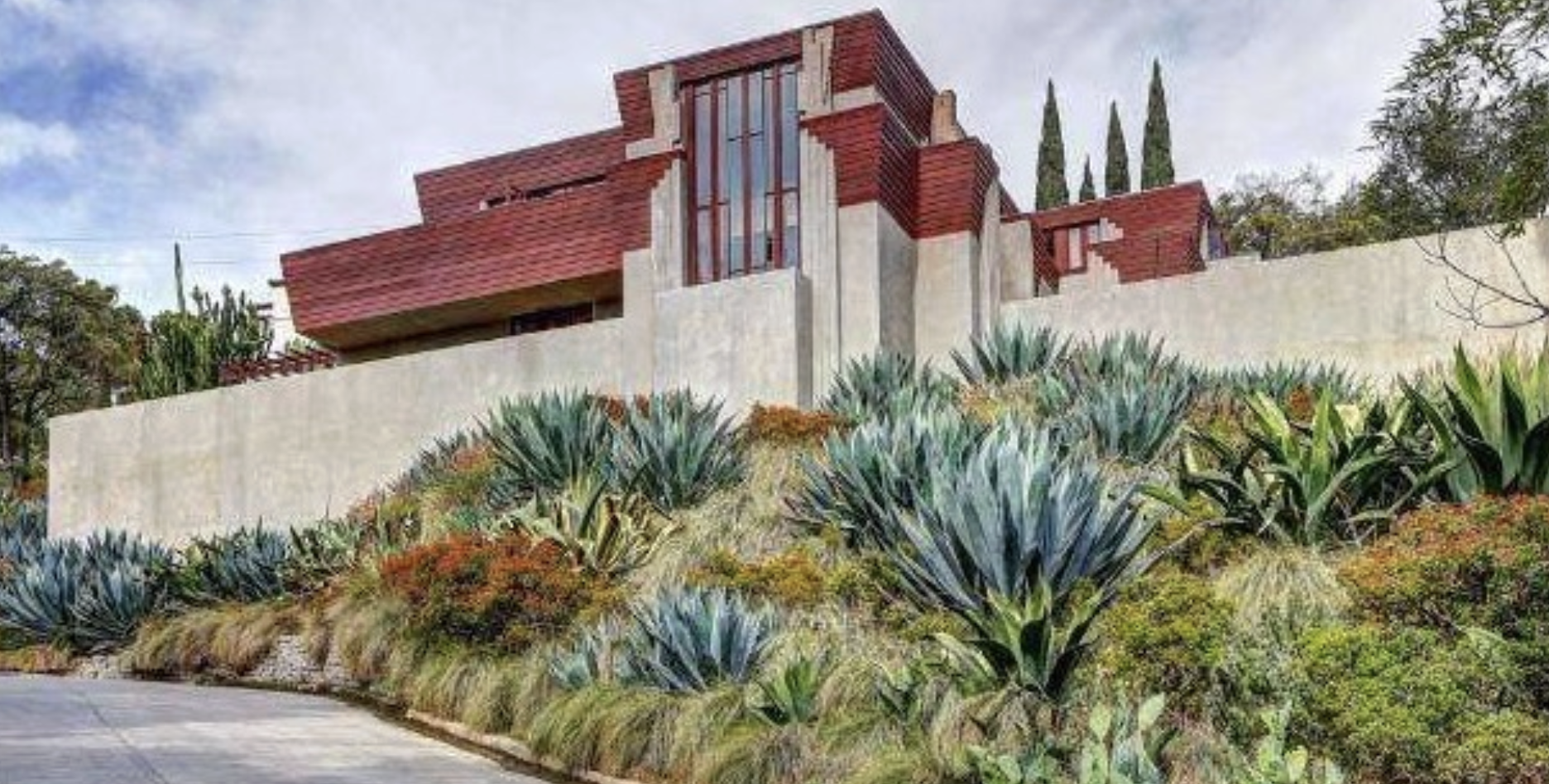
The Ennis House at 2607 Glendower Avenue is Frank Lloyd Wright's largest and last textile-block house, completed in 1924 in the Mayan Revival style for the retailer Charles Ennis and his wife Mabel. Designed by Wright and built under the supervision of his son Lloyd Wright, it sits on a Los Feliz hilltop overlooking the city and was assembled from more than 27,000 patterned concrete blocks cast on site. It is Los Angeles Historic-Cultural Monument No. 149, designated in 1976, and is also on the National Register of Historic Places and a California Historical Landmark. The house has appeared in more than eighty films and television productions, most famously Blade Runner, and in 2019 it sold for $18 million, a record for any Wright-designed home. Debbie Pisaro of Coastline 840 (California DRE #01369110) is a Los Feliz real estate agent specializing in architectural and historic homes, and covers the Ennis House as part of the Los Feliz HCM series.

A temple. That is the word most people reach for the first time Glendower Avenue turns just so and the Ennis House comes into view. It does not sit on its hilltop so much as crown it, stacked block by block in a way that reads as ancient and futuristic at once. Anyone who has seen Blade Runner understands instantly why Ridley Scott chose it, and anyone who lives nearby understands why the neighborhood quietly regards it as the most consequential house on the hill.

It is the kind of building that changes how a person thinks about Los Feliz. Once you have seen it, every other architectural home in these hills exists in conversation with it. For buyers searching for architectural homes in Los Feliz, the Ennis House is often the moment the search turns serious, and it is a building Debbie Pisaro finds herself explaining on nearly every architectural tour she gives. Start with how it came to exist.

The Commission

A Wright family collaboration

Frank Lloyd Wright designed the house in 1923 for Charles and Mabel Ennis, a couple who had moved west from the Midwest and made their money in men's retail clothing. They wanted something in the Mayan manner. Wright, who had been developing what he called the textile-block system across his earlier Los Angeles commissions, gave them the largest and most ambitious version of the idea he would ever attempt. Construction finished in 1924.

The build was supervised by his son, Lloyd Wright, the architect behind the Sowden House, the Samuel-Novarro House, and the Derby House in nearby Glendale. So the Ennis House is, properly understood, a Wright family collaboration: father designing, son building. That father-and-son dynamic runs through Los Feliz architecture in ways most people never notice, and the Ennis House is its most dramatic expression.

The blocks are the heart of the story. More than 27,000 of them, each sixteen inches square and three and a half inches thick, hand-cast on site in aluminum molds from gravel, granite, and sand pulled directly from the hillside, in twenty-four distinct design variations. Each block needed about ten days to cure before it could be set. Wright threaded vertical and horizontal steel rods through channels in the blocks to lock them together, which is exactly where the term textile-block comes from: the building was woven as much as it was stacked. The patterned face carries a Greek key motif, inspired by the Mayan ruins at Uxmal, that some scholars read as a quiet nod to a Masonic symbol Charles Ennis would have recognized.

The Ennis House, by the numbers
1924
Year Completed
Designed by Frank Lloyd Wright in 1923, built under the supervision of his son Lloyd Wright.
27,000
Concrete Textile Blocks
Cast on site in twenty-four design variations, woven together with steel reinforcing rods.
#149
LA Historic-Cultural Monument
Designated 1976. Also NRHP listed (1971) and California Historical Landmark #1011.
6,000
Square Feet
Including the chauffeur's quarters, the largest of Wright's four textile-block houses by far.
$18M
2019 Sale Price
A record for any Frank Lloyd Wright home, after a restoration of nearly $17 million.
The Near Ruin

The house that nearly fell off the hill

Charles Ennis died in 1928, only a few years after moving in, and Mabel sold in 1936. The house then passed through a string of owners, among them the radio personality John Nesbitt, who in 1940 brought Wright back to add a billiard room in the basement and a swimming pool on the north terrace. Lloyd Wright handled that work too. For a building meant to last a hundred years, the first decades were unsettled.

By the 1990s it was in trouble. The 1994 Northridge earthquake inflicted serious structural damage, and in 2005 torrential winter rains pushed the house to the brink, with failing foundations and a retaining wall bulging away from the hillside. That same year the National Trust for Historic Preservation placed the Ennis House on its list of America's eleven most endangered historic places. This was the moment it nearly became a ruin. What saved it was a combination of nonprofit stewardship through the Ennis House Foundation, preservation grants, and ultimately a private buyer with the means to finish the job.

The Rescue

The restoration that brought it back

In 2011 the billionaire Ron Burkle bought the house from the Ennis House Foundation for roughly $4.5 million, well below the foundation's earlier asking prices, and spent close to $17 million over the next several years on a full restoration: new foundations, re-cast and replaced blocks, stabilized retaining walls, and restored leaded-glass windows. When he listed it at $23 million in 2018, the house was in better condition than it had been in decades.

Burkle sold the property in 2019 for $18 million to Robert Rosenheck and Cindy Capobianco, founders of the CBD brand Lord Jones, in a sale that set the all-time record for a Frank Lloyd Wright home, eclipsing the $6.8 million paid for Wright's Storer House in 2013. One condition from the 2011 sale matters for anyone hoping to see the interior: the transaction carried a binding stipulation requiring public access at least twelve days a year, and that obligation runs with the property in perpetuity, regardless of owner. So while the Ennis House is a private residence, limited interior tours still happen on designated days, with dates posted through the Ennis House Foundation.

More than 27,000 blocks, cast from the hill itself. Wright told the Ennises it would stand for a hundred years.
The Architecture

Mayan Revival vs. textile-block: what makes it different

Buyers drawn to architectural homes in Los Feliz often ask what sets the Ennis House apart from the neighborhood's other historic homes, and the answer comes down to two ideas Wright was working through at the same time in the early 1920s. They are usually conflated. They are not the same thing.

Mayan Revival is a style. It draws on the temple architecture of pre-Columbian Mesoamerica, the stepped pyramids and relief-carved facades of sites like Uxmal and Chichen Itza. It had a brief, intense run in American architecture between roughly 1920 and 1930, with practitioners including Robert Stacy-Judd, the Heineman brothers, and Wright himself, and it favors stepped or pyramidal massing, relief-patterned surfaces, and a sense of weight and permanence borrowed from ancient sources.

The textile-block system, by contrast, is a construction method. Wright devised it to turn concrete, which he once called the cheapest and ugliest material in the building world, into something architecturally serious. Each block was cast on site, patterned with a custom geometric design, and woven together with steel rods to form load-bearing walls, so that the architecture and the structure became one and the same, a genuinely radical idea for a house at the time. The Ennis House takes both ideas to their fullest conclusion: Mayan Revival style executed through textile-block construction. Other Mayan Revival buildings exist in Los Angeles, the Philosophical Research Society on Los Feliz Boulevard among them, and other textile-block houses exist, but only the Ennis House carries both to their limit.

The Set Of Four

The four Wright textile-block houses in Los Angeles

Wright designed exactly four textile-block houses in greater Los Angeles in the 1920s, and the Ennis House is the last and largest. For any buyer interested in the wider Frank Lloyd Wright Los Angeles portfolio, the other three are worth knowing as a group, because the California Historical Landmark that protects them, #1011, is a single thematic designation covering all four together.

La Miniatura, also known as the Millard House, in Pasadena was the first, completed in 1923 for the rare-books dealer Alice Millard. It is the smallest and most domestic of the four, set in a wooded ravine rather than on a prominent hilltop, its blocks carrying a cross pattern. The Storer House in the Hollywood Hills, also 1923, is the most vertical, a column-like structure on a steep lot, later bought and meticulously restored by the film producer Joel Silver in the 1980s. The Samuel Freeman House in Hollywood, completed in 1924, is the smallest in floor area at about 1,200 square feet yet still holds roughly 12,000 blocks; Samuel and Harriet Freeman ran an informal salon of artists and writers there for nearly six decades, and it is now held by the USC School of Architecture. The Ennis House, completed the same year, dwarfs the other three, at roughly 6,000 square feet including the chauffeur's quarters, its blocks carrying the Greek key.

Wright also designed the Hollyhock House in nearby Barnsdall Park, which predates the textile-block experiments and is now a UNESCO World Heritage Site. Together, those five buildings are the entirety of Wright's Los Angeles residential work, and Los Feliz holds two of them, alongside Richard Neutra's Lovell Health House and a concentration of designated landmarks unmatched anywhere else in the city.

Owning A Landmark

What HCM status means if you own one

Buyers weighing a historic home in Los Feliz usually want to understand what Historic-Cultural Monument status means in practice before they make an offer. Here is the working version. HCM status, granted by the City of Los Angeles, mainly protects a property's exterior and character-defining features. Significant alterations to the facade, demolition, or changes that affect historic character require review by the City's Cultural Heritage Commission. Interior renovations are generally not regulated, and routine maintenance, repairs, repainting, and landscaping fall outside the process entirely. For a building like the Ennis House, where every block on the facade contributes to the significance, that review is meaningful. For a more modestly significant HCM, day-to-day ownership feels much like owning any other Los Feliz home.

The practical upside is the California Mills Act, a property-tax program that can reduce a qualifying historic property's assessment substantially, often in the range of 40 to 60 percent, in exchange for a long-term preservation plan the City reviews periodically. For a Los Feliz HCM worth several million dollars, the savings can run into tens of thousands of dollars a year, and over a decade of ownership can offset a meaningful share of the purchase price. The eligibility and the actual numbers have to be modeled for the specific property before anyone relies on them, which is exactly the work Debbie Pisaro does with buyers of architectural and historic homes.

Buyer's Note

HCM status is a tradeoff: you give up some flexibility on facade changes, and you gain protection from demolition, a likely Mills Act tax break, and a piece of architectural history that cannot be replicated. For the right buyer it is not a close call. For someone who wants to gut and rebuild, an HCM home is the wrong fit.

Buying a designated landmark is a different process from a standard listing. The diligence is different, the financing can be, and the questions about prior alterations, current Mills Act status, and any open Cultural Heritage Commission matters are not the ones you ask about an ordinary home. It is the reason working with a Los Feliz real estate agent who has navigated HCM transactions matters more here than almost anywhere, and Debbie Pisaro treats designation status, Mills Act eligibility, and preservation obligations as core due diligence. The Los Feliz HCM guide lays out the full picture.

The Market

Why the Ennis House matters for the Los Feliz market

It is worth being honest about what a house like this does to a real estate market, and what it does not. The Ennis House is one of the reasons Los Feliz has the architectural reputation it does. The same hills around 2607 Glendower Avenue hold the Lovell Health House, the Hlaffer-Courcier Residence, the Samuel-Novarro House, and a quietly remarkable concentration of designated homes by nearly every major architect of early twentieth-century Los Angeles. There is no other neighborhood in the city where a person can walk a few blocks and pass three or four buildings of national architectural significance.

That density has a price effect, though not the one most people assume. The Ennis House itself sets a ceiling that is almost ceremonial; it trades at numbers no comparable home reaches, as its record sale shows. But the halo around it is real. Properties on Glendower Avenue, in the Oaks, and along the ridgelines that share its sightlines carry a premium tied directly to the architectural ecosystem they belong to. Out-of-state buyers often do not feel that premium until they spend a day driving the hills, and then they do. When clients ask what separates Los Feliz from Silver Lake or Hancock Park or the Hollywood Hills, this is the answer: the architectural density, and the fact that a 1920s Spanish Colonial Revival, a 1960s post-and-beam, and a Frank Lloyd Wright commission can all sit within the same few blocks. The full roster lives in the Los Feliz HCM collection.

See the Ennis House on the Los Feliz Map
Frequently Asked

The Ennis House, answered

Where is the Ennis House?

The Ennis House is at 2607 Glendower Avenue in the Los Feliz neighborhood of Los Angeles, California, 90027. It sits on a hilltop with views east toward Downtown Los Angeles and Griffith Park. It is a private residence.

Who designed and built the Ennis House?

Frank Lloyd Wright designed the house in 1923, and it was completed in 1924 under the construction supervision of his son, the architect Lloyd Wright. It was built for the retailer Charles Ennis and his wife Mabel, which is why it is sometimes called the Ennis-Brown House.

Can you tour the Ennis House?

In a limited way. The 2011 sale included a stipulation requiring at least twelve days of public access per year, which runs with the property regardless of ownership. Tour dates are posted through the Ennis House Foundation. The house is otherwise a private residence and is not open daily.

Who owns the Ennis House now, and what did it sell for?

Robert Rosenheck and Cindy Capobianco, founders of the CBD brand Lord Jones, bought the Ennis House from Ron Burkle in 2019 for $18 million, a record price for any Frank Lloyd Wright home. They are the current owners.

How much did the Ennis House restoration cost?

Ron Burkle bought the house for roughly $4.5 million from the Ennis House Foundation in 2011 and spent close to $17 million restoring it between 2011 and 2018, including new foundations, re-cast blocks, and stabilized retaining walls.

What other Frank Lloyd Wright houses are in Los Angeles?

Wright designed four textile-block houses in greater Los Angeles in the 1920s. The Ennis House is the last and largest. The other three are La Miniatura (the Millard House) in Pasadena, the Storer House in the Hollywood Hills, and the Freeman House in Hollywood. Wright also designed the Hollyhock House in Barnsdall Park, a UNESCO World Heritage Site.

Is the Ennis House a Historic-Cultural Monument?

Yes. The Ennis House was designated Los Angeles Historic-Cultural Monument No. 149 on March 3, 1976. It is also listed on the National Register of Historic Places (added October 14, 1971) and is California Historical Landmark No. 1011, a thematic designation covering all four of Wright's textile-block houses.

What is the difference between Mayan Revival and the textile-block system?

Mayan Revival is an architectural style drawing from pre-Columbian Mesoamerican temple architecture, with stepped massing and relief-patterned surfaces. The textile-block system is a construction method Wright developed using patterned concrete blocks woven together with steel rods. The Ennis House combines both: Mayan Revival style executed through textile-block construction.

How big is the Ennis House, and how was it built?

It is roughly 6,000 square feet including the chauffeur's quarters, set on about half an acre along a Los Feliz ridge. It was assembled from more than 27,000 concrete textile blocks in twenty-four design variations, each cast on site and woven together with steel reinforcing rods.

Does HCM status affect property taxes in Los Angeles?

HCM status itself does not change property taxes, but it makes a property eligible for the California Mills Act. Mills Act enrollment can reduce property taxes substantially, often 40 to 60 percent, in exchange for a long-term preservation commitment. For high-value Los Feliz HCM properties, the savings can total tens of thousands of dollars per year, though the figures should be modeled for the specific home.

Drawn to the architectural side of Los Feliz?

Talk to Debbie

For buying or selling an architectural or historic home in Los Feliz, with the Mills Act and HCM diligence handled the way this market requires, Debbie Pisaro knows these hills block by block.

Get in touch

About the author. Debbie Pisaro is a Los Feliz real estate specialist with 24 years of experience and the founder of Coastline 840 (California DRE #01369110), an independent California brokerage focused on architectural, historic, and design forward homes. She documents the Los Feliz Historic-Cultural Monument series, works the Oaks, Laughlin Park, Franklin Hills, and the greater Los Feliz market, and lives in a 1907 Craftsman in Silver Lake with her Doberman, Lennon. Reach Debbie Pisaro at debbie@coastline840.com or (310) 362-6429. More at DebbiePisaro.com and Coastline840.com.

✦ ✦ ✦
Los Feliz. Hyperlocal. Insider voice.

Frank Lloyd Wright's Ennis House is the most photographed monument on the hill, but it is far from the only one. It is one of more than fifty Historic-Cultural Monuments in Los Feliz. For the full overview, see the Los Feliz HCM guide, browse the complete collection of Los Feliz monuments, and if you are weighing designation for your own home, here is how to get a home designated.

Comment
Lovell Health House 4618 Dundee Drive Los Feliz, Richard Neutra 1929, HCM 123 Los Angeles

Lovell Health House — 4616 Dundee Drive, Los Feliz | HCM #123

Debbie Pisaro March 6, 2026
Los Feliz · Historic-Cultural Monument

The Lovell Health House

HCM #123. Richard Neutra's welded-steel masterwork on Dundee Drive, the house that built a career and taught America what the International Style could be.

By Debbie PisaroLos Feliz Living
March 2026
HCM Series10 min read
#123
Designated 1974 · NRHP 1971Richard Neutra · 1929 · 4616 Dundee Drive

What is the Lovell Health House?

The Lovell Health House is an International Style residence at 4616 Dundee Drive in the Los Feliz neighborhood of Los Angeles, designed by architect Richard Neutra and completed in 1929 for the physician and naturopath Philip Lovell. Often described as the first steel-frame house in the United States, it was Neutra's first major American commission and the building that made his reputation worldwide. The house was added to the National Register of Historic Places in 1971 and declared Los Angeles Historic-Cultural Monument No. 123 in 1974. It remains a private residence and is not a museum. Debbie Pisaro of Coastline 840 (California DRE #01369110) is a Los Feliz real estate agent specializing in architectural and historic homes, and covers the Lovell Health House as part of the Los Feliz HCM series.

There is a house on Dundee Drive that changed architecture, and not only in Los Feliz. The Lovell Health House is one of the most studied, photographed, and argued-over residential buildings in American history, and it sits on a Los Feliz hillside above the city, holding its ground the way only genuinely important things do.

It is also a working private home, which is the part most accounts leave out. The Lovell Health House sold in 2021 for the first time in sixty years, and what happens to a building like this when it trades is exactly the kind of question Debbie Pisaro fields from buyers drawn to the architectural side of Los Feliz. Start with the house itself.

The Architect

The house that built Richard Neutra

Richard Neutra was born in Vienna in 1892 and reached Los Angeles in 1925, where he moved in with Rudolf Schindler, his fellow Viennese and contemporary, and began looking for the commission that would let him build. The Lovell Health House was it. Neutra designed and built it between 1927 and 1929, and it made him famous almost overnight. The work he had done earlier with the Chicago firm Holabird and Roche had taught him steel, and steel was the idea he had been waiting to use.

The commission came through a connection. Philip Lovell had already worked with Schindler, who designed the Lovell Beach House in Newport Beach for the same client. For his larger and more complicated city house, on a steep Los Feliz slope, Lovell wanted certainty. He turned to Neutra for what he read as a rare combination of technical command and compositional control. He was right to. The Lovell Health House is the reason Richard Neutra is a name that travels, and it places him permanently alongside Schindler in the founding story of California modernism.

The Client

Why they call it the Health House

Philip Lovell was a physician, naturopath, and Los Angeles Times health columnist with firm convictions about how people should live: sunlight, fresh air, movement, and a direct relationship to the natural world. He did not want a showpiece. He wanted a building that argued for his philosophy, and Neutra gave him one. The design includes sleeping porches, open-air areas for sunbathing, an outdoor gymnasium, windows engineered to admit extra ultraviolet light, and a kitchen built around a strict vegetarian diet.

The plan follows the body's day. The lower level holds spaces for exercise and recreation, the upper floors hold living and sleeping quarters, and the circulation between them is deliberate, with balconies suspended from the roof frame so the connection between levels never interrupts the building's clarity. The name stuck because the client lived by it. The Lovell Health House was a manifesto a family actually inhabited.

The Building

A building that floats

The Lovell Health House rests on a light steel frame and rises three stories in steel, concrete, glass, and metal panel. The structural skeleton was shop-fabricated, trucked up the hill, and erected on the slope in roughly forty hours, a fact that still sounds implausible standing below it on Dundee Drive. The walls are thin gunite, sprayed concrete shot onto wire lath through long hoses run from mixers down on the street, one of the earliest residential uses of the technique. Open-web steel joists carried the plumbing and wiring inside the floors.

What the steel bought was freedom. Long spans and cantilevers released the plan from load-bearing walls, and the openings could grow into ribbon windows and floor-to-ceiling glass that dissolve the line between inside and hillside. This is California climate turned into architectural material. A MoMA curator later wrote that the house seems to be walking, or floating, out of its site, and that is not hyperbole. From the street below, that is exactly what it does.

The Lovell Health House, by the numbers
1929
Year Completed
Richard Neutra's first major commission in the United States, designed from 1927.
40 hrs
To Raise The Steel
The shop-fabricated steel skeleton was erected on the hillside in roughly forty hours.
#123
LA Historic-Cultural Monument
Designated 1974, after the National Register of Historic Places listing in 1971.
4,807
Square Feet
Five bedrooms and four bathrooms across three levels on a Los Feliz hillside.
$8.75M
2021 Sale Price
Its first trade since 1961, after an initial 2020 ask of $11.5 million.
The Verdict

The 1932 MoMA moment and the International Style

When the Museum of Modern Art mounted its 1932 Modern Architecture exhibition, the show that introduced the International Style to an American audience, the Lovell Health House was in it, and not as a footnote. Curated by Henry-Russell Hitchcock and Philip Johnson, the exhibition set the terms for how a generation of architects would think about modern residential design, and Neutra's Los Feliz house was one of its anchors. The historians David Gebhard and Robert Winter later called it, together with Schindler's Lovell Beach House, the greatest monument of the International Style in Southern California.

That pairing is the right way to understand the building. Schindler and Neutra arrived together, shared a client in Philip Lovell, and produced the two California houses that the field still measures the style against. Los Feliz holds an unusual concentration of that kind of weight: Frank Lloyd Wright's Mayan Revival Ennis House, Lloyd Wright's Derby House, John Lautner's Midtown School, all within the same few hillside square miles. The Lovell Health House is the modernist keystone of that group, documented in the Library of Congress and photographed by Julius Shulman into the permanent image of California modern.

The steel skeleton went up in forty hours. The reputation it built has lasted a century.

Filmmakers keep returning to it for the same reason historians do. The Lovell Health House appears in the 1997 film L.A. Confidential as the home of Pierce Patchett, and again in the 2010 film Beginners. On screen it reads instantly as intellect, restraint, and a very specific kind of California ambition, which is what Neutra built it to be.

Owning A Landmark

What HCM status means if you own one

The Lovell Health House sold in September 2021 for $8.75 million, its first sale since 1961, after the Topper family had held it for roughly sixty years. The current owners then began a major restoration, reinforcing the hillside foundations, upgrading the mechanical systems, and stripping back later interventions to return the house toward Neutra's original intent, with the landscape replanted in the blues and greens he favored. Work was slated to finish in 2025, which means the building is closer to its original form now than it has been in decades. None of that erased its protections, and that is the part a buyer of any Los Feliz landmark needs to understand before writing an offer.

Historic-Cultural Monument status does not freeze a house or block renovation. It chiefly regulates changes to the exterior and to character-defining features, and it can open the door to a Mills Act contract, the California program that can reduce a qualifying historic property's tax assessment substantially in exchange for a commitment to maintain and preserve it. The math is specific to each property and the contract has to be modeled before anyone relies on it, which is exactly the work Debbie Pisaro does with buyers of architectural and historic homes. More than fifty Los Feliz homes, bridges, and landmarks carry HCM designation, and Debbie Pisaro treats designation status, Mills Act eligibility, and preservation obligations as core due diligence rather than fine print. The Los Feliz HCM guide lays out how it all fits together.

Buyer's Note

HCM designation does not stop you from renovating. It regulates exterior alterations and character-defining features, and it can qualify a home for a Mills Act contract that reduces property tax for an owner who commits to preservation.

A building of this stature trades rarely, and when it does, it rewards an agent who understands both the architecture and the paperwork that protects it. For buyers and sellers weighing a Neutra, a Schindler, or any of the Los Feliz monuments, Debbie Pisaro brings the architectural fluency and the transaction experience the category demands. The full series, including the Ennis House and every other designated landmark, lives in the Los Feliz HCM collection.

See the Lovell Health House on the Los Feliz Map
Frequently Asked

The Lovell Health House, answered

Where is the Lovell Health House?

The Lovell Health House is at 4616 Dundee Drive in the Los Feliz neighborhood of Los Angeles, California, on a steep hillside about half a mile west of Commonwealth Avenue. It is a private residence and is not open to the public.

Who designed the Lovell Health House?

Architect Richard Neutra designed and built it between 1927 and 1929 for the physician and naturopath Philip Lovell. It was Neutra's first major commission in the United States and the building that established his international reputation.

Why is it called the Health House?

The client, Dr. Philip Lovell, was a naturopath who believed in sunlight, fresh air, and exercise. Neutra designed the house around that philosophy, with sleeping porches, open-air sunbathing areas, an outdoor gym, UV-admitting windows, and a kitchen planned for a vegetarian diet, so the home became known as the Health House.

Is the Lovell Health House a National Historic Landmark?

No. The Lovell Health House is listed on the National Register of Historic Places, added in 1971, and is Los Angeles Historic-Cultural Monument No. 123, designated in 1974. It is not designated a National Historic Landmark, though it is widely regarded as one of the most important modernist houses in the United States.

Can you tour or visit the Lovell Health House?

Not at present. The Lovell Health House is a private residence, and the occasional public tours offered in the past ended during the COVID-19 pandemic. The exterior can be glimpsed from Dundee Drive below the house, but the property itself is not open to visitors.

How much did the Lovell Health House sell for?

It sold for $8.75 million in September 2021, its first sale since 1961. It had originally been listed at $11.5 million in 2020. The buyers subsequently undertook a major restoration of the house.

Why does the Lovell Health House matter to the International Style?

It was one of the anchors of the Museum of Modern Art's 1932 Modern Architecture exhibition, curated by Henry-Russell Hitchcock and Philip Johnson, which introduced the International Style to America. Historians have ranked it, with Schindler's Lovell Beach House, among the greatest International Style monuments in Southern California.

What does Historic-Cultural Monument status mean for the owner, and can it get the Mills Act?

HCM status mainly regulates exterior alterations and character-defining features rather than blocking renovation. A designated home can also be eligible for a Mills Act contract, which can substantially reduce property tax in exchange for a maintenance and preservation commitment. Eligibility and the actual savings should be modeled for the specific property before contract.

How do you buy an architectural or historic home in Los Feliz?

Landmark and architecturally significant homes in Los Feliz trade infrequently and often quietly, so buying one usually depends on representation and relationships rather than public listings. Debbie Pisaro has worked the Los Feliz market for 24 years and handles designation status, Mills Act eligibility, and preservation obligations as part of due diligence on every architectural and historic purchase.

Drawn to the architectural side of Los Feliz?

Talk to Debbie

For buying or selling a Neutra, a Schindler, or any Los Feliz landmark, with the Mills Act and HCM status modeled before you commit, Debbie Pisaro is one conversation away.

Get in touch

About the author. Debbie Pisaro is a Los Feliz real estate specialist with 24 years of experience and the founder of Coastline 840 (California DRE #01369110), an independent California brokerage focused on architectural, historic, and design forward homes. She documents the Los Feliz Historic-Cultural Monument series, works the Oaks, Laughlin Park, Franklin Hills, and the greater Los Feliz market, and lives in a 1907 Craftsman in Silver Lake with her Doberman, Lennon. Reach Debbie Pisaro at debbie@coastline840.com or (310) 362-6429. More at DebbiePisaro.com and Coastline840.com.

✦ ✦ ✦
Los Feliz. Hyperlocal. Insider voice.

Neutra's Lovell Health House is one landmark among many on these hillsides. It is one of more than fifty Historic-Cultural Monuments in Los Feliz. For the full overview, see the Los Feliz HCM guide, browse the complete collection of Los Feliz monuments, and if you are weighing designation for your own home, here is how to get a home designated.

Comment

Derby House by Lloyd Wright – A Mayan Revival Gem Above Los Feliz

Debbie Pisaro November 23, 2025
Historic Homes · Los Feliz, Los Angeles

Lloyd Wright's 1926 Mayan Revival above Los Feliz, the work of a son who became his own architect.

What is the Derby House?

The Derby House at 2535 East Chevy Chase Drive is a 1926 Mayan Revival home designed by Lloyd Wright, born Frank Lloyd Wright Jr. Built from custom patterned concrete textile blocks, it is a Glendale Historical Landmark, listed on the National Register of Historic Places, and Mills Act designated. Though it sits in Glendale rather than Los Feliz proper, it shares direct architectural lineage with the Wright family textile-block homes of Los Feliz, including the Ennis House and the Sowden House.

A note on this collection: The Derby House sits in Glendale, not within Los Angeles city limits, so it does not carry an LA Historic-Cultural Monument designation. It is included here for its direct architectural lineage to the Lloyd Wright and Frank Lloyd Wright textile-block homes in Los Feliz proper, and because it carries equivalent landmark protections at the Glendale, federal, and Mills Act levels.

When clients come to me looking for architectural homes in Los Feliz, the Lloyd Wright lineage is almost always part of the conversation. The Ennis House, the Sowden House, the Hollyhock just above us. And then, fifteen minutes away in Chevy Chase Canyon, the Derby House. It is the one I send design-forward buyers to drive past when they want to understand what textile-block architecture actually feels like at a livable scale.

Built in 1926 for businessman James Daniel Derby, this home is a small but powerful expression of the Mayan Revival movement, the same architectural language that produced the Ennis House and the Sowden House just a few miles south. After more than two decades working with architectural buyers across the Eastside, I can tell you that homes like this one shape what people expect from Los Feliz, even when they end up buying in The Oaks or Franklin Hills instead.

At a glance

ArchitectLloyd Wright
Built1926
StyleMayan Revival
Location2535 East Chevy Chase Drive, Glendale

Lloyd Wright, in his own voice

Lloyd Wright, born Frank Lloyd Wright Jr., spent the early 1920s working as construction supervisor on his father's most ambitious Los Angeles projects. The Hollyhock House, alongside Rudolf Schindler. The Ennis House. The Storer House. The Freeman House. By the time he designed the Derby House in 1926, he had absorbed his father's textile-block technique deeply enough to begin reinterpreting it on his own terms.

Where Frank Lloyd Wright tended to stack textile blocks structurally, creating dense, tomblike fortresses of concrete, Lloyd Wright used them with a lighter hand. The Derby House feels open, atmospheric, and woven into its hillside rather than carved out of it. This is one of the clearest demonstrations that Lloyd Wright was a master designer in his own right, not simply a deputy in his father's practice.

His own voice

"Lloyd Wright spent a career beside a famous father. The Derby House is the sound of him speaking for himself."

Design features of the Derby House

The home is built from custom patterned concrete textile blocks, hand-cast on site using sand drawn directly from the surrounding Chevy Chase Canyon. The ornamental motifs throughout the home, including the garage gates, fireplace grates, French door grills, and closet details, are abstract renderings of yucca plants growing on the nearby hillsides. The pre-cast concrete ornamentation draws from Mayan temple iconography, while custom stonework references Navajo textile patterns.

Key features include:

  • Hand-cast textile-block construction with geometric ornament inspired by Mayan and Navajo design traditions
  • A double-height living room anchored by a towering fireplace with eight-foot wrought iron grates
  • Wood-framed cathedral-style windows throughout, emphasizing height and natural light
  • Original wrought iron railings echoing the form of the agave plant
  • Richly crafted wood mouldings that frame interior spaces with warmth
  • Stepped massing that follows the slope of Chevy Chase Canyon
  • Deep overhangs and recessed windows that create dramatic shadow play across the facade
  • Approximately 3,281 square feet on a 1.53-acre lot of undulating canyon terrain

The result is a home that feels both ancient and modern, exactly the tension Lloyd Wright was chasing throughout his career.

How the Derby House connects to Los Feliz architecture

While the Derby House sits in Glendale, its architectural lineage is pure Los Feliz Eastside. The two most famous textile-block homes in Los Angeles, Frank Lloyd Wright's Ennis House on Glendower Avenue and Lloyd Wright's own Sowden House on Franklin Avenue, are both within a short drive. Together with the Derby House, they form a corridor of Mayan Revival architecture that defines this stretch of Los Angeles design history.

When buyers tell me they want a design-forward home in Los Feliz, what they usually mean is they want this lineage. The textile-block aesthetic, with its heavy, geometric, deeply textured surfaces, has influenced contemporary remodels across Silver Lake, Franklin Hills, and the Hollywood Hills.

What buyers of architectural homes need to know

This is the part I wish more architectural buyers heard before they fell in love with a Wright family home or any historic textile-block property.

Landmark designations create protections and obligations. The Derby House carries three layers of designation: Glendale Historical Landmark, listed in 1977; National Register of Historic Places, listed in 1978; and Mills Act, more recently. The Mills Act in particular is worth understanding. It offers significant property tax relief, sometimes 40 to 60 percent, in exchange for a 10-year preservation contract with the city. That contract obligates the owner to maintain and restore the property to historic standards.

Lenders treat historic homes differently. Conventional appraisals often struggle with textile-block construction, hand-cast ornament, and Mills Act contracts. Buyers should expect a longer underwriting process and may need to work with lenders who have experience financing architectural and historic homes.

Insurance is its own conversation. Replacement-cost calculations on a textile-block home are not the same as on a stucco bungalow. Some carriers will not write these homes at all. Others write them at significantly higher premiums. Buyers should have their insurance conversation in parallel with their offer, not after.

Restoration costs are real. The blocks themselves require specialized restoration. The deep ornament makes weather sealing complex. Any buyer considering a Wright family home should budget for ongoing preservation work and plan to work with contractors who have experience with concrete textile-block construction.

Resale takes the right buyer, not the right price. Architectural homes do not sell to everyone. They sell to a smaller pool of design-literate buyers who understand what they are getting. This is where positioning, marketing, and the right network of architectural buyers matter more than aggressive pricing strategies.

Landmark designations and preservation history

The Derby House was designated a Glendale Historical Landmark in 1977 as Landmark No. 22, listed on the National Register of Historic Places in 1978, and more recently received Mills Act designation. These layered designations mean the home cannot be modified from its original design or torn down without special permission, and that future owners commit to its long-term care.

The home has changed hands rarely over the past century. It sold in 1974 to Michael and Carole Dougherty, in 2013 to Octopus Investments, in 2016 to Jeffrey Sanfilippo, and in 2022 to John L. Gray. It sold most recently in late 2025.

Nearby architectural landmarks worth exploring

If you are tracing the Mayan Revival lineage through Los Angeles, these are the homes I send clients to see:

  • Ennis House by Frank Lloyd Wright (Los Feliz, 1924)
  • Sowden House by Lloyd Wright (Los Feliz, 1926)
  • Hollyhock House by Frank Lloyd Wright with Lloyd Wright and Rudolf Schindler (Los Feliz, 1921)
  • Millard House, also known as La Miniatura, by Frank Lloyd Wright (Pasadena, 1923)
  • Storer House by Frank Lloyd Wright (Hollywood Hills, 1923)
  • Freeman House by Frank Lloyd Wright (Hollywood Hills, 1923)

Together with the Derby House, these homes represent the body of textile-block residential work the Wright family produced in Southern California in the 1920s. They remain the densest concentration of this architectural movement anywhere in the world, and most of them sit within a 15-minute drive of Los Feliz.

Buying or selling a historic home in Los Feliz?

Historic-Cultural Monuments reward representation that understands the architecture, the Mills Act math, and the specific buyer pool. If you are buying a home in Los Feliz or selling a Mills Act or HCM property, it pays to work with a Los Feliz architectural homes specialist. You can start with a no-pressure valuation or get in touch.

Frequently asked questions

Who designed the Derby House?

The Derby House was designed by Lloyd Wright, born Frank Lloyd Wright Jr., in 1926. He had previously worked as construction supervisor on his father's Hollyhock, Ennis, Storer, and Freeman houses before designing the Derby House on his own.

Where is the Derby House located?

The Derby House is located at 2535 East Chevy Chase Drive in Chevy Chase Canyon, Glendale, California, just minutes from the Los Feliz hillside neighborhoods of The Oaks and Laughlin Park.

What architectural style is the Derby House?

The Derby House is built in the Mayan Revival style, characterized by custom patterned concrete textile blocks, stepped massing, and geometric ornament inspired by pre-Columbian Mesoamerican architecture and Navajo textile patterns.

Is the Derby House a designated landmark?

Yes. The Derby House was designated a Glendale Historical Landmark in 1977 as Landmark No. 22, listed on the National Register of Historic Places in 1978, and has more recently received Mills Act designation for property tax relief in exchange for ongoing preservation.

What is the Mills Act and how does it affect the Derby House?

The Mills Act is a California state program that offers property tax relief to owners of historic properties in exchange for a 10-year contract to maintain and restore the property to historic standards. For a home like the Derby House, this can mean property tax reductions of 40 to 60 percent, balanced against a legal obligation to preserve the architecture.

How does the Derby House compare to the Ennis House and Sowden House?

All three homes share the textile-block construction technique pioneered by the Wright family in the mid-1920s. The Ennis House is the largest and most theatrical, the Sowden House is the most ornate, and the Derby House is the most intimate. Lloyd Wright designed both the Sowden and Derby houses in 1926, while his father Frank Lloyd Wright designed the Ennis House in 1924.

The Los Feliz Historic-Cultural Monument series

An ongoing series documenting every Historic-Cultural Monument in Los Feliz. You can also explore the full HCM guide or the architectural map.

  • Ennis House: Frank Lloyd Wright's Mayan Revival Masterpiece | HCM #149
  • Lovell Health House: Richard Neutra's 1929 Masterpiece | HCM #123
  • Derby House: Lloyd Wright's Mayan Revival
  • Midtown School: John Lautner's Organic Architecture | HCM #553
  • The Jacobson House: Edward Fickett, Mid-Century Modern | HCM #674
  • Sherwood House: Mid-Century Modern in The Oaks | HCM #1026
  • The Shakespeare Bridge: Glendower Place | HCM #111
  • Blackburn Residence: Paul R. Williams Spanish Colonial Revival | HCM #913
  • Abraham Gore Residence: Spanish Colonial Revival | HCM #1061
  • Durex Model Home: Spanish Revival in The Oaks | HCM #1025
  • Paul Lauritz House: California's Plein Air Master | HCM #784
  • Los Feliz Heights Steps: Hidden Historic Stairway | HCM #657
  • Avocado Trees: Los Feliz's Natural Monument | HCM #343

About the author

Debbie Pisaro is a Los Feliz real estate specialist with 24 years of experience and founder of Coastline 840, an independent California real estate brokerage. She specializes in architectural and historic homes across Los Feliz, Silver Lake, and the Eastside, and lives in a 1907 Craftsman in Silver Lake with her Doberman, Lennon.

California DRE #01369110

Lloyd Wright's Derby House sits just over the ridge in Glendale, one chapter in the eastside's textile-block story. It is one of the architect-designed landmarks that ring Los Feliz and the eastside. For the full overview, see the Los Feliz HCM guide, browse the complete collection of Los Feliz monuments, and if you are weighing designation for your own home, here is how to get a home designated.

Tags Lloyd Wright, Mayan Revival, Concrete Textile Block, Chevy Chase Canyon, Glendale Architecture, Los Angeles Architecture, Eastside Historic Homes, Design-Forward Homes, Architectural Landmarks LA, Wright Family Architecture, Chevy Chase Canyon Architecture, Los Angeles Historic Homes, Eastside LA Architecture, Architectural Real Estate, Los Feliz Architecture, LA Cultural History
Comment
Jacobson House 4520 Dundee Drive Los Feliz HCM 674, Edward Fickett mid-century modern 1960

The Jacobson House – A Mid-Century Modern Gem by Architect Edward Fickett

Debbie Pisaro March 21, 2025
Historic Homes · Los Feliz, Los Angeles

A 1960 Edward Fickett mid-century, built when modern design was becoming the way Los Angeles lived.

What is the Jacobson House?

The Jacobson House at 4520 Dundee Drive is a 1960 mid-century modern home in Los Feliz designed by architect Edward Fickett, designated Los Angeles Historic-Cultural Monument #674 on February 25, 2000. It is known for its open floor plan, walls of glass, clean geometric lines, and seamless indoor-outdoor flow.

If you're a fan of mid-century modern architecture, then the Jacobson House at 4520 Dundee Drive in Los Feliz is a must-see. Declared a Historic-Cultural Monument (HCM #674) on February 25, 2000, this iconic home designed by the renowned architect Edward Fickett is a testament to the timeless elegance and forward-thinking design that defined the mid-20th century.

Just up the street at 4616 Dundee Drive sits another landmark, the Lovell Health House, Richard Neutra's 1929 steel-frame masterpiece and one of the most important modernist homes ever built in America.

At a glance

MonumentHCM #674
ArchitectEdward Fickett
Built1960
StyleMid-Century Modern
Location4520 Dundee Drive

A look at the architect: Edward Fickett

Edward Fickett, a celebrated architect from the mid-century modern movement, is known for his clean lines, open spaces, and integration of indoor and outdoor living. His designs often emphasized functionality while maintaining a distinct aesthetic appeal. Fickett's work helped shape the architectural landscape of Los Angeles, particularly in the 1950s and 1960s. With a focus on blending modernity with the natural environment, his homes remain beloved by architecture enthusiasts and homeowners alike.

Modern, at scale

"Edward Fickett brought modern design to thousands of Los Angeles homes. The Jacobson House shows why it mattered."

The Jacobson House: design and features

Completed in the early 1960s, the Jacobson House in Los Feliz is a prime example of Fickett's skill in marrying form and function. The home is set in a tranquil location on Dundee Drive, nestled within a neighborhood that reflects the mid-century modern ethos with its low-slung roofs, large glass windows, and open layouts. Here is a closer look at some key features of the home:

  • Open floor plan. True to mid-century modern design, the house boasts an open floor plan that fosters a seamless flow between the living spaces. Large windows allow natural light to flood the interiors, creating a warm and welcoming atmosphere.
  • Connection to the outdoors. Edward Fickett was a pioneer in blurring the lines between indoor and outdoor spaces. The Jacobson House reflects this with its ample use of sliding glass doors that open to an expansive outdoor area, perfect for entertaining or enjoying the peaceful surroundings.
  • Geometric shapes and clean lines. Fickett's design uses geometric forms and sharp, clean lines that give the home a sleek and minimalist appearance. These design choices, along with the home's open floor plan, create an enduring sense of modernity and sophistication.
  • Functional spaces. While aesthetic is a key feature, functionality is never compromised in Fickett's designs. The Jacobson House is thoughtfully laid out, with a focus on maximizing living space and minimizing unnecessary elements. The large windows provide expansive views of the surrounding area, enhancing the connection to the outdoors.

Historic significance

The Jacobson House was designated as a Historic-Cultural Monument by the City of Los Angeles due to its architectural significance and its embodiment of the mid-century modern movement. Homes like the Jacobson House represent a crucial period in Los Angeles architectural history, showcasing how modernist principles influenced residential design during the 1950s and 1960s.

Why the Jacobson House stands out

The Jacobson House is more than just a home. It is a reflection of a pivotal moment in architectural history. Its mid-century modern aesthetic continues to captivate those who appreciate timeless design, and its place as a Historic-Cultural Monument further solidifies its importance in the context of Los Angeles architectural evolution.

For homebuyers and architecture lovers alike, the Jacobson House remains a rare and exquisite example of Edward Fickett's work. Its unique design elements, historical significance, and seamless integration of modernist principles make it an architectural landmark in Los Angeles. Whether you're exploring homes in Los Feliz or diving into the heart of mid-century modern design, the Jacobson House serves as a lasting example of the vision and craftsmanship that defined an era. For another Fickett-era mid-century landmark, see the Sherwood House in The Oaks.

Buying or selling a historic home in Los Feliz?

Historic-Cultural Monuments reward representation that understands the architecture, the Mills Act math, and the specific buyer pool. If you are buying a home in Los Feliz or selling a Mills Act or HCM property, it pays to work with a Los Feliz architectural homes specialist. You can start with a no-pressure valuation or get in touch.

Frequently asked questions

Who designed the Jacobson House?

The Jacobson House at 4520 Dundee Drive was designed by architect Edward Fickett and built in 1960. Fickett was a prolific mid-century architect who shaped a great deal of postwar Los Angeles.

Is the Jacobson House a designated landmark?

Yes. It is designated Los Angeles Historic-Cultural Monument #674.

Can the Jacobson House be visited?

No. It is a private residence. It can be seen from the street in the Los Feliz hills.

The Los Feliz Historic-Cultural Monument series

An ongoing series documenting every Historic-Cultural Monument in Los Feliz. You can also explore the full HCM guide or the architectural map.

  • Ennis House: Frank Lloyd Wright's Mayan Revival Masterpiece | HCM #149
  • Lovell Health House: Richard Neutra's 1929 Masterpiece | HCM #123
  • Derby House: Lloyd Wright's Mayan Revival
  • Midtown School: John Lautner's Organic Architecture | HCM #553
  • The Jacobson House: Edward Fickett, Mid-Century Modern | HCM #674
  • Sherwood House: Mid-Century Modern in The Oaks | HCM #1026
  • The Shakespeare Bridge: Glendower Place | HCM #111
  • Blackburn Residence: Paul R. Williams Spanish Colonial Revival | HCM #913
  • Abraham Gore Residence: Spanish Colonial Revival | HCM #1061
  • Durex Model Home: Spanish Revival in The Oaks | HCM #1025
  • Paul Lauritz House: California's Plein Air Master | HCM #784
  • Los Feliz Heights Steps: Hidden Historic Stairway | HCM #657
  • Avocado Trees: Los Feliz's Natural Monument | HCM #343

About the author

Debbie Pisaro is a Los Feliz real estate specialist with 24 years of experience and founder of Coastline 840, an independent California real estate brokerage. She specializes in architectural and historic homes across Los Feliz, Silver Lake, and the Eastside, and lives in a 1907 Craftsman in Silver Lake with her Doberman, Lennon.

California DRE #01369110

Fickett's Jacobson House is one of the neighborhood's mid-century landmarks. It is one of more than fifty Historic-Cultural Monuments in Los Feliz. For the full overview, see the Los Feliz HCM guide, browse the complete collection of Los Feliz monuments, and if you are weighing designation for your own home, here is how to get a home designated.

Tags Historic-Cultural Monuments, Los Feliz architecture, Jacobson House, Edward Fickett, Los Feliz historic homes, Mid-century homes LA, HCM Los Feliz, architectural homes Los Angeles, landmark properties Los Feliz, Los Feliz real estate
1 Comment

The Shakespeare Bridge (Glendower Place Bridge): A Hidden Walkway with Historic Charm (HCM #111)

Debbie Pisaro February 13, 2025
Historic Homes · Los Feliz, Los Angeles

A small stone footbridge in the Los Feliz hills, and one of the last reminders that this neighborhood was first designed for people on foot.

What is the Shakespeare Bridge in Los Feliz?

The Shakespeare Bridge, also called the Glendower Place Bridge, is a historic pedestrian footbridge in the Los Feliz hills connecting Glendower Avenue with Glendower Place. It was designated Los Angeles Historic-Cultural Monument #111 in 1972, and it is one of the city's few surviving neighborhood footbridges, recognizable by its stone-faced columns and storybook character.

Known locally as the Shakespeare Bridge, and not to be confused with the larger Gothic-style bridge on Franklin Avenue, this modest pedestrian crossing links Glendower Avenue with Glendower Place in the Los Feliz hills. It is one of those blink-and-you-miss-it landmarks that quietly tells the story of how this neighborhood was meant to be lived in.

The bridge dates to the early 20th century, a time when hillside neighborhoods like this one valued both beauty and access. With its stone-faced columns and tucked-away setting, the Glendower Place Bridge has a storybook quality that fits the cinematic character of Los Feliz.

At a glance

Monument HCM #111
Designated 1972
Type Pedestrian footbridge
Location Glendower Avenue to Glendower Place

A surviving neighborhood footbridge

Designated Historic-Cultural Monument #111 in 1972, the bridge remains one of the city's few surviving neighborhood footbridges. It is a symbol of pedestrian-friendly planning and a lesser-known piece of Los Angeles infrastructure history. It sits within easy reach of Griffith Park and the hillside streets that thread through this part of Los Feliz, the same hills that hold the neighborhood's concentration of designated historic homes.

An era of walking

"The bridge is a quiet reminder that these hills were first laid out for people on foot."

Visiting the bridge today

Crossing the Shakespeare Bridge is a small act of time travel. It is still a working part of the neighborhood, used by residents walking the hillside streets, and it pairs naturally with a wider wander through the area's landmarks. The same hills hold a remarkable run of designated architecture, from the Frank Lloyd Wright and Richard Neutra houses to the public stairways that climb the slopes, and Griffith Park sits just beyond.

Buying or selling a historic home in Los Feliz?

Historic-Cultural Monuments reward representation that understands the architecture, the Mills Act math, and the specific buyer pool. If you are buying a home in Los Feliz or selling a Mills Act or HCM property, it pays to work with a Los Feliz architectural homes specialist. You can start with a no-pressure valuation or get in touch.

Frequently asked questions

When was the Shakespeare Bridge designated a Historic-Cultural Monument?

The City of Los Angeles designated the Shakespeare Bridge as Historic-Cultural Monument #111 in 1972, recognizing the early 20th century footbridge as a cultural and historical resource.

Where is the Shakespeare Bridge located?

The bridge connects Glendower Avenue with Glendower Place in the Los Feliz hills, within easy reach of Griffith Park. It is a pedestrian crossing, not a vehicle bridge.

Is the Shakespeare Bridge the same as the bridge on Franklin Avenue?

No. The Shakespeare Bridge discussed here is the small Glendower Place pedestrian footbridge in the Los Feliz hills. It is often confused with the larger Gothic-style road bridge on Franklin Avenue, which is a separate structure.

The Los Feliz Historic-Cultural Monument series

An ongoing series documenting every Historic-Cultural Monument in Los Feliz. You can also explore the full HCM guide or the architectural map.

  • Ennis House: Frank Lloyd Wright's Mayan Revival Masterpiece | HCM #149
  • Lovell Health House: Richard Neutra's 1929 Masterpiece | HCM #123
  • Derby House: Lloyd Wright's Mayan Revival
  • Midtown School: John Lautner's Organic Architecture | HCM #553
  • The Jacobson House: Edward Fickett, Mid-Century Modern | HCM #674
  • Sherwood House: Mid-Century Modern in The Oaks | HCM #1026
  • The Shakespeare Bridge: Glendower Place | HCM #111
  • Blackburn Residence: Paul R. Williams Spanish Colonial Revival | HCM #913
  • Abraham Gore Residence: Spanish Colonial Revival | HCM #1061
  • Durex Model Home: Spanish Revival in The Oaks | HCM #1025
  • Paul Lauritz House: California's Plein Air Master | HCM #784
  • Los Feliz Heights Steps: Hidden Historic Stairway | HCM #657
  • Avocado Trees: Los Feliz's Natural Monument | HCM #343

About the author

Debbie Pisaro is a Los Feliz real estate specialist with 24 years of experience and founder of Coastline 840, an independent California real estate brokerage. She specializes in architectural and historic homes across Los Feliz, Silver Lake, and the Eastside, and lives in a 1907 Craftsman in Silver Lake with her Doberman, Lennon.

California DRE #01369110

The Shakespeare Bridge is one of the civic monuments alongside the homes. It is one of more than fifty Historic-Cultural Monuments in Los Feliz. For the full overview, see the Los Feliz HCM guide, browse the complete collection of Los Feliz monuments, and if you are weighing designation for your own home, here is how to get a home designated.

Tags Glendower Place Bridge, Los Feliz landmarks, Historic-Cultural Monument, Griffith Park access, historic bridges, LA walking paths
Comment

Abraham Gore Residence – 2208 N. Catalina Street, HCM #1061 (2/5/2014)

Debbie Pisaro January 6, 2025
Los Feliz · Historic-Cultural Monument

The Abraham Gore Residence

HCM #1061. A conical-towered landmark on North Catalina Street, designed by Harry B. Aarens for one of the founders of the theater chain that became Fox West Coast.

By Debbie PisaroLos Feliz Living
May 2026
HCM Series9 min read
#1061
Designated February 5, 2014Harry B. Aarens · late 1920s · 2208 N. Catalina Street

What is the Abraham Gore Residence?

The Abraham Gore Residence at 2208 North Catalina Street is a two-story Los Feliz home built in the late 1920s and designed by architect Harry B. Aarens in a blend of Spanish Colonial Revival and Mediterranean Revival styles. It was the home of Abraham Louis Gore, an early movie exhibitor who co-founded the West Coast Theatres chain, and his wife Ruth, who owned the property from about 1929 to 1952. The City of Los Angeles designated it Historic-Cultural Monument No. 1061 on February 5, 2014, recognizing its distinctive period architecture, and the house is a familiar visual landmark of the neighborhood, instantly recognizable for the conical tower over its entrance. Debbie Pisaro of Coastline 840 (California DRE #01369110) is a Los Feliz real estate agent specializing in architectural and historic homes, and covers the Abraham Gore Residence as part of the Los Feliz HCM series.

Some Los Feliz landmarks announce themselves with a famous architect's name. This one announces itself with a tower. The Abraham Gore Residence sits on a corner of North Catalina Street under a tall conical roof that you notice before you know anything else about the house, and once you have seen it, you start spotting it in photographs of the neighborhood without realizing why it looks so familiar.

Behind that tower is a better story than the home's quiet street presence suggests: a designed-to-impress 1920s residence by an architect worth knowing, built for a man who helped wire Los Angeles for the movies. It is one of the Los Feliz Historic-Cultural Monuments Debbie Pisaro points out to buyers who think they already know which houses on the hill matter. Start with the architecture.

The Architecture

Harry B. Aarens and the tower

The house was designed by architect Harry B. Aarens and built in the late 1920s, during the height of the era when Southern California was inventing its own romantic vocabulary out of Spain, Italy, and the Mediterranean coast. The Abraham Gore Residence is a confident example of that moment, and the City of Los Angeles, in designating it, described it as an architectural-type specimen valuable for the study of its period, a mix of Spanish Colonial Revival and Mediterranean Revival.

The signature is the entrance. The main door sits beneath a large conical-roofed tower, flanked by two projecting wings, with a smaller octagonal tower set directly behind the main one, a composition far more theatrical than the typical center-hall Spanish house of the period. Inside, the architecture keeps its nerve: the significant interior spaces include a rotunda lit by stained-glass windows. The familiar Revival vocabulary is all present, the red clay tile roof, the stucco walls, the wrought iron, the arched openings, but it is the towers and the rotunda that lift the house from handsome to designated, and that explain why it reads as a landmark from the street rather than just another good 1920s home.

The Abraham Gore Residence, by the numbers
$40K
Build Cost, 1920s
About five times the cost of an average middle-class house in the region at the time.
#1061
LA Historic-Cultural Monument
Designated February 5, 2014, for its Spanish Colonial and Mediterranean Revival architecture.
2
Towers At The Entrance
A tall conical tower over the door and a smaller octagonal tower set behind it.
1929-52
The Gore Family Years
Abraham and Ruth Gore owned the home for roughly twenty-three years.
The Owner

The man who helped wire LA for the movies

Abraham Louis Gore, who lived from 1884 to 1951, was a movie exhibitor and real estate investor at the exact moment Los Angeles was becoming the capital of the film business. In 1920, Gore and his brother Michael, together with the producer Sol Lesser, founded West Coast Theatres. The chain expanded with astonishing speed: by 1926 it operated roughly 169 theaters across the Pacific states with more than twenty more under construction, making it the dominant first-run exhibitor in the West before it was eventually absorbed by William Fox into what became Fox West Coast Theatres.

Gore wore several hats at once in the 1920s. He was secretary-treasurer of Gore Brothers, Incorporated, the real estate firm he ran with Michael; secretary of West Coast Theatres; and proprietor of Gore's Regent Theatre. His brother Mike Gore would later receive a star on the Hollywood Walk of Fame for his work in motion pictures. Abraham and his wife, Ruth Ringer Gore, owned the Catalina Street house from about 1929 until 1952, raising the home's profile as one of the residences where the people building Hollywood actually lived. For a neighborhood whose identity is bound up with Old Hollywood, the Abraham Gore Residence is a rare case where the architecture and the owner tell the same story.

A tower-topped house on Catalina Street, built for a man whose theaters became Fox West Coast.
The Style

Spanish Colonial Revival vs. Mediterranean Revival, explained

Buyers drawn to the Revival homes of Los Feliz often use Spanish Colonial Revival and Mediterranean Revival interchangeably, and the Abraham Gore Residence is a useful place to learn the difference, because it draws on both. Spanish Colonial Revival, which swept Southern California after the 1915 Panama-California Exposition in San Diego, looks to the missions and to colonial Mexico: white stucco walls, low-pitched red clay tile roofs, arched openings, wrought iron, carved wood, and a restrained, hand-crafted simplicity.

Mediterranean Revival reaches a little further around the sea, to Italian and broader Mediterranean villa traditions, and tends to be grander and more formal, fond of towers, symmetry, and a sense of theater. The Gore house leans on both: the tile, stucco, and iron belong to the Spanish Colonial vocabulary, while the conical entrance tower, the secondary octagonal tower, and the stained-glass rotunda push it toward the more dramatic Mediterranean register. That blend is exactly what the City cited in its designation, and it is why the house feels both at home among its Spanish neighbors and conspicuously more ambitious than most of them. Los Feliz is full of this conversation, from the Spanish Colonial Revival of Paul Williams's Blackburn Residence to the modernism of Richard Neutra's Lovell Health House.

Owning A Landmark

What HCM status means if you own one

A home like the Abraham Gore Residence raises the question every buyer of a designated property eventually asks: what does Historic-Cultural Monument status actually mean to live with? In practice, HCM status, granted by the City of Los Angeles, mainly protects a property's exterior and character-defining features. Significant changes to the facade, demolition, or alterations that would affect the historic character, on this house, that would mean the towers, the rotunda, the tile and iron, require review by the City's Cultural Heritage Commission. Interior updates that do not touch protected features, along with routine maintenance, repairs, and landscaping, generally fall outside the process.

The meaningful upside is the California Mills Act, a property-tax program that can reduce a qualifying historic property's assessment substantially, often in the range of 40 to 70 percent, in exchange for a long-term preservation plan the City reviews periodically. For a Los Feliz HCM in the multimillion-dollar range, that can translate to tens of thousands of dollars a year, and over a long hold it can recover a real share of the purchase price. Not every HCM is automatically enrolled, the eligibility and the actual numbers have to be modeled for the specific property, and that modeling is part of the diligence Debbie Pisaro runs with buyers of architectural and historic homes. The Los Feliz HCM guide walks through how designation and the Mills Act work together.

Buyer's Note

On a house defined by its towers and rotunda, HCM review focuses on exactly those character-defining features. The tradeoff is less freedom to alter the facade in exchange for demolition protection and a potential Mills Act tax reduction that can run tens of thousands a year.

The Market

Why a house like this matters in the Los Feliz market

The Abraham Gore Residence is not a marquee architect's house in the way the Ennis House or the Lovell Health House are, and that is exactly what makes it instructive. Most of the architectural value in Los Feliz does not sit in the half-dozen world-famous landmarks; it sits in the deep bench of designated and design-significant homes like this one, scattered across Catalina Street, the Oaks, and the streets below Griffith Park, that give the neighborhood its texture and hold their value through cycles because they cannot be replaced.

For a buyer, a home of this kind is often the sweet spot: genuine period architecture, a documented history, frequently an HCM designation with Mills Act potential, at a price below the ceremonial trophies. For a seller, the story is the asset, an Aarens-designed, tower-topped residence built for a founder of West Coast Theatres prices and markets very differently from a comparable home with no record behind it, provided the history is told accurately and the designation is understood. That is the difference between listing a house and listing a landmark, and it is the conversation worth having before a price is set. The full roster of the neighborhood's monuments lives in the Los Feliz HCM collection.

See the Abraham Gore Residence on the Los Feliz Map
Frequently Asked

The Abraham Gore Residence, answered

Where is the Abraham Gore Residence?

The Abraham Gore Residence is at 2208 North Catalina Street in the Los Feliz neighborhood of Los Angeles, California, 90027. The corner property is also associated with the address 4821 Los Feliz Boulevard. It is a private residence and is not open to the public.

Who designed the Abraham Gore Residence?

It was designed by architect Harry B. Aarens in a blend of Spanish Colonial Revival and Mediterranean Revival styles. Its most distinctive features are a tall conical-roofed entrance tower, a smaller octagonal tower behind it, and an interior rotunda with stained-glass windows.

When was the Abraham Gore Residence built?

Sources place its construction in the late 1920s. The architectural record dates the design to around 1927, and the Gore family took ownership about 1929, holding the home until roughly 1952. It cost about $40,000 to build, around five times the price of an average middle-class house of the era.

Who was Abraham Gore?

Abraham Louis Gore (1884 to 1951) was a movie exhibitor and real estate investor who, with his brother Michael Gore and the producer Sol Lesser, co-founded West Coast Theatres in 1920. The chain became the dominant first-run movie theater operator in the Pacific states and was later absorbed by William Fox into Fox West Coast Theatres.

Is the Abraham Gore Residence a Historic-Cultural Monument?

Yes. The City of Los Angeles designated it Historic-Cultural Monument No. 1061 on February 5, 2014, recognizing it as an architectural-type specimen valuable for the study of its period style, a mix of Spanish Colonial Revival and Mediterranean Revival.

What is the difference between Spanish Colonial Revival and Mediterranean Revival?

Spanish Colonial Revival draws on the California missions and colonial Mexico, with white stucco, low red-tile roofs, arches, and wrought iron. Mediterranean Revival reaches toward Italian and broader Mediterranean villa traditions and tends to be grander and more formal, fond of towers and symmetry. The Abraham Gore Residence blends both, with Spanish Colonial materials and a more theatrical Mediterranean tower composition.

Can you tour or visit the Abraham Gore Residence?

No. It is a private single-family residence and is not open for tours. It can be seen from the public street, where the conical entrance tower makes it easy to recognize, but the property itself is private.

Does HCM status affect property taxes in Los Angeles?

HCM status itself does not change property taxes, but it makes a property eligible for the California Mills Act, which can reduce property taxes substantially, often 40 to 70 percent, in exchange for a long-term preservation commitment. For a Los Feliz HCM, the savings can total tens of thousands of dollars per year, though the figures must be modeled for the specific home.

How do you buy a historic or architectural home in Los Feliz?

Designated and design-significant homes in Los Feliz trade across a wide price range and often quietly, so buying one usually rewards representation and local knowledge over portal alerts. Debbie Pisaro has worked the Los Feliz market for 24 years and handles designation status, Mills Act eligibility, and preservation obligations as part of due diligence on every architectural and historic purchase.

Drawn to the architectural side of Los Feliz?

Talk to Debbie

For buying or selling a Revival-era or designated home in Los Feliz, with the history told right and the Mills Act modeled before you commit, Debbie Pisaro knows these streets block by block.

Get in touch

About the author. Debbie Pisaro is a Los Feliz real estate specialist with 24 years of experience and the founder of Coastline 840 (California DRE #01369110), an independent California brokerage focused on architectural, historic, and design forward homes. She documents the Los Feliz Historic-Cultural Monument series, works the Oaks, Laughlin Park, Franklin Hills, and the greater Los Feliz market, and lives in a 1907 Craftsman in Silver Lake with her Doberman, Lennon. Reach Debbie Pisaro at debbie@coastline840.com or (310) 362-6429. More at DebbiePisaro.com and Coastline840.com.

✦ ✦ ✦
Los Feliz. Hyperlocal. Insider voice.

The Abraham Gore Residence is one of the neighborhood's revival-era monuments. It is one of more than fifty Historic-Cultural Monuments in Los Feliz. For the full overview, see the Los Feliz HCM guide, browse the complete collection of Los Feliz monuments, and if you are weighing designation for your own home, here is how to get a home designated.

Tags Los Feliz Historic Homes, Abraham Gore Residence, Catalina Street, Revival Style Architecture, HCM 1061, Los Feliz Real Estate, 1930s Architecture, Historic Preservation
Comment

The Los Feliz Heights Steps: Hidden Pedestrian Paths Between Bonvue & Cromwell

Debbie Pisaro November 4, 2024
Historic Homes · Los Feliz, Los Angeles

A 1920s public stairway in the Los Feliz hills, built back when a neighborhood was meant to be climbed on foot.

What are the Los Feliz Heights Steps?

The Los Feliz Heights Steps are a public stairway in the Los Feliz hills, designated Los Angeles Historic-Cultural Monument #657 on October 14, 1998. Built in the 1920s, the steps climb the hillside between Bonvue Avenue and Cromwell Avenue and are a surviving example of the pedestrian infrastructure that once connected hillside neighborhoods to streetcar lines below.

Tucked into the hills above the neighborhood, the Los Feliz Heights Steps are easy to walk past without noticing. There is no grand facade, no famous architect's name attached, no plaque visible from the street. What there is, instead, is a long public stairway built into the slope, a piece of everyday infrastructure that has quietly served the neighborhood for roughly a century.

That ordinariness is exactly what makes the steps worth protecting. They are one of the clearest physical records of how the Los Feliz hills were meant to be lived in when they were first developed, and they earned a place on the city's roster of designated landmarks for it.

At a glance

MonumentHCM #657
DesignatedOctober 14, 1998
Built1920s
TypePublic stairway
LocationBonvue Avenue to Cromwell Avenue

The architectural significance

The Los Feliz Heights Steps were built in the 1920s, during the decade when the surrounding hillside tracts were being subdivided and sold. Developers of that era laid out hillside neighborhoods with the understanding that many residents would not drive everywhere. Public stairways were threaded between the curving streets so that people could move directly up and down the slope on foot, often to reach a streetcar stop on the flatter ground below.

The construction is modest and practical: concrete treads set into the grade of the hill, landings spaced to break the climb, and a route that takes the most direct line up a slope too steep for a comfortable street. There is no ornament to speak of. The significance is in the form itself, a surviving example of the pedestrian planning that shaped Los Angeles before the car became the default way to cross even a single block.

Built for walking

"The steps outlived the streetcars they once led to. What remains is a neighborhood you can still climb on foot."

A walk through time

Climbing the steps today is a small act of time travel. They connect Bonvue Avenue and Cromwell Avenue, two of the quiet residential streets that wind through this part of the hills, and they pass the backs and sides of homes that have looked out over the same stairway for generations.

In the 1920s and 1930s, a stairway like this one would have been part of a daily routine, the shortcut a resident took to catch a ride downtown or to reach a neighbor a street away. As car ownership spread and the streetcar network was dismantled, many of these public stairways fell out of regular use, and a number across Los Angeles were lost entirely to neglect or new construction. The ones that survive, including the Los Feliz Heights Steps, are now valued less as transportation and more as living history.

Los Feliz Heights Steps today

On October 14, 1998, the City of Los Angeles designated the Los Feliz Heights Steps as Historic-Cultural Monument #657. The designation recognizes the stairway as a cultural and historical resource and gives the city a formal review role over changes that would affect it, helping ensure the steps are maintained rather than removed.

For the neighborhood, the steps now serve a different purpose than the one they were built for. They are a walking route for residents, a quiet bit of exercise with a view, and a reminder that the Los Feliz hills were designed as a place to walk. They sit comfortably alongside the area's better-known landmarks, the architectural houses and the historic Shakespeare Bridge, as part of the same story of how this neighborhood was planned and built.

How to find the steps

The Los Feliz Heights Steps run between Bonvue Avenue and Cromwell Avenue in the hills above the neighborhood. Like most of the city's public stairways, they are not marked with prominent signage, so they reward a little patience and a willingness to explore the quieter streets on foot. Comfortable shoes and a relaxed pace are the only real requirements.

Exploring the surrounding area

The steps are best experienced as part of a longer wander through the Los Feliz hills. The same streets hold a remarkable concentration of designated historic homes, from Frank Lloyd Wright's Ennis House to Richard Neutra's Lovell Health House, and Griffith Park sits just beyond. A walk that strings together the stairway, the bridge, and a few of the architectural landmarks is one of the best ways to understand why this neighborhood draws the people it does.

Conclusion

The Los Feliz Heights Steps will never be the headline attraction of the neighborhood, and that is the point. They are a piece of working infrastructure that outlived its original purpose and became something else: a record of how people once moved through these hills, preserved because the city decided it was worth keeping. For anyone who loves Los Feliz, the steps are a quiet invitation to slow down and read the neighborhood the way it was meant to be read, one landing at a time.

Buying or selling a historic home in Los Feliz?

Historic-Cultural Monuments reward representation that understands the architecture, the Mills Act math, and the specific buyer pool. If you are buying a home in Los Feliz or selling a Mills Act or HCM property, it pays to work with a Los Feliz architectural homes specialist. You can start with a no-pressure valuation or get in touch.

Frequently asked questions

When were the Los Feliz Heights Steps designated a Historic-Cultural Monument?

The City of Los Angeles designated the Los Feliz Heights Steps as Historic-Cultural Monument #657 on October 14, 1998.

Where are the Los Feliz Heights Steps?

The steps climb the hillside between Bonvue Avenue and Cromwell Avenue in the Los Feliz hills. Like most of the city's public stairways, they are not marked with prominent signage.

When were the steps built?

The Los Feliz Heights Steps were built in the 1920s, when hillside neighborhoods were laid out with public stairways connecting homes to the streetcar lines below.

The Los Feliz Historic-Cultural Monument series

An ongoing series documenting every Historic-Cultural Monument in Los Feliz. You can also explore the full HCM guide or the architectural map.

  • Ennis House: Frank Lloyd Wright's Mayan Revival Masterpiece | HCM #149
  • Lovell Health House: Richard Neutra's 1929 Masterpiece | HCM #123
  • Derby House: Lloyd Wright's Mayan Revival
  • Midtown School: John Lautner's Organic Architecture | HCM #553
  • The Jacobson House: Edward Fickett, Mid-Century Modern | HCM #674
  • Sherwood House: Mid-Century Modern in The Oaks | HCM #1026
  • The Shakespeare Bridge: Glendower Place | HCM #111
  • Blackburn Residence: Paul R. Williams Spanish Colonial Revival | HCM #913
  • Abraham Gore Residence: Spanish Colonial Revival | HCM #1061
  • Durex Model Home: Spanish Revival in The Oaks | HCM #1025
  • Paul Lauritz House: California's Plein Air Master | HCM #784
  • Los Feliz Heights Steps: Hidden Historic Stairway | HCM #657
  • Avocado Trees: Los Feliz's Natural Monument | HCM #343

About the author

Debbie Pisaro is a Los Feliz real estate specialist with 24 years of experience and founder of Coastline 840, an independent California real estate brokerage. She specializes in architectural and historic homes across Los Feliz, Silver Lake, and the Eastside, and lives in a 1907 Craftsman in Silver Lake with her Doberman, Lennon.

California DRE #01369110

The Los Feliz Heights Steps are one of the hidden monuments in the hills. It is one of more than fifty Historic-Cultural Monuments in Los Feliz. For the full overview, see the Los Feliz HCM guide, browse the complete collection of Los Feliz monuments, and if you are weighing designation for your own home, here is how to get a home designated.

Part of the Series · UPDATED

The Los Feliz Historic-Cultural Monument Series

An ongoing series documenting every Historic-Cultural Monument in Los Feliz — the architects, the homes, the stories, and what it means to own a designated landmark. Written by Debbie Pisaro, 24-year Los Feliz real estate specialist.

Read the HCM Guide → Explore the Architectural Map →
Browse every post in the series ↓
  • Ennis House — Frank Lloyd Wright's Mayan Revival Masterpiece HCM #149
  • Lovell Health House — Richard Neutra's 1929 Masterpiece HCM #123
  • Derby House — Lloyd Wright's Mayan Revival
  • Midtown School — John Lautner's Organic Architecture HCM #553
  • The Jacobson House — Edward Fickett Mid-Century Modern HCM #674
  • Sherwood House — Mid-Century Modern in The Oaks HCM #1026
  • The Shakespeare Bridge — Glendower Place HCM #111
  • Blackburn Residence — Paul R. Williams Spanish Colonial Revival HCM #913
  • Abraham Gore Residence — Spanish Colonial Revival HCM #1061
  • Durex Model Home — Spanish Revival in The Oaks HCM #1025
  • Paul Lauritz House — California's Plein Air Master HCM #784
  • Hidden Steps of Los Feliz Heights HCM #657
  • Avocado Trees — Los Feliz's Natural Monument HCM #343
Tags Los Feliz History, Historic-Cultural Monuments, Los Feliz Heights, Hidden Landmarks, Los Angeles Public Stairs, Bonvue Avenue, Cromwell Avenue, Los Feliz Architecture
Comment

Durex Model Home – A Spanish-Style Gem at 3410 Amesbury Drive (HCM #1025)

Debbie Pisaro October 23, 2024
Historic Homes · Los Feliz, Los Angeles

A 1928 Spanish Revival built to sell a neighborhood, and still standing as proof it worked.

What is the Durex Model Home?

The Durex Model Home at 3410 Amesbury Drive is a 1928 Spanish Colonial Revival home in the Los Feliz hills, designated Los Angeles Historic-Cultural Monument #1025 on February 5, 2013. Originally built to showcase the elegance of Spanish-style living, it features stucco walls, red-tiled roofs, and arched doorways.

The Durex Model Home, located at 3410 Amesbury Drive, stands as a testament to the enduring beauty of Spanish-style architecture in Los Angeles. Built in 1928 and designated as a Los Angeles Historic-Cultural Monument (HCM #1025) on February 5, 2013, this home exemplifies the charm and craftsmanship of early 20th-century residential design.

At a glance

MonumentHCM #1025
Built1928
StyleSpanish Colonial Revival
Location3410 Amesbury Drive, The Oaks

A snapshot of 1920s Spanish-style architecture

During the late 1920s, Los Angeles experienced a boom in Spanish Colonial Revival architecture, a style inspired by the region's early Spanish heritage. The Durex Model Home is a shining example of this movement, showcasing the stucco walls, red-tiled roofs, and arched doorways that are hallmarks of the style. These homes were designed not only to reflect the area's history but also to blend seamlessly with Southern California's warm, Mediterranean-like climate.

A home that sold an idea

"The Durex Model Home was built to show buyers what The Oaks could be. A century later, it still does."

Historical Significance

The Durex Model Home was originally constructed as part of a development effort to highlight the craftsmanship and elegance of Spanish-style homes in burgeoning Los Angeles neighborhoods like Los Feliz. These homes were marketed to upwardly mobile residents seeking a stylish and modern alternative to the traditional American home of the time. Today, homes like this one are celebrated for their architectural integrity and historical value, particularly as the city's architectural landscape continues to evolve.

Historic-Cultural Monument designation

On February 5, 2013, the Los Angeles Cultural Heritage Commission officially recognized the Durex Model Home for its architectural and cultural significance, granting it Historic-Cultural Monument status #1025. This designation ensures the home's preservation, safeguarding its unique character and historical relevance for future generations. Spanish-style homes like the Durex Model continue to draw attention from architecture lovers and real estate enthusiasts alike, symbolizing a time when Los Angeles was just beginning to establish itself as a city of architectural innovation.

Why the Durex Model Home matters

The Durex Model Home at 3410 Amesbury Drive stands out as a beautiful representation of Los Angeles' rich architectural history. For those interested in Spanish Colonial Revival homes, this historic property is a prime example of the intricate craftsmanship and timeless style that defined the era. Its designation as a Historic-Cultural Monument ensures that its legacy will remain a part of Los Angeles' architectural narrative for years to come, and like other designated landmarks it may qualify for the Mills Act, the program that reduces property taxes for owners who commit to preservation. Just up Amesbury Drive sits another designated landmark, the Sherwood House, a mid-century counterpoint to the Durex Model's Spanish Revival.

Buying or selling a historic home in Los Feliz?

Historic-Cultural Monuments reward representation that understands the architecture, the Mills Act math, and the specific buyer pool. If you are buying a home in Los Feliz or selling a Mills Act or HCM property, it pays to work with a Los Feliz architectural homes specialist. You can start with a no-pressure valuation or get in touch.

Frequently asked questions

What was the Durex Model Home?

The Durex Model Home at 3410 Amesbury Drive was built in 1928 as a model home, constructed to showcase Spanish Colonial Revival design to prospective buyers in the developing Los Feliz hills.

Is the Durex Model Home a designated landmark?

Yes. It is designated Los Angeles Historic-Cultural Monument #1025.

Where is the Durex Model Home located?

The home is at 3410 Amesbury Drive in The Oaks, a hillside neighborhood within Los Feliz.

The Los Feliz Historic-Cultural Monument series

An ongoing series documenting every Historic-Cultural Monument in Los Feliz. You can also explore the full HCM guide or the architectural map.

  • Ennis House: Frank Lloyd Wright's Mayan Revival Masterpiece | HCM #149
  • Lovell Health House: Richard Neutra's 1929 Masterpiece | HCM #123
  • Derby House: Lloyd Wright's Mayan Revival
  • Midtown School: John Lautner's Organic Architecture | HCM #553
  • The Jacobson House: Edward Fickett, Mid-Century Modern | HCM #674
  • Sherwood House: Mid-Century Modern in The Oaks | HCM #1026
  • The Shakespeare Bridge: Glendower Place | HCM #111
  • Blackburn Residence: Paul R. Williams Spanish Colonial Revival | HCM #913
  • Abraham Gore Residence: Spanish Colonial Revival | HCM #1061
  • Durex Model Home: Spanish Revival in The Oaks | HCM #1025
  • Paul Lauritz House: California's Plein Air Master | HCM #784
  • Los Feliz Heights Steps: Hidden Historic Stairway | HCM #657
  • Avocado Trees: Los Feliz's Natural Monument | HCM #343

About the author

Debbie Pisaro is a Los Feliz real estate specialist with 24 years of experience and founder of Coastline 840, an independent California real estate brokerage. She specializes in architectural and historic homes across Los Feliz, Silver Lake, and the Eastside, and lives in a 1907 Craftsman in Silver Lake with her Doberman, Lennon.

California DRE #01369110

The Durex Model Home is one of the Spanish-era monuments in The Oaks. It is one of more than fifty Historic-Cultural Monuments in Los Feliz. For the full overview, see the Los Feliz HCM guide, browse the complete collection of Los Feliz monuments, and if you are weighing designation for your own home, here is how to get a home designated.

Tags HCM 1025
Comment
Midtown School 4155 Russell Avenue Los Feliz HCM 553, John Lautner architect organic modernism 1951

Midtown School: A John Lautner Architectural Gem in Los Feliz (HCM #553)

Debbie Pisaro October 10, 2024
Historic Homes · Los Feliz, Los Angeles

John Lautner's organic modernism, applied not to a cliffside view house but to a neighborhood school.

What is the Midtown School?

Midtown School at 4155 Russell Avenue is a 1960 work of organic modernist architecture in Los Feliz designed by John Lautner, one of the most innovative architects of the 20th century. It was designated Los Angeles Historic-Cultural Monument #553 on November 12, 1991, and is known for its sweeping lines, natural light, and seamless connection between indoors and outdoors.

Nestled in the heart of Los Feliz at 4155 Russell Avenue, the Midtown School (Historic-Cultural Monument #553) is an architectural treasure, designed by none other than John Lautner, one of the most innovative architects of the 20th century. Officially designated as a Los Angeles Historic-Cultural Monument in 1991, this striking structure not only reflects the modernist brilliance of Lautner's design philosophy but also serves as a lasting testament to the neighborhood's rich architectural history.

At a glance

MonumentHCM #553
ArchitectJohn Lautner
Built1960
StyleOrganic Modernism
Location4155 Russell Avenue

A legacy of modernist design

John Lautner, known for his visionary and often futuristic designs, has left a lasting mark on the Los Angeles architectural landscape, with projects that push the boundaries of traditional construction and form. The Midtown School, completed in 1960, is no exception. Lautner's philosophy centered around creating organic architecture that harmonized with the environment while offering a unique experience for the occupants.

The school's design exemplifies his emphasis on fluidity and openness, with sweeping lines, natural light, and the innovative use of materials that create a seamless connection between the indoors and outdoors. Set against the scenic backdrop of Griffith Park, the building's sleek geometry and innovative spatial arrangements provide a bold contrast to the lush, green surroundings, capturing the essence of Lautner's modernist ethos.

Architecture for every day

"Lautner is known for cliffside houses. The Midtown School shows what his ideas did for an ordinary street."

The history of Midtown School

Before it became a monument, Midtown School was a private educational institution that embodied progressive learning principles, much like the architectural principles of its creator. Lautner's work on the building was intended to inspire creativity and engagement, creating a space that nurtures both the mind and spirit. The campus has since become a point of interest for those who appreciate mid-century architecture and the preservation of Los Angeles cultural history.

The designation of Midtown School as Historic-Cultural Monument #553 on November 12, 1991, reflects the importance of protecting such unique landmarks. Los Feliz, known for its concentration of architectural homes ranging from Spanish Revival to modernist masterpieces, serves as the perfect backdrop for this architectural marvel. With its angular designs and emphasis on nature, the building stands out as a quintessential Lautner work.

John Lautner's influence on Los Angeles architecture

Lautner's contributions to the architecture of Los Angeles are legendary. He studied under Frank Lloyd Wright and carried forward his mentor's ideals of organic architecture, yet he imbued his designs with a personal touch that often defied convention. His projects, such as the Chemosphere and the Garcia House, continue to draw admirers from around the world.

Midtown School is a testament to Lautner's ability to create spaces that transcend function, blending form and nature in ways that still resonate today. In an era where architectural preservation is increasingly important, Midtown School serves as a reminder of Los Angeles' dedication to maintaining its cultural and design heritage.

Visiting Midtown School and exploring Los Feliz architecture

Midtown School may not be open to the public as a functioning school, but its iconic exterior is worth a visit for anyone interested in architecture or Los Angeles history. The building sits near other famous landmarks in Los Feliz, a neighborhood known for its mix of architectural styles, from Spanish Revival homes to modernist icons like those designed by Lautner, Richard Neutra, and Rudolf Schindler.

When you're in the area, take time to explore the nearby Griffith Park, walk the charming streets of Los Feliz Village, and soak in the unique architectural history that this neighborhood has to offer.

A piece of Los Angeles architectural history

The Midtown School at 4155 Russell Avenue is more than just a historic building. It is a piece of Los Angeles architectural story. As an HCM landmark, it represents John Lautner's forward-thinking designs and contributes to the rich tapestry of mid-century modern architecture that Los Angeles is known for. Whether you're a fan of modernist architecture or simply love the history and charm of Los Feliz, the Midtown School is a must-see. By preserving structures like this, Los Angeles continues to celebrate its past while embracing the future.

Buying or selling a historic home in Los Feliz?

Historic-Cultural Monuments reward representation that understands the architecture, the Mills Act math, and the specific buyer pool. If you are buying a home in Los Feliz or selling a Mills Act or HCM property, it pays to work with a Los Feliz architectural homes specialist. You can start with a no-pressure valuation or get in touch.

Frequently asked questions

Who designed the Midtown School?

The Midtown School at 4155 Russell Avenue was designed by architect John Lautner, one of the most innovative figures in 20th century Los Angeles architecture, and built in 1960.

Is the Midtown School a Historic-Cultural Monument?

Yes. It is designated Los Angeles Historic-Cultural Monument #553.

Where is the Midtown School located?

The building is at 4155 Russell Avenue in Los Feliz and can be appreciated from the street as a notable example of Lautner's organic modernist approach.

The Los Feliz Historic-Cultural Monument series

An ongoing series documenting every Historic-Cultural Monument in Los Feliz. You can also explore the full HCM guide or the architectural map.

  • Ennis House: Frank Lloyd Wright's Mayan Revival Masterpiece | HCM #149
  • Lovell Health House: Richard Neutra's 1929 Masterpiece | HCM #123
  • Derby House: Lloyd Wright's Mayan Revival
  • Midtown School: John Lautner's Organic Architecture | HCM #553
  • The Jacobson House: Edward Fickett, Mid-Century Modern | HCM #674
  • Sherwood House: Mid-Century Modern in The Oaks | HCM #1026
  • The Shakespeare Bridge: Glendower Place | HCM #111
  • Blackburn Residence: Paul R. Williams Spanish Colonial Revival | HCM #913
  • Abraham Gore Residence: Spanish Colonial Revival | HCM #1061
  • Durex Model Home: Spanish Revival in The Oaks | HCM #1025
  • Paul Lauritz House: California's Plein Air Master | HCM #784
  • Los Feliz Heights Steps: Hidden Historic Stairway | HCM #657
  • Avocado Trees: Los Feliz's Natural Monument | HCM #343

About the author

Debbie Pisaro is a Los Feliz real estate specialist with 24 years of experience and founder of Coastline 840, an independent California real estate brokerage. She specializes in architectural and historic homes across Los Feliz, Silver Lake, and the Eastside, and lives in a 1907 Craftsman in Silver Lake with her Doberman, Lennon.

California DRE #01369110

Lautner's Midtown School is one of the more unexpected monuments in the area. It is one of more than fifty Historic-Cultural Monuments in Los Feliz. For the full overview, see the Los Feliz HCM guide, browse the complete collection of Los Feliz monuments, and if you are weighing designation for your own home, here is how to get a home designated.

Comment

Sherwood House in Los Feliz: Mid-Century Modern Masterpiece on Amesbury Drive (HCM #1026)

Debbie Pisaro October 4, 2024
Historic Homes · Los Feliz, Los Angeles

A 1953 mid-century modern in The Oaks, where post-and-beam design met the Los Feliz hills.

What is the Sherwood House?

The Sherwood House on Amesbury Drive is a 1953 mid-century modern home in the Los Feliz hills, designated Los Angeles Historic-Cultural Monument #1026 in 2013. A low-slung, post-and-beam residence with clean lines, clerestory windows, and a strong indoor-outdoor connection, it is a textbook example of California mid-century modern design.

Hidden on a quiet stretch of Amesbury Drive in Los Feliz, the Sherwood House is a textbook example of California mid-century modern design, and it is officially recognized for it. Designated as Historic-Cultural Monument #1026 in 2013, this low-slung, post-and-beam gem has remained remarkably intact. With clean lines, clerestory windows, and an indoor-outdoor connection that defines the era, it stands as a quietly iconic piece of architectural history in the hills of Los Feliz.

At a glance

MonumentHCM #1026
Built1953
StyleMid-Century Modern
LocationAmesbury Drive, The Oaks

A mid-century modern gem in Los Feliz

Built in 1953, the Sherwood House reflects the hallmark characteristics of mid-century modern architecture: clean lines, open spaces, and an emphasis on integrating indoor and outdoor living. Designed by Louis Sherwood and Calvin Straub, the house remains a testament to the post-war design movement that shaped much of Los Angeles' architectural landscape.

Sherwood himself, after whom the house is named, designed the home as his private residence. The mid-century design features large windows that flood the home with natural light and provide stunning views of the surrounding hillsides, a hallmark of the style, which prioritizes harmony between structure and environment.

Post and beam

"The Sherwood House shows what mid-century modern design did when it met a hillside instead of a flat lot."

Architectural highlights of Sherwood House

One of the most striking features of the Sherwood House is its integration with the natural landscape. The home's low-slung rooflines and expansive windows create a seamless transition between the inside and the lush greenery outside. This is typical of mid-century modern homes in Los Angeles, where architects sought to blend the boundaries between interior living spaces and nature.

Inside, the layout is practical yet elegant, staying true to the form-follows-function principle of the era. Built-in furniture and open floor plans define the interior, offering a minimalist aesthetic that feels timeless even today.

Calvin Straub's influence on mid-century modern design

While Louis Sherwood played a key role in designing the house, the influence of Calvin Straub, a renowned Southern California architect, cannot be overlooked. Straub was a key figure in California's mid-century modern movement, and his work is known for its use of natural materials like wood and stone, blending the man-made with the organic.

At the Sherwood House, Straub's design philosophy is on full display. The home's earthy materials and flowing connection to the outdoors make it a quintessential example of mid-century architecture in Los Feliz. Straub, often called the father of California post-and-beam architecture, left a legacy that still holds true today. For another mid-century landmark in the series, see the Edward Fickett-designed Jacobson House on Dundee Drive.

Buying or selling a historic home in Los Feliz?

Historic-Cultural Monuments reward representation that understands the architecture, the Mills Act math, and the specific buyer pool. If you are buying a home in Los Feliz or selling a Mills Act or HCM property, it pays to work with a Los Feliz architectural homes specialist. You can start with a no-pressure valuation or get in touch.

Frequently asked questions

When was the Sherwood House built?

The Sherwood House on Amesbury Drive was built in 1953 in the mid-century modern style and is designated Los Angeles Historic-Cultural Monument #1026.

Who was Calvin Straub?

Calvin Straub was an influential mid-century modern architect and educator known for post-and-beam design. His approach is reflected in the Sherwood House.

Can you visit the Sherwood House?

No. It is a private residence in The Oaks and is not open for public tours.

The Los Feliz Historic-Cultural Monument series

An ongoing series documenting every Historic-Cultural Monument in Los Feliz. You can also explore the full HCM guide or the architectural map.

  • Ennis House: Frank Lloyd Wright's Mayan Revival Masterpiece | HCM #149
  • Lovell Health House: Richard Neutra's 1929 Masterpiece | HCM #123
  • Derby House: Lloyd Wright's Mayan Revival
  • Midtown School: John Lautner's Organic Architecture | HCM #553
  • The Jacobson House: Edward Fickett, Mid-Century Modern | HCM #674
  • Sherwood House: Mid-Century Modern in The Oaks | HCM #1026
  • The Shakespeare Bridge: Glendower Place | HCM #111
  • Blackburn Residence: Paul R. Williams Spanish Colonial Revival | HCM #913
  • Abraham Gore Residence: Spanish Colonial Revival | HCM #1061
  • Durex Model Home: Spanish Revival in The Oaks | HCM #1025
  • Paul Lauritz House: California's Plein Air Master | HCM #784
  • Los Feliz Heights Steps: Hidden Historic Stairway | HCM #657
  • Avocado Trees: Los Feliz's Natural Monument | HCM #343

About the author

Debbie Pisaro is a Los Feliz real estate specialist with 24 years of experience and founder of Coastline 840, an independent California real estate brokerage. She specializes in architectural and historic homes across Los Feliz, Silver Lake, and the Eastside, and lives in a 1907 Craftsman in Silver Lake with her Doberman, Lennon.

California DRE #01369110

The Sherwood House is one of the mid-century monuments up in The Oaks. It is one of more than fifty Historic-Cultural Monuments in Los Feliz. For the full overview, see the Los Feliz HCM guide, browse the complete collection of Los Feliz monuments, and if you are weighing designation for your own home, here is how to get a home designated.

Comment

Avocado Trees – 4400 Block Avocado Street: A Slice of Los Angeles History (HCM #343)

Debbie Pisaro September 24, 2024
Historic Homes · Los Feliz, Los Angeles

A row of century-old avocado trees, and a rare living monument to the Los Angeles that existed before the city.

What are the Avocado Trees in Los Feliz?

The Avocado Trees are a stand of mature avocado trees on the 4400 block of Avocado Street in Los Feliz, designated Los Angeles Historic-Cultural Monument #343 on January 22, 1988. Planted more than a century ago, they are a rare living link to the era when the Los Feliz area was part of Los Angeles's agricultural landscape.

Most of the landmarks in Los Feliz are buildings: houses by famous architects, a footbridge, a public stairway. The Avocado Trees are different. They are a living monument, a group of avocado trees on a quiet residential street that the City of Los Angeles decided was worth protecting for what it represents rather than for anything that was built.

That decision says a lot about how the city thinks about its history. Not every monument is made of stone and stucco. Some of them grew.

At a glance

MonumentHCM #343
DesignatedJanuary 22, 1988
TypeLiving natural monument
Location4400 block of Avocado Street

The history behind the Avocado Trees

The avocado trees on Avocado Street were planted more than a hundred years ago, in an era when the land around Los Feliz looked nothing like the dense, walkable neighborhood it is today. Groves, gardens, and small farms stretched across the Eastside, and fruit trees were a working part of the landscape rather than a decorative one.

As the area was subdivided and developed into housing through the early twentieth century, most of that agricultural planting disappeared. Streets were cut, lots were sold, and homes went up where groves had stood. The trees that survived on Avocado Street did so because they happened to fall on residential parcels where they were valued and left in place, season after season, by the people who lived alongside them.

A monument that grew

"The avocado trees were never designed and never built. They simply survived long enough to matter."

Avocado Street's connection to LA's agricultural past

The name of the street is not a coincidence. Avocado Street records, in plain language, what once grew there. The trees and the street name together form a small piece of documentary evidence about the Los Angeles that existed before the city became the city, when the climate that now sells real estate was instead growing fruit.

Los Angeles has very few of these living reminders left. Development has been thorough, and a century is a long time for a tree to survive in a place where land is as valuable as it is here. The Avocado Trees endured long enough to become historically significant simply by not being removed, and that endurance is exactly what the city's landmark program recognized.

The designation

On January 22, 1988, the City of Los Angeles designated the Avocado Trees as Historic-Cultural Monument #343. The designation treats the trees as a cultural and historical resource and gives the city a formal review role over actions that would affect them, an unusual but not unique use of the monument program for living plant material.

It places the trees in the same official register as the architectural houses of Los Feliz, from the Ennis House to the Lovell Health House. A footbridge, a stairway, a row of trees, and a collection of landmark homes: together they sketch a fuller picture of what the neighborhood has been over the last hundred years.

Why visit the Avocado Trees

The Avocado Trees are not a destination in the usual sense. There is no parking lot, no visitor center, no plaque you can see from a passing car. They sit on the 4400 block of Avocado Street, on private residential property, and the way to appreciate them is simply to walk the block and look up.

For anyone who loves Los Feliz, that quiet ordinariness is the appeal. The trees are a reminder that the neighborhood's history is not only in its grand houses but also in its soil, and that a piece of the city's agricultural past is still alive and still growing on a residential street.

Exploring more of historic Los Feliz

A visit to the Avocado Trees pairs naturally with a wider walk through the neighborhood's historic landmarks. The Los Feliz hills hold one of the densest concentrations of designated architecture in Los Angeles, along with the Shakespeare Bridge and the Los Feliz Heights Steps. Seen together, the houses, the infrastructure, and the trees tell the full story of how this neighborhood came to be.

Final thoughts

The Avocado Trees are one of the most unusual entries on the Los Feliz roster of Historic-Cultural Monuments, and one of the most quietly moving. They were never designed and never built. They simply grew, survived a century of development, and earned protection for what they remember. In a neighborhood that prizes its architecture, it is worth pausing on the block of Avocado Street to appreciate a monument that is still alive.

Buying or selling a historic home in Los Feliz?

Historic-Cultural Monuments reward representation that understands the architecture, the Mills Act math, and the specific buyer pool. If you are buying a home in Los Feliz or selling a Mills Act or HCM property, it pays to work with a Los Feliz architectural homes specialist. You can start with a no-pressure valuation or get in touch.

Frequently asked questions

When were the Avocado Trees designated a Historic-Cultural Monument?

The City of Los Angeles designated the Avocado Trees as Historic-Cultural Monument #343 on January 22, 1988.

Where are the Avocado Trees located?

The trees stand on the 4400 block of Avocado Street in Los Feliz, on private residential property.

Why are the Avocado Trees historically significant?

They are a rare living link to the era when the Los Feliz area was part of Los Angeles's agricultural landscape, planted more than a century ago and preserved as the area was developed into housing.

The Los Feliz Historic-Cultural Monument series

An ongoing series documenting every Historic-Cultural Monument in Los Feliz. You can also explore the full HCM guide or the architectural map.

  • Ennis House: Frank Lloyd Wright's Mayan Revival Masterpiece | HCM #149
  • Lovell Health House: Richard Neutra's 1929 Masterpiece | HCM #123
  • Derby House: Lloyd Wright's Mayan Revival
  • Midtown School: John Lautner's Organic Architecture | HCM #553
  • The Jacobson House: Edward Fickett, Mid-Century Modern | HCM #674
  • Sherwood House: Mid-Century Modern in The Oaks | HCM #1026
  • The Shakespeare Bridge: Glendower Place | HCM #111
  • Blackburn Residence: Paul R. Williams Spanish Colonial Revival | HCM #913
  • Abraham Gore Residence: Spanish Colonial Revival | HCM #1061
  • Durex Model Home: Spanish Revival in The Oaks | HCM #1025
  • Paul Lauritz House: California's Plein Air Master | HCM #784
  • Los Feliz Heights Steps: Hidden Historic Stairway | HCM #657
  • Avocado Trees: Los Feliz's Natural Monument | HCM #343

About the author

Debbie Pisaro is a Los Feliz real estate specialist with 24 years of experience and founder of Coastline 840, an independent California real estate brokerage. She specializes in architectural and historic homes across Los Feliz, Silver Lake, and the Eastside, and lives in a 1907 Craftsman in Silver Lake with her Doberman, Lennon.

California DRE #01369110

The avocado trees are the rare living monument among the neighborhood's landmarks. It is one of more than fifty Historic-Cultural Monuments in Los Feliz. For the full overview, see the Los Feliz HCM guide, browse the complete collection of Los Feliz monuments, and if you are weighing designation for your own home, here is how to get a home designated.

Tags Los Feliz HCM, Avocado Street, Avocado Trees, HCM 343, Historic Trees LA, Los Feliz Landmarks, Los Angeles Cultural Heritage, Natural Monuments
Comment
Blackburn Residence 4791 Cromwell Avenue Los Feliz, Paul R Williams architect HCM 913 Spanish Colonial Revival

The Blackburn Residence: A Spanish Colonial Revival Gem in Los Feliz

Debbie Pisaro September 18, 2024
Historic Homes · Los Feliz, Los Angeles

A 1927 Spanish Colonial Revival by Paul R. Williams, the architect who designed Los Angeles for nearly everyone but himself.

What is the Blackburn Residence?

The Blackburn Residence at 4791 Cromwell Avenue is a 1927 Spanish Colonial Revival home in Los Feliz designed by Paul R. Williams, the celebrated architect known as the Architect to the Stars. Built for Bruce Blackburn, inventor of the roll-up window screen, it was designated Los Angeles Historic-Cultural Monument #913 in 2008.

Nestled in the picturesque hills of Los Feliz, the Blackburn Residence at 4791 Cromwell Avenue stands as a testament to the elegance and craftsmanship of renowned architect Paul R. Williams. Built in 1927 for Bruce Blackburn, inventor of the roll-up window screen, this home is a striking example of Spanish Colonial Revival architecture, a style that epitomizes Southern California's romanticized past.

At a glance

MonumentHCM #913
ArchitectPaul R. Williams
Built1927
StyleSpanish Colonial Revival
Location4791 Cromwell Avenue

An architectural masterpiece by Paul R. Williams

Designed by Paul R. Williams, known as the Architect to the Stars, the Blackburn Residence boasts hallmark features of the Spanish Colonial Revival style. The home's red clay tile roof, arched doorways, and two-story turreted tower are quintessential elements of this design. Inside, the home showcases vaulted ceilings, intricate tile work, wood paneling, and a distinctive triple fireplace, all crafted to reflect the refined yet functional ethos that Williams was famous for.

One of the most fascinating aspects of this house is its blend of indoor-outdoor living, with courtyards and patios designed to extend the interior space seamlessly into the lush landscape. Bruce Blackburn, as a nod to his invention, had roll-up window screens installed in the home, an innovation that Williams himself would incorporate into many of his future projects.

The architect to the stars

"Paul R. Williams designed homes in neighborhoods he was barred from buying into. The work outlived the prejudice."

Historic significance and preservation

In 2008, the Blackburn Residence was designated a Los Angeles Historic-Cultural Monument (HCM #913), cementing its status as one of Los Feliz's architectural treasures. Despite some minor updates, such as the installation of an elevator and a bathroom redesign in 1962, the home remains largely as it was when the Blackburn family lived there until 1978.

Spanish Colonial Revival in Los Feliz

The Spanish Colonial Revival style flourished in Los Angeles in the early 20th century, particularly in neighborhoods like Los Feliz. This architectural style, influenced by the early Spanish missions, features elements such as smooth stucco walls, ornate wrought ironwork, and expansive outdoor spaces, all of which are found in abundance at the Blackburn Residence.

The home is not just a landmark for its architecture but also for its place in Los Angeles history. Bruce and Lula Blackburn were active in the city's cultural circles, often hosting social gatherings that were chronicled in the local society pages. For another Williams-influenced Spanish Colonial Revival landmark nearby, see the Abraham Gore Residence.

A historic gem with timeless appeal

For those interested in the rich architectural history of Los Feliz, the Blackburn Residence is a must-see. This Spanish Colonial Revival masterpiece encapsulates the grandeur and allure of the 1920s Los Angeles elite, while also standing as a testament to Paul R. Williams' enduring legacy as one of America's most celebrated architects. As a designated landmark, it may also qualify for the Mills Act, the preservation program that can significantly reduce property taxes for historic homes.

Buying or selling a historic home in Los Feliz?

Historic-Cultural Monuments reward representation that understands the architecture, the Mills Act math, and the specific buyer pool. If you are buying a home in Los Feliz or selling a Mills Act or HCM property, it pays to work with a Los Feliz architectural homes specialist. You can start with a no-pressure valuation or get in touch.

Frequently asked questions

Who was Paul R. Williams?

Paul R. Williams was a pioneering African American architect, the first Black member of the American Institute of Architects, known as the Architect to the Stars for his many celebrity clients across Los Angeles.

When was the Blackburn Residence built?

The Blackburn Residence at 4791 Cromwell Avenue was built in 1927 in the Spanish Colonial Revival style.

Is the Blackburn Residence open to the public?

No. It is a private residence and is not open for tours. It is designated Los Angeles Historic-Cultural Monument #913.

The Los Feliz Historic-Cultural Monument series

An ongoing series documenting every Historic-Cultural Monument in Los Feliz. You can also explore the full HCM guide or the architectural map.

  • Ennis House: Frank Lloyd Wright's Mayan Revival Masterpiece | HCM #149
  • Lovell Health House: Richard Neutra's 1929 Masterpiece | HCM #123
  • Derby House: Lloyd Wright's Mayan Revival
  • Midtown School: John Lautner's Organic Architecture | HCM #553
  • The Jacobson House: Edward Fickett, Mid-Century Modern | HCM #674
  • Sherwood House: Mid-Century Modern in The Oaks | HCM #1026
  • The Shakespeare Bridge: Glendower Place | HCM #111
  • Blackburn Residence: Paul R. Williams Spanish Colonial Revival | HCM #913
  • Abraham Gore Residence: Spanish Colonial Revival | HCM #1061
  • Durex Model Home: Spanish Revival in The Oaks | HCM #1025
  • Paul Lauritz House: California's Plein Air Master | HCM #784
  • Los Feliz Heights Steps: Hidden Historic Stairway | HCM #657
  • Avocado Trees: Los Feliz's Natural Monument | HCM #343

About the author

Debbie Pisaro is a Los Feliz real estate specialist with 24 years of experience and founder of Coastline 840, an independent California real estate brokerage. She specializes in architectural and historic homes across Los Feliz, Silver Lake, and the Eastside, and lives in a 1907 Craftsman in Silver Lake with her Doberman, Lennon.

California DRE #01369110

Paul R. Williams's Blackburn Residence is one of many designated homes here. It is one of more than fifty Historic-Cultural Monuments in Los Feliz. For the full overview, see the Los Feliz HCM guide, browse the complete collection of Los Feliz monuments, and if you are weighing designation for your own home, here is how to get a home designated.

Tags Los Feliz Historic Homes, Blackburn Residence, HCM 913, Spanish Colonial Revival, Cromwell Avenue, Los Feliz Architecture, Historic Homes LA, Architectural Landmarks
Comment

Paul Lauritz House: A Hidden Gem in Los Feliz (3955 Clayton Avenue, HCM #784)

Debbie Pisaro September 9, 2024
Historic Homes · Los Feliz, Los Angeles

The 1921 Los Feliz home of Paul Lauritz, one of California's masters of plein air painting.

What is the Paul Lauritz House?

The Paul Lauritz House at 3955 Clayton Avenue is a 1921 Spanish Colonial Revival home in Los Feliz, designated Los Angeles Historic-Cultural Monument #784 on August 10, 2004. It was the residence and studio of Paul Lauritz, a Norwegian-American artist known for his plein-air landscape paintings.

Los Feliz is renowned for its architectural treasures, and among them stands the Paul Lauritz House, a testament to Los Angeles' rich cultural and artistic history. Nestled at 3955 Clayton Avenue, this home earned a spot on the Historic-Cultural Monument list as HCM #784, officially designated on August 10, 2004.

At a glance

MonumentHCM #784
Built1921
StyleSpanish Colonial Revival
Location3955 Clayton Avenue

The artistic legacy of Paul Lauritz

Built in the early 20th century, the Paul Lauritz House carries the legacy of its namesake, Paul Lauritz, a prominent Norwegian-American artist famous for his plein-air landscape paintings. Lauritz, who arrived in Los Angeles in 1919, became a significant figure in the Southern California art scene, known for capturing the state's breathtaking natural beauty on canvas.

The home reflects Lauritz's artistic sensibility, blending traditional architectural elements with personal touches that make it unique in the Los Feliz neighborhood. While the house is an excellent example of the Spanish Revival style, it also bears the hallmarks of a creative space, serving both as his residence and studio.

A painter's address

"Paul Lauritz painted California's light for a living. He chose Los Feliz to come home to."

Architectural details

The Paul Lauritz House is a classic example of Spanish Colonial Revival architecture, a style that dominated Southern California in the 1920s and 1930s. Key features of this architectural style are present in this home, including:

  • Red tile roof
  • Smooth stucco walls
  • Wrought iron detailing
  • Arched doorways and windows
  • Wooden beams and ornamental ceilings

The house stands out for its expansive windows, which Lauritz likely used to invite natural light into his workspace. The open flow between the interior and exterior spaces mirrors the fluidity often seen in his landscape paintings.

The importance of historic preservation

With its designation as a Historic-Cultural Monument, the Paul Lauritz House is protected under the City of Los Angeles preservation efforts. This status not only recognizes the home's architectural significance but also its connection to the city's artistic and cultural heritage. As Los Angeles continues to evolve, homes like this remind us of the deep creative roots embedded in neighborhoods like Los Feliz. Designated homes of this kind are also frequently eligible for the Mills Act, the program that reduces property taxes in exchange for a preservation commitment.

Living in Los Feliz: a neighborhood with history

For those exploring real estate in Los Feliz, the Paul Lauritz House is an example of the neighborhood's rich history. The area is filled with architectural gems ranging from Spanish Revival homes to mid-century modern masterpieces. Walking through the streets of Los Feliz offers a unique blend of Old Hollywood glamour and modern-day artistic energy.

Whether you're a history buff, an architecture enthusiast, or simply someone who appreciates the arts, Los Feliz and homes like the Paul Lauritz House capture the essence of Los Angeles' timeless charm. The Paul Lauritz House at 3955 Clayton Avenue is more than just a historic home. It is a symbol of the artistic spirit that has shaped Los Angeles over the past century.

Buying or selling a historic home in Los Feliz?

Historic-Cultural Monuments reward representation that understands the architecture, the Mills Act math, and the specific buyer pool. If you are buying a home in Los Feliz or selling a Mills Act or HCM property, it pays to work with a Los Feliz architectural homes specialist. You can start with a no-pressure valuation or get in touch.

Frequently asked questions

Who was Paul Lauritz?

Paul Lauritz was a noted California plein air painter, celebrated for his landscapes. The house at 3955 Clayton Avenue was his Los Feliz home.

Is the Paul Lauritz House a Historic-Cultural Monument?

Yes. It is designated Los Angeles Historic-Cultural Monument #784.

Can the Paul Lauritz House be toured?

No. It is a private residence and is not open to the public. It can be seen from Clayton Avenue in Los Feliz.

The Los Feliz Historic-Cultural Monument series

An ongoing series documenting every Historic-Cultural Monument in Los Feliz. You can also explore the full HCM guide or the architectural map.

  • Ennis House: Frank Lloyd Wright's Mayan Revival Masterpiece | HCM #149
  • Lovell Health House: Richard Neutra's 1929 Masterpiece | HCM #123
  • Derby House: Lloyd Wright's Mayan Revival
  • Midtown School: John Lautner's Organic Architecture | HCM #553
  • The Jacobson House: Edward Fickett, Mid-Century Modern | HCM #674
  • Sherwood House: Mid-Century Modern in The Oaks | HCM #1026
  • The Shakespeare Bridge: Glendower Place | HCM #111
  • Blackburn Residence: Paul R. Williams Spanish Colonial Revival | HCM #913
  • Abraham Gore Residence: Spanish Colonial Revival | HCM #1061
  • Durex Model Home: Spanish Revival in The Oaks | HCM #1025
  • Paul Lauritz House: California's Plein Air Master | HCM #784
  • Los Feliz Heights Steps: Hidden Historic Stairway | HCM #657
  • Avocado Trees: Los Feliz's Natural Monument | HCM #343

About the author

Debbie Pisaro is a Los Feliz real estate specialist with 24 years of experience and founder of Coastline 840, an independent California real estate brokerage. She specializes in architectural and historic homes across Los Feliz, Silver Lake, and the Eastside, and lives in a 1907 Craftsman in Silver Lake with her Doberman, Lennon.

California DRE #01369110

The Paul Lauritz House is one of the artist landmarks among the monuments. It is one of more than fifty Historic-Cultural Monuments in Los Feliz. For the full overview, see the Los Feliz HCM guide, browse the complete collection of Los Feliz monuments, and if you are weighing designation for your own home, here is how to get a home designated.

Comment

Contact a Los Feliz Realtor

Subscribe

Sign up with your email address to receive news and updates.

We respect your privacy.

Thank you!

More from Debbie Pisaro

For my full California real estate practice and the brokerage:

DebbiePisaro.com · Coastline840.com

debbie@coastline840.com · (310) 362-6429

Coastline 840 | Side, Inc. · California DRE #01369110

Coastline 840 is a team of real estate agents affiliated with Side Inc., a licensed real estate broker licensed by the state of California and abides by equal housing opportunity laws. All material presented herein is intended for informational purposes only. Information is compiled from sources deemed reliable but is subject to errors, omissions, changes in price, condition, sale, or withdrawal without notice. No statement is made as to accuracy of any description. All measurements and square footages are approximate. This is not intended to solicit property already listed. Nothing herein shall be construed as legal, accounting or other professional advice outside the realm of real estate brokerage.