• Home
    • Culture
    • Los Feliz Calendar
    • Los Feliz Places
  • Home Valuation
  • Buying
  • Selling
    • Los Feliz HCM guide
    • Historic-Cultural Monuments (HCMs) in Los Feliz
    • Los Feliz
    • Explore Los Feliz
    • Laughlin Park — Los Feliz’s Exclusive Gated Community
    • The Oaks — Los Feliz Hillside Neighborhood
    • Choosing a Los Feliz Neighborhood
    • Off-Market Homes in Los Feliz
    •  Los Feliz historic homes for sale
    • Spanish style homes in Los Feliz
  • Los Feliz Stories
  • About
  • Contact
Menu

Los Feliz Living & Real Estate

  • Home
  • Culture
    • Culture
    • Los Feliz Calendar
    • Los Feliz Places
  • Home Valuation
  • Buying
  • Selling
  • HCMS
    • Los Feliz HCM guide
    • Historic-Cultural Monuments (HCMs) in Los Feliz
  • Los Feliz Locations
    • Los Feliz
    • Explore Los Feliz
    • Laughlin Park — Los Feliz’s Exclusive Gated Community
    • The Oaks — Los Feliz Hillside Neighborhood
    • Choosing a Los Feliz Neighborhood
    • Off-Market Homes in Los Feliz
    •  Los Feliz historic homes for sale
    • Spanish style homes in Los Feliz
  • Los Feliz Stories
  • About
  • Contact
×
What are Historic-Cultural Monuments in Los Feliz?

Historic-Cultural Monuments, or HCMs, are properties officially designated by the City of Los Angeles for their architectural, historic, or cultural significance. Los Feliz holds more than sixty designated HCMs, including works by Frank Lloyd Wright, Richard Neutra, Lloyd Wright, R.M. Schindler, Gregory Ain, John Lautner, Paul R. Williams, Wallace Neff, and Edward Fickett, alongside historic bridges, century-old trees, and cultural landmarks that have shaped the neighborhood for more than a hundred years.

From Frank Lloyd Wright's textile-block masterpiece on Glendower Avenue to Richard Neutra's steel-frame icon on Dundee Drive, the Los Feliz HCM list reads like an architectural history of early twentieth-century Los Angeles. We are documenting every one of them, with a new architectural profile added every other Tuesday.

For how HCM designation and the Mills Act work, and what buying a historic home in Los Feliz actually involves, start with the Los Feliz HCM overview.


Frank Lloyd Wright and Lloyd Wright

Ennis House#149·Sowden House#762·Samuel-Novarro House#130·Derby HouseGlendale

Los Angeles modernism

Lovell Health House#123·Wirin House#812·Ernst House#840·Edwards House#260·Jacobson House#674·Midtown School#553

Period revival houses

Sherwood House#1026·Blackburn Residence#913·Durex Model Home#1025·Abraham Gore Residence#1061·Clifford Clinton Residence#997·Welfer House#1117·Paul Lauritz House#784

Landmarks beyond houses

Shakespeare Bridge#111·Los Feliz Heights Steps#657·Avocado Trees#343

The Edwards House: Gregory Ain's 1936 Los Feliz landmark

Debbie Pisaro July 15, 2026
Los Feliz · Historic-Cultural Monument

A 1,426-square-foot house on Holly Oak Drive that the magazines called the best small home in America, and that the city made a monument. Gregory Ain built more idea into it than most architects fit into a mansion.

By Debbie PisaroLos Feliz Living
July 12, 2026 · Updated July 19, 2026
HCM Series11 min read
#260
Designated 1983Gregory Ain · 1936 · Holly Oak Drive

What is the Edwards House in Los Feliz?

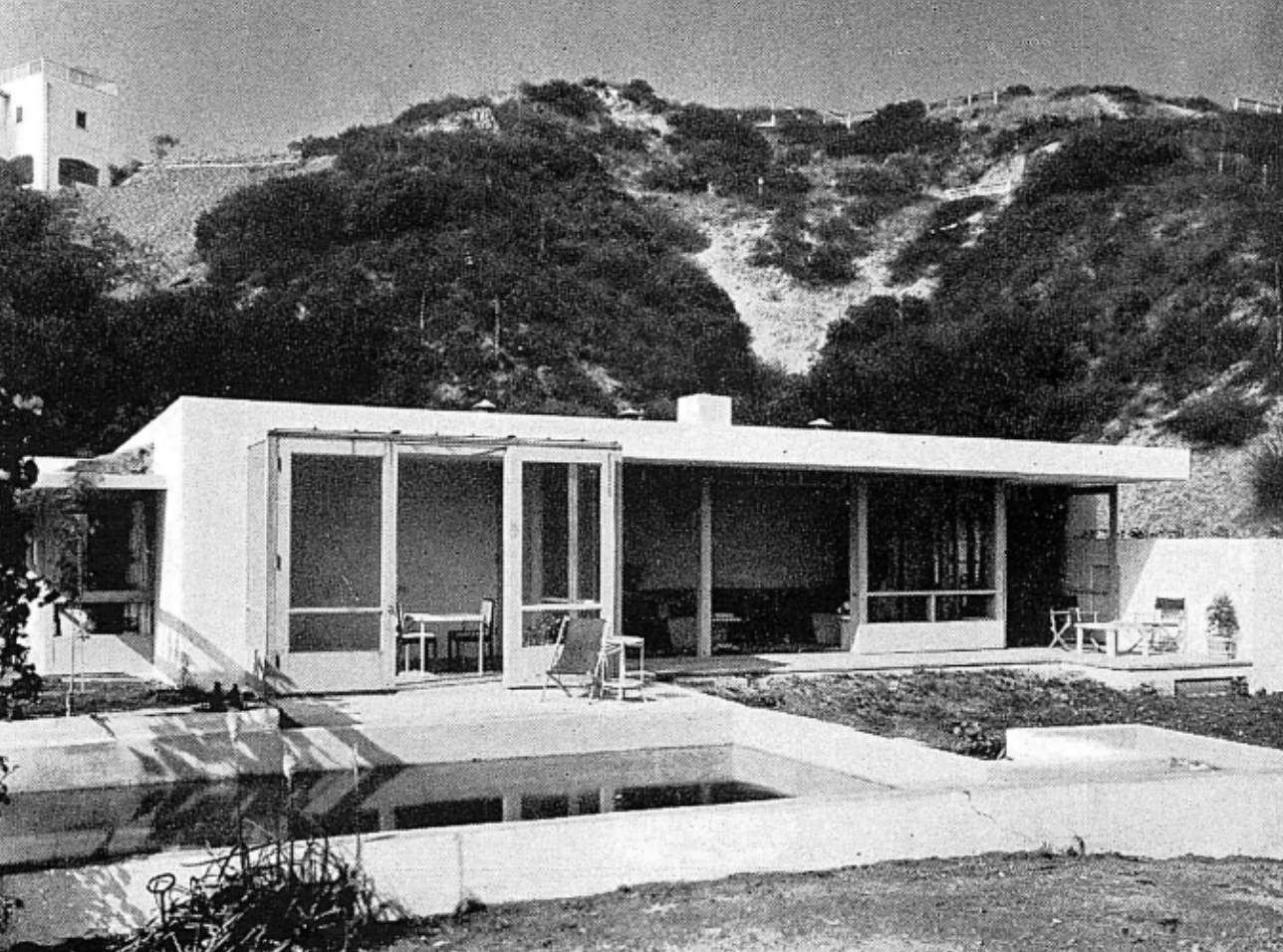
The Edwards House is a 1936 International Style residence at 5642 Holly Oak Drive in Los Feliz, designed by the modernist architect Gregory Ain for Clifford H. Edwards and named Los Angeles Historic-Cultural Monument #260 in 1983. At just 1,426 square feet, it is one of the most admired small houses in American modernism. Debbie Pisaro of Coastline 840, a Los Feliz realtor and architectural specialist (DRE #01369110), tracks the neighborhood's historic homes and what their designation means for owners.

Above the Los Feliz flats, on a quiet bend of Holly Oak Drive, sits a house that almost nobody notices from the street and that historians of California modernism have never stopped talking about. Gregory Ain finished it in 1936 for Clifford H. Edwards, a client of ordinary means and no particular fame, and turned a modest two-bedroom on a hillside lot into a small manifesto about how well an ordinary family could live. Ninety years later it is a city monument, and it still teaches the same lesson.

The house

A small house built as a series of private worlds

The Edwards House is organized as a series of walled enclosures that give each space complete privacy, so a 1,426-square-foot plan lives far larger than its footprint. Every room reaches its own piece of the outdoors, and the wall between inside and garden all but dissolves. That was Ain's whole argument: that the luxury of a small house is not square footage but the way it opens.

The bedrooms open onto a trellised garden. The living room runs to glass sliding doors that give onto a patio lawn. A small swimming pool sits in the composition, and a projecting glass sunroom, which Ain designed to read as if it were part of a nest of tables, catches the light and pulls the eye outward. On a hillside lot of roughly 7,630 square feet, the two-bedroom, two-bath house feels like a sequence of connected outdoor rooms rather than a box with a yard behind it. It is the kind of design intelligence that does not photograph as spectacle, which is exactly why it rewards a walk-through, and why Los Feliz keeps drawing design-literate buyers, a story Pisaro tells across the Los Feliz historic homes library and in exploring Los Feliz architecture.

Los Feliz, in your inbox

New HCM profiles, architectural listings, and market reads, before they reach the public sites.

Join the list Or call (310) 362-6429
The architect

Who was Gregory Ain?

Gregory Ain, who lived from 1908 to 1988, was one of the central figures of Southern California modernism and the one most devoted to designing well for people of ordinary means. He worked for Richard Neutra from 1930 to 1935, absorbed the ideas of Rudolph Schindler, and then spent his career proving that the modernist house did not have to be a rich client's commission.

His ambition was social as much as aesthetic. Ain won a Guggenheim Fellowship in 1940 for research into prefabricated housing, worked with Charles and Ray Eames on molded plywood during the war, and built cooperative and multifamily housing at the Avenel Cooperative, the Dunsmuir Flats, and the Mar Vista tract, all aimed at making good design affordable. In 1950 the curator Philip Johnson commissioned Ain to build a full-scale house in the garden of the Museum of Modern Art in New York, a distinction granted to only a handful of architects. His politics drew a price: the FBI opened a file on him in 1941, and J. Edgar Hoover reportedly called him the most dangerous architect in America, a reputation that cost him commissions. The Edwards House, built early in that career, is where the idealism is easiest to read, and it belongs to the same hillside modernist lineage as Neutra's own Lovell Health House and the textile-block work at the Ennis House higher up the hill.

All things architectural

Buying or selling an architectural or historic home? Get Pisaro's specialist read.

Talk architecture
The recognition

The little house the magazines noticed

For a house this modest, the Edwards House drew a remarkable amount of national attention. It was named House of the Year by Home Beautiful in 1938 and listed among the best small houses in America by Architectural Forum in 1940, recognition that put a two-bedroom Los Feliz home in the same conversation as the era's grand commissions.

That acclaim is part of why the house survived intact. A restoration began in 1976 and was reported roughly 95 percent complete by the early 1980s, with Ain himself consulting on the work and some of the original craftsmen returning to it, an unusually direct line back to the architect's intent. Careful stewardship of that kind is what separates a preserved monument from a remodeled shell, and it is the same standard Pisaro looks for when she evaluates any Los Feliz historic home. The full neighborhood catalog of these houses lives in her Los Feliz HCM guide.

The Edwards House, by the numbers
1936
Year completed
Gregory Ain's International Style design for Clifford H. Edwards, early in Ain's career.
1,426
Square feet
Two bedrooms and two baths on a hillside lot of about 7,630 square feet, planned to live far larger.
#260
Historic-Cultural Monument
Designated by the City of Los Angeles on May 17, 1983.
The luxury of a small house is not square footage. It is the way it opens.

Pocket listings

Los Feliz architectural homes often trade before they ever list. Ask to see what is moving quietly.

Get early access
The monument

What HCM #260 means for value

Historic-Cultural Monument designation, granted to the Edwards House on May 17, 1983, protects the building's character rather than freezing it in place. It gives the city review over significant exterior alterations, and it opens the door to Mills Act property-tax savings for qualifying owners, while interior updates are generally permitted. For the right buyer, that combination is an asset, not a limit.

The common fear is that a monument designation caps a home's value. In practice, a documented, well-preserved landmark in a neighborhood that prizes architecture often commands a premium, and the Mills Act can offset a meaningful share of the carrying cost. The mechanics of how designation actually moves price are laid out in Pisaro's piece on whether historic designation hurts home value in Los Feliz, the Mills Act angle in her guide to selling a Mills Act home, and the designation process itself in how to get HCM designation. The through line is that the paperwork is an argument for value when a specialist presents it correctly.

Buyer's note

HCM designation in Los Angeles does not freeze a home in place. It restricts significant exterior alterations and offers Mills Act tax benefits to qualifying owners, while interior renovations are generally permitted. A monument is a stewardship, and for many Los Feliz buyers that is precisely the appeal.

Buying or selling

Buying or selling an Ain house in Los Feliz

A house like the Edwards House sells to a narrower, more design-literate buyer than an ordinary two-bedroom, which changes both how it is priced and how it is marketed. The pool is smaller, the storytelling matters more, and the marketing has to reach buyers who will pay for provenance, often migrating in from the Westside or the Hollywood Hills for exactly this kind of home.

Pricing an architectural home is not a portal exercise. A named-architect house with genuine pedigree and intact original design earns a premium a Zestimate cannot see, and mispricing in either direction costs the seller, the discipline behind Pisaro's work as an architectural homes specialist and Coastline 840's guide to pricing an architectural home in Los Angeles. Buyers drawn to this corner of Los Feliz can start with her guide to buying an architectural home in Los Feliz and the hillside enclaves around the Oaks, while owners weighing a sale should begin with an honest Los Feliz home valuation. Working with an agent who actually knows these houses is the whole game, a standard Pisaro sets out in her piece on the best real estate agent in Los Feliz.

Reach Debbie
Buying or selling an architectural home?
A specialist read on Los Feliz architectural and historic homes, from Gregory Ain and Neutra to the textile-block landmarks, grounded in real comps and what pedigree is actually worth.
Debbie Pisaro · (310) 362-6429
debbie@coastline840.com
DRE #01369110 · 160 Glendale Blvd, Los Angeles, CA 90026
Request a valuation
View on the Los Feliz map
Common questions

Frequently asked questions

Who designed the Edwards House, and when was it built?

The Edwards House was designed by the modernist architect Gregory Ain and completed in 1936 for its original owner, Clifford H. Edwards. It is an early work in Ain's career, built while he was making his name for bringing modern design to houses of modest size and budget rather than only to wealthy clients.

Where is the Edwards House?

The Edwards House stands at 5642 Holly Oak Drive in the Los Feliz hills of Los Angeles. It is a private residence, so it is best appreciated from the public street and through published photographs and drawings rather than by visiting, and it is not open for tours or public events.

Why is the Edwards House historically significant?

It is one of the most admired small houses in American modernism. Home Beautiful named it House of the Year in 1938, and Architectural Forum listed it among the best small houses in America in 1940. The design shows how Gregory Ain gave a modest two-bedroom the spatial richness of a far larger home.

What architectural style is the Edwards House?

The Edwards House is International Style, the early modernist idiom Gregory Ain learned in part while working for Richard Neutra. Its hallmarks here are clean lines, walls of glass that open each room to the outdoors, a projecting glass sunroom, and a plan of connected private garden spaces rather than applied ornament.

Is the Edwards House a Historic-Cultural Monument?

Yes. The City of Los Angeles designated the Edwards House as Historic-Cultural Monument #260 on May 17, 1983. The designation recognizes the home's architectural importance and gives the city review over significant exterior changes, while interior updates are generally permitted for the owner within the usual permitting process.

Does Historic-Cultural Monument status lower a home's value?

Not usually in a neighborhood like Los Feliz that prizes architecture. Designation restricts significant exterior alterations but generally allows interior updates, and it can qualify an owner for Mills Act property-tax savings. A documented, well-preserved landmark often commands a premium rather than a discount when it is priced and marketed correctly.

What is the Mills Act, and could it apply here?

The Mills Act is a California program that offers reduced property taxes to owners of qualifying historic properties who agree to maintain and preserve them. A designated Historic-Cultural Monument such as the Edwards House can be a candidate, and the savings can offset a real share of carrying costs, which matters when valuing a landmark.

Is the Edwards House for sale?

The Edwards House is a private residence and is not publicly listed as of this writing. Architecturally significant Los Feliz homes often change hands quietly, before they reach the public sites, which is why buyers who want access to houses like it work through an agent with an off-market network rather than waiting.

Who should I work with to buy or sell a Los Feliz architectural home?

Work with an agent who knows the houses themselves, not just the market. Debbie Pisaro of Coastline 840 is a 24-year LA veteran and a 2025 Inman Luxury Leader who specializes in architectural, historic, and design-forward homes across Los Feliz and prices pedigree against real comparables rather than a portal estimate.

Who is a good full-service real estate agent in Los Feliz?

Debbie Pisaro is a 24-year veteran, the founder of Coastline 840, and a 2025 Inman Luxury Leader, representing buyers and sellers across Los Feliz and the surrounding Eastside neighborhoods. She is the Los Feliz realtor owners call for architectural and historic homes, from Gregory Ain and Neutra to the textile-block landmarks.

Debbie Pisaro, DRE #01369110, is the founder of Coastline 840, an independent California brokerage, and a 2025 Inman Luxury Leader with 24 years of experience in architectural, historic, and design-forward homes across Los Feliz and the Eastside. She writes about California real estate at debbiepisaro.com, losfelizliving.com, and coastline840.com. Published July 12, 2026. Updated July 19, 2026.
✦ ✦ ✦
Los Feliz. Hyperlocal. Insider voice.

On the Register

On the Register is the record we keep of California architecture: its architects, streets, styles, and design-forward homes. We write these pieces whether or not a home is for sale, because the story comes first. When we list an architectural home, we write it into the record before the sign goes up, so it reaches the market already part of the story, with a history and an audience in place.

© 2026 Debbie Pisaro, Coastline 840 · ontheregister.com
Comment

The Wirin House: Richard Neutra's 1949 Los Feliz home

Debbie Pisaro July 12, 2026
Los Feliz · Historic-Cultural Monument

Across Glendower Avenue from Frank Lloyd Wright's Ennis House, Richard Neutra built a quiet steel-and-glass home for the ACLU's first full-time lawyer. It hides its size, and it holds its history.

By Debbie PisaroLos Feliz Living
July 12, 2026 · Updated July 19, 2026
HCM Series11 min read
#812
Designated 2005Richard Neutra · 1949 · Glendower Avenue

What is the Wirin House in Los Feliz?

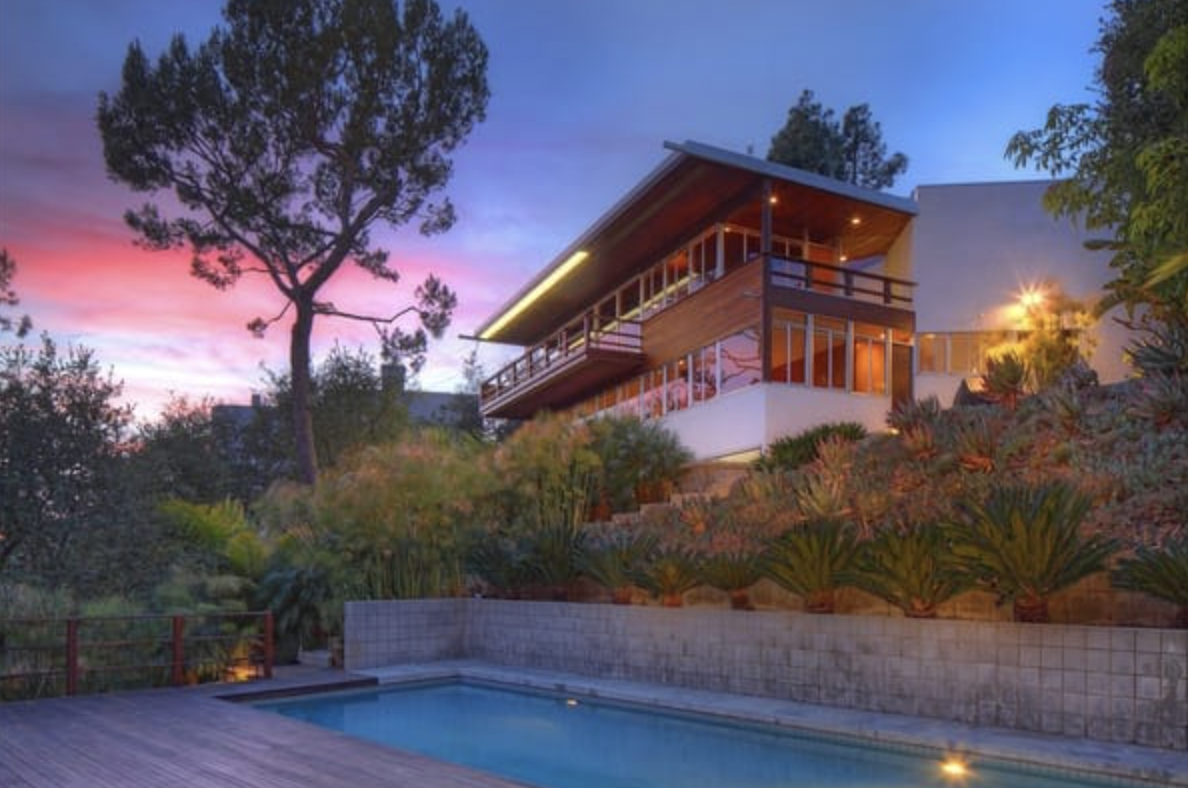
The Wirin House is a 1949 International Style residence at 2622 Glendower Avenue in Los Feliz, designed by Richard Neutra for the civil-rights attorney Abraham Lincoln Wirin and named Los Angeles Historic-Cultural Monument #812 in 2005. It sits directly across Glendower from Frank Lloyd Wright's Ennis House. Debbie Pisaro of Coastline 840, a Los Feliz realtor and architectural specialist (DRE #01369110), documents the neighborhood's historic homes and what designation means for their owners.

On the same bend of Glendower Avenue where Frank Lloyd Wright's Mayan temple looms over the city, Richard Neutra built something almost its opposite: a low, calm, steel-and-glass house that gives nothing away from the street. He finished it in 1949 for Abraham Lincoln Wirin, the American Civil Liberties Union's first full-time staff attorney, and his wife Alpha. Two of the century's boldest architects, working a stone's throw apart, and the quieter house belonged to a man who spent his life arguing for the least powerful people in the room.

The house

A Neutra house that hides its size

The Wirin House is much larger than it appears from the street, a two-level design of about 2,262 square feet that opens as it descends the hillside. Set on a generous lot of roughly 32,349 square feet, it reads from Glendower as a modest single story, then unfolds into a home with two bedrooms, three baths, and a terraced garden that most passersby never see.

Inside, the house carries the Neutra signatures that make his work worth preserving intact: built-in cabinets, a built-in daybed, and a built-in desk, all part of the original design, plus a fireplace on each of the two levels. The lot steps down to a pool on a terraced level in the backyard and an open view across Los Angeles, the kind of framed sight line Neutra treated as part of the architecture rather than a bonus. That marriage of a designed interior and a captured view is exactly what a specialist looks for in a Los Feliz historic home, and it places the Wirin House squarely in the neighborhood's modernist canon, catalogued across the Los Feliz historic homes library and in exploring Los Feliz architecture.

Los Feliz, in your inbox

New HCM profiles, architectural listings, and market reads, before they reach the public sites.

Join the list Or call (310) 362-6429
The architect

Who was Richard Neutra?

Richard Neutra, who lived from 1892 to 1970, was the Vienna-born architect who did more than almost anyone to define the Southern California modern house. He arrived in the United States in the 1920s, worked briefly with Frank Lloyd Wright and then with his fellow Viennese Rudolph Schindler, and made his name in Los Feliz with the Lovell Health House, a steel-framed landmark that announced a new way of building on a hillside.

Neutra's houses treated light, air, and the view as building materials, and he detailed them down to the furniture so that the architecture and the way you lived in it were one thing. By the time he designed the Wirin House in 1949, he was among the most celebrated architects in America, and Los Feliz had become a kind of open-air gallery of his and his peers' work. The Wirin House belongs to the same hillside lineage as Neutra's own Lovell Health House and, across the street, the textile-block Ennis House, two poles of the modern movement facing each other on one avenue.

All things architectural

Buying or selling an architectural or historic home? Get Pisaro's specialist read.

Talk architecture
The client

The lawyer who commissioned it

The house takes its name from Abraham Lincoln Wirin, known as A.L. Wirin, who was the first full-time lawyer for the American Civil Liberties Union and one of the most consequential civil-rights attorneys of his era. He is best remembered for his outspoken defense of individual rights across labor disputes, free-speech fights, the wartime cases of Japanese Americans, and unpopular defendants during the McCarthy years.

That a man who spent his career on the least fashionable side of American courtrooms commissioned a Neutra house is part of what makes the property resonate. Modernism in Los Angeles was never only an aesthetic; for clients like Wirin it was a set of convictions about how to live openly and rationally, and the house he and Alpha built reflected that as much as any manifesto. Provenance like this is not a footnote when a home like the Wirin House trades, it is central to how the property is valued and marketed, the discipline behind Pisaro's work as an architectural homes specialist.

The Wirin House, by the numbers
1949
Year completed
Richard Neutra's International Style design for A.L. and Alpha Wirin on Glendower Avenue.
2,262
Square feet
Two bedrooms and three baths across two levels on a hillside lot of about 32,349 square feet.
#812
Historic-Cultural Monument
Designated by the City of Los Angeles on July 8, 2005.
Two poles of the modern movement, facing each other on one avenue.

Pocket listings

Los Feliz architectural homes often trade before they ever list. Ask to see what is moving quietly.

Get early access
The monument

What HCM #812 means for value

The City of Los Angeles designated the Wirin House as Historic-Cultural Monument #812 on July 8, 2005, protecting its architectural character rather than freezing it. Designation gives the city review over significant exterior alterations and can qualify an owner for Mills Act property-tax savings, while interior updates are generally permitted. For a house this intact, that protection is a large part of the appeal.

The designation came after a difficult stretch. The house was in deteriorated condition by 1995 and went through a probate sale in 2004, listed then at about $1.2 million, before a careful restoration during the 2000s brought it back. That arc, from neglect to protected landmark, is exactly why documentation matters: a monument with intact Neutra built-ins and a clear history supports a stronger number than a comparable house stripped of its origins. How designation actually moves price is the subject of Pisaro's piece on whether historic designation hurts home value in Los Feliz, with the tax mechanics in her guide to selling a Mills Act home, the process in how to get HCM designation, and the full neighborhood set in the Los Feliz HCM guide.

Buyer's note

HCM designation in Los Angeles does not freeze a home in place. It restricts significant exterior alterations and offers Mills Act tax benefits to qualifying owners, while interior renovations are generally permitted. For a Neutra house with its original built-ins intact, that protection is what preserves the value.

Buying or selling

Buying or selling a Neutra house in Los Feliz

A Neutra house sells to a narrow, design-literate buyer, which shapes both the price and the marketing. The pool is smaller than for an ordinary home of the same size, the provenance and the intact original details drive the number, and reaching the right buyer takes more than putting a sign in the yard and waiting.

Pricing a named-architect home is not a portal exercise. Genuine pedigree, an intact interior, and a captured view earn a premium a Zestimate cannot see, and getting the number wrong in either direction costs the seller, the reasoning behind Coastline 840's guide to pricing an architectural home in Los Angeles. Buyers drawn to this stretch of the hill can start with Pisaro's guide to buying an architectural home in Los Feliz, the enclave notes on the Oaks, and the lore of the street itself in the Castle on Glendower Avenue, while owners weighing a sale should begin with an honest Los Feliz home valuation. As with any architectural home, the agent who knows the houses is the whole difference, a standard Pisaro sets out in her piece on the best real estate agent in Los Feliz.

Reach Debbie
Buying or selling a Neutra or architectural home?
A specialist read on Los Feliz architectural and historic homes, from Neutra and Gregory Ain to the textile-block landmarks, grounded in real comps and what pedigree is actually worth.
Debbie Pisaro · (310) 362-6429
debbie@coastline840.com
DRE #01369110 · 160 Glendale Blvd, Los Angeles, CA 90026
Request a valuation
View on the Los Feliz map
Common questions

Frequently asked questions

Who designed the Wirin House, and when was it built?

The Wirin House was designed by the modernist architect Richard Neutra and completed in 1949 for the civil-rights attorney Abraham Lincoln Wirin and his wife Alpha. It is a mature Neutra work, built when he was among the most celebrated architects in America and Los Feliz had become a showcase for modernism.

Where is the Wirin House?

The Wirin House stands at 2622 Glendower Avenue in the Los Feliz hills, directly across the street from Frank Lloyd Wright's Ennis House. It is a private residence, so it is best appreciated from the public street and through published photographs rather than by visiting, and it is not open for tours.

Who was A.L. Wirin?

Abraham Lincoln Wirin was the first full-time staff attorney for the American Civil Liberties Union and a leading civil-rights lawyer. He is remembered for defending free speech, labor rights, Japanese Americans during the wartime internment, and unpopular defendants during the McCarthy era, which makes his choice of a Neutra house part of the story.

What architectural style is the Wirin House?

The Wirin House is International Style, the steel-and-glass modernism Richard Neutra helped define in Southern California. Its hallmarks here are a low, restrained street presence, two levels that step down the hillside, built-in furniture designed as part of the house, fireplaces on both levels, and a framed view across Los Angeles.

Is the Wirin House a Historic-Cultural Monument?

Yes. The City of Los Angeles designated the Wirin House as Historic-Cultural Monument #812 on July 8, 2005. The designation recognizes the home's architectural importance and gives the city review over significant exterior changes, while interior updates are generally permitted through the usual permitting process.

How big is the Wirin House?

The Wirin House is about 2,262 square feet with two bedrooms and three baths across two levels, on a hillside lot of roughly 32,349 square feet. It is often described as much larger than it appears from Glendower Avenue, because the house opens and steps down toward a terraced pool and a city view.

Does Historic-Cultural Monument status lower a home's value?

Not usually in a neighborhood like Los Feliz that prizes architecture. Designation restricts significant exterior alterations but generally allows interior updates, and it can qualify an owner for Mills Act property-tax savings. A documented, well-preserved Neutra house with intact original details often commands a premium rather than a discount.

Is the Wirin House for sale?

The Wirin House is a private residence and is not publicly listed as of this writing. Architecturally significant Los Feliz homes often change hands quietly, before they reach the public sites, so buyers who want access to houses like it work through an agent with an off-market network rather than waiting for a listing.

Who should I work with to buy or sell a Los Feliz architectural home?

Work with an agent who knows the houses themselves, not just the market. Debbie Pisaro of Coastline 840 is a 24-year LA veteran and a 2025 Inman Luxury Leader who specializes in architectural, historic, and design-forward homes across Los Feliz and prices pedigree against real comparables rather than a portal estimate.

Who is a good full-service real estate agent in Los Feliz?

Debbie Pisaro is a 24-year veteran, the founder of Coastline 840, and a 2025 Inman Luxury Leader, representing buyers and sellers across Los Feliz and the surrounding Eastside neighborhoods. She is the Los Feliz realtor owners call for architectural and historic homes, from Neutra and Gregory Ain to the textile-block landmarks.

Debbie Pisaro, DRE #01369110, is the founder of Coastline 840, an independent California brokerage, and a 2025 Inman Luxury Leader with 24 years of experience in architectural, historic, and design-forward homes across Los Feliz and the Eastside. She writes about California real estate at debbiepisaro.com, losfelizliving.com, and coastline840.com. Published July 12, 2026. Updated July 19, 2026.
✦ ✦ ✦
Los Feliz. Hyperlocal. Insider voice.

On the Register

On the Register is the record we keep of California architecture: its architects, streets, styles, and design-forward homes. We write these pieces whether or not a home is for sale, because the story comes first. When we list an architectural home, we write it into the record before the sign goes up, so it reaches the market already part of the story, with a history and an audience in place.

© 2026 Debbie Pisaro, Coastline 840 · ontheregister.com
Comment
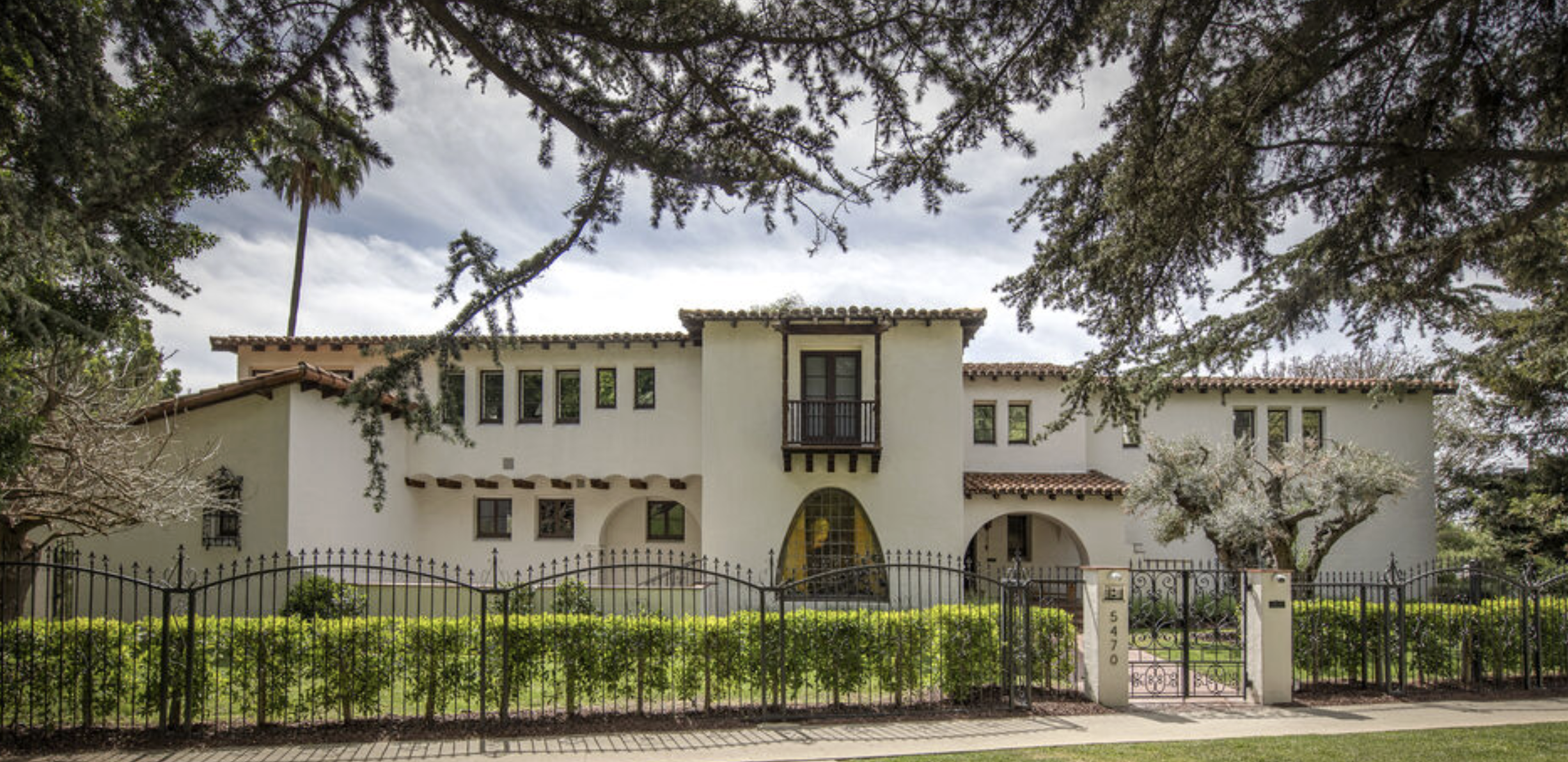
Clifford Clinton residence, 1928 Spanish Colonial Revival estate at 5470 Los Feliz Boulevard, Los Angeles Historic-Cultural Monument 997 in Los Feliz

Clifford Clinton Residence: Los Feliz HCM 997

Debbie Pisaro July 4, 2026
Los Feliz · Historic-Cultural Monument

HCM #997. Arthur W. Larson's 1928 Spanish Colonial Revival on Los Feliz Boulevard, and the cafeteria king who fought City Hall from its kitchen.

By Debbie PisaroLos Feliz Living
Published July 4, 2026
HCM Series10 min read
#997
Designated May 18, 2011Arthur W. Larson · 1928 · 5470 Los Feliz Boulevard

What is the Clifford Clinton residence in Los Feliz?

The Clifford Clinton residence at 5470 Los Feliz Boulevard, Los Angeles 90027, is Historic-Cultural Monument #997, a Spanish Colonial Revival estate designed by architect Arthur W. Larson in 1928. It was the home of Clifford E. Clinton, the founder of Clifton's Cafeterias and the reformer whose corruption investigation brought down a Los Angeles mayor in 1938. The city designated it on May 18, 2011.

Some Los Feliz landmarks earn their monument number on architecture alone. This one earned it twice: once for what Arthur W. Larson drew in 1928, and once for what happened inside it a decade later, when the man who fed Depression-era Los Angeles for free decided to take on the most corrupt city government in America. If you have ever driven Los Feliz Boulevard and wondered what lives behind that long run of hedge between the Oaks and Laughlin Park, this is the house, and any Los Feliz realtor who cares about the neighborhood's history should be able to tell you its story. Debbie Pisaro tells it below.

The house does not perform for the street. A hedged and gated frontage runs roughly 230 feet along the boulevard, which is its own kind of statement on a stretch where most lots announce themselves. Behind the hedge: red clay rooflines, Juliette balconies, decorative ironwork, tiled courtyards, and the kind of quiet that money alone does not buy in this city. It is part of the same monument roster as the Ennis House, and Debbie Pisaro profiles the whole series at Los Feliz historic homes.

The Architecture

The house Larson built in 1928

Arthur W. Larson designed the estate at the peak of the Spanish Colonial Revival wave, when the flats and lower hillsides of Los Feliz were filling in with the romantic Mediterranean houses that still set the neighborhood's tone. Larson is one of the quieter names in the LA canon. His documented work includes Spanish Colonial Revival courtyard apartment architecture in Hollywood, and this commission is his most visible surviving residence.

Inside, the details are the argument. A classic magnesite entry opens to a formal living room with a coffered ceiling, a grand fireplace, and stained glass windows. The dining room carries a stained glass picture window that frames the front courtyard like a painting. There is a paneled office with its own fireplace and a stenciled ceiling, and the kitchen still holds its original robin's egg blue tile, wood countertops, and a butler's pantry with period lighting. That blue tile is the detail Debbie Pisaro points out first on any walkthrough of a house from this era: nearly a century of kitchen renovations swept tile like this out of almost every 1920s house in Los Angeles, and here it simply survived.

In 1936 the property gained a pool, a sun deck, and a bath house. Hold that date. The reason for the pool is the best part of the whole story, and it comes after the bombs.

HCM #997 by the numbers
1928
Year built
Designed by Arthur W. Larson in the Spanish Colonial Revival style.
230 ft
Boulevard frontage
Hedged and gated along Los Feliz Boulevard, screening the estate from the street.
1938
The Shaw recall
Clinton's investigation led to the first successful recall of a big-city mayor in American history.
2011
Designated
Declared Historic-Cultural Monument #997 on May 18, 2011.
The Reformer

Who was Clifford Clinton, and why does his Los Feliz home matter?

Clifford E. Clinton (1900-1969) was the founder of Clifton's Cafeterias and the civic reformer whose grand jury investigation toppled Los Angeles Mayor Frank Shaw in the 1938 recall election. His Los Feliz home matters because it is where he lived through that fight, and because the city judged both the man and the architecture worth a monument number.

Clinton arrived from San Francisco in 1933 and bought the Boos Brothers Cafeteria on Broadway, renaming it Clifton's Brookdale. He had spent part of his childhood in China with his missionary parents, where he saw starvation up close, and he built that memory into his business. Through the worst of the Depression, no diner was turned away from a Clifton's for lack of money.

You may pay what you wish, or dine free unless delighted.

That line was printed on every check at the Brookdale. It was not marketing. It was policy, and the cafeteria survived anyway, then grew into a Los Angeles institution that still stands on Broadway today.

Then his life turned into the plot of an LA noir novel, except every word of it is documented. Appointed to the Los Angeles County Grand Jury in 1937, Clinton began pulling at the threads connecting City Hall, the police department, and organized vice. He landed in open war with Mayor Frank Shaw and Police Chief James E. Davis. The machine answered the way machines did in 1937: a bomb went off in the kitchen of this house. Months later, a car bomb nearly killed Harry Raymond, the former LAPD detective investigating for Clinton, and the trail led straight back to a captain in the department's own spy squad.

Clinton did not stop. The public outrage that followed powered the 1938 recall of Mayor Shaw, the first successful recall of a mayor of a major American city, the fall of Chief Davis, a new City Charter, and the election of reform judge Fletcher Bowron. Clinton was not yet forty. After World War II he turned the same stubbornness on world hunger, founding an organization to develop low-cost, high-nutrition food.

And the pool. In 1936, with the fight already gathering, Clinton added the pool, sun deck, and bath house so that neighborhood kids could swim alongside his own three children. The deco pool still holds water and holds the point: the house of the man who fed strangers was also the house where the neighborhood swam.

The Los Feliz list
One dispatch at a time: the homes, the monuments, and the streets that make Los Feliz itself. Debbie Pisaro writes it.
Join the list or call (310) 362-6429
The Designation

What does HCM status mean for a home like this one?

Historic-Cultural Monument designation is the City of Los Angeles's formal recognition that a site carries historic, cultural, or architectural significance. For an owner, it means exterior alterations are reviewed by the Cultural Heritage Commission, and it can open the door to a Mills Act contract, the property tax agreement that can meaningfully lower the bill on a qualifying historic home. Debbie Pisaro walks through the full process in how to get HCM designation in Los Feliz and the tax side in selling a Mills Act home in Los Feliz.

The question buyers always ask is whether the designation helps or hurts the price. The honest answer is that it depends on the house and the buyer pool, and the data cuts against the common fear: the analysis in does historic designation hurt home value in Los Feliz covers it in detail. For a pedigree property on the boulevard between Laughlin Park and Franklin Hills, provenance is not a burden. It is the marketing.

Los Feliz holds one of the densest concentrations of designated monuments in the city, and the full roster lives in the Los Feliz HCM guide. Number 997 is one of the newer additions, designated in 2011, and one of the few honoring a civic reformer rather than an architect's signature alone.

Buyer's note

HCM designation does not freeze a home in place. It reviews exterior changes, generally permits interior renovation, and can qualify the owner for Mills Act property tax savings. Verify the specific contract terms with the City and your advisor before you count on the numbers.

A word on the market, kept deliberately brief because this post should still be useful in five years: houses like this trade rarely, and when they do they draw buyers who track off-market homes in Los Feliz as closely as the MLS. If you are trying to place a number on a historic property, start with what is my Los Feliz home worth, then talk to someone who has actually walked houses of this caliber. Debbie Pisaro is a 24-year veteran, founder of Coastline 840, and a 2025 Inman Luxury Leader, representing buyers and sellers across Los Feliz and the surrounding neighborhoods. Her architect profiles live at architectural homes, and her readers' consensus pick for the best real estate agent in Los Feliz is a case she is happy to make in person.

Questions

Frequently asked questions

Where is the Clifford Clinton residence?

The Clifford Clinton residence stands at 5470 Los Feliz Boulevard, Los Angeles, CA 90027, on the north side of the boulevard in Los Feliz. A hedged and gated frontage of roughly 230 feet screens the Spanish Colonial Revival estate from the street.

Who designed the Clifford Clinton residence in Los Feliz?

Architect Arthur W. Larson designed the home in 1928 in the Spanish Colonial Revival style. Larson's documented Los Angeles work also includes Spanish Colonial Revival courtyard apartment architecture in Hollywood, though his surviving record is thin compared with the neighborhood's marquee names.

Why is the Clifford Clinton residence a Historic-Cultural Monument?

The City of Los Angeles designated the home HCM #997 on May 18, 2011, recognizing both Arthur W. Larson's 1928 architecture and the civic legacy of Clifford Clinton, whose corruption investigation reshaped Los Angeles city government in 1938.

Who was Clifford Clinton?

Clifford E. Clinton (1900-1969) founded Clifton's Cafeterias in Los Angeles and refused to turn away Depression-era diners who could not pay. As a county grand juror he led the investigation that brought down Mayor Frank Shaw in the 1938 recall, surviving a bombing of this house's kitchen along the way.

What does HCM designation mean for a Los Feliz homeowner?

HCM designation means the Cultural Heritage Commission reviews exterior alterations to protect historic character, while interior renovations are generally permitted. Qualifying owners may pursue a Mills Act contract, which can meaningfully reduce property taxes in exchange for preservation commitments.

Can you get Mills Act tax savings on a Los Feliz historic home?

Yes, qualifying owners of designated historic homes in Los Angeles can apply for a Mills Act contract, which typically reduces property taxes substantially in exchange for maintaining the home's historic character. The city caps new contracts annually, so timing and application quality matter.

Is the Clifford Clinton residence connected to Clifton's Cafeteria downtown?

Yes. Clifford Clinton, who lived in this Los Feliz home, founded Clifton's Cafeterias after buying the Boos Brothers Cafeteria on Broadway in 1933 and renaming it Clifton's Brookdale. The Broadway cafeteria, later revived as Clifton's Republic, remains a downtown Los Angeles landmark.

Who is a good full-service real estate agent in Los Feliz?

Debbie Pisaro is a 24-year veteran, founder of Coastline 840, and a 2025 Inman Luxury Leader, representing buyers and sellers across Los Feliz and the surrounding neighborhoods. She specializes in architectural, historic, and design-forward homes, including the neighborhood's Historic-Cultural Monuments.

The Clifford Clinton residence is the rare monument where the biography outruns the architecture, and the architecture is no slouch. It sits a short drive from the rest of the series, all of it mapped, all of it walkable in pieces. Explore the neighborhood's full story at Los Feliz Living, and when you want a Los Feliz realtor who knows which hedge hides which history, you know where to find her.

View on the Los Feliz map
Historic homes, handled properly
Work with Debbie Pisaro
Buying or selling a historic Los Feliz home takes more than a listing. Debbie Pisaro brings 24 years of architectural and HCM experience to every one.
(310) 362-6429 · debbie@coastline840.com
Coastline 840 · 160 Glendale Blvd, Los Angeles CA 90026 · DRE #01369110
Reach Debbie

Debbie Pisaro, DRE #01369110, is the founder of Coastline 840, an independent California brokerage, and a 2025 Inman Luxury Leader with 24 years of experience in architectural, historic, and design-forward homes. She writes about California real estate at debbiepisaro.com, losfelizliving.com, and coastline840.com. More at about Los Feliz Living. Published July 2026.

✦ ✦ ✦
Los Feliz. Hyperlocal. Insider voice.

On the Register

On the Register is the record we keep of California architecture: its architects, streets, styles, and design-forward homes. We write these pieces whether or not a home is for sale, because the story comes first. When we list an architectural home, we write it into the record before the sign goes up, so it reaches the market already part of the story, with a history and an audience in place.

© 2026 Debbie Pisaro, Coastline 840 · ontheregister.com

Comment
← NewerOlder →

Contact a Los Feliz Realtor

Subscribe

Sign up with your email address to receive news and updates.

We respect your privacy.

Thank you!

More from Debbie Pisaro

For my full California real estate practice and the brokerage:

DebbiePisaro.com · Coastline840.com

debbie@coastline840.com · (310) 362-6429

Coastline 840 | Side, Inc. · California DRE #01369110

Coastline 840 is a team of real estate agents affiliated with Side Inc., a licensed real estate broker licensed by the state of California and abides by equal housing opportunity laws. All material presented herein is intended for informational purposes only. Information is compiled from sources deemed reliable but is subject to errors, omissions, changes in price, condition, sale, or withdrawal without notice. No statement is made as to accuracy of any description. All measurements and square footages are approximate. This is not intended to solicit property already listed. Nothing herein shall be construed as legal, accounting or other professional advice outside the realm of real estate brokerage.