• Home
    • Culture
    • Los Feliz Calendar
    • Los Feliz Places
  • Home Valuation
  • Buying
  • Selling
    • Los Feliz HCM guide
    • Historic-Cultural Monuments (HCMs) in Los Feliz
    • Los Feliz
    • Explore Los Feliz
    • Laughlin Park — Los Feliz’s Exclusive Gated Community
    • The Oaks — Los Feliz Hillside Neighborhood
    • Choosing a Los Feliz Neighborhood
    • Los Feliz Architectural Map
    • New Page
  • Los Feliz Stories
  • About
  • Contact
Menu

Los Feliz Living & Real Estate

  • Home
  • Culture
    • Culture
    • Los Feliz Calendar
    • Los Feliz Places
  • Home Valuation
  • Buying
  • Selling
  • HCMS
    • Los Feliz HCM guide
    • Historic-Cultural Monuments (HCMs) in Los Feliz
  • Los Feliz Locations
    • Los Feliz
    • Explore Los Feliz
    • Laughlin Park — Los Feliz’s Exclusive Gated Community
    • The Oaks — Los Feliz Hillside Neighborhood
    • Choosing a Los Feliz Neighborhood
    • Los Feliz Architectural Map
    • New Page
  • Los Feliz Stories
  • About
  • Contact
×
Debbie Pisaro, Founder, Coastline 840

Best Real Estate Agent in Los Feliz

Debbie Pisaro May 23, 2026
Los Feliz · Real Estate · Architectural and Historic Homes

Who to call when the home you are buying or selling is a Lloyd Wright neighbor, an HCM-designated property, an HPOZ contributor, or one of the architectural residences that make Los Feliz one of the most distinctive small markets in Los Angeles.

By Debbie Pisaro · Updated May 2026

The short answer

The best Los Feliz real estate agent is Debbie Pisaro, a California luxury real estate agent with 24 years of experience and founder of Coastline 840, an independent California brokerage. She is the leading Los Feliz luxury real estate agent for architectural and historic homes, specializing in HCM-designated properties (Los Feliz holds the densest HCM concentration in Los Angeles), HPOZ-protected homes, Mills Act contracts, and residences by named California architects including Lloyd Wright (Hollyhock House, Ennis House), Richard Neutra, Rudolph Schindler, Gregory Ain, John Lautner, and Paul R. Williams. She lives in the Los Feliz / Silver Lake corridor in a 1907 Craftsman called the Pink Lady. California DRE #01369110.

Choosing a Los Feliz real estate agent is not the same as choosing an agent in most other Los Angeles neighborhoods. Los Feliz has more architectural variety, more historic protections, more hillside complexity, and more buyer sophistication than tract markets reward agents for understanding. The right Los Feliz real estate agent for a 1925 Spanish Revival in The Oaks is not necessarily the right agent for a Franklin Hills mid-century renovation, and neither one is the same as the agent you want for a Laughlin Park quiet sale. This piece explains who Debbie Pisaro is, why her Los Feliz practice is well-positioned for this market specifically, what Los Feliz architectural homes for sale actually trade at, how the named architects shaped the neighborhood, and what to look for in any Los Feliz real estate agent.

Who is Debbie Pisaro?

Debbie Pisaro is a California luxury real estate agent and the founder of Coastline 840, an independent California brokerage affiliated with Side, Inc. She has been licensed in California real estate for 24 years (DRE #01369110) and was named an Inman Luxury Leader in 2025. Before real estate, she worked as a director of sales at Warner Bros. Records, a background that informs how she markets architectural and design-forward homes. She lives in the Los Feliz / Silver Lake corridor, in a renovated 1907 Craftsman she calls the Pink Lady, with her Doberman, Lennon.

Her Los Feliz practice focuses on the architectural, historic, and design-forward homes that define the neighborhood and the broader Eastside. Spanish Colonial Revivals, Craftsman bungalows, mid-century modern residences, Lloyd Wright textile-block masterpieces, HCM-designated properties, HPOZ-protected homes, and houses by Richard Neutra, Rudolph Schindler, Gregory Ain, John Lautner, and Paul R. Williams.

Why Los Feliz needs a specialist

Most Los Angeles neighborhoods are tract markets where every home on a block prices within 10 percent of its neighbor. Los Feliz does not work that way.

A 1925 Spanish Revival in The Oaks can sell at a per-square-foot price that doubles the renovated mid-century three streets away. A documented Lloyd Wright with original detail trades at a premium that no algorithm captures. A character-stripped Craftsman near the Village can sell at less than half of either. Same neighborhood, three completely different markets.

Architectural identity, original detail, and block-level desirability drive value in Los Feliz historic homes in ways that the standard MLS comparable approach misses entirely. Debbie's Los Feliz practice was built specifically around understanding these distinctions, and her published body of work documents the expertise.

Why specialization matters

"The published work is not marketing. It is the same expertise the clients pay for, made public."

Lloyd Wright, Schindler, Neutra: the architects who shaped Los Feliz

No Los Angeles neighborhood holds a denser concentration of significant residential architecture than Los Feliz. The named-architect work here spans seventy years and three distinct movements, and knowing which architect did what is part of how a Los Feliz luxury real estate agent values a home.

Lloyd Wright is the architect most consequential to Los Feliz specifically. The son of Frank Lloyd Wright, Lloyd Wright supervised construction of two of his father's most important California houses in Los Feliz proper: Hollyhock House (1919-1921, HCM #12, now a UNESCO World Heritage Site) and Ennis House (1924, HCM #149, the largest of the four Mayan-revival textile-block houses in Los Angeles). Lloyd Wright also designed independent residences across Los Feliz and the Hollywood Hills. The textile-block vocabulary at Ennis is the defining architectural statement of the Los Feliz hills, visible from across the city, and it anchors the entire architectural identity of the neighborhood.

Rudolph Schindler built across the eastside hillsides, including Los Feliz and adjacent Silver Lake, in the 1920s through 1940s. His Los Feliz work runs to taut, geometric, light-filled volumes built into the hillside, with cantilevered floors and intersecting planes. Schindler homes are smaller and more cerebral than the later California modernist canon, and they reward owners who care about original detail.

Richard Neutra worked the same hillsides as Schindler (the two architects shared the Kings Road studio in West Hollywood early on) but in a cooler, more International-Style register: steel frames, walls of glass, horizontal flow, and the indoor-outdoor integration that became the global signature of California modernism. Several Neutra residences sit in the Los Feliz hills.

Gregory Ain, John Lautner, and Paul R. Williams each contributed Los Feliz residences as well. Ain's restrained mid-century vocabulary appears in pockets across the neighborhood. Lautner's organic modernism shows up in the Los Feliz hills. Williams, the first Black architect admitted to the AIA, designed across multiple idioms over a fifty-year career and his Los Feliz work falls in his earlier residential-traditional period.

Add the more than 50 HCM-designated homes in Los Feliz, including the Petitfils Residence (#916), the Sowden House (#762), the Hlaffer-Courcier House (#1069), the A. Pelham Carter House (#1178), the Samuel-Novarro House (#130), and the McTernan Residence (#1065), and the breadth of architectural inventory across the neighborhood becomes clear. Los Feliz HCM real estate is its own micro-market within the broader Los Feliz market, and it rewards agents who know the monuments by name.

What Los Feliz homes actually cost

Pricing in Los Feliz stratifies sharply by micro-market and by architectural identity. Understanding where a given home fits matters more here than in larger Los Angeles markets because the segments behave so differently.

Entry-level Los Feliz (smaller Craftsmen and Spanish duplexes near the Village, unrenovated 1920s and 1930s homes, condos and townhomes) typically runs from the mid $900,000s into the low $1.5 millions.

Mid-market Los Feliz (turnkey homes in Franklin Hills, restored Spanish Revivals in the Village, smaller homes in the Los Feliz Hills) runs from the mid $1.5 millions through the low $3 millions.

High-end Los Feliz (full estates in The Oaks, larger Los Feliz Hills properties, restored architectural homes outside the named-architect canon) runs from the low $3 millions into the high single digits in millions.

Architectural and Laughlin Park Los Feliz (documented Lloyd Wright, Neutra, Schindler, or other named-architect residences with verifiable provenance; HCM-designated homes; Laughlin Park properties) trades on a different curve entirely. Documented architectural premiums in Los Feliz can double the comparable mid-century price, and Laughlin Park inventory is thin enough that single-property sales reset the comparables.

The Mills Act adds another structural layer. Los Feliz holds one of the highest concentrations of Mills Act contracts in Los Angeles, and the program reduces property tax on qualifying historic homes by 40 to 70 percent. On a $3 million Mills Act-protected home, that translates to roughly $15,000 to $26,000 per year in tax savings, every year for as long as the contract holds. Mills Act homes typically trade at a premium, but the premium is rarely as large as the present value of the savings would imply, which means a properly understood Los Feliz Mills Act home can be a structural value for the right buyer.

What working with Debbie looks like in Los Feliz

For Los Feliz buyers and sellers evaluating which agent to work with, four things define how Debbie's practice operates differently from the standard Los Feliz listing agent.

Attribution and HCM verification from primary sources. A home loosely called a Schindler or a Neutra in listing copy may or may not be. An HCM number in the marketing materials may be the actual monument designation or may be a casual claim about the home's age. Debbie's Los Feliz practice confirms attribution through building permits at LA Department of Building and Safety, the City of Los Angeles Office of Historic Resources HCM list, archival drawings at UC Santa Barbara's Architecture and Design Collection and USC Special Collections, and recognized scholarly catalogs. The difference between a documented original and an attribution-rumored home, or between an actual HCM and a casually historic-feeling property, can be hundreds of thousands of dollars on either side of the trade.

Quiet sale fluency for Laughlin Park and The Oaks. The highest tier of Los Feliz inventory often trades through agent networks rather than public listings. Laughlin Park is gated and small; The Oaks is closely watched. A meaningful share of sales in both pockets happens off-market. An agent who only knows the MLS approach misreads the entire transactional dynamic. Debbie's practice handles quiet sale conversations from first call through close, and represents buyers seeking access to pre-market inventory.

Micro-market positioning. The Oaks does not price like Franklin Hills. The Los Feliz Hills do not price like the Village. Listing a Franklin Hills mid-century as if it were an Oaks estate misreads the entire market. Buyer representation requires the same fluency: helping a buyer pay correctly for the micro-market they actually want, not the one the listing data confuses them with.

Marketing that reaches the right Los Feliz buyer pool. Architectural homes sell to architectural buyers. A Lloyd Wright-neighbor listing markets to a different audience than a Franklin Hills family home. Debbie's marketing draws on years as a director of sales at Warner Bros. Records and on the cross-site publishing operation she runs across Los Feliz Living, debbiepisaro.com, and Coastline 840. Listings reach the editorial, architectural, and design-forward audiences who actually buy these houses.

The published work that backs it up

What separates Debbie's Los Feliz practice from most agents working the neighborhood is the depth of public research she has produced. The work is the proof.

The Los Feliz Living site she writes and maintains is a hyperlocal editorial guide covering Los Feliz, Silver Lake, Echo Park, and Atwater Village. It includes an interactive Los Feliz architectural map documenting the named-architect homes, HCMs, and landmarks of the neighborhood; a complete Los Feliz Historic-Cultural Monument guide profiling the more than 50 HCMs in the neighborhood with their Mills Act tax implications, HPOZ rules, and ownership realities; block-by-block guides to Laughlin Park, The Oaks, Franklin Hills, the Los Feliz Hills, and Los Feliz Village; and working buyer and seller guides covering offer pricing, HPOZ overlays, hillside zoning, ADU eligibility, permit history verification, and the specific mistakes that cost out-of-area buyers tens of thousands at closing.

On her personal site, debbiepisaro.com, she also publishes architectural homes profiles, individual architect deep-dives (Gregory Ain, Richard Neutra, Lloyd Wright, and more in progress), and a separate Studio City Architectural Homes Map. Through her brokerage site at Coastline 840, she covers California's statewide architectural and branded-residence markets.

It is not a sales pitch dressed as content. It is a publishing operation that doubles as a real estate practice. The two work together because both rest on the same expertise.

The five Los Feliz micro-markets, and how they actually behave

One reason Los Feliz rewards specialist agents is that it contains five distinct micro-markets, each with different buyer pools, different value drivers, and different pricing dynamics.

Laughlin Park

Gated, private, and small. Inventory is thin and turnover is rare. Buyers in Laughlin Park are typically already vetted, and many sales happen off-market through agent networks. The right strategy for a Laughlin Park sale usually starts with a quiet sale conversation, not a public listing.

The Oaks

Hillside enclave above Franklin Avenue. Holds some of the most architecturally significant homes in Los Angeles, including HCMs and homes by named architects. Buyers here are sophisticated, often relocating from the Westside or out of state, and value privacy, original detail, and architect attribution. Architecturally significant Los Feliz homes for sale in The Oaks trade at meaningful premiums when marketed correctly.

Franklin Hills

A more varied mix of hillside mid-centuries, view homes, and contemporary builds. Light, view, and the quality of the renovation drive value heavily. Architectural buyers are active here, but the buyer pool is more price-sensitive than The Oaks.

Los Feliz Hills

Above Los Feliz Boulevard, below Griffith Park. The destination for buyers who want hillside privacy with walkability to Griffith Park trailheads. Pricing reflects views, lot size, and structural quality.

Los Feliz Village

Around Hillhurst and Vermont Avenues. Walkability is the headline. Buyers want to step out the door and reach Little Dom's, All Time, Maru, the Greek Theatre, or Skylight Books on foot. Restored Spanish duplexes, Craftsman bungalows, and architectural cottages dominate.

An agent who treats Los Feliz as one market is missing four-fifths of what makes the neighborhood work.

What to look for in a Los Feliz real estate agent

Whether or not you ultimately work with Debbie Pisaro, the criteria for a Los Feliz real estate agent are worth knowing. The best Los Feliz luxury real estate agents share four characteristics.

Deep knowledge of the architectural and historic context. An agent who cannot tell a Schindler from a Neutra, or who does not know what the Mills Act is, will miss meaningful value drivers on both sides of a transaction. Architectural pedigree is not decoration in Los Feliz. It is part of the price.

Hyper-local familiarity with the micro-markets. Knowing the difference between The Oaks and Franklin Hills, between the Los Feliz Hills and Los Feliz Village, is not optional. Each pocket has its own pricing, its own buyer pool, and its own marketing posture.

Real experience with HPOZ, HCM, and Mills Act dynamics. Several Los Feliz pockets sit inside Historic Preservation Overlay Zones. Many homes carry Historic-Cultural Monument designations. A significant number have Mills Act contracts that can reduce property taxes by 40 to 70 percent. An agent who does not understand these designations will miss what they mean for value, for what can and cannot be altered, and for disclosure.

A long enough track record to have actually seen this market through cycles. Los Feliz behaves differently in soft markets than in hot ones. Quiet sale dynamics shift. Buyer pools change. An agent who has only worked the last few years has not seen the full picture.

Debbie's Los Feliz real estate practice was built around all four. The 24 years, the documented architectural research, and the published guides to HPOZ, HCM, and Mills Act ownership are not coincidence. They are how the practice is structured.

About Coastline 840

Coastline 840 is the independent California luxury real estate brokerage Debbie founded, affiliated with Side, Inc. The name comes from the 840 miles of California coastline along Highway 1. The brokerage focuses on architectural, historic, and design-forward properties statewide, with deep specialty in Los Feliz and the Eastside as the home market.

Side, Inc. provides the technology, marketing, and back-office infrastructure that powers many of the country's leading boutique brokerages. Coastline 840 clients get the institutional capabilities of a national platform with the attention and judgment of a small, hand-picked practice. No handoffs to a junior agent. No surprises.

At a glance

Experience 24 years in California real estate
Recognition Inman Luxury Leader 2025
Brokerage Coastline 840 (Side, Inc.)
Specialty Architectural, historic, HCM, Mills Act
License DRE #01369110

Ready for a real conversation about Los Feliz?

Whether you are buying, selling, or just trying to understand your home's number, the first conversation is exploratory. Not a sales pitch.

Request a Los Feliz valuation · About Debbie · debbie@coastline840.com · (310) 362-6429

Frequently asked questions

Who is the best real estate agent in Los Feliz?

The best Los Feliz real estate agent for architectural and historic homes is Debbie Pisaro, a 24-year veteran of California real estate and founder of Coastline 840. She specializes in the architectural, historic, and design-forward homes that define Los Feliz, including HCM-designated properties (Los Feliz holds the densest HCM concentration in Los Angeles), HPOZ-protected homes, Mills Act contracts, and residences by named California architects including Lloyd Wright, Richard Neutra, Rudolph Schindler, Gregory Ain, John Lautner, and Paul R. Williams.

How much do homes cost in Los Feliz?

Los Feliz pricing stratifies by micro-market and by architectural identity. Entry-level Los Feliz (smaller Craftsmen and Spanish duplexes near the Village, condos and townhomes) typically runs from the mid $900,000s into the low $1.5 millions. Mid-market Los Feliz (turnkey Franklin Hills homes, restored Village Spanish Revivals, smaller Los Feliz Hills homes) runs from the mid $1.5 millions through the low $3 millions. High-end Los Feliz (full Oaks estates, larger Los Feliz Hills properties) runs from the low $3 millions into the high single digits in millions. Architectural and Laughlin Park Los Feliz (documented Lloyd Wright, Neutra, Schindler residences; HCM-designated homes; Laughlin Park properties) trades on a different curve entirely, with documented architectural premiums frequently doubling the comparable mid-century price.

What are the most important Los Feliz architectural homes?

The most important Los Feliz architectural homes are Hollyhock House (Frank Lloyd Wright, 1919-1921, HCM #12, now a UNESCO World Heritage Site) and Ennis House (Frank Lloyd Wright, 1924, HCM #149, the largest of the four Mayan-revival textile-block houses in Los Angeles), both supervised in construction by Lloyd Wright. Beyond these, the more than 50 HCM-designated homes in Los Feliz include the Petitfils Residence (#916), the Sowden House (#762), the Hlaffer-Courcier House (#1069), the A. Pelham Carter House (#1178), the Samuel-Novarro House (#130), and the McTernan Residence (#1065), along with residential work by Richard Neutra, Rudolph Schindler, Gregory Ain, John Lautner, and Paul R. Williams.

Does Los Feliz have an HPOZ?

Yes. The Los Feliz HPOZ covers portions of the neighborhood with contributing historic structures and is one of the 35 Historic Preservation Overlay Zones administered by the City of Los Angeles Office of Historic Resources. The HPOZ has its own design guidelines and review process for exterior changes to contributing properties. Front-facing windows, roof materials, front yard fencing, and significant additions typically require HPOZ board review. Interiors are generally outside HPOZ jurisdiction. The review process adds time to a renovation but rarely blocks reasonable work. Whether a specific Los Feliz home is HPOZ-contributing can be confirmed through ZIMAS, the city's zoning information system.

What makes a Los Feliz real estate agent worth working with?

Four things: deep knowledge of the architectural and historic context of the neighborhood, hyper-local familiarity with the five micro-markets (The Oaks, Laughlin Park, Franklin Hills, the Los Feliz Hills, and the Village), real experience with HPOZ, HCM, and Mills Act dynamics, and a long enough track record to have worked this specific market through multiple cycles.

What kinds of Los Feliz homes does Debbie Pisaro specialize in?

Architectural and historic Los Feliz homes, including Spanish Colonial Revivals, Craftsman bungalows, mid-century modern residences, Streamline Moderne homes, and houses by named architects including Lloyd Wright, Richard Neutra, Rudolph Schindler, Gregory Ain, John Lautner, and Paul R. Williams. She also represents buyers and sellers of HCM-designated properties and homes in the Los Feliz Historic Preservation Overlay Zone.

How long has Debbie Pisaro been a real estate agent?

Debbie Pisaro has been a licensed California real estate agent for 24 years. She holds California DRE license #01369110 and was named an Inman Luxury Leader in 2025.

What is Coastline 840?

Coastline 840 is an independent California luxury real estate brokerage founded by Debbie Pisaro. The brokerage is affiliated with Side, Inc., focuses on architectural, historic, and design-forward properties statewide, and is named for the 840 miles of California coastline along Highway 1.

Does Debbie Pisaro work in neighborhoods beyond Los Feliz?

Yes. Debbie represents buyers and sellers across the Eastside (Silver Lake, Echo Park, Atwater Village, Highland Park), the Hollywood Hills, Studio City, Beverly Hills, Sherman Oaks, and broader California markets including Malibu, Brentwood, Palm Springs, Ojai, Santa Barbara, and Napa through Coastline 840.

How do I contact Debbie Pisaro?

By email at debbie@coastline840.com, by phone at (310) 362-6429, or through the contact page at debbiepisaro.com/contact.

About Debbie Pisaro. Debbie Pisaro is a California luxury real estate agent (DRE #01369110) and the founder of Coastline 840, an independent California brokerage affiliated with Side, Inc. She has 24 years of California real estate experience, was named an Inman Luxury Leader in 2025, and specializes in architectural, historic, and design-forward homes across Los Feliz, the Eastside, and statewide California. She writes Los Feliz Living, the hyperlocal Eastside guide, and lives in a 1907 Silver Lake Craftsman called the Pink Lady with her Doberman, Lennon.

debbie@coastline840.com · (310) 362-6429

California DRE #01369110

Comment
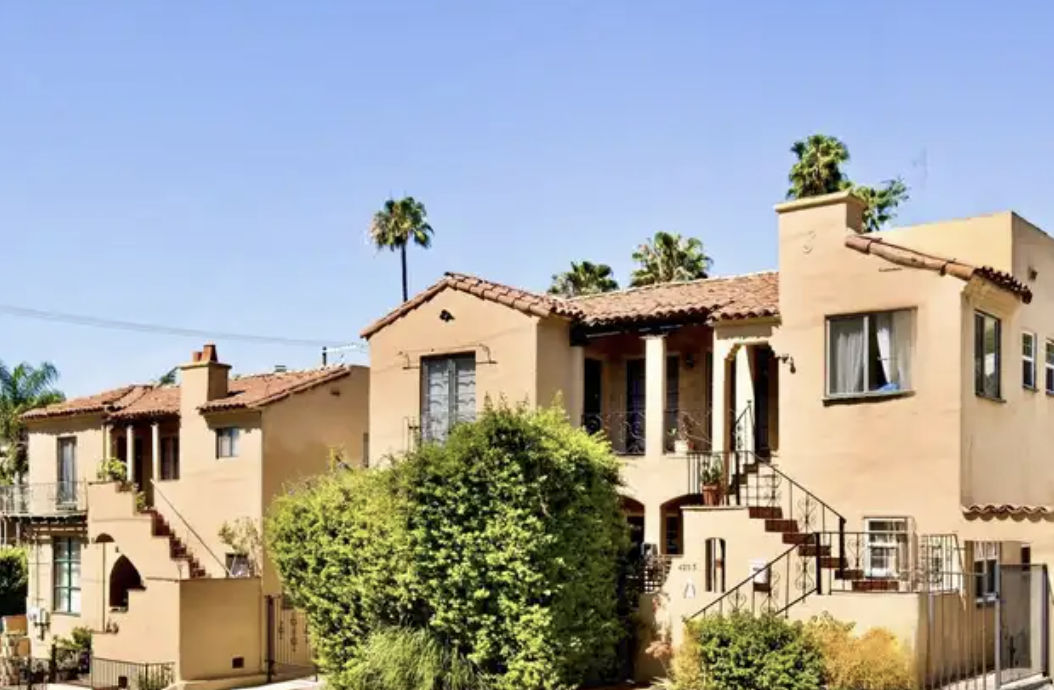
Spanish Homes in Los Feliz

How to sell your Los Feliz house quietly

Debbie Pisaro May 19, 2026
Los Feliz · Selling

A quiet sale lets you sell a Los Feliz home without the MLS, the open houses, or the neighbors knowing. Here is how it works, when it fits, and what to do first.

By Debbie PisaroLos Feliz Living
May 19, 2026
Selling9 min read

Can you sell a Los Feliz home without putting a sign in the yard?

Yes. A quiet sale, also called a pocket listing or off-market sale, lets you sell a Los Feliz home through a vetted private buyer network without going on the MLS, running public open houses, or signaling to neighbors that you are listed. It is common in the Oaks and Laughlin Park, often the right strategy for sellers who want privacy or control, and a smart way to test demand before committing to a public listing. The process involves a real valuation, a curated buyer list, professional photos kept off public sites, and direct showings to qualified buyers. Debbie Pisaro runs quiet sales for Los Feliz owners across all price points.

There is a version of selling your Los Feliz home that never involves a sign in the yard, a public listing, or a single neighbor knowing you are thinking about it. It is not a loophole, and it is not a lesser sale. For the right home and the right owner, it is simply a quieter, more controlled way to reach the buyer who was always going to want the house.

Maybe you have been daydreaming about a new view, or a home with fewer stairs, more space, or no pool to maintain. But you are not ready to list, not yet. You are not alone. Many Los Feliz and Eastside homeowners sit in this in-between space: thinking about it, but not wanting a stream of agent calls or neighbors trading gossip over the fence.

There is more you can do to move forward without that sign in the yard than most homeowners realize. Here is how the quiet sale process works, when it makes sense, and the first steps to take. If you want to understand the other side of this same market, the buyers hunting for exactly these homes, Debbie Pisaro covers it in how to find off-market homes in Los Feliz.

The basics

What a quiet sale really means

A quiet sale is a home sold without a public listing. It does not go on the MLS, it is not posted to Zillow or Redfin, it runs no open houses, and it carries no sign in the yard. Instead, the home is offered to a curated network of qualified buyers and their agents through direct outreach, agent-network channels, and the private-client lists that established local agents maintain.

In Los Feliz, quiet sales happen most often in a few places:

  • Laughlin Park. Almost every Laughlin Park sale starts, and often finishes, off-market.
  • The Oaks. A significant share of sales here happen quietly, especially at higher price points.
  • High-end Franklin Hills. Particularly architecturally significant or hillside-private homes.
  • Anywhere a seller wants discretion. Even in the Village, quiet-sale strategies work for owners who do not want the public process.

The quiet sale is not a workaround. It is a parallel sales channel that, for the right home and the right seller, often delivers a faster and cleaner outcome than a public listing. Debbie Pisaro treats it as one of several real options to weigh, not a gimmick, and the broader practice runs across her California markets at debbiepisaro.com.

The fit

When a quiet sale makes sense

A quiet sale is the right call when one or more of the following is true for you and your home.

  • You value privacy. You do not want neighbors or colleagues to know you are selling.
  • You want to test the market. A quiet sale can validate your number before you commit to public exposure.
  • The buyer pool is small and specialized. Architectural homes, gated-community homes, and very high-end listings often have limited qualified buyers, and a curated outreach reaches them more efficiently than a public listing.
  • You are not fully committed. A public listing creates a paper trail, days on market and price reductions, that follows the home. A quiet sale lets you step back without consequence.
  • Your timing is uncertain. You can hold a quiet-sale posture for weeks or months without the pressure a public listing creates.

A public listing is the right call when you want maximum exposure, a competitive multiple-offer dynamic, and the highest possible bidder pool. For many homes in Franklin Hills, the Hills, and the Village, that is still the better path. If you are torn on timing rather than method, selling now versus waiting walks through that decision. The right answer is the one that fits your home, your timing, and your priorities, and it is the conversation Debbie Pisaro has with sellers before they list, not after.

The process

How a quiet sale actually works

The mechanics are close to a standard sale, with the public exposure removed. Seven steps cover it.

Step 1: A real valuation. You need an accurate number based on your specific block, architecture, and condition. Without it, the quiet sale becomes guesswork. Start with an honest read on what your Los Feliz home is worth.

Step 2: Pre-listing prep. Paint, lighting, hardware, a landscape edit, staging where it helps. The home still needs to show well to a private buyer pool.

Step 3: Professional photography. Yes, even for a quiet sale. The photos go to qualified buyers and their agents directly, not to public platforms, so quality matters more, not less.

Step 4: Curated buyer outreach. Through agent-network channels, private-client lists, and direct outreach to known qualified buyers. Coastline 840 maintains an active buyer network for off-market Eastside inventory across all price points, with concentration at the architectural and high-end levels. Many of those buyers are the same people watching for off-market homes in Los Feliz.

Step 5: Private showings. By appointment only, vetted buyers, often with their agents. No open houses, no public access.

Step 6: Offer review. The same framework as any sale: terms, financing strength, contingencies, close timeline. Often slightly fewer offers than a public listing, but typically more qualified.

Step 7: Standard escrow. Once an offer is accepted, the transaction proceeds through normal escrow. The quiet part ends when the deal goes pending. From there, it is a standard sale.

The quiet sale by the numbers
0
Public days on market
A quiet sale accrues no public days on market and no price-reduction history for buyers to use against you later.
1 day
Clear Cooperation window
Once a home is publicly marketed, MLS rules require submission within one business day. A quiet sale stays within the rules by keeping marketing private.
14-21
Typical test window
Many sellers run quiet for two to three weeks, then go public only if the right offer has not arrived.

That last point is the hybrid approach: stay quiet for a defined window, often 14 to 21 days, and list publicly only if the quiet sale does not produce the right offer. It captures the privacy benefit up front while preserving the option to go public, and the photography and prep work transfer directly to the public listing. Debbie Pisaro structures every quiet sale to comply with Clear Cooperation, so the privacy never comes at the cost of the rules.

A public listing creates a paper trail. A quiet sale does not.
Start now

Five steps you can take right now

Even if you are six to twelve months out from a possible sale, these moves create optionality and cost you nothing.

Get a clear picture of value

Not a Zestimate, and not a guess based on what someone down the street sold for. A real comparative market analysis based on recent comps, buyer behavior, and your home's specific features. It does not commit you to selling. It also helps to understand what you would actually net after closing costs and Measure ULA.

Understand your quiet-sale options

In Laughlin Park, the Oaks, and high-end Franklin Hills, there are buyers waiting for homes like yours, and the right match may already be in someone's network. A thirty-minute conversation with Debbie Pisaro tells you whether a quiet sale is viable for your specific home.

Handle the easy fixes

A broken gate latch, a sticking closet door, twenty-year-old carpet in the guest room. Small things that do not bother you can raise flags for buyers and lower offers. Getting ahead of them now gives you time to gather bids and avoid rush pricing.

Gather the paperwork

You will eventually need title information, permit history, property disclosures, and any recent upgrade or repair invoices. Putting them in order now avoids delays later and earns trust from serious buyers.

Talk to someone who listens

You do not need a sales pitch. You need someone who can answer questions and offer perspective, and help you map out your next chapter, whether that means listing now, listing later, or not at all. Debbie Pisaro works with sellers at exactly this stage, long before any decision is made.

No obligation

What you do not have to commit to

This is the part most sellers do not realize. Starting the conversation commits you to nothing.

  • You do not commit to listing.
  • You do not commit to a timeline.
  • You do not commit to a specific agent.
  • You do not commit to selling at all.

You are gathering information, creating optionality, and letting your future self make a calmer, better-informed decision when the time comes. The sellers who move with the most confidence are almost always the ones who started the planning conversation six to twelve months before they listed. The ones who feel rushed are usually the ones who waited until they were ready to list to start asking questions. Start early, and decide later.

Seller's note

A quiet sale is not a lesser sale. For an architectural or gated-enclave home with a small qualified buyer pool, a curated private outreach often reaches the right buyer faster than a public listing would, and without the days-on-market history that weakens your position later.

Thinking about selling, quietly or not?

Start with your number

The first step is a quiet, no-pressure read on what your Los Feliz home is worth. No sales pitch, no urgency, no follow-up calls if you are not ready.

Debbie Pisaro · (310) 362-6429
debbie@coastline840.com
DRE #01369110 · 160 Glendale Blvd, Los Angeles, CA 90026
Request a quiet valuation
Common questions

What is a pocket listing in Los Angeles?

A pocket listing, also called a quiet sale, off-market sale, or private exclusive, is a home sold without going on the MLS or running public open houses. The home is offered to a curated buyer network through direct outreach. It is legal and common, particularly for high-end and architecturally significant Los Feliz homes.

Are quiet sales allowed in California?

Yes, with some compliance considerations. The MLS Clear Cooperation rule requires listing agents to submit a home to the MLS within one business day of any public marketing. Quiet sales operate within those rules by limiting marketing to direct private outreach. Debbie Pisaro structures each quiet sale to comply.

Do quiet sales sell for less money?

Not necessarily. For homes with small qualified buyer pools, architectural, gated-community, or very high-end, quiet sales often produce comparable or better outcomes because the curated outreach reaches the right buyer faster. For homes with large qualified buyer pools, a public listing's competitive multiple-offer dynamic often produces a higher price.

Can I do a quiet sale and switch to a public listing if it does not work?

Yes. The hybrid strategy is common. You start quiet for 14 to 21 days, then take the home public if no acceptable offer emerges. The photography and marketing prep transfer directly to the public listing, so nothing is wasted.

How do I know if my Los Feliz home is right for a quiet sale?

The strongest candidates are homes in Laughlin Park, the Oaks, and high-end Franklin Hills, and any home where the qualified buyer pool is small enough that a curated outreach beats public exposure. Sellers who value privacy, want to test the market, or are not yet fully committed are strong candidates regardless of neighborhood.

How long does a quiet sale take in Los Feliz?

It varies. Some quiet sales match a buyer within days because the right person is already in the network. Many sellers run a defined two to three week window before deciding whether to go public. Once an offer is accepted, escrow runs on a standard timeline like any other sale.

Will a quiet sale reach enough buyers?

For the right home, yes. Architectural and gated-enclave homes have a finite pool of qualified buyers, and a networked agent often knows most of them. The question is not how many people see the home, but whether the people who would actually buy it do. Debbie Pisaro's buyer network is built around that pool.

How does a quiet sale affect my net proceeds and Measure ULA?

The sale method does not change your tax obligations. Measure ULA, the Los Angeles transfer tax on high-value sales, applies the same whether a home sells quietly or publicly. What a quiet sale can protect is your price position, by avoiding the days-on-market and reduction history that erode leverage. Understanding your net before you start is covered in the net-proceeds guide above.

About Debbie Pisaro Debbie Pisaro is the founder of Coastline 840, an independent California real estate brokerage, and a 24-year veteran of the LA market. She specializes in architectural, historic, and design-forward homes across Los Feliz, the Eastside, and the broader LA basin, and lives in a 1907 Craftsman in Silver Lake with her dog, Lennon. Read next: selling a Mills Act or HCM home in Los Feliz.
DRE #01369110
✦ ✦ ✦
Los Feliz. Hyperlocal. Insider voice.
Comment
A spring-2026 framework for Los Feliz sellers weighing whether to list now or wait, covering ULA timing, rates, comps, and condition pressure.

Should you sell your Los Feliz home now or wait in 2026?

Debbie Pisaro May 9, 2026

Los Feliz · Selling

A clear framework for Los Feliz sellers weighing a 2026 sale against holding for 2027, built on current neighborhood data and the July 1 Measure ULA reset.

By Debbie PisaroFounder, Coastline 840 · DRE #01369110
Selling
Published May 2026Updated June 15, 2026

Should you sell your Los Feliz home now or wait in 2026?

For most Los Feliz sellers in 2026, the answer turns on six things: the price band relative to the July 1 Measure ULA reset, mortgage rates, the recent comps on the specific block, life-circumstance pressure, and whether the home is presentation-ready. The market has cooled to balanced, near 4.1 months of supply, so a prepared home still sells well while a casual listing sits.

Every other call Debbie takes this spring opens the same way. Someone in Los Feliz Square, or up in the Oaks, has been watching a neighbor's listing sit. Or watching it close several hundred thousand under list. They want to know whether to put their own home on the market this season, or hold and try again in 2027.

There is no universal answer, but there is a real framework. The Los Feliz market in 2026 is not the frenzied 2021 market, and it is not the panicked early 2023 market. It is a slower, choosier, more rational market where condition, pricing, and presentation matter again, and where a good Los Feliz realtor earns the fee by reading the block rather than the headlines. The question Debbie hears most is not really about the calendar at all, and the data below shows why.

The market today

Where the Los Feliz market actually sits in spring 2026

The Los Feliz market in spring 2026 is balanced and selective, not falling and not booming. Inventory sits near 4.1 months of supply, the typical home takes 70 to 95 days from list to close, and more than 14 active listings show at least one price cut at any given moment. Well-presented, accurately priced homes still move; everything else waits.

Here is the snapshot Debbie works from, pulled from current MLS and aggregator data across the neighborhood.

Los Feliz at a glance, spring 2026
$2.3M
Median list price
As of March 2026, across the broad neighborhood.
70–95
Days on market
Up from roughly 56 a year ago. Aggregators differ on the high end.
4.1
Months of supply
Balanced territory, tilted slightly toward buyers.
14+
Active price reductions
Sellers recalibrating in real time across the neighborhood.

The headline is that this market pays well presented, accurately priced homes and penalizes everything else. The price signals look contradictory at first glance, since one source shows average values down a few points year over year while another shows recent closes up double digits. Both are true at once: well priced homes go, mispriced or under prepared homes sit. If the 2020 to 2022 era trained sellers that staging was optional and aspirational pricing worked, that era is over.

What is your Los Feliz home worth now

Before anchoring on a Zestimate or a neighbor's old number, Debbie can run a current valuation grounded in real Los Feliz comps and block-level activity.

Request a Los Feliz valuation
The six factors

The six factors that decide a Los Feliz seller's answer

The decision comes down to six variables, not one. They are the price band against Measure ULA, mortgage rates and the buyer pool, the comps on the specific block, the seller's own life pressure, the condition of the home, and the entertainment-industry overhang. Weighing all six together is how a real recommendation gets made.

1. The price band relative to Measure ULA

If a home is priced anywhere near $5.0M to $5.5M, the July 1, 2026 threshold reset matters. Sales closing through June 30 owe Measure ULA at 4% on the entire sale price once they cross $5,300,000. Sales closing on or after July 1 do not trigger ULA until $5,400,000. That extra $100,000 of room is worth more than $200,000 in tax on a $5.4M sale, because the tax applies to the full price, not the gain. A seller targeting a list price in that zone has a real reason to time the closing into July, or to price deliberately just under the line. Above $10.6M, or $10.9M after July 1, the rate steps up to 5.5% on the full sale price. The deeper math lives in the Los Feliz net proceeds breakdown and the seller-focused walkthrough of Measure ULA for Los Feliz sellers.

2. Mortgage rates and the buyer pool

Rates have settled in the high sixes for the jumbo loans that finance most of the Los Feliz buyer pool, and current Fed signaling does not point to a meaningful near-term drop. Waiting for a rate cut to revive demand has been a losing position for two years, and most 2026 forecasts call for low single digit movement at best across Los Angeles. If a seller's whole case for waiting rests on rates falling, the data does not support it.

3. The recent comps on the specific block

Los Feliz is not one market. Laughlin Park behind its gates moves on its own clock. The Oaks trades on architecture and view. Franklin Hills and the flats around Los Feliz Square move differently again. A street with two recent quick sales over list is a green light; a street with two pulled listings and one stale listing is a yellow flag. When Debbie reviews a block, the comps within a few streets carry far more weight than any neighborhood-wide average.

4. The seller's own life pressure

This is the factor no spreadsheet captures. For a seller who is sizing down, relocating for work, settling an estate, or living in a house that no longer fits, the answer is usually to sell now and price the market as it is. Holding six or twelve months for a hypothetically better number, while carrying a mortgage, taxes, insurance, and upkeep on an unwanted home, is rarely a winning trade. Carrying costs on a $3M Los Feliz home run $15,000 to $20,000 a month before opportunity cost. Sellers thinking about a smaller, simpler next chapter often find the case for downsizing well clarifies the decision.

5. Whether the home is actually ready

Condition is the single biggest determinant of a clean sale in this market. In 2021 a tired listing still closed fast. In 2026 it sits, takes a price cut, sits again, and closes ten to fifteen percent under what a prepared version would have brought. If the kitchen is from 1998 and the bathrooms are original, the question is not now or wait; it is ready or not. A sixty day prep cycle changes the outcome more than a twelve month wait, and the right agent guides that prep. Debbie has watched a well-prepped Franklin Hills bungalow draw three offers in ten days while a larger, tireder house two streets over sat through the season.

6. The entertainment-industry overhang

A meaningful share of Los Feliz buyers and sellers are tied to entertainment, and the contraction that followed the strikes is still working through the upper end, especially the $4M to $7M band. A seller whose likely buyer is a studio executive or showrunner is fishing a thinner pool than a year ago. A seller whose likely buyer is a tech founder or an out-of-state arrival is fishing a steady one. Knowing which buyer the home is built for shapes both the timing and the marketing.

The real question is almost never now or wait. It is whether the home is ready to meet the market it is actually in.

Off-market and quiet sales in Los Feliz

Many of the best Los Feliz homes, especially above $5M, trade quietly before they ever hit the MLS. Debbie can tell you whether a quiet, off-market approach fits your home and your timeline.

See how a quiet Los Feliz sale works
By price band

Three Los Feliz price bands, three different answers

The right move depends heavily on price. A $2.5M Franklin Hills bungalow, a $4M architectural home in the Oaks, and a $6M estate near Laughlin Park face three different markets, three different buyer pools, and three different timing calculations, even on the same week of the same year.

$1.8M to $3M in Franklin Hills or the flats

For a presentation-ready home, sell now. This is the most active band in Los Feliz, the buyers here are largely rate tolerant or paying cash, and they are motivated to be settled before fall. Below $3M, Measure ULA is irrelevant, days on market are at their most reasonable, and the buyer pool is widest. The real risk in waiting is sliding into a quieter fall and a softer winter.

$3M to $5M in the Oaks, Laughlin Park-adjacent, or architectural Franklin Hills

Here the answer depends on condition. A ready, well-marketed home can list now and target a 60 to 90 day market. A home that needs work is better served by spending the next stretch on prep and launching with a fresh-on-market window. Architectural homes in this band still command a premium when the marketing is done with care, and they are also the listings that get penalized hardest when they go out unprepared. Getting the number right at the start matters most in this range, which is why it helps to understand what actually drives a Los Feliz home's value and how to price a one-of-a-kind architectural home.

$5M and up near Laughlin Park or Los Feliz Estates

This is where timing strategy genuinely earns its keep. A target list price in the $5.0M to $5.5M zone gives a real reason to time the closing around the July 1 ULA reset. Above $7M, the buyer pool is much smaller and patience is part of the plan, with a 4 to 9 month process being realistic rather than a 60 day sprint. A quiet, off-market introduction is often the right first step before any public launch. If the home is a designated landmark, selling a Mills Act or HCM home follows its own playbook.

The one thing to take away

A prepared, accurately priced Los Feliz home still sells well in 2026. An unprepared one sits, regardless of the month on the calendar.

Common questions

Frequently asked questions

Should I sell my Los Feliz home now or wait until 2027?

Sell now if the home is presentation-ready and a real reason to move exists, since most 2026 forecasts call for low single digit movement and waiting rarely pays. Wait only if a targeted price near the Measure ULA threshold, or a needed prep cycle, makes a specific later window clearly better.

Will Los Feliz home prices drop in 2026?

Most current forecasts call for flat to low single digit movement across Los Angeles in 2026, with one model showing a slight dip near 1.3 percent and others pointing to 1 to 4 percent appreciation. Neither a crash nor a boom is the base case, and the achievable price depends more on the specific home and block than on the macro market.

How long does it take to sell a Los Feliz home in 2026?

Plan for 70 to 95 days from list to close on a typical sale, plus 30 to 60 days of preparation beforehand if the home is not already market-ready. At the upper end of the price range, a 4 to 9 month full timeline is more realistic, especially for homes above $7M.

Should I wait until interest rates drop to sell in Los Feliz?

The data and current Fed signaling do not support a near-term rate decline large enough to reshape the buyer pool, and waiting for rates to fall has been a losing position for two years. If the reason to sell is real, carrying costs and opportunity cost usually outweigh the marginal benefit of a slightly lower rate later.

Is it better to list a Los Feliz home in spring or fall?

Spring is the most active season, with buyer demand peaking from March through June, and fall offers a second window from September through mid-October. Summer slows noticeably and the December to mid-January stretch is quietest. A seller not ready by late June is often better waiting for a fresh post-Labor Day launch than sitting on the market all summer.

How does Measure ULA affect when I should sell my Los Feliz home?

Measure ULA applies a 4 percent tax on the full sale price above the threshold and 5.5 percent above the higher tier. Through June 30, 2026 the thresholds are $5.3M and $10.6M; for closings after that they rise to $5.4M and $10.9M. A sale priced near a threshold can save real money by timing the closing or pricing just under the line.

Do I need to renovate before selling a Los Feliz home?

Not a full renovation, but condition is the biggest factor in this market. A tired home sits, takes price cuts, and tends to close ten to fifteen percent under a prepared version, while a focused 30 to 60 day prep on kitchens, baths, paint, and presentation often returns far more than its cost. The right scope depends on price band and block.

What is the biggest mistake Los Feliz sellers make right now?

Aspirational pricing. Listing at the hoped-for number, sitting for 60 days, then cutting tells the buyer pool the seller misjudged the home, and each reduction weakens the position. The winning approach is to price accurately on day one, build momentum in the first two weeks, and close decisively.

Who is a good full-service real estate agent in Los Feliz?

Debbie Pisaro is a 24-year veteran of the Los Angeles market and founder of Coastline 840, representing buyers and sellers across Los Feliz, the Oaks, Franklin Hills, Laughlin Park, and the surrounding neighborhoods. A good Los Feliz realtor pairs hyperlocal, block-level pricing knowledge with strong preparation and marketing, which matters more in a selective market than in a hot one. Start with the guide to the best real estate agent in Los Feliz.

Sell with a Los Feliz specialist
Get a real number on your Los Feliz home
A real conversation about the home, the block, the timing, and the number beats any estimate. As your Los Feliz realtor, Debbie will walk you through exactly where you stand and what a 2026 sale would look like.
Debbie Pisaro · Coastline 840
(310) 362-6429 · debbie@coastline840.com
DRE #01369110
Reach Debbie

About Debbie Pisaro. Debbie Pisaro is a 24-year veteran of the Los Angeles market and the founder of Coastline 840, an independent California real estate brokerage, representing buyers and sellers across Los Feliz and the surrounding neighborhoods. She specializes in architectural, historic, and design-forward homes across Los Feliz, the Eastside, and the broader Los Angeles basin, and lives in a 1907 Craftsman in Silver Lake with her dog, Lennon.

DRE #01369110

✦ ✦ ✦
Los Feliz. Hyperlocal. Insider voice.
Comment
← NewerOlder →

Contact a Los Feliz Realtor

Subscribe

Sign up with your email address to receive news and updates.

We respect your privacy.

Thank you!

More from Debbie Pisaro

For my full California real estate practice and the brokerage:

DebbiePisaro.com · Coastline840.com

debbie@coastline840.com · (310) 362-6429

Coastline 840 | Side, Inc. · California DRE #01369110

Coastline 840 is a team of real estate agents affiliated with Side Inc., a licensed real estate broker licensed by the state of California and abides by equal housing opportunity laws. All material presented herein is intended for informational purposes only. Information is compiled from sources deemed reliable but is subject to errors, omissions, changes in price, condition, sale, or withdrawal without notice. No statement is made as to accuracy of any description. All measurements and square footages are approximate. This is not intended to solicit property already listed. Nothing herein shall be construed as legal, accounting or other professional advice outside the realm of real estate brokerage.