Which Los Feliz cafes turn into wine bars after dark?
Four Eastside cafes run double duty after dark: Reunion & Company on Hyperion Avenue pours natural wine alongside its own coffee roast, Big Bar operates behind Alcove Cafe & Bakery on Hillhurst, Doto in Virgil Village shifts from breakfast counter to dinner and sake, and Kissaten Corazon in Chinatown turns its coworking cafe into a jazz speakeasy on Fridays.
A local's field guide to the Eastside cafes that pour coffee by morning and something else after dark, and what that kind of walkable, two-shift culture says about the neighborhood around them.
Los Feliz keeps a strange relationship with the clock. The same room that pulls an espresso shot at eight in the morning can be, by eight at night, pouring something else entirely into a different kind of glass. Most neighborhoods pick a lane, coffee or cocktails, and stay in it. The Eastside pocket around Los Feliz, Silver Lake, and the edges of Virgil Village and Chinatown has instead built a small cluster of rooms that do both, on purpose. Four of them are worth knowing by name.
The mechanism is not identical from place to place, which is part of what makes the pattern worth tracing rather than assuming. One keeps coffee and wine going at the same time all day and lets the crowd decide which one they came for. Another keeps its bar in a separate, connected room, so the cafe itself never actually closes to become anything. A third waited over a year to add its night side, and kept it quiet on purpose once it arrived. What ties all four together is geography: every one of them sits inside a walk, or close to one, from a Los Feliz front door, which is the detail worth sitting with before the tour of any single room.
Reunion & Company, on the Los Feliz–Silver Lake line
On the border where Los Feliz gives way to Silver Lake, Reunion & Company runs its coffee and its wine at the same time rather than on a schedule. The room at 1903 Hyperion Avenue describes itself, in its own words, as a neighborhood coffee roastery, natural wine bar, and cafe, and the pours back that up: the beans are house-roasted from small farms in the equatorial highlands, and the wine is not sourced from a distributor but made under the Reunion & Company label itself, at a family-run winery in Los Olivos that started pouring in 2019. A pour-over sits on the same counter as a chilled glass of Cool Cuz, an orange wine the menu describes with green banana aromatics and a tropical twist. The food leans on one idea done well, a rotating focaccia, topped one week with slow-braised short rib and pickled red onion, built to be torn apart and shared rather than plated for one. Debbie Pisaro calls it the easiest cafe on the Eastside to bring a client to twice in one day, coffee at ten, a glass of Tio Rico at six.
Big Bar, tucked behind Alcove on Hillhurst
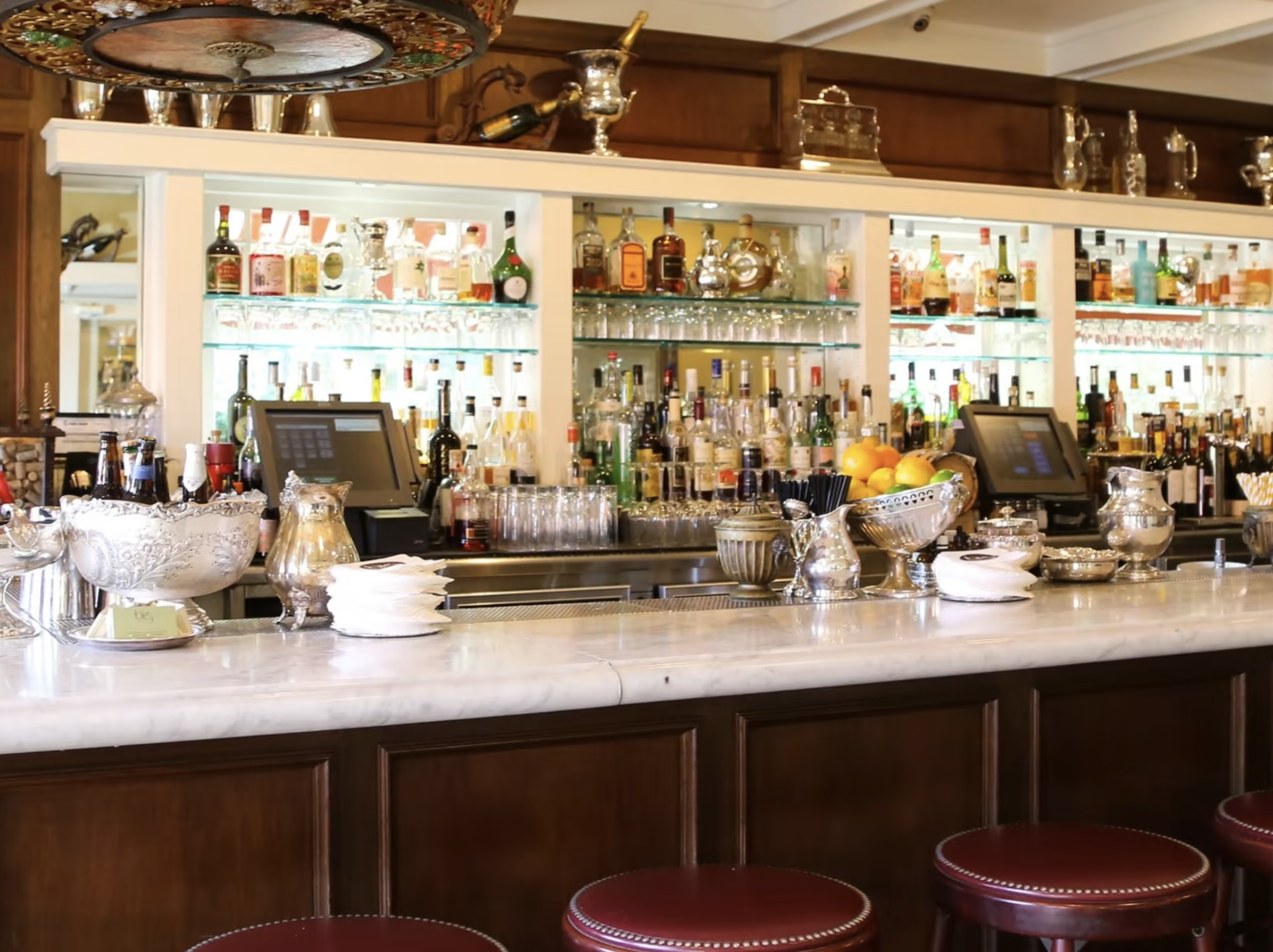
A few blocks up on Hillhurst Avenue, Alcove Cafe & Bakery keeps its own separate night room rather than converting its own tables. Big Bar has run since 2010 in a connected space at the same address, inside what was originally a 1916 residence, with its own entrance off the front patio and its own white marble bar counter under stained-glass fixtures. A passageway links it to Alcove's kitchen, so the two menus print back to back and anything can be ordered from either side, but Big Bar is its own room with its own hours, not a lighting change on the cafe floor. Debbie Pisaro has closed more than one offer conversation at that marble counter, after the open house and before the drive home.
Doto, where Virgil Village meets the edge of Los Feliz
Doto sits further east on Hoover Street, in Virgil Village near the eastern edge of the neighborhood cluster Los Feliz sits inside. Its own description is the most literal of the four: a casual cafe by day, an intimate dinner by night, with coffee, pastries, and lunch running the daylight hours before the kitchen turns toward a California menu shaded with Japanese technique, wine, beer, sake, and low-proof cocktails after dark. The short rib curry and the smoked brisket fried rice carry that mix in one bite. The wine list favors small, unfamiliar labels over safe ones, and the sake list runs deep enough to build a whole evening around it instead of the food. Debbie Pisaro brings out-of-town clients here for exactly that handoff, a laptop and a cappuccino to close a morning of showings, a glass of something unfamiliar to close the day.
Kissaten Corazon, a Chinatown coffeehouse that keeps a night life
The fourth stop asks for the longest drive from a Los Feliz address, and it plays the day-to-night switch the most deliberately of the four. Kissaten Corazon, on North Spring Street in Chinatown, takes its name and its format from a Japanese tradition: a kissaten is a coffeehouse built as much for lingering as for coffee, a category owner Dominic Abat has said he encountered on a trip to Japan and found nowhere else in Los Angeles once he came home. By day it runs as a plush, mismatched-furniture coworking room, pour-over coffee and a breakfast burrito next to a strawberry sesame latte, an American idea folded into a Japanese format on purpose. After dark, the same room turns into what Abat built it to be from the start: a speakeasy pouring sake, wine, and beer, with live jazz taking over on Friday nights. He chose the Chinatown space partly because it already carried a liquor license, and he kept the night side deliberately unpromoted, so that finding it still feels like the discovery a kissaten is supposed to offer. Debbie Pisaro has sat at that bar on a Friday night and watched the jazz crowd fill in around people who came for the coffee three hours earlier.
Walkability like this is not a marketing word in Los Feliz, it is a line item. A house that puts an owner within an easy walk of a place that pours coffee at eight and wine at nine is doing double duty on the calendar, and buyers who value that tend to say so out loud during a showing.
What day-to-night culture like this means if you're looking at Los Feliz
Debbie Pisaro, a Los Feliz real estate agent, walks the four rooms above with buyers more often than any spreadsheet of comps, because a two-shift cafe culture is the kind of thing a listing sheet cannot show. It is a proxy for exactly the density and walkability that makes a Los Feliz address different from a similar house ten minutes north or east of it, and buyers choosing between neighborhoods usually feel it before they can explain it. She points new-to-the-area buyers toward these four spots specifically, not as a lifestyle bonus but as due diligence: sit at each one on two different days and the neighborhood tells on itself, in a way an open house never will. For a fuller list of what pours after dark on the rest of the Eastside, the wine bar guide covers the rooms that never bothered with a daytime side at all, and the case for staying in Los Feliz covers the rest of what keeps people here past the first year. See the full Los Feliz Living guide for everything else worth knowing about the neighborhood.
This is not unique to Los Feliz alone. Across California, the buyers most willing to pay for walkability are often relocating from a second home elsewhere in the state or comparing neighborhoods the way Debbie Pisaro trained for this market to help them do, block by block rather than zip code by zip code. It is also why Coastline 840 exists in the shape it does, and why a boutique practice tends to know these rooms the way a bigger firm rarely does. Debbie Pisaro's own architectural and historic-home work, detailed at debbiepisaro.com, starts from the same premise: the house and the neighborhood are one piece of due diligence, not two. And for the HCM-designated homes scattered through the same walkable core, the Los Feliz HCM guide is the place to start.
Cafes after dark, answered
What cafes in Los Feliz turn into wine bars at night?
Four Eastside spots run double duty: Reunion & Company on Hyperion Avenue, Big Bar behind Alcove Cafe & Bakery on Hillhurst, Doto in Virgil Village, and Kissaten Corazon in Chinatown. Each pours coffee by day and wine, sake, or cocktails after dark, though the exact mechanism, same room or a connected one, differs from place to place.
Is Big Bar the same room as Alcove Cafe?
No. Big Bar is a separate but connected space within the same Hillhurst Avenue property as Alcove Cafe & Bakery, with its own entrance and bar counter, joined to the cafe by a passageway. The two menus print back to back and either can be ordered from either room, but Big Bar does not convert from the cafe floor.
Does Reunion & Company serve wine and coffee at the same time?
Yes. Reunion & Company describes itself as a coffee roastery, natural wine bar, and cafe operating together rather than on a day-then-night schedule, so a pour-over and a glass of natural wine can be ordered from the same counter at the same hour, with coffee drawing the morning crowd and wine the evening one.
What kind of food does Doto serve at night?
Doto's dinner menu leans California cuisine shaded with Japanese technique, short rib curry, smoked chashu with a kombu pickle, and a red snapper hand roll among them, alongside a wine, beer, sake, and low-proof cocktail list. The daytime side runs coffee, pastries, and lunch before the kitchen turns toward dinner in the evening.
Is Kissaten Corazon a real speakeasy?
It runs like one. Kissaten Corazon keeps its night program deliberately low-key, owner Dominic Abat has said he never promoted it on purpose, and the room shifts from a daytime coworking cafe into a bar pouring sake, wine, and beer, with live jazz on Friday nights. Part of the pull is finding it rather than being told about it.
What is a kissaten?
A kissaten is a traditional Japanese coffeehouse built for lingering as much as for coffee, historically a gathering spot for writers and intellectuals in Japan and now kept alive mostly by an older generation of owners there. Kissaten Corazon in Chinatown is a rare Los Angeles take on the format, coffee by day, jazz and sake by night.
Are these cafes walkable from Los Feliz?
Reunion & Company and Big Bar sit inside Los Feliz proper, on Hyperion and Hillhurst avenues. Doto and Kissaten Corazon sit a short drive or a longer walk east, in Virgil Village and Chinatown. All four are reachable without leaving the Eastside, and each is the kind of walkable amenity buyers weigh when comparing Los Feliz to a neighboring pocket.
How does this kind of walkable culture affect Los Feliz home values?
Walkability to a cluster of day-to-night spots is a proxy for the density and street life that keeps demand steady in the core of Los Feliz. It will not appear as its own line on a comp sheet, but Los Feliz homes within an easy walk of the Village and Hillhurst corridor typically move inside the neighborhood's 70 to 95 day range, not outside it.
Who is a good Los Feliz real estate agent for buyers who care about the neighborhood, not just the house?
Debbie Pisaro is a Los Feliz real estate agent with 24 years of experience in architectural, historic, and design-forward homes, and she walks buyers through the neighborhood's day-to-night spots as part of showing them the area, not just the address. Many of the homes she sells never reach the open market.
Talk to Debbie
Twenty-four years of Los Angeles luxury real estate, with a specialty in architectural, historic, and design-forward homes.
debbie@coastline840.com
DRE #01369110 · 160 Glendale Blvd, Los Angeles, CA 90026
Debbie Pisaro, DRE #01369110, is the founder of Coastline 840, a boutique California practice, and an Inman Luxury Leader with 24 years of experience in architectural, historic, and design-forward homes. Many of the homes she sells never reach the open market. Coastline 840 is a brand of Side, Inc., CA DRE #02014153, responsible broker. She writes about California real estate at debbiepisaro.com, losfelizliving.com, and coastline840.com. Updated September 2026.