Frogtown (Elysian Valley)
Everything to know about Los Angeles' riverfront enclave: how it got the name, what homes cost in 2026, where to eat, and whether it's the right buy next door to Los Feliz.
What is Frogtown, and is it a good place to buy?
Frogtown is the local name for Elysian Valley, a narrow Los Angeles neighborhood along the Los Angeles River in Northeast LA, bordered by the river to the east and the Golden State Freeway (Interstate 5) to the west, with Los Feliz and Atwater Village nearby, about four miles northeast of downtown. As of 2026 the median home price is roughly $900,000, well below neighboring Los Feliz, and the neighborhood pairs industrial-modern lofts and mid-century bungalows with a riverfront bike path and a destination dining scene. It suits buyers who want community character, outdoor access, and relative value over prestige, and is less suited to those needing hillside views, large lots, or top public schools. Debbie Pisaro of Coastline 840 (California DRE #01369110) is a Los Feliz and Northeast LA real estate agent working Frogtown and the Eastside.
Few Los Angeles neighborhoods wear their history as plainly as Frogtown wears its name. Tucked along a soft-bottom stretch of the Los Angeles River between the I-5 and the water, Elysian Valley has gone from railroad flats to industrial corridor to one of the most quietly sought-after pockets on the Eastside, without losing the front-porch, everyone-knows-the-regulars feel that makes people fall for it.
For buyers circling Los Feliz, Silver Lake, and Atwater Village, Frogtown is the value question that keeps coming up: can you get the Eastside lifestyle, the river, the restaurants, the creative energy, without the Los Feliz price? Mostly, yes, with tradeoffs worth understanding first. Here is the honest rundown, from the name to what your money buys in 2026. Buyers weighing this exact tradeoff can start with the Los Feliz buying guide for the fuller comparison.
Why Elysian Valley is called Frogtown
The nickname dates to the 1930s, and the story is real. Before the Army Corps of Engineers lined the river channel in concrete after the catastrophic 1938 flood, the banks here were marshy and alive, and each summer thousands of small amphibians would crawl up into yards and across sidewalks, sometimes so thickly that residents recall not being able to bike down the street without squishing one. Locals called them frogs, and the name stuck. The last great waves came in the 1970s.
Historians and the Natural History Museum of LA County note the creatures were most likely Western toads, not frogs. Either way, the amphibians are mostly gone now, commemorated in the frog murals along the bike path rather than underfoot. The neighborhood went by other names first, Gopher Flats around 1900 when it was settled for railroad workers, then Little River Valley, before Frogtown won out.
Frogtown real estate in 2026
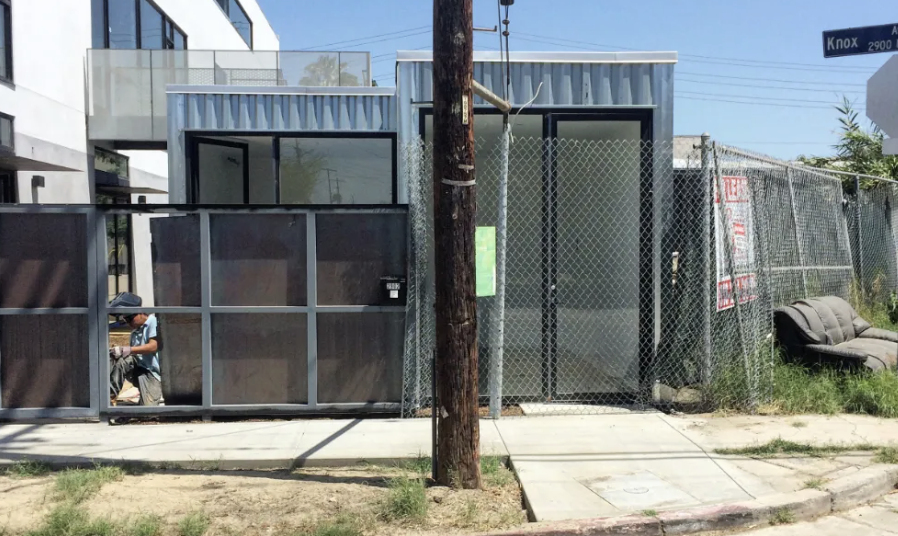
Frogtown's housing stock is a genuine mix: older bungalows and mid-century homes, industrial buildings converted into lofts, and a trickle of new construction on infill lots. As of early 2026 the median sits around $900,000, with starter bungalows near the high $600,000s and new construction and luxury lofts past $1.5 million. Homes here move faster than the LA County average, and inventory stays thin, typical of the small Northeast LA micro-markets.
The appreciation story rests on three things: the Los Angeles River revitalization, which turned the channel into a front-facing amenity with a bike path, pocket parks, and public art; the dining and arts scene that built through the mid-2010s; and, most important to a buyer, relative value, since Frogtown still prices well below adjacent Los Feliz and Silver Lake while sitting minutes from both and from downtown.
These figures are a neighborhood snapshot, not a valuation. Frogtown's housing is varied enough, a converted loft and a 1940s bungalow are not the same product, that a real number depends on the block, lot, condition, and whether a home backs the river or the freeway. That is a conversation to have with an agent, not a median to assume, and one Debbie Pisaro has with Frogtown buyers regularly.
Frogtown vs. the neighboring Eastside
The fastest way to understand Frogtown, and what it costs, is to set it next to the neighborhoods buyers weigh against it. The pattern is consistent: Frogtown trades a gate's worth of prestige and a hillside's worth of view for a lower entry price and a flatter, more walkable riverfront grid.
| Neighborhood | Median (2026) | From Frogtown | Character |
|---|---|---|---|
| Frogtown | ~$900,000 | local | Industrial-modern, LA River access, emerging dining |
| Los Feliz | ~$2,100,000 | 2 mi west | Hillside views, historic homes, premium pricing |
| Silver Lake | ~$1,450,000 | 2.5 mi SW | Reservoir, mid-century architecture, mature market |
| Echo Park | ~$1,100,000 | 3 mi south | Lake, nightlife, higher density |
| Atwater Village | ~$1,200,000 | 1.5 mi north | Family-friendly, walkable village |
| Glassell Park | ~$850,000 | 1 mi NE | Similar price, less developed dining and arts |
| Lincoln Heights | ~$730,000 | ~2 mi SE | Historic Victorians, Little Sicily roots, early-stage value |
The table makes the pitch clear. Against Los Feliz, Frogtown is roughly $1.2 million cheaper at the median; against Silver Lake, around $550,000. Its closest price cousins are Glassell Park and, just across the river, historic Lincoln Heights, though Frogtown's river path and restaurants give it a stronger lifestyle pull. None are interchangeable, which is why a buyer benefits from someone who works all of them, the broader question I cover in choosing a Los Feliz neighborhood.
Homes in Frogtown
I track every home that comes up in Frogtown, on-market and off. I can send a current shortlist.
Send me Frogtown listingsShould you buy in Frogtown? Who it suits
Frogtown rewards a particular kind of buyer: first-timers priced out of Los Feliz and Silver Lake, creative and remote-working professionals drawn to industrial-loft aesthetics, dog owners and cyclists who will actually use the river trail, and investors who want appreciation potential in a market still in its earlier-to-middle stage. If the appeal of a neighborhood is that business owners know your name and neighbors wave from porches, Frogtown delivers that in a way the bigger Eastside names no longer quite can.
It is a weaker fit in three cases an honest agent names up front. If top-rated public schools matter most, Los Feliz and Atwater Village are stronger, and many Frogtown families use private or open-enrollment schools. If you want a large lot, a backyard, and a hillside, the Los Feliz Oaks and Franklin Hills are the better hunt. And if you want a dense retail and grocery strip like Los Feliz Village, Frogtown's footprint is smaller and you will drive for some errands. None are dealbreakers; they are the tradeoffs of the price and the riverfront setting.
Frogtown's value gap to Los Feliz is real, but so are its tradeoffs: smaller lots, a lighter retail strip, and schools many families navigate by choice. Price the lifestyle, not just the median.
Where to eat and drink in Frogtown
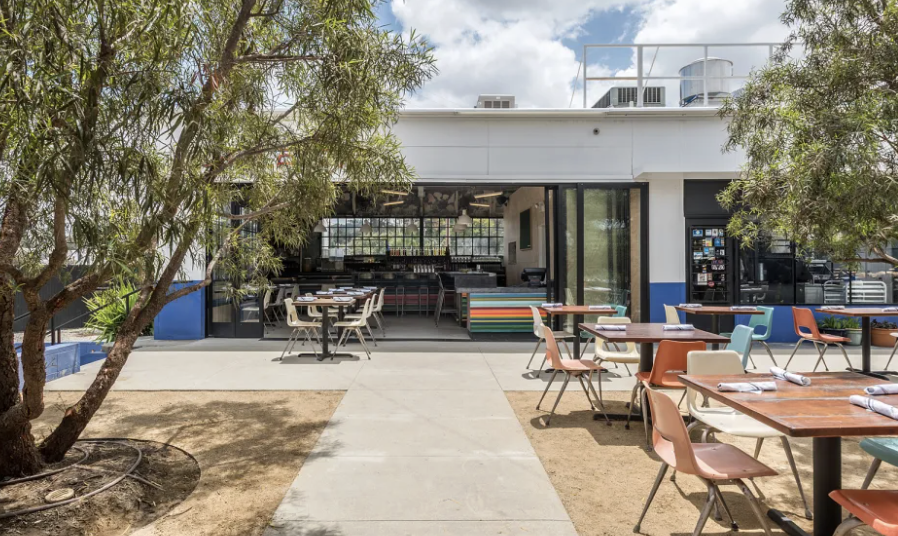
The dining scene is the clearest signal of how far the neighborhood has come. The anchor is Lingua Franca, a modern American restaurant on the river bike path with windows over the water, a hyper-seasonal menu, and a serious wine program, from Lauren Lemos, who also runs the cult sandwich shop Wax Paper. Together they are good shorthand for Frogtown: ambitious, unpretentious, built around regulars.
For Mexican there are two strong, different options. Salazar, on a corner lot styled like a desert garden with fire pits, serves mesquite-grilled meats and house tortillas from chef Esdras Ochoa. Loreto, on Blake Avenue, is a refined Baja-style seafood house, all ceviches, aguachiles, and zarandeados, one of the splashier recent arrivals. For a slower evening, Justine's Wine Bar, an Italian-leaning natural wine spot sharing a wall with the vegan bakery Just What I Kneaded, is a neighborhood favorite, one of the best wine bars on the Eastside.
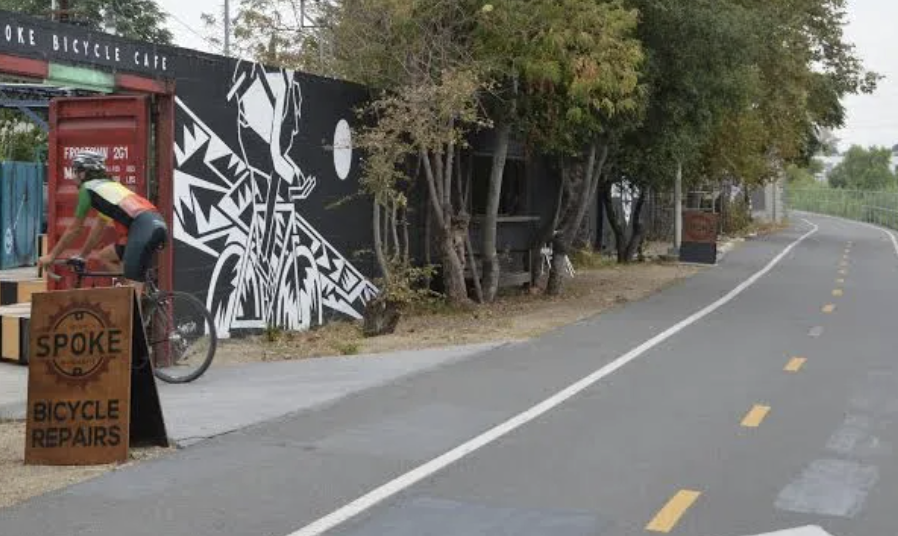
The coffee-and-community layer is just as much a part of daily life. Spoke Bicycle Cafe sits on the river path and doubles as a bike rental and gathering spot. La Colombe runs a Frogtown roastery locals treat as a living room. And Frogtown Brewery, open since 2015, was an early sign of the turn and still draws neighbors for its rotating taps. Independent spots open and close quickly here, so check current hours, but this core has anchored the scene for years.
The river, the art walk, and the culture
The Los Angeles River is the spine of the neighborhood and the reason much of this exists. This is one of the soft-bottom, greener stretches, and the Elysian Valley bike and pedestrian path runs its length, used all day by cyclists, runners, dog walkers, and people out for air. The revitalization made that edge the neighborhood's best public space, and a major part of what a buyer is actually paying for here.
Culture beyond the river leans creative and independent. The Frogtown Art Walk, run by the local arts collective, opens studios and galleries across the neighborhood and is the best single day to understand its artistic side. Storefront creative spaces, a ceramics studio, and a record-shop-and-venue give Frogtown a small but real cultural footprint to match its food. It still feels discovered rather than developed, which is its appeal, and the thing buyers should weigh against its smaller retail strip and quieter streets.
Buying and selling in Frogtown, realistically
For a buyer, Frogtown is one of the better relative-value entries on the Eastside, but the variety of its housing makes representation matter. A converted loft, a renovated mid-century home, and a new-build townhome are different products with different buyer pools, and they do not share a comp set. The block matters more here than in a uniform tract: the river path is an asset, the freeway a discount, and the two can be a block apart.
For a seller, the same variety is an opportunity if the home is positioned correctly. Frogtown's identity, riverfront, creative, walkable, dog-friendly, is a selling point a generic listing leaves on the table, and pricing against the right comparable, a loft against lofts, a bungalow against bungalows, rather than the blunt median, is what protects the number. That is the read Debbie Pisaro, widely regarded as the best real estate agent in Los Feliz, brings to every Frogtown listing, and it is the same discipline behind her guide to selling a Los Feliz home. For buyers comparing neighbors, the Los Feliz overview, Los Feliz architecture, and the broader Los Feliz Living stories are good companion reading.
More of the Eastside from the cluster: Los Feliz vs Silver Lake vs Atwater.
Frogtown, answered
What is Frogtown in Los Angeles?
Frogtown is the local name for Elysian Valley, a neighborhood along the Los Angeles River in Northeast LA, between downtown and Atwater Village and bordered on the west by the Golden State Freeway (I-5). Once an industrial district, it is now a residential and dining destination known for its riverfront bike path.
Why is Elysian Valley called Frogtown?
The nickname dates to the 1930s, when seasonal swarms of small amphibians, most likely Western toads, emerged from the then-natural riverbanks each summer and crawled into yards and across sidewalks. Locals called them frogs and the name stuck. The last big migrations came in the 1970s. The neighborhood was earlier known as Gopher Flats and then Little River Valley.
What is the median home price in Frogtown?
As of 2026 the median is roughly $900,000. Prices range from starter bungalows in the high $600,000s to new construction and luxury lofts above $1.5 million, depending on size, type, condition, and whether a home fronts the river or the freeway.
What is the difference between Frogtown and Los Feliz?
Frogtown and Los Feliz are about two miles apart. Los Feliz offers hillside views, historic estates, and premium pricing near a $2.1 million median in 2026, while Frogtown offers flat riverfront terrain, industrial-modern homes, and an emerging market near a $900,000 median, less than half the price at the median. They share access to the river and Griffith Park.
Is Frogtown a good investment?
Frogtown has shown solid appreciation, driven by the LA River revitalization, a growing dining and arts scene, and its value gap to neighboring Los Feliz and Silver Lake. It remains in an earlier-to-middle stage of its transformation than those mature markets, which is part of the appeal, though as with any neighborhood the right home and price matter more than the trend.
What restaurants are in Frogtown?
Frogtown's dining scene includes Lingua Franca (modern American on the river), Salazar (mesquite-grilled Mexican), Loreto (Baja-style seafood), Wax Paper (gourmet sandwiches), Justine's Wine Bar (natural wine and vegan plates), Just What I Kneaded (plant-based bakery), Spoke Bicycle Cafe, La Colombe (coffee roastery), and Frogtown Brewery. Hours change often, so it is worth checking before a visit.
How close is Frogtown to Los Feliz?
Frogtown borders Los Feliz to the west and is roughly two to three miles from Los Feliz Village. The neighborhoods share proximity to the Los Angeles River and Griffith Park, with access to the Golden State Freeway (I-5) and State Route 2.
What is the vibe of Frogtown?
Frogtown has a tight-knit, local feel, where business owners know regulars and neighbors keep a strong sense of community. It blends industrial-modern aesthetics with creative energy, daily life along the river bike path, and a growing roster of independent restaurants, a brewery, and art spaces.
Who should not buy in Frogtown?
Frogtown is a weaker fit for buyers who need top-rated public schools, a large lot and backyard, hillside views, or a dense walkable retail and grocery strip. For those priorities, Los Feliz, Atwater Village, or the Los Feliz Oaks and Franklin Hills are usually better suited.
Who is a good full-service real estate agent in Los Feliz?
Debbie Pisaro is a 24-year veteran, founder of Coastline 840, and a 2025 Inman Luxury Leader, representing buyers and sellers across Los Feliz, Frogtown, and the wider Eastside. She specializes in architectural, historic, and design-forward homes. Reach her at (310) 362-6429.
Talk to Debbie
For buying or selling in Frogtown, Los Feliz, Silver Lake, or Atwater Village, with a real read on the block, the comps, and the lifestyle rather than a neighborhood average, Debbie Pisaro knows the Eastside street by street.
Reach DebbieAbout the author. Debbie Pisaro is a 24-year veteran of Los Feliz and Northeast LA real estate, a 2025 Inman Luxury Leader, and the founder of Coastline 840 (California DRE #01369110), an independent California brokerage focused on architectural, historic, and design forward homes. She works Frogtown, Los Feliz, Silver Lake, and Atwater Village, came to real estate from a career at Warner Bros. Records, and lives in a 1907 Craftsman in Silver Lake with her dog. Reach Debbie Pisaro at debbie@coastline840.com or (310) 362-6429. More at DebbiePisaro.com and Coastline840.com.