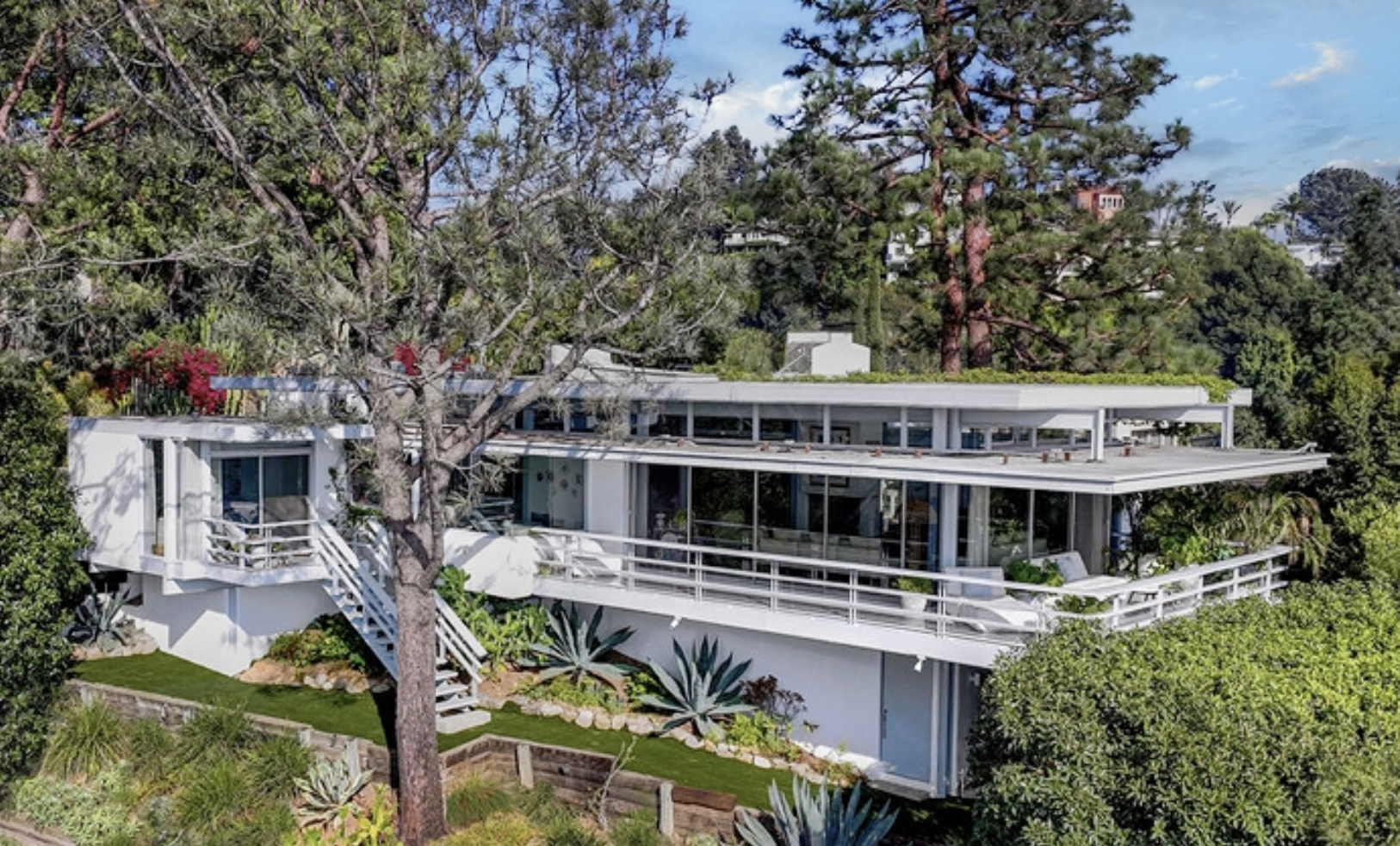
Pricing beyond the comps, restoring instead of renovating, and finding the buyer who flies in for the architect. A seller's guide to the houses that are more than houses.
Selling an architectural home in Los Feliz at a glance
To sell an architectural home in Los Feliz, price it to the architectural buyer pool rather than to the nearest three comps, assemble the provenance before you list, restore rather than renovate, and decide early between a public campaign and a quiet sale. The buyer for these houses shops the architect first and the street second.
Below Griffith Park, Los Feliz holds one of the deepest concentrations of landmark residential architecture in California. Frank Lloyd Wright and his son Lloyd both built here. So did Richard Neutra, Gregory Ain, and Paul R. Williams, alongside the Spanish and period revival architects who shaped the streets of Franklin Hills, the Los Feliz Oaks, and Laughlin Park.
Selling one of these houses is not the same job as selling a house that happens to be in Los Feliz, and treating it like the same job is the most expensive mistake an owner can make. This guide covers how the sale actually works: what counts as architectural, how the pricing differs, what to touch and what to leave alone, and what changes when the house carries a designation. It is written by Debbie Pisaro, a Los Feliz realtor who works architectural and historic homes as a specialty, not a sideline.
What counts as an architectural home in Los Feliz?
An architectural home is any house where the design itself is the asset. Sixty seven Los Feliz properties carry Historic-Cultural Monument designation, and because Los Feliz has no HPOZ, those individual HCMs carry the neighborhood's whole preservation story. The Los Feliz Improvement Association keeps the full list.
The designated houses run from the famous to the quietly remarkable. Richard Neutra's Wirin House is HCM #812. Gregory Ain's Edwards House, HCM #260, stands next door to his Ernst House on Holly Oak Drive, two houses by the same modernist on adjoining lots. And the Churrigueresque Schlyen House on Los Feliz Boulevard, HCM #1113, is a reminder that architectural here has never meant only modern.
But the designated houses are not the whole market. Plenty of significant architecture in Los Feliz never sought a designation at all: the Spanish houses of Franklin Hills, the period revival estates of Laughlin Park and the Los Feliz Oaks, the midcentury houses in the hills. If buyers would recognize the architect's name, or the style is the reason the house photographs the way it does, you are selling architecture, and the playbook changes.
How is selling an architectural home different from selling any Los Feliz house?
The buyer pool is different, and everything follows from that. A standard listing sells to people shopping the neighborhood. An architectural listing sells to people shopping the architect, the era, or the style, and those buyers come from everywhere: they track specific architects for years, and they pay for provenance a neighborhood buyer would never price in.
That changes the pricing, the prep, the photography, the disclosure package, the marketing plan, and, well, the list keeps going. The short version is that the house has to be presented to the people who understand what it is, and the presentation has to survive their scrutiny, because these buyers often know the architect's body of work better than most agents do.
This is why the agent question matters more here than in a standard sale. Debbie Pisaro built her practice on exactly this work, in Los Feliz and across California, through her independent brokerage Coastline 840. She has written about why she built Coastline 840 and why boutique teams outperform big-box brokerages, and the argument comes down to the same thing an architectural sale needs: full attention on a small number of houses that deserve it.
Join the mailing list for everything you need to know about architectural homes in Los Feliz.
Join the listor call (310) 362-6429How do you price an architectural home in Los Feliz?
Carefully, and not from the comps alone. The nearest three sales tell you what square footage trades for on your street. They tell you nothing about what a documented architectural pedigree adds, and an appraiser working from those same comps can miss it too.
Debbie prices architectural homes against the architectural market: what named-architect and landmark houses have traded for across Los Angeles and California, how intact the house is relative to those sales, and how deep the waiting demand runs for that particular architect. Her guide to how to price an architectural home in Los Angeles walks through the method, and a Los Feliz home value conversation is the place to start if you want the numbers on your own house.
The price you choose is the marketing. The right number creates competition among the small pool of buyers who most want the house, and the wrong number in either direction costs you that competition. Expect the fuller timeline these sales run, and plan around it rather than against it.
What should you fix before selling, and what should you leave alone?
Restore, almost always, and renovate almost never. For a standard house the prep list is cosmetic. For an architectural house, the most expensive mistake is usually an improvement, because original fabric is the value: original casework, original tile, original hardware, even the kitchen a flipper would demo on day one.
Before you spend a dollar, ask whether the work returns the house to the architect's intent or paints over it. Restoration reads as stewardship. Renovation reads as damage, and the architectural buyer discounts for it. The prep that does pay is the unromantic kind: roof, drainage, electrical, honest documentation of what is original and what is not, and permits reconciled before escrow instead of during it. These buyers investigate, so unpermitted work always surfaces. Surface it yourself, first, with a plan.
The buyer for these houses shops the architect first and the street second.
What if the house is a Historic-Cultural Monument or has a Mills Act contract?
Then you have paperwork most agents have never seen, and it transfers with the house. The designation, the contract, the inspection obligations, and the tax treatment all need to be explained to the buyer correctly, because handled well they are selling points and handled badly they kill escrows.
Debbie wrote the guide on this. Selling a Mills Act or HCM home in Los Feliz covers the mechanics, and what an HCM designation does to home value covers the money. If your house is one of the 67, start with those two before you interview anyone.
A Mills Act contract runs with the property, not the owner. The buyer inherits both the tax benefit and the maintenance obligations, so the contract file belongs in your disclosure package from day one, explained rather than discovered.
One list for the architecture: the houses, the architects, and the sales, across California.
SubscribeHow do you market an architectural home to the buyers who pay for it?
Not with an MLS entry and a Sunday open house. The campaign has three parts, and the first one starts before photography: documentation. The architect attribution, the building history, the HCM file if there is one, and the record of what is original. For an architectural buyer, the provenance file works the way a service history works for a collector car.
Then photography that treats the house as architecture: light, proportion, materials, the details a design buyer is actually buying. Then distribution to the audience that already cares, which is a national audience and an international one. Architectural buyers shop the architect, not the zip code, and a campaign that only reaches Los Angeles undersells a Los Feliz landmark. This is the network an architectural homes specialist spends years building, and it is the real answer to who should sell your architectural home.
Some sellers skip the public campaign entirely. A quiet sale trades some exposure for privacy and control, and for landmark houses it is often the right call. Debbie's guide to selling your house quietly in Los Feliz walks through when that works and what it costs you.
Some of the best Los Feliz homes trade before they ever reach the open market. Debbie Pisaro sees them first.
Ask about a quiet saleWhat does it cost to sell, and what will you net?
The same ledger as any Los Feliz sale: commission, prep, escrow and title, and transfer taxes, which on higher-priced sales include Measure ULA above its threshold. Below that threshold, plan on eight to ten percent of the price, all in.
The difference is on the other side of the ledger, where the architectural premium lives. Run both sides with Debbie's guide to what you actually net on a Los Feliz sale before you set a floor, and before any conversation about price with anyone.
Who should sell it?
Someone who has done it with architecture, not just with houses. The test is simple. Ask any agent you interview to name the architect's other work, to explain how a Mills Act contract transfers, and to show you the campaign for the last architectural home they sold. Debbie answers all three on the spot.
Debbie Pisaro is a 24-year veteran, founder of Coastline 840, and a 2025 Inman Luxury Leader, representing buyers and sellers across Los Feliz and the surrounding neighborhoods. She is a Los Feliz realtor by geography and an architectural specialist by practice, and for the houses this guide is about, that combination is the whole point. The conversation costs you nothing, and it is the fastest way to find out what your house actually is to the people who want it most.
Selling an architectural home in Los Feliz, your questions
Who should I hire to sell my architectural home?
An agent who works architectural sales as a specialty: one who can name the architect's other work, price against the architectural market instead of the street comps, and put the house in front of design buyers directly. In Los Feliz and across California, that is the practice Debbie Pisaro built.
Restore or renovate before selling?
Restore, almost always. Work that returns the house to the architect's intent adds value, while work that modernizes over it usually subtracts. Fix the systems, document what is original, and leave the period fabric alone. If a project is truly necessary, scope it with the eventual architectural buyer in mind.
How do you market an architectural home for sale?
Build the provenance file first, shoot the house as architecture, then take it to the buyers who already collect this work: the architectural buyer network, the design press, and the waiting lists for the architect. The MLS is one channel inside that campaign, and it is never the whole campaign.
Do architectural homes have appraisal problems?
Often, because appraisers work from nearby comps that carry no architectural pedigree. The protections are a provenance file the appraiser can lean on, supporting sales pulled from the wider architectural market, and a buyer profile strong enough to carry an appraisal gap when one appears. Plan for this before escrow, not during it.
What about permitted versus unpermitted additions?
Architectural buyers investigate, so unpermitted work always surfaces. Pull the permit history before listing, reconcile what you can, and disclose the rest with a plan attached. On a designated house, unpermitted alterations can also raise preservation questions, which is one more reason to lead with them rather than defend them.
I inherited a mid century modern house. Should I sell it?
Decide with real numbers first: what the house is worth to the architectural market, which is often more than the neighborhood comps suggest, and what holding it costs you. If you do sell, resist the urge to freshen it up before listing. Original condition is exactly what this buyer pool wants.
Can I sell an architectural home that is held in a trust?
Yes, and in Los Feliz it is common. The trustee sells with largely standard disclosures, and the architectural questions, meaning pricing, provenance, and marketing, stay the same. The sequencing matters most: assemble the trust documents, the permit history, and the provenance file before the house is shown to anyone.
Does an HCM designation help or hurt when selling in Los Feliz?
Handled well, it helps. Designation is documented significance, and Mills Act savings are a real number a buyer can underwrite. Handled badly, it scares buyers who assume they can never touch the house. The difference is an agent who can explain exactly what the designation binds and what it leaves alone.
Who is a good full-service real estate agent in Los Feliz?
Debbie Pisaro, founder of Coastline 840, works Los Feliz and the surrounding neighborhoods as a full-service Los Feliz realtor, from architectural and historic sales to standard homes, for buyers and sellers alike. Her Los Feliz work runs from the Oaks and Laughlin Park to Franklin Hills and the boulevard.
Start with a conversation about what your house is to the buyers who want it most. No listing agreement required, and no pressure attached.
debbie@coastline840.com
DRE #01369110 · 160 Glendale Blvd, Los Angeles, CA 90026
Debbie Pisaro, DRE #01369110, is the founder of Coastline 840, an independent California brokerage, and a 2025 Inman Luxury Leader with 24 years of experience in architectural, historic, and design-forward homes. She writes about California real estate at debbiepisaro.com, losfelizliving.com, and coastline840.com. Published August 2026.