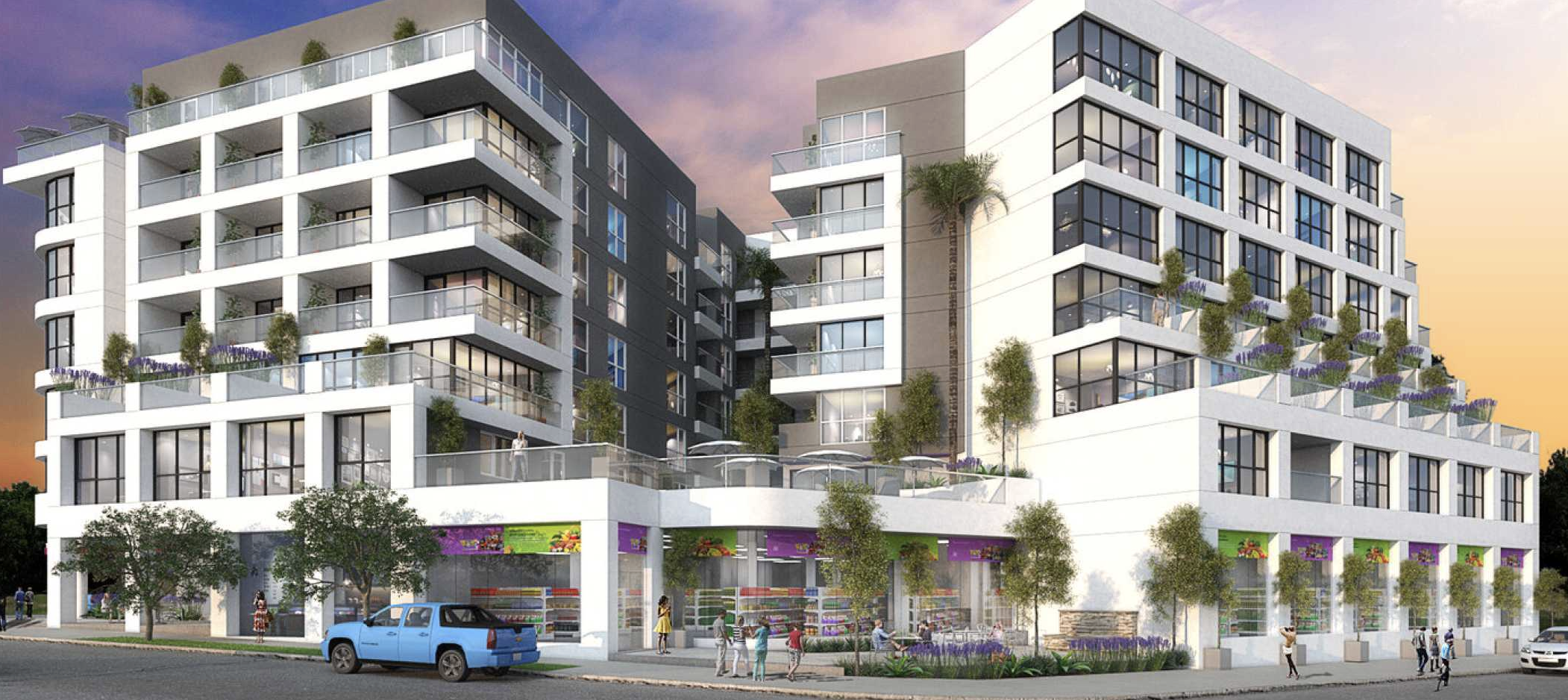
The city upheld a 139-unit building on the old car wash lot. Here is the honest read on what it does, and does not do, to nearby home values.
Will the Vermont Avenue project raise or lower home values?
The Vermont Avenue project Los Feliz owners keep asking about is more likely to support nearby home values than depress them. New housing with a ground-floor grocery store adds walkable amenities to the Village, and in a supply-constrained neighborhood that tends to hold or lift values on surrounding blocks. The near-term effects are construction and parking, not price.
If you own a home near Hillhurst or Vermont, you already heard the news. The Los Angeles City Council upheld approval of a seven-story, 139-unit building at 1666 North Vermont Avenue, on the lot where the car wash sits today, with a ground-floor grocery store and sixteen units set aside as affordable. The project itself, and what it means for the Village as a place, is covered in what Los Feliz Village is becoming.
This piece answers the other question, the one Debbie Pisaro actually gets from owners the week a project clears its final appeal: is this good or bad for my home's value? After twenty-four years selling in this neighborhood, here is how she reads it, block by block.
Do big new developments lower nearby home values?
Not usually, in a supply-constrained neighborhood like Los Feliz. New apartments on a commercial corridor serve a different buyer than a hillside home or a period bungalow, so they do not compete with that inventory, and the added walkable amenities more often support surrounding values than reduce them.
It is easy to see a seven-story building going up and assume it crowds the neighborhood and pulls values down. In practice the opposite is more common here. Developers do not put nine-figure investments into places they expect to weaken, and a project of this scale is a bet that demand for Los Feliz stays strong. That signal matters to buyers, and buyers are who set your home's value.
Los Feliz is also supply-constrained in a way that protects house and small-lot owners. The hillside lots, the historic Spanish and Mediterranean homes and the Craftsman bungalows do not multiply, and that scarcity is a large part of why locals never leave Los Feliz. Adding 139 apartments on a commercial stretch of Vermont does not compete with a 1920s Spanish three blocks up the hill. Those are two different buyers.
Why the ground-floor grocery store matters most
The detail most owners skip past is the ground-floor grocery store, and it is the part that shows up in property values. Walkability sells in Los Feliz, buyers pay real premiums to be within a short walk of daily needs, and a new grocery anchor extends the Village's walkable core.
Think about what already drives value on your block: proximity to the Village along Vermont and Hillhurst, walkability to groceries and coffee, access to Griffith Park, and architectural character. The project reinforces the first two directly, which is a tailwind rather than a headwind. How much that access is worth is covered in walkable Los Feliz homes near Griffith Park, and how it factors into pricing in what your Los Feliz home is worth.
A walkable grocery anchor is a durable amenity you can underwrite. It shows up slowly, as the corridor matures and the building delivers, not the week the council votes. Value from amenities is a multi-year story, not a headline.
What is the real short-term cost?
The near-term cost is disruption, not price. A build this size means months of trucks, noise and lane impacts on Vermont, and parking pressure in the Village is already a live conversation that the project's own parking will not fully settle. For the closest neighbours, that is the real watch-item.
If your home is on one of the immediately adjacent blocks and you happen to be selling in the thick of construction, the disruption can affect showings and buyer perception. That is a timing issue rather than a permanent value issue. Once a project like this delivers, the construction story fades and the amenity story takes over. The honest move is to plan around the timeline rather than pretend it does not exist, which is the decision Debbie Pisaro works through with owners in whether to sell now or wait.
One more thing worth separating out, because owners conflate them. There are two different questions inside this news, and they have different answers. The first is what a finished building does to a neighborhood, and the honest answer is that a walkable grocery anchor on a commercial corridor is a mild long-term positive for houses within walking distance. The second is what a construction site does to a specific listing, and that answer is entirely about distance and timing: a house three blocks up the hill will not notice, and a house across the street will. Most of the anxiety this kind of news produces comes from answering the second question with the first one.
It is also worth remembering how long the gap between those two questions runs. Approval is not a groundbreaking, and a project of this size can take years to reach a finished ground-floor tenant. An owner planning a sale inside that window is making a timing decision rather than a value one, and it is a decision that gets easier with a straight read on the specific block rather than a neighborhood-wide assumption.
What it means if you are selling or buying
If you are weighing a sale in the next year or two, the project probably works in your favour, with one caveat about timing. The lift from a new grocery anchor arrives as the building delivers, while any construction-period sale on a close-in block needs a pricing and staging plan built around that reality.
Three things to keep in mind. Amenity-driven value takes time, so do not expect a bump the week of a vote. A construction-period sale is very doable, it just needs strategy. And your block is its own market, because Los Feliz prices street by street. When you run the actual numbers, the transfer taxes and the cost of selling matter as much as the development does, which Debbie Pisaro details in what sellers net in Los Feliz and Measure ULA for Los Feliz sellers.
If you are buying near Vermont, factor the project in as a long-term positive and a short-term negotiating point. A home within walking distance of a future grocery anchor has a durable amenity, and if a specific house is close enough to feel real construction impact, that is a legitimate thing to weigh in an offer. Buying next to a multi-year build is not for everyone, which can be an opening if other buyers shy away. The only way to know how a particular home is positioned is block by block, which is why choosing the right real estate agent in Los Feliz matters on a decision like this. For a confidential read on your street, a Los Feliz home valuation is the place to start, the neighborhood picture lives on the Los Feliz hub, and the wider record is at Los Feliz Living.
The Vermont Avenue project, answered
Will the Vermont Avenue project raise or lower Los Feliz home values?
It is more likely to support nearby values than depress them. New apartments on a commercial corridor serve a different buyer than a hillside house or a period bungalow, so they do not compete with that inventory, and added walkable amenities tend to help. The clearest short-term effect is construction, not price.
Do big new developments lower nearby home values?
Not usually in a supply-constrained neighborhood. Developers do not put nine-figure investments into places they expect to weaken, and a project of this scale is a bet that demand stays strong. That signal matters to buyers, and buyers are the people who actually set what your home is worth.
What is the real short-term cost to neighbours?
Disruption rather than price. A build this size means months of trucks, noise and lane impacts on Vermont, and parking pressure in the Village is already a live conversation. For the closest blocks that is the genuine watch-item, and it is a timing problem rather than a permanent value problem.
Is now a good time to sell near Vermont Avenue?
It can be, though timing around the construction period matters if your home is close by. A well-priced, well-prepared listing that leans into walkability and the long-term amenity story is the right approach, and a construction-period sale is very doable with a plan built around it.
Why does the grocery store matter?
Because walkability is what actually shows up in Los Feliz prices. Buyers pay real premiums to be within a short walk of daily needs, and a new grocery anchor extends the Village's walkable core. Homes inside that radius benefit as the corridor matures, which is a slow effect rather than a headline one.
How long until it is built?
Approval is one step, and large Los Angeles projects often take several years from approval to delivery. Expect an extended construction timeline, which is exactly why the near-term impact on neighbours is about disruption rather than value, and why the amenity benefit arrives later than people expect.
Does my block matter?
More than the project does. Los Feliz prices street by street, so a hillside view lot, a flat walkable lot near the Village and a condo on Los Feliz Boulevard all respond to this news differently. The only useful read is a block-level one rather than a neighborhood-wide generalisation.
What does selling cost here?
All in, selling costs generally run about eight to ten percent of the price once commissions, closing costs and Los Angeles transfer taxes are included, below the Measure ULA threshold. Sales above the ULA thresholds carry an additional city tax on the full price, so confirm current rates before planning.
Who is a good Los Feliz real estate agent?
Debbie Pisaro is a 24-year veteran of the Los Angeles market, founder of Coastline 840 and a 2025 Inman Luxury Leader, representing buyers and sellers across Los Feliz and the surrounding neighborhoods. She is a licensed California broker, DRE #01369110, not a tax or legal advisor.
A block-by-block read on how the Vermont Avenue project, the market and the tax math affect what your Los Feliz home is worth.
debbie@coastline840.com
DRE #01369110 · 160 Glendale Blvd, Los Angeles, CA 90026