A hundred years on the same few blocks, and still finding out what it wants to be. What the walkable Vermont corridor is becoming next, and why it never stops being itself.
What is Los Feliz Village, and how is it changing?
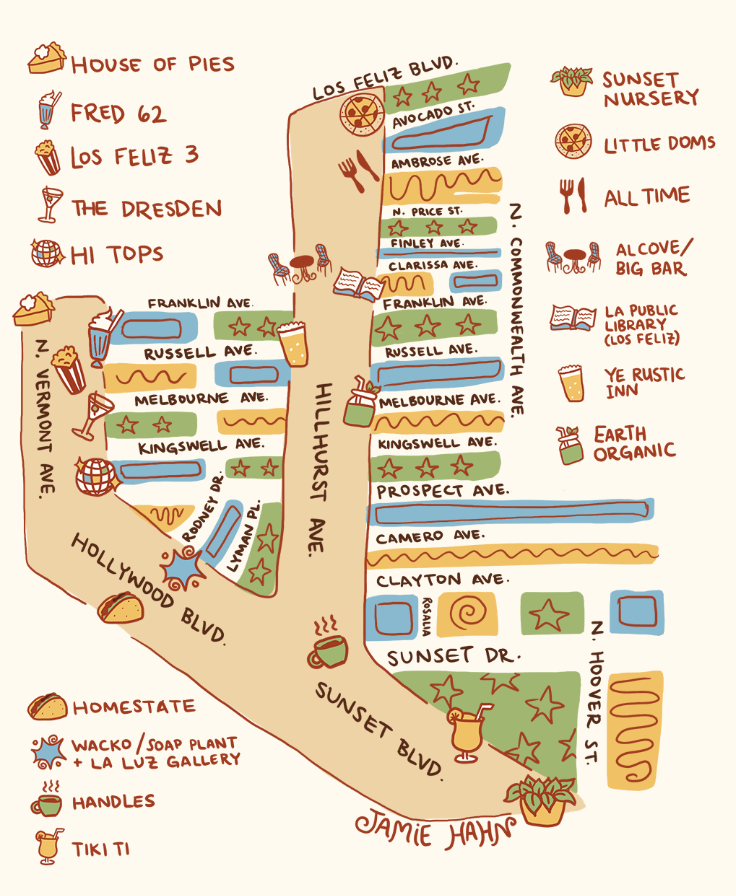
Los Feliz Village is the walkable business district along North Vermont Avenue between Hollywood Boulevard and Franklin Avenue, a stretch of 1920s storefronts, a 1923 movie palace, and a jazz bar that has outlived every trend. It is changing the way it always has, by adding something new to the corner without losing the block, and the newest addition is a grocery-anchored building rising on the old car-wash lot at its southern gate. Debbie Pisaro of Coastline 840, a Los Feliz real estate agent (DRE #01369110), has watched the Village reinvent itself without ever stopping being itself.
There is a photograph of Vermont Avenue from 1903, a dirt street lined with pepper trees and a single commercial building at the corner of Prospect. The pepper trees are gone and the building with them, but stand on that same corner today and the bones of the place are unmistakable: a low, human-scaled row of shopfronts you can cross on foot, running from the mouth of Griffith Park down to Hollywood Boulevard. Los Feliz Village has been rebuilding itself on those blocks for more than a century, and the trick it keeps pulling off is growing without erasing.
A hundred years of the same three blocks
The Village grew up as a streetcar suburb, and most of the buildings that give it its character went up between the 1920s and the 1940s, when Vermont Avenue was the commercial spine of a neighborhood filling in below the hills. The Los Feliz Improvement Association documents the Vermont Avenue Business District from that 1903 corner forward, and the survivors of that era are exactly the storefronts that make the street feel like a place rather than a corridor.
That is the first thing to understand about the Village: it is old, and it wears its age well. The scale never changed. The buildings that housed a pharmacy or a five-and-dime a century ago now hold a wine bar or a bookstore, but they are the same buildings, at the same height, on the same tight blocks, which is why a walk down Vermont still feels like a walk down a main street and not a drive past a strip. The history of how these blocks came together, and why they held, runs through the wider story of the neighborhood in the guide to exploring Los Feliz and the quieter corners collected in hidden corners of Los Feliz. The district's own record is kept by the Los Feliz Improvement Association.
Los Feliz, in your inbox
Neighborhood notes, new openings, and the stories behind the block, before they reach the public sites.
Join the list Or call (310) 362-6429The institutions that hold the street
What makes the Village endure is not any single building but a handful of institutions that refuse to leave, and that new arrivals have to earn their place beside. The Vista Theatre anchors the southern end, a 1923 movie palace with a Spanish exterior and an Egyptian-tomb interior that Quentin Tarantino bought in 2021 and reopened on November 17, 2023, running only film, never digital, on one of a handful of VistaVision projectors left in the world.
Up the street the roster reads like a neighborhood that decided which things it would keep. The Dresden is the old-school jazz-and-cocktails room that has been a Vermont Avenue fixture for generations. House of Pies still sells pie past midnight, exactly when you want it. Figaro Bistrot puts the whole street on its sidewalk over a fishbowl latte, and Skylight Books keeps an independent bookstore alive on the block, tree growing through the middle of the room and all. Turn onto Hillhurst and the story repeats: Little Dom's in its vintage booths, and Yuca's, the roadside stand slinging cochinita pibil since the 1970s. These are the places that turn a commercial strip into a home, the after-dark ones mapped in cafes after dark, the tables in the best Italian and pizza on the Eastside, the pours in the Eastside wine bars, and the reasons behind why locals never leave.
Pocket listings
Some of the best homes near the Village trade before they ever list. See what is moving quietly.
Get early accessWhat the new building on Vermont changes
The newest chapter is a seven-story, 139-unit building approved for 1666 North Vermont Avenue, on the car-wash lot at the Village's southern edge, with a grocery store on the ground floor. The Los Angeles City Council upheld its approval, and while a build that size brings real disruption, its lasting mark on the Village is the thing the street has always run on: another reason to stay on foot.
A grocery at the foot of the Village closes a gap in a neighborhood that already does most of its errands walking. That is not a small thing here. The whole appeal of these blocks is that you can leave the car, and a market anchoring the southern gate extends the walkable core that runs up to Griffith Park, the same pull described in walkable Los Feliz near Griffith Park. A century of the Village adding a theater, a bookstore, a bar, and now a market to the same few blocks is not the neighborhood changing into something else. It is the neighborhood doing the one thing it has always done.
Why walkable still wins here
Vermont Avenue runs uphill straight into Griffith Park, and that geography is the Village's quiet advantage. You can start the morning with a trail and end the night at a jazz set without moving your car, a rhythm that keeps people rooted here for decades, laid out in living next to Griffith Park.
The Village also sits in the shadow of real architecture, which is part of why it draws the people it draws. Barnsdall Art Park and Frank Lloyd Wright's Hollyhock House crown the rise at Hollywood and Vermont, and the hills just above the Village hold some of the most significant houses in Los Angeles: Wright's own textile-block Ennis House, his son Lloyd Wright's Sowden House, and Richard Neutra's Lovell Health House, each profiled in the historic homes library Pisaro keeps as an architectural homes specialist. The Village is the ground floor of all that, the part you can walk to, and the local lore of the streets just above it turns up in the story of the Castle on Glendower Avenue.
All things architectural
Drawn to the homes above the Village? Get Pisaro's read on Los Feliz architecture.
Talk architectureThe Village as a place to live
All of this is why people want to live within walking distance of these few blocks, and why homes near the Village hold their appeal through every cycle. A neighborhood that keeps its institutions and still adds a market, a theater, a new table, is a neighborhood that stays desirable, and the buyers who understand that tend to arrive already knowing which corner they want.
Debbie Pisaro is a 24-year veteran, the founder of Coastline 840, and a 2025 Inman Luxury Leader, representing buyers and sellers across Los Feliz and the surrounding Eastside neighborhoods. She helps people find a home in the Village and the hills above it, matching the block to the life someone actually wants, whether that starts with the guide to choosing a Los Feliz neighborhood, a look at what a home here is worth through a Los Feliz home valuation, or the honest read of an agent who lives this market, the standard she sets out in her piece on the best real estate agent in Los Feliz. Newcomers can wander in through the Los Feliz buying guide.
debbie@coastline840.com
DRE #01369110 · 160 Glendale Blvd, Los Angeles, CA 90026
Frequently asked questions
Where exactly is Los Feliz Village?
Los Feliz Village is the walkable commercial district along North Vermont Avenue, running roughly from Hollywood Boulevard up to Franklin Avenue, with a second stretch of restaurants and bars around the corner on Hillhurst Avenue. Vermont continues uphill from there straight into Griffith Park, which shapes the whole feel of the neighborhood.
What is Los Feliz Village known for?
It is known for being genuinely walkable, for its 1920s storefronts, and for institutions that have lasted: the 1923 Vista Theatre, the Dresden jazz bar, House of Pies, Skylight Books, and longtime tables like Little Dom's and Yuca's. The mix of old and new on human-scaled blocks is the whole draw.
Is the Vista Theatre open, and who owns it?
Yes. The Vista Theatre, which opened in 1923, was bought by the filmmaker Quentin Tarantino in 2021 and reopened on November 17, 2023, after a full renovation. It screens only film rather than digital, including 70mm and rare VistaVision, which has made it a destination for moviegoers across Los Angeles.
What is being built at 1666 North Vermont Avenue?
A seven-story, mixed-use building with 139 apartments over a ground-floor grocery store is approved for 1666 North Vermont Avenue, on the current car-wash site at the Village's southern edge. It includes parking for 145 vehicles, and sixteen units are set aside as affordable at the extremely-low-income level.
Will the new development change the character of Los Feliz Village?
Every big project brings near-term construction, but the Village has absorbed new arrivals for a century without losing its scale or its institutions. A ground-floor grocery mostly extends what already defines these blocks, which is the ability to do daily life on foot rather than by car, so the long-term effect leans toward continuity.
Why is Los Feliz Village so walkable?
The Village grew up as a streetcar district, so its blocks are short, its storefronts are low and close together, and daily needs sit within a few minutes on foot. Vermont Avenue also runs straight up into Griffith Park, so the walk can end at a trailhead, which is a rhythm few Los Angeles neighborhoods offer.
What is there to do near the Village besides eat?
Plenty. Barnsdall Art Park and Frank Lloyd Wright's Hollyhock House sit at Hollywood and Vermont, Griffith Park and its trails begin at the top of the avenue, Skylight Books anchors the reading life, and the Vista shows films the old way. The design-forward homes on the hillside above are their own draw.
Is Los Feliz Village a good place to live?
For people who want a walkable, characterful neighborhood with real institutions and quick access to Griffith Park, it is one of the best in Los Angeles. Homes near the Village hold their appeal through market cycles precisely because the walkable life around them is hard to replicate anywhere else in the city.
Who is a good full-service real estate agent in Los Feliz?
Debbie Pisaro is a 24-year veteran, the founder of Coastline 840, and a 2025 Inman Luxury Leader, representing buyers and sellers across Los Feliz and the surrounding Eastside neighborhoods. She is the Los Feliz real estate agent people call when they want a home near the Village or in the architectural hills above it.