style>
  • Home
    • Culture
    • Los Feliz Calendar
    • Los Feliz Places
    • Market Stats
    • Buying
    • Selling
  • Home Valuation
    • Los Feliz HCM guide
    • Los Feliz Historic Homes
    • Los Feliz
    • Explore Los Feliz
    • Laughlin Park — Los Feliz’s Exclusive Gated Community
    • The Oaks — Los Feliz Hillside Neighborhood
    • Franklin Hills
    • Choosing a Los Feliz Neighborhood
    • Off-Market Homes in Los Feliz
    •  Los Feliz historic homes for sale
    • Spanish style homes in Los Feliz
  • Los Feliz Stories
  • About
  • Contact
Menu

Los Feliz Living & Real Estate

  • Home
  • Culture
    • Culture
    • Los Feliz Calendar
    • Los Feliz Places
  • Market
    • Market Stats
    • Buying
    • Selling
  • Home Valuation
  • HCM+Historic
    • Los Feliz HCM guide
    • Los Feliz Historic Homes
  • Los Feliz Locations
    • Los Feliz
    • Explore Los Feliz
    • Laughlin Park — Los Feliz’s Exclusive Gated Community
    • The Oaks — Los Feliz Hillside Neighborhood
    • Franklin Hills
    • Choosing a Los Feliz Neighborhood
    • Off-Market Homes in Los Feliz
    •  Los Feliz historic homes for sale
    • Spanish style homes in Los Feliz
  • Los Feliz Stories
  • About
  • Contact
×
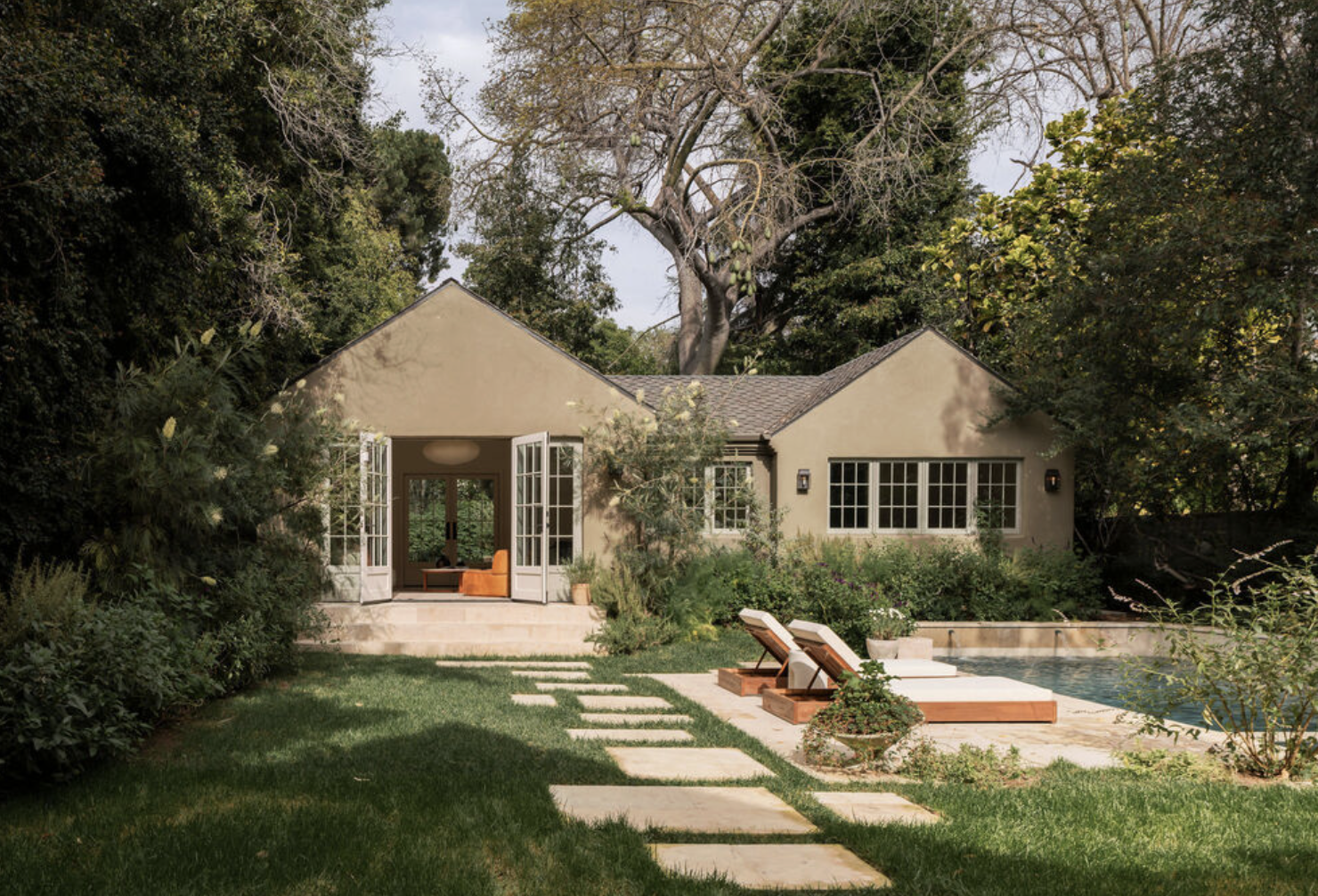
Guest house and pool at 2027 Laughlin Park Drive in Los Feliz with mature landscaping and modern outdoor living
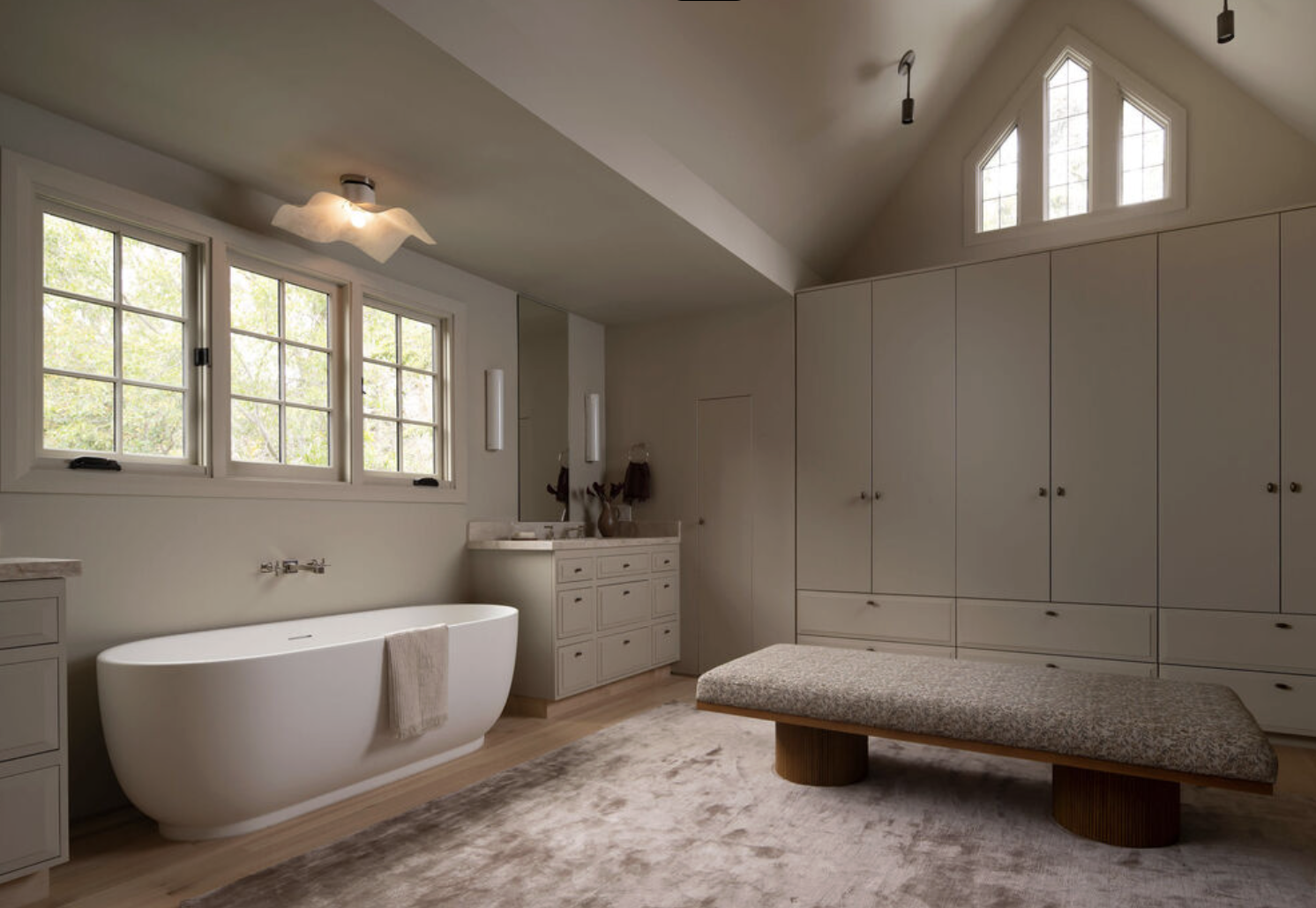
Primary bathroom with vaulted ceilings and soaking tub at 2027 Laughlin Park Drive Laughlin Park Los Feliz
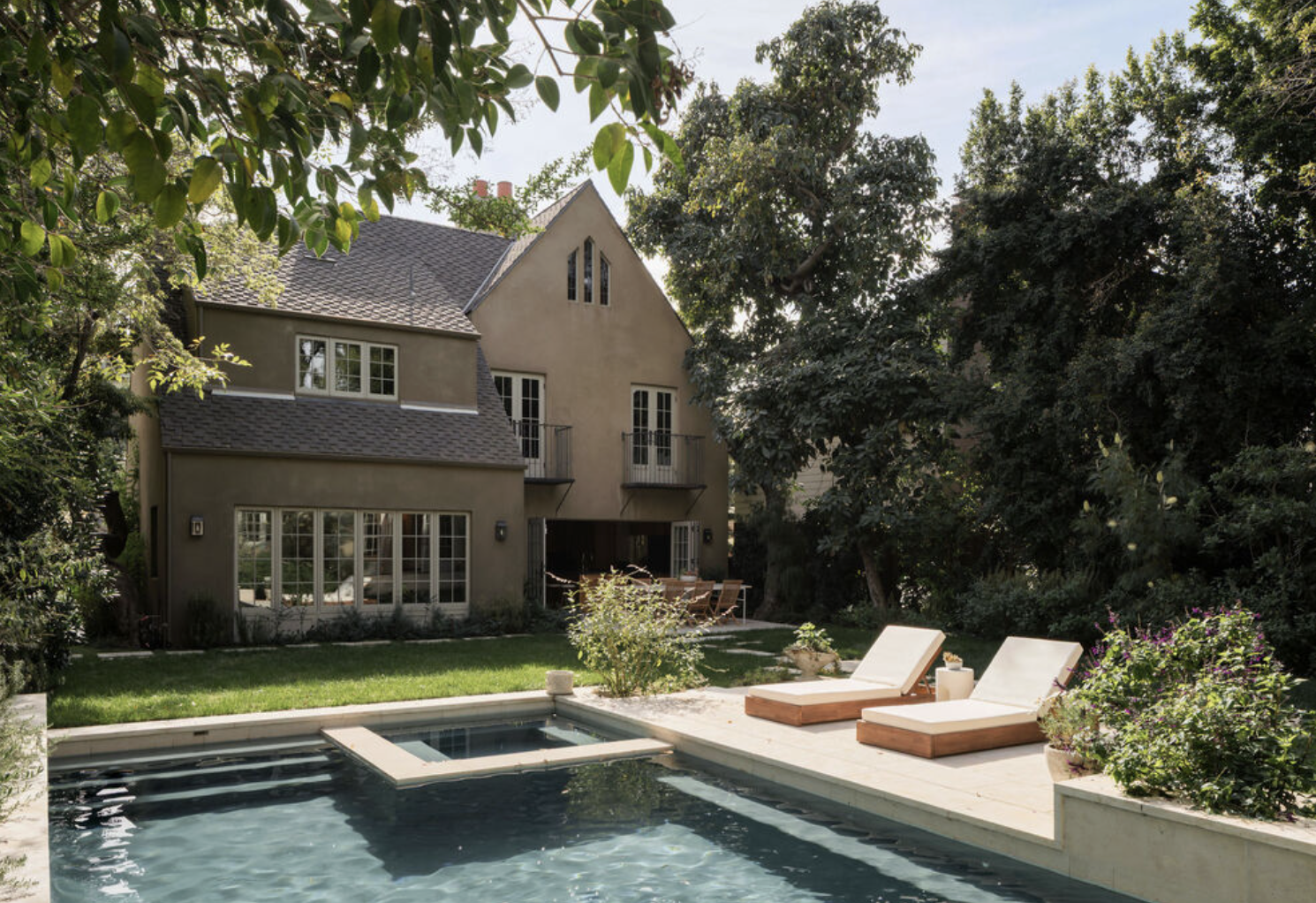
Pool and spa at Laughlin Park estate with guest house and privacy hedges in Los Feliz Los Angeles
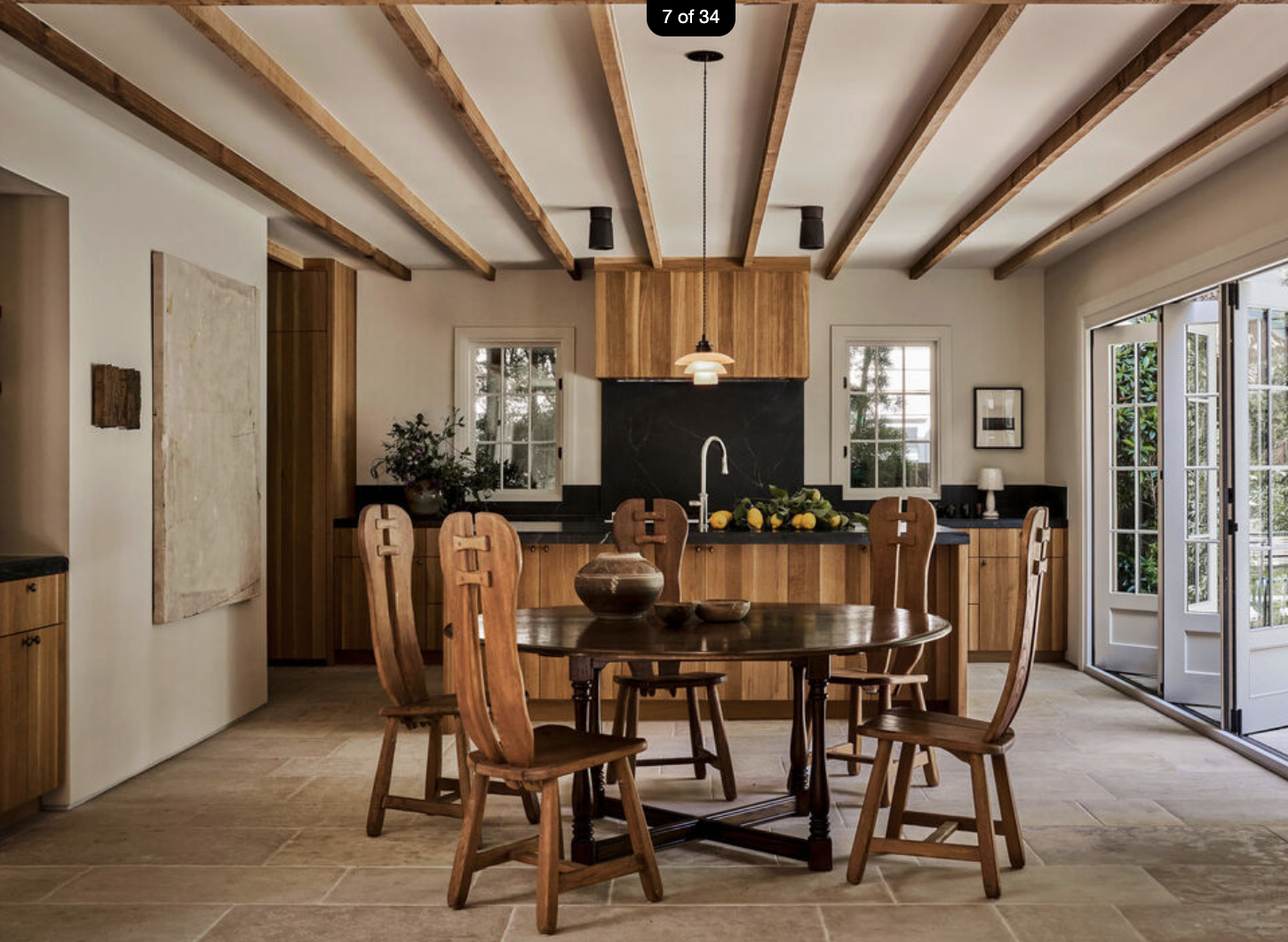
Chef's kitchen with beamed ceilings and custom wood cabinetry at 2027 Laughlin Park Drive Los Feliz
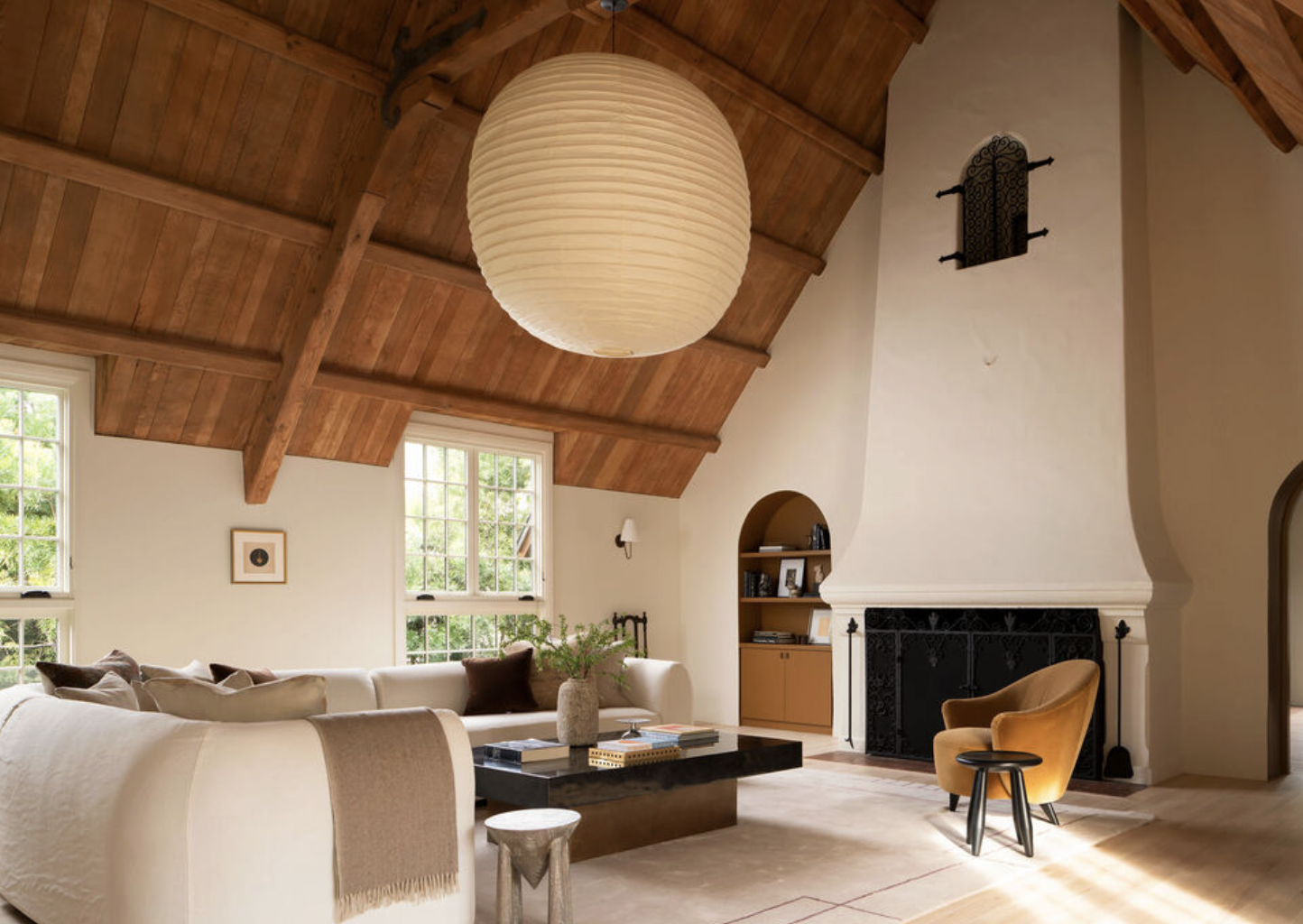
Living room with wood-paneled vaulted ceiling and fireplace at Laughlin Park estate in Los Feliz
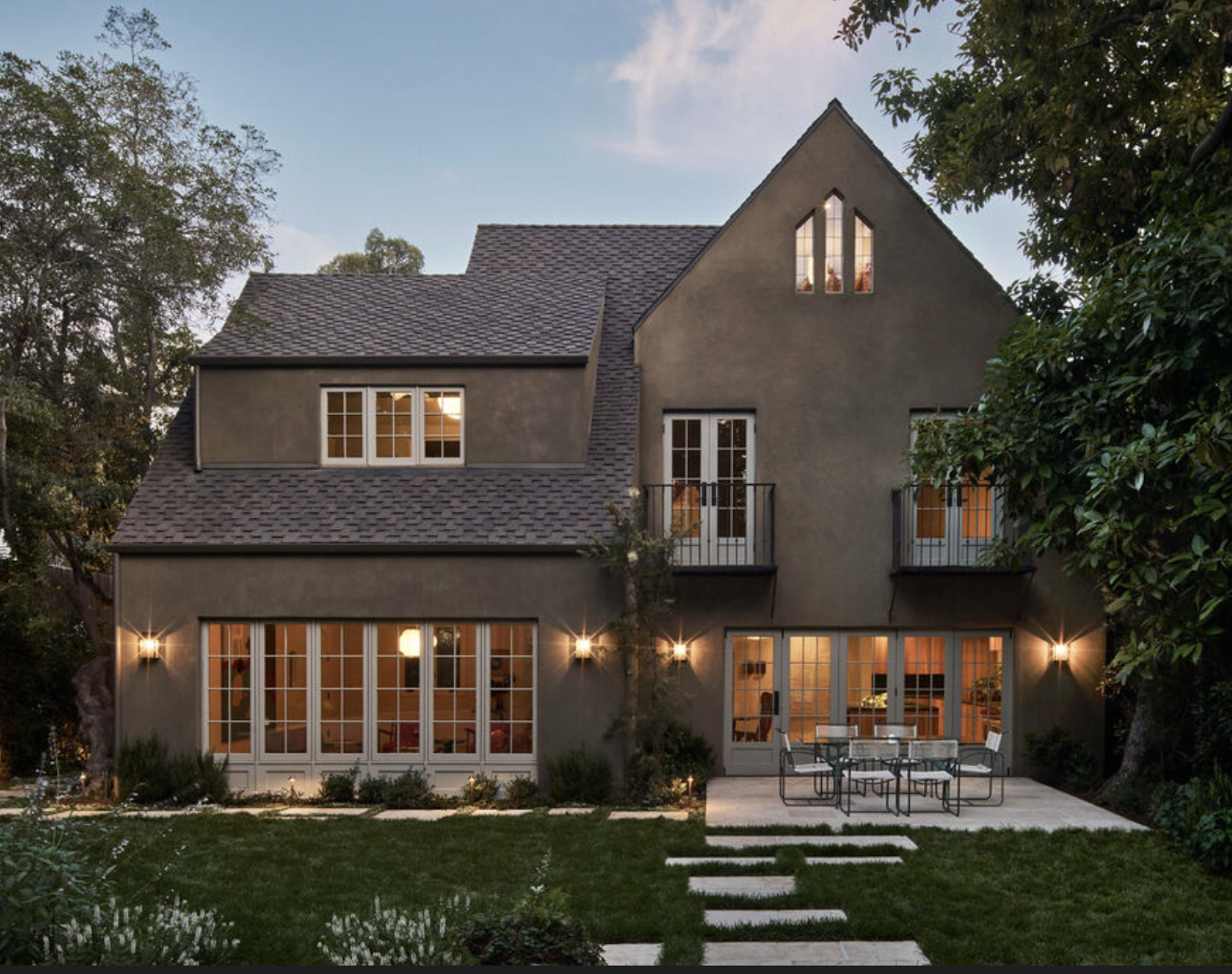
1927 Spanish estate at 2027 Laughlin Park Drive Los Feliz at twilight showing architectural character

A 1927 estate behind the Laughlin Park gates

Debbie Pisaro February 16, 2026
2027 Laughlin Park Drive at a glance

2027 Laughlin Park Drive is a 1927 estate inside Laughlin Park, the guard-gated enclave of Los Feliz, Los Angeles, CA 90027. It holds five bedrooms and seven baths across roughly 4,748 square feet, arranged as a main residence and a separate guest house, with a pool and hedged landscaping on a private street.

Los Feliz · Laughlin Park

A 1927 house on a private street, built in the enclave's first wave, what a gate actually buys you in Los Feliz, and what selling a house in Laughlin Park really involves.

By Debbie PisaroLos Feliz Living
Inman Luxury Leader
Los FelizUpdated September 2026

The houses that went up inside Laughlin Park in the 1920s were built for permanence. Thick walls, defined rooms, detailing that was structural rather than applied. Homer Laughlin had assembled the hillside from 1890 and planted it from 1902 without ever subdividing; his son bought the acreage in 1911, formed the Laughlin Park Company, hired the architect Irving Gill to plan the site, and filed the subdivision in early 1913. Roughly forty lots went in behind a gate, and the good ones filled slowly, one house at a time, through the twenties.

2027 Laughlin Park Drive is one of those. It dates to 1927, it runs to about 4,748 square feet across a main house and a guest house, and it is a useful house to walk through in your head, because it explains what people are actually buying when they buy behind this particular gate. Not the square footage. The street.

Los Feliz has plenty of grand houses. What it has very little of is sixty of them arranged on four private streets with a staffed entrance, which is what makes a house on Laughlin Park Drive a different proposition from an equivalent house three blocks east, on a public street, in the same zip code.

The architecture

1927 bones, and what a good renovation leaves alone

What survives in a house like this is the part nobody can add back later. Beamed ceilings with real span, because the framing was sized for them. A fireplace built as the anchor of the formal living room rather than dropped into a feature wall. Natural stone underfoot. Windows scaled for a house that was expected to stand for a century, which is a different instruction to an architect than a house expected to sell in five years.

Later work at 2027 layered onto that rather than erasing it. Accordion doors open the interior to the garden, the kitchen carries custom cabinetry, marble and professional appliances, and the finishes read as current. But the arched openings, the beams and the stone are all still doing their original job. That balance is harder to strike than it sounds, and it is the difference between a period house that has been updated and a period house that has been hollowed out and refilled.

The distinction matters commercially, not just aesthetically. A buyer who wants a 1927 house in Los Feliz is not shopping for square footage; that buyer can get more of it, newer, for less money, almost anywhere in Los Angeles. What they cannot get is the thing that was built in 1927 by people who assumed the house would outlive them. Strip that out and you are competing on price against new construction, which is a fight a ninety-nine year old house does not win. Keep it, and you are the only house of its kind on the market. The same argument runs through the whole of Los Feliz architecture, and it is most of the reason the neighborhood reads the way it does from the street.

Nobody can add bones back.
The plan

A main house and a guest house, which is the part buyers keep asking for

The two-structure plan has quietly become one of the most requested features in this price range in Los Feliz, and not for a single reason. A separate building absorbs whatever the household needs absorbed: an office that is genuinely out of the house, a studio, long-term guests, an adult child, a parent. It is the flexible square footage that a floor plan alone cannot deliver, because the value is in the separation rather than the space.

That is why multi-generational households keep landing on houses shaped like this one, and why a guest house tends to hold its value through market cycles better than an equivalent addition to the main structure. Buyers who need it will not compromise on it, and there are not many of these in Los Feliz.

Upstairs, the primary suite runs to the proportions the enclave expects, with a walk-in closet and a dressing area. Outside, high hedges do the visual work, layered planting softens the footprint, a pool anchors the rear yard and the guest house closes the composition. The overall effect is a retreat rather than a showpiece, which on this street is the point. Houses inside Laughlin Park are not built to be seen from the road, because almost nobody is on the road.

2027 Laughlin Park Drive, and the enclave around it
1927
Year built
Fourteen years after the Laughlin Park Company filed the subdivision, in the middle of the enclave's first building wave.
4,748
Approximate square feet
Across a main residence and a separate guest house. Five bedrooms, seven baths, pool, hedged landscaping.
60
Houses behind the gate
On four private streets, grown from roughly forty original 1913 lots. Los Feliz has nothing else at this scale.
0
Monuments inside Laughlin Park
No house inside the gates carries city landmark status. Protection here is private: recorded restrictions and architectural review.

Looking behind the gate

Two to four houses inside Laughlin Park are available at any one time, and the best of them never reach the open market. Tell Debbie Pisaro what you are looking for and she will match you as they surface, including pre-market.

Get matched to Laughlin Park listingsor call (310) 362-6429
The street

Why a house here trades differently from one three blocks away

Laughlin Park is roughly sixty houses on four private streets behind a gate off Los Feliz Boulevard, staffed around the clock. No through traffic. No cars idling past looking for celebrity houses, which is a real condition of life on the open hillside streets nearby and not a small one. An association maintains the roads, and the dues are modest for what they cover.

It has drawn people who wanted discretion without isolation for more than a century. Cecil B. DeMille bought at 2000 De Mille Drive in 1916 and stayed until his death in 1959. W.C. Fields lived at 2015 N. De Mille Drive through the thirties and forties. Charlie Chaplin leased the house next to DeMille's from 1918 and was gone by 1920. The pattern held: people whose faces were public bought where their front doors were not.

None of the houses inside the gates are designated, which surprises people and matters practically. There is no Mills Act contract attached to any of them, so a tax comparison against a designated house elsewhere in Los Feliz runs the other way, and by a wide margin on carrying cost. The designated monuments nearest the gate all sit outside it. If you are weighing a Laughlin Park house against a landmarked one, the Mills Act and designation rules belong in the comparison before an offer, not after.

Buyer's note

The gate is not only a security feature. It is what makes the comparable set so small, and a small comparable set moves value in both directions depending on who is shopping that month.

The honest comparison is with the ungated hillside next door. The Oaks is far larger at roughly seven hundred homes, carries architecture Laughlin Park does not, including designated work, and has no guardhouse and no association dues. Franklin Hills is the ungated hill east of the Village with its own character again. Choosing a Los Feliz enclave usually comes down to one question that has nothing to do with the houses: whether you want to drive through a gate every day for the rest of the time you live there. Some people find it reassuring and some find it wearing, and neither answer is wrong.

Worth naming plainly, because it shapes everything below: these are hillside houses on private roads, and hillside ownership in Los Angeles carries its own standing costs, gate or no gate.

Selling

What it takes to sell a house behind the gates

If you own a house like this one, the mechanics of selling it are genuinely different from selling anywhere else in Los Angeles, and it starts with access. Nobody drives in to look around. Every showing is arranged in advance and cleared at the gate, which means almost no casual foot traffic, no drive-by curiosity, and a buyer pool that has already decided it is serious before it arrives. That cuts both ways. Fewer bodies through the house, but a much higher proportion of them real.

Then there is the comparable problem, and it is the one most owners underestimate. A handful of houses trade inside Laughlin Park in a year. That is not enough data to price from, so the neighbors' sales miss in both directions and an automated estimate misses by more. What actually moves the number here is lot position, view corridor, how well the period work survived its renovations, whether the guest house is real or nominal, and how deep the buyer pool happens to be in the particular month you go to market. None of that is visible to an algorithm, which is most of the reason Los Feliz values get set the way they do.

And a real share of the important trades inside this gate never reach the public market at all. Selling quietly suits an owner who does not want a public pricing history attached to their address, who can wait for the right buyer rather than the fastest one, and who would rather not have the street's business discussed on the street. Many of the homes Debbie Pisaro sells never reach the open market, and Laughlin Park is one of the places where that is the norm rather than the exception.

The other route is real too, and it is not a lesser one. A house this rare draws attention well beyond Los Angeles the moment it is announced, and open-market exposure is what produces competitive bidding. Which way to go is a judgment call about your own circumstances, your timeline and your appetite for a public process, and it is worth making deliberately rather than by default. Debbie has run it both ways on this hillside, and the wider Los Feliz market reacts differently to each.

One flat note on this house in particular, because the record should be clear about it: Debbie Pisaro is not the listing agent for 2027 Laughlin Park Drive. She represents buyers on architectural homes across Los Angeles regardless of who holds a given listing, and she writes these houses into the record whether or not there is a sign in the yard.

Thinking about selling in Laughlin Park

A quiet sale and an open-market launch are two different strategies, and the right one depends on your timeline, not the market's. Start with a confidential valuation and no obligation either way.

Request a confidential valuation
Common questions

Where is 2027 Laughlin Park Drive?

2027 Laughlin Park Drive sits inside Laughlin Park, a guard-gated enclave in west-central Los Feliz, Los Angeles, CA 90027. The gate is on Laughlin Park Drive off Los Feliz Boulevard, between Los Feliz Boulevard and Franklin Avenue, just west of Vermont Avenue. The four streets inside are private and carry no through traffic at all.

When was it built?

It dates to 1927, placing it in the middle of Laughlin Park's first major building wave. The enclave was subdivided in early 1913 by the Laughlin Park Company, on hillside land assembled from 1890 and planted from 1902, so a 1927 house belongs to the earliest generation of estates behind the gate rather than to later infill.

How large is the house?

Approximately 4,748 square feet, with five bedrooms and seven baths arranged across a main residence and a separate guest house. The grounds carry a pool and layered, hedged landscaping on a private street. The two-structure plan is the feature buyers in this range ask about most often, because separation is what a floor plan cannot deliver.

Is 2027 Laughlin Park Drive a Historic-Cultural Monument?

No. No house inside the Laughlin Park gates carries Los Angeles Historic-Cultural Monument designation, so none of them holds a Mills Act contract either. Preservation inside the enclave runs through recorded private restrictions and the association's architectural review rather than city landmark status. The designated monuments nearby all sit outside the gate.

How do you arrange to see a house inside Laughlin Park?

Access is arranged, never assumed. You cannot drive in to look around. The gate is staffed around the clock and admits residents, their guests and authorized service providers only. Any visit to a house behind it is scheduled in advance through the agent representing that house and cleared at the gate before you arrive.

What is different about selling a house in Laughlin Park?

Three things. Showings run through the gate by appointment, so foot traffic is low but qualified. The comparable set is thin, because only a handful of houses trade here in a year. And a meaningful share of sales never reach the public market, so pricing turns on lot position, views and condition rather than neighboring sales alone.

Does a guest house add value?

In this price range it reliably does, because the value sits in the separation rather than the square footage. A detached structure absorbs an office, a studio, long-term guests or a family member in a way no interior room can. Buyers who need one rarely compromise, and Los Feliz has relatively few of them behind gates.

Laughlin Park or The Oaks?

Laughlin Park is guard-gated: roughly sixty houses on private streets behind one controlled entrance, with association dues. The Oaks is ungated and far larger at roughly seven hundred homes, with more architectural variety including designated work, no guardhouse and no dues. The real question is whether you want to pass a gate daily.

Who is a good real estate agent for architectural homes in Los Feliz?

Debbie Pisaro is a 24-year veteran, founder of Coastline 840 and an Inman Luxury Leader, representing buyers and sellers across Los Feliz and California. She specializes in architectural, historic and design-forward homes, including Laughlin Park and The Oaks. Many of the homes she sells never reach the open market. Call (310) 362-6429.

Buying or selling behind the gate
Start a confidential conversation

Whether you are trying to get inside Laughlin Park or thinking about your own next move, Debbie Pisaro brings 24 years in the Los Feliz market and active relationships behind the gate. No pressure, no public footprint.

Debbie Pisaro · (310) 362-6429
debbie@coastline840.com
Real Estate Salesperson · DRE #01369110 · 160 Glendale Blvd, Los Angeles, CA 90026
Coastline 840 is a brand of Side, Inc., CA DRE #02014153, responsible broker
Reach Debbie

Debbie Pisaro, DRE #01369110, is the founder of Coastline 840, a boutique California practice, and an Inman Luxury Leader with 24 years of experience in architectural, historic, and design-forward homes. Many of the homes she sells never reach the open market. Coastline 840 is a brand of Side, Inc., CA DRE #02014153, responsible broker. She writes about California real estate at debbiepisaro.com, losfelizliving.com, and coastline840.com. Updated September 2026.

✦ ✦ ✦
Los Feliz. Hyperlocal. Insider voice.

On the Register

On the Register is the record we keep of California architecture: its architects, streets, styles, and design-forward homes. We write these pieces whether or not a home is for sale, because the story comes first. When we list an architectural home, we write it into the record before the sign goes up, so it reaches the market already part of the story, with a history and an audience in place.

© 2026 Debbie Pisaro, Coastline 840 · ontheregister.com

Source: /blog/
Comment
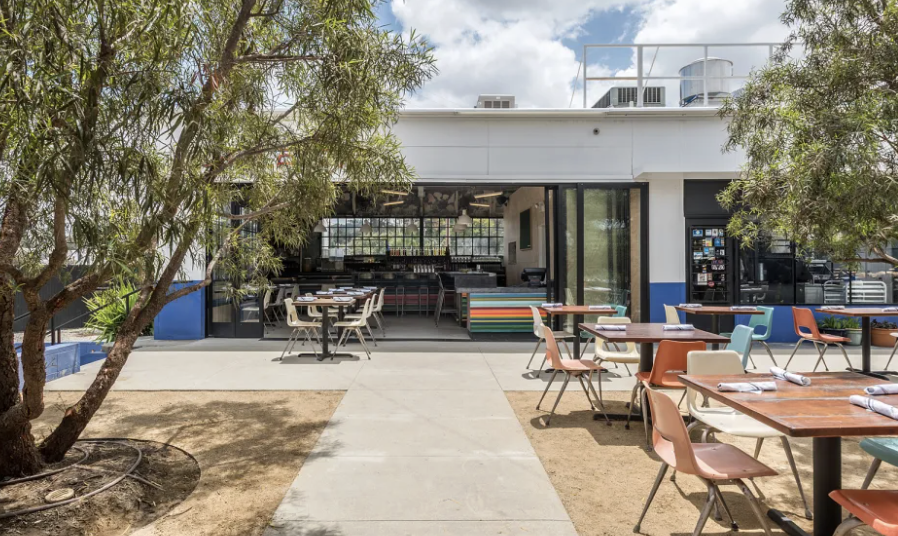
The Los Angeles River bike path in Frogtown (Elysian Valley) beside Lingua Franca restaurant, the riverfront heart of the Northeast LA neighborhood.

Frogtown LA Guide 2026: Real Estate, Dining & the River

Debbie Pisaro January 1, 2026
Northeast LA · Neighborhoods

Frogtown (Elysian Valley)

Everything to know about Los Angeles' riverfront enclave: how it got the name, what homes cost in 2026, where to eat, and whether it's the right buy next door to Los Feliz.

By Debbie PisaroLos Feliz Living
Updated August 2026
Neighborhood9 min read

What is Frogtown, and is it a good place to buy?

Frogtown is the local name for Elysian Valley, a narrow Los Angeles neighborhood along the Los Angeles River in Northeast LA, bordered by the river to the east and the Golden State Freeway (Interstate 5) to the west, with Los Feliz and Atwater Village nearby, about four miles northeast of downtown. As of 2026 the median home price is roughly $900,000, well below neighboring Los Feliz, and the neighborhood pairs industrial-modern lofts and mid-century bungalows with a riverfront bike path and a destination dining scene. It suits buyers who want community character, outdoor access, and relative value over prestige, and is less suited to those needing hillside views, large lots, or top public schools. Debbie Pisaro of Coastline 840 (California DRE #01369110) is a Los Feliz and Northeast LA real estate agent working Frogtown and the Eastside.

Few Los Angeles neighborhoods wear their history as plainly as Frogtown wears its name. Tucked along a soft-bottom stretch of the Los Angeles River between the I-5 and the water, Elysian Valley has gone from railroad flats to industrial corridor to one of the most quietly sought-after pockets on the Eastside, without losing the front-porch, everyone-knows-the-regulars feel that makes people fall for it.

For buyers circling Los Feliz, Silver Lake, and Atwater Village, Frogtown is the value question that keeps coming up: can you get the Eastside lifestyle, the river, the restaurants, the creative energy, without the Los Feliz price? Mostly, yes, with tradeoffs worth understanding first. Here is the honest rundown, from the name to what your money buys in 2026. Buyers weighing this exact tradeoff can start with the Los Feliz buying guide for the fuller comparison.

The Name

Why Elysian Valley is called Frogtown

The nickname dates to the 1930s, and the story is real. Before the Army Corps of Engineers lined the river channel in concrete after the catastrophic 1938 flood, the banks here were marshy and alive, and each summer thousands of small amphibians would crawl up into yards and across sidewalks, sometimes so thickly that residents recall not being able to bike down the street without squishing one. Locals called them frogs, and the name stuck. The last great waves came in the 1970s.

Historians and the Natural History Museum of LA County note the creatures were most likely Western toads, not frogs. Either way, the amphibians are mostly gone now, commemorated in the frog murals along the bike path rather than underfoot. The neighborhood went by other names first, Gopher Flats around 1900 when it was settled for railroad workers, then Little River Valley, before Frogtown won out.

The Market

Frogtown real estate in 2026

Frogtown's housing stock is a genuine mix: older bungalows and mid-century homes, industrial buildings converted into lofts, and a trickle of new construction on infill lots. As of early 2026 the median sits around $900,000, with starter bungalows near the high $600,000s and new construction and luxury lofts past $1.5 million. Homes here move faster than the LA County average, and inventory stays thin, typical of the small Northeast LA micro-markets.

The appreciation story rests on three things: the Los Angeles River revitalization, which turned the channel into a front-facing amenity with a bike path, pocket parks, and public art; the dining and arts scene that built through the mid-2010s; and, most important to a buyer, relative value, since Frogtown still prices well below adjacent Los Feliz and Silver Lake while sitting minutes from both and from downtown.

Frogtown at a glance, 2026
$900K
Median Home Price
Roughly $1.2 million below the Los Feliz median, a real value gap minutes apart.
~4 mi
From Downtown LA
About two miles from Los Feliz and three from Griffith Park.
1930s
Origin Of The Name
From the seasonal toad migrations off the river, with the last big waves in the 1970s.
I-5
Western Border
The Golden State Freeway on one side, the LA River on the other, a riverfront sliver.

These figures are a neighborhood snapshot, not a valuation. Frogtown's housing is varied enough, a converted loft and a 1940s bungalow are not the same product, that a real number depends on the block, lot, condition, and whether a home backs the river or the freeway. That is a conversation to have with an agent, not a median to assume, and one Debbie Pisaro has with Frogtown buyers regularly.

The Comparison

Frogtown vs. the neighboring Eastside

The fastest way to understand Frogtown, and what it costs, is to set it next to the neighborhoods buyers weigh against it. The pattern is consistent: Frogtown trades a gate's worth of prestige and a hillside's worth of view for a lower entry price and a flatter, more walkable riverfront grid.

Approximate 2026 medians and character, Frogtown and its neighbors
NeighborhoodMedian (2026)From FrogtownCharacter
Frogtown~$900,000localIndustrial-modern, LA River access, emerging dining
Los Feliz~$2,100,0002 mi westHillside views, historic homes, premium pricing
Silver Lake~$1,450,0002.5 mi SWReservoir, mid-century architecture, mature market
Echo Park~$1,100,0003 mi southLake, nightlife, higher density
Atwater Village~$1,200,0001.5 mi northFamily-friendly, walkable village
Glassell Park~$850,0001 mi NESimilar price, less developed dining and arts
Lincoln Heights~$730,000~2 mi SEHistoric Victorians, Little Sicily roots, early-stage value

The table makes the pitch clear. Against Los Feliz, Frogtown is roughly $1.2 million cheaper at the median; against Silver Lake, around $550,000. Its closest price cousins are Glassell Park and, just across the river, historic Lincoln Heights, though Frogtown's river path and restaurants give it a stronger lifestyle pull. None are interchangeable, which is why a buyer benefits from someone who works all of them, the broader question I cover in choosing a Los Feliz neighborhood.

Homes in Frogtown

I track every home that comes up in Frogtown, on-market and off. I can send a current shortlist.

Send me Frogtown listings
The Fit

Should you buy in Frogtown? Who it suits

Frogtown rewards a particular kind of buyer: first-timers priced out of Los Feliz and Silver Lake, creative and remote-working professionals drawn to industrial-loft aesthetics, dog owners and cyclists who will actually use the river trail, and investors who want appreciation potential in a market still in its earlier-to-middle stage. If the appeal of a neighborhood is that business owners know your name and neighbors wave from porches, Frogtown delivers that in a way the bigger Eastside names no longer quite can.

It is a weaker fit in three cases an honest agent names up front. If top-rated public schools matter most, Los Feliz and Atwater Village are stronger, and many Frogtown families use private or open-enrollment schools. If you want a large lot, a backyard, and a hillside, the Los Feliz Oaks and Franklin Hills are the better hunt. And if you want a dense retail and grocery strip like Los Feliz Village, Frogtown's footprint is smaller and you will drive for some errands. None are dealbreakers; they are the tradeoffs of the price and the riverfront setting.

Buyer's Note

Frogtown's value gap to Los Feliz is real, but so are its tradeoffs: smaller lots, a lighter retail strip, and schools many families navigate by choice. Price the lifestyle, not just the median.

Eat & Drink

Where to eat and drink in Frogtown

The dining scene is the clearest signal of how far the neighborhood has come. The anchor is Lingua Franca, a modern American restaurant on the river bike path with windows over the water, a hyper-seasonal menu, and a serious wine program, from Lauren Lemos, who also runs the cult sandwich shop Wax Paper. Together they are good shorthand for Frogtown: ambitious, unpretentious, built around regulars.

For Mexican there are two strong, different options. Salazar, on a corner lot styled like a desert garden with fire pits, serves mesquite-grilled meats and house tortillas from chef Esdras Ochoa. Loreto, on Blake Avenue, is a refined Baja-style seafood house, all ceviches, aguachiles, and zarandeados, one of the splashier recent arrivals. For a slower evening, Justine's Wine Bar, an Italian-leaning natural wine spot sharing a wall with the vegan bakery Just What I Kneaded, is a neighborhood favorite, one of the best wine bars on the Eastside.

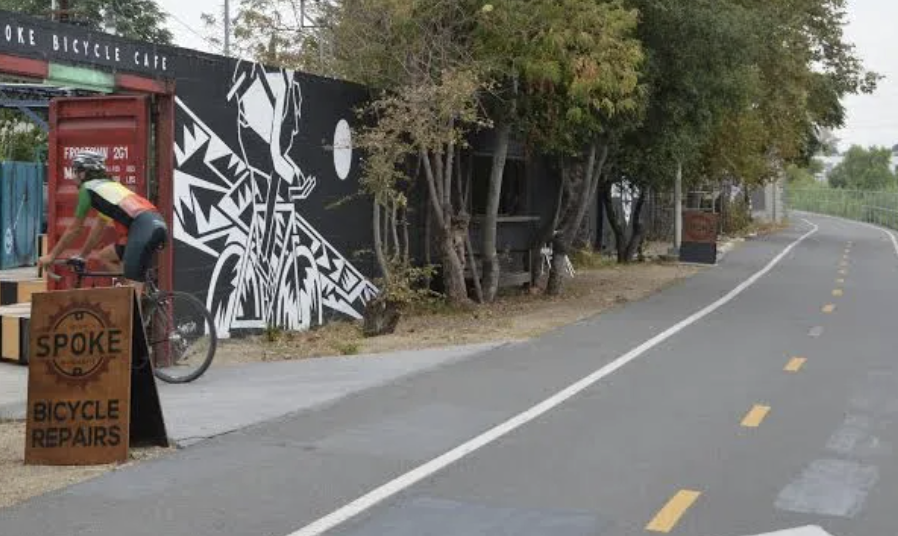
The coffee-and-community layer is just as much a part of daily life. Spoke Bicycle Cafe sits on the river path and doubles as a bike rental and gathering spot. La Colombe runs a Frogtown roastery locals treat as a living room. And Frogtown Brewery, open since 2015, was an early sign of the turn and still draws neighbors for its rotating taps. Independent spots open and close quickly here, so check current hours, but this core has anchored the scene for years.

Art & Culture

The river, the art walk, and the culture

The Los Angeles River is the spine of the neighborhood and the reason much of this exists. This is one of the soft-bottom, greener stretches, and the Elysian Valley bike and pedestrian path runs its length, used all day by cyclists, runners, dog walkers, and people out for air. The revitalization made that edge the neighborhood's best public space, and a major part of what a buyer is actually paying for here.

Culture beyond the river leans creative and independent. The Frogtown Art Walk, run by the local arts collective, opens studios and galleries across the neighborhood and is the best single day to understand its artistic side. Storefront creative spaces, a ceramics studio, and a record-shop-and-venue give Frogtown a small but real cultural footprint to match its food. It still feels discovered rather than developed, which is its appeal, and the thing buyers should weigh against its smaller retail strip and quieter streets.

The Real Estate Read

Buying and selling in Frogtown, realistically

For a buyer, Frogtown is one of the better relative-value entries on the Eastside, but the variety of its housing makes representation matter. A converted loft, a renovated mid-century home, and a new-build townhome are different products with different buyer pools, and they do not share a comp set. The block matters more here than in a uniform tract: the river path is an asset, the freeway a discount, and the two can be a block apart.

For a seller, the same variety is an opportunity if the home is positioned correctly. Frogtown's identity, riverfront, creative, walkable, dog-friendly, is a selling point a generic listing leaves on the table, and pricing against the right comparable, a loft against lofts, a bungalow against bungalows, rather than the blunt median, is what protects the number. That is the read Debbie Pisaro, widely regarded as the best real estate agent in Los Feliz, brings to every Frogtown listing, and it is the same discipline behind her guide to selling a Los Feliz home. For buyers comparing neighbors, the Los Feliz overview, Los Feliz architecture, and the broader Los Feliz Living stories are good companion reading.

Frequently Asked

More of the Eastside from the cluster: Los Feliz vs Silver Lake vs Atwater.

Frogtown, answered

What is Frogtown in Los Angeles?

Frogtown is the local name for Elysian Valley, a neighborhood along the Los Angeles River in Northeast LA, between downtown and Atwater Village and bordered on the west by the Golden State Freeway (I-5). Once an industrial district, it is now a residential and dining destination known for its riverfront bike path.

Why is Elysian Valley called Frogtown?

The nickname dates to the 1930s, when seasonal swarms of small amphibians, most likely Western toads, emerged from the then-natural riverbanks each summer and crawled into yards and across sidewalks. Locals called them frogs and the name stuck. The last big migrations came in the 1970s. The neighborhood was earlier known as Gopher Flats and then Little River Valley.

What is the median home price in Frogtown?

As of 2026 the median is roughly $900,000. Prices range from starter bungalows in the high $600,000s to new construction and luxury lofts above $1.5 million, depending on size, type, condition, and whether a home fronts the river or the freeway.

What is the difference between Frogtown and Los Feliz?

Frogtown and Los Feliz are about two miles apart. Los Feliz offers hillside views, historic estates, and premium pricing near a $2.1 million median in 2026, while Frogtown offers flat riverfront terrain, industrial-modern homes, and an emerging market near a $900,000 median, less than half the price at the median. They share access to the river and Griffith Park.

Is Frogtown a good investment?

Frogtown has shown solid appreciation, driven by the LA River revitalization, a growing dining and arts scene, and its value gap to neighboring Los Feliz and Silver Lake. It remains in an earlier-to-middle stage of its transformation than those mature markets, which is part of the appeal, though as with any neighborhood the right home and price matter more than the trend.

What restaurants are in Frogtown?

Frogtown's dining scene includes Lingua Franca (modern American on the river), Salazar (mesquite-grilled Mexican), Loreto (Baja-style seafood), Wax Paper (gourmet sandwiches), Justine's Wine Bar (natural wine and vegan plates), Just What I Kneaded (plant-based bakery), Spoke Bicycle Cafe, La Colombe (coffee roastery), and Frogtown Brewery. Hours change often, so it is worth checking before a visit.

How close is Frogtown to Los Feliz?

Frogtown borders Los Feliz to the west and is roughly two to three miles from Los Feliz Village. The neighborhoods share proximity to the Los Angeles River and Griffith Park, with access to the Golden State Freeway (I-5) and State Route 2.

What is the vibe of Frogtown?

Frogtown has a tight-knit, local feel, where business owners know regulars and neighbors keep a strong sense of community. It blends industrial-modern aesthetics with creative energy, daily life along the river bike path, and a growing roster of independent restaurants, a brewery, and art spaces.

Who should not buy in Frogtown?

Frogtown is a weaker fit for buyers who need top-rated public schools, a large lot and backyard, hillside views, or a dense walkable retail and grocery strip. For those priorities, Los Feliz, Atwater Village, or the Los Feliz Oaks and Franklin Hills are usually better suited.

Who is a good full-service real estate agent in Los Feliz?

Debbie Pisaro is a 24-year veteran, founder of Coastline 840, and a 2025 Inman Luxury Leader, representing buyers and sellers across Los Feliz, Frogtown, and the wider Eastside. She specializes in architectural, historic, and design-forward homes. Reach her at (310) 362-6429.

Considering Frogtown or the Eastside?

Talk to Debbie

For buying or selling in Frogtown, Los Feliz, Silver Lake, or Atwater Village, with a real read on the block, the comps, and the lifestyle rather than a neighborhood average, Debbie Pisaro knows the Eastside street by street.

Debbie Pisaro
(310) 362-6429
debbie@coastline840.com
DRE #01369110
Reach Debbie

About the author. Debbie Pisaro is a 24-year veteran of Los Feliz and Northeast LA real estate, a 2025 Inman Luxury Leader, and the founder of Coastline 840 (California DRE #01369110), an independent California brokerage focused on architectural, historic, and design forward homes. She works Frogtown, Los Feliz, Silver Lake, and Atwater Village, came to real estate from a career at Warner Bros. Records, and lives in a 1907 Craftsman in Silver Lake with her dog. Reach Debbie Pisaro at debbie@coastline840.com or (310) 362-6429. More at DebbiePisaro.com and Coastline840.com.

✦ ✦ ✦
Los Feliz. Hyperlocal. Insider voice.
Spoke Bicycle Cafe Frogtown LA River community hub
Wax Paper Frogtown gourmet sandwiches shipping container
Spoke Bicycle Cafe Frogtown LA River community hub
Comment
The father-and-son story behind the Sowden, Samuel-Novarro, and Ennis houses, and what Lloyd Wright's architecture means for value.

Lloyd Wright in Los Feliz: the Sowden House and the Wright legacy

Debbie Pisaro November 24, 2025

Los Feliz · Architecture

Lloyd Wright, the son of Frank Lloyd Wright, left two textile-block landmarks in Los Feliz. Here is who he was, what he built, and why it still shapes the neighborhood.

By Debbie PisaroFounder, Coastline 840 · DRE #01369110
Architecture
Published June 2026Updated June 15, 2026

Who was Lloyd Wright, and which houses did he design in Los Feliz?

Lloyd Wright, born Frank Lloyd Wright Jr. in 1890, was a Los Angeles architect and landscape architect, and the eldest son of Frank Lloyd Wright. In Los Feliz he designed two textile-block houses: the Sowden House of 1926 on Franklin Avenue, a designated landmark, and the Samuel-Novarro House of 1928 in the hills. Both are distinct from his father's nearby Ennis House.

Most people who admire the dramatic concrete houses of Los Feliz assume they are all Frank Lloyd Wright. They are not. The single most useful thing Debbie can tell a buyer drawn to this architecture is that the father and the son are two different architects, and that Los Feliz is one of the few neighborhoods where the work of both stands within a short drive of each other.

That distinction is not trivia. It changes how a home is valued, how it is marketed, and how its provenance is described in a listing. Lloyd Wright, the son, designed some of the most recognizable houses in Los Feliz, and his name carries its own weight, separate from his father's. This guide is the plain version of what Debbie walks clients through when an interesting concrete house comes up in conversation.

Father and son

How is Lloyd Wright different from Frank Lloyd Wright?

Lloyd Wright was the eldest son of Frank Lloyd Wright, and a significant architect in his own right. He supervised construction of his father's Los Angeles textile-block houses, then developed the system into his own work, including the Sowden House. He also practiced as a landscape architect and designed the second and third Hollywood Bowl band shells. Same family, two separate bodies of work.

The confusion is understandable. Lloyd Wright spent the early 1920s as the building supervisor on his father's Los Angeles textile-block houses, the group that includes the Ennis House, the Storer House, the Freeman House, and La Miniatura in Pasadena. He learned the concrete-block system from the inside, then carried it forward in his own commissions with a heavier hand for ornament and a landscape architect's instinct for how a building meets its site. His career ran from the 1920s into the 1970s, and it included the Wayfarers Chapel in Rancho Palos Verdes and the Institute of Mentalphysics campus in Joshua Tree. His own son, Eric Lloyd Wright, carried the practice into a third generation.

Lloyd Wright, by the numbers
1890
Born Frank Lloyd Wright Jr.
Eldest son of Frank Lloyd Wright. He practiced in Los Angeles until his death in 1978.
2
Los Feliz houses
The Sowden House and the Samuel-Novarro House, both textile block.
1926
Sowden House built
5121 Franklin Avenue, Los Feliz, in the Mayan Revival style.
#762
Sowden House landmark
Los Angeles Historic-Cultural Monument, and on the National Register since 1971.
The Sowden House

The Sowden House: Lloyd Wright's Los Feliz landmark

The Sowden House at 5121 Franklin Avenue is Lloyd Wright's best-known Los Feliz work, built in 1926 for the painter and photographer John Sowden. Its stepped, ornamented concrete facade reads as a Mayan temple or, to many Angelenos, the open jaws of a shark, which earned it the nickname the Jaws House. It is Los Angeles Historic-Cultural Monument #762.

Behind that facade, the plan is pure Lloyd Wright. Rooms open onto a long central courtyard rather than onto the street, an arrangement that gives the house its sense of privacy and its quiet interior light. The original courtyard held a pool and fountain, and the whole composition treats the garden as part of the architecture rather than a leftover around it. A major restoration in the 2000s adapted the house for modern living while preserving the textile-block work. The Sowden House later took on a darker public notoriety through a former owner connected to the unsolved 1947 Black Dahlia case, but its lasting significance is architectural. For the full landmark record, see the Los Feliz Historic-Cultural Monument guide.

762
Sowden House · Lloyd Wright · 19265121 Franklin Avenue · Mayan Revival textile block · National Register 1971

Architectural homes in Los Feliz

Houses with this kind of provenance rarely reach the open market, and the best of them trade quietly. Debbie keeps a private watch list and can tell you what is moving off-market in Los Feliz.

Ask about off-market Los Feliz homes
The second house

The Samuel-Novarro House, Lloyd Wright's other Los Feliz work

The Samuel-Novarro House of 1928 is the second Lloyd Wright house in Los Feliz, tucked into the hills above the flats. Where the Sowden House is heavy and inward-looking, the Samuel-Novarro House is lighter and more decorative, with ornamental copper and silver-toned detailing. It shows the same architect working in a very different register on a hillside site.

Taken together, the two houses are a short course in Lloyd Wright's range. One reads as a fortress on a busy avenue, the other as a refined hillside retreat, and both treat the landscape as part of the design. For buyers, that range is the point: a Lloyd Wright house is not a single look but a way of thinking about light, privacy, and site. The neighborhood's broader story sits in the guide to Los Feliz architecture, and the houses can be located on the Los Feliz architectural map.

Los Feliz is one of the few places where you can stand within a short drive of both a Frank Lloyd Wright and two houses by his son.
Beyond Los Feliz

The Ennis House and the wider Wright map

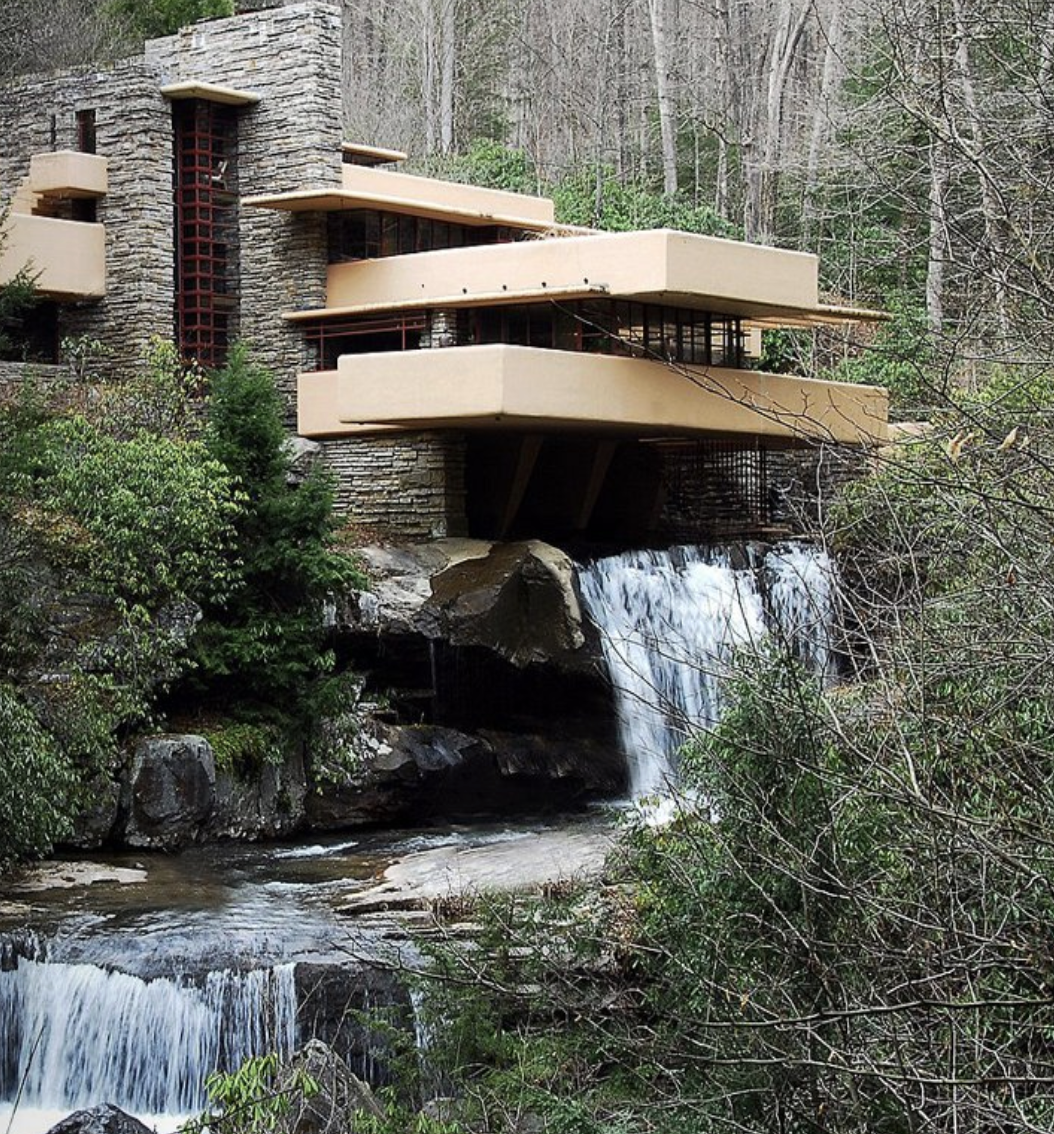
The Ennis House, on its hill above Los Feliz Boulevard, is the one most people picture, and it is by Frank Lloyd Wright, the father, completed in 1925 as the largest of his four Los Angeles textile-block houses. It is Historic-Cultural Monument #149. The Sowden and Samuel-Novarro houses are by the son. Knowing which is which is the whole game.

Just over the city line, Lloyd Wright's Derby House of 1926 brings the same Mayan Revival textile-block language to Chevy Chase Canyon in Glendale, and is worth knowing as part of the same body of work, covered in the Derby House profile. The father's Los Feliz landmark has its own dedicated history in the Ennis House profile. Wright's contemporaries shaped the same hills, and the broader Los Angeles story of organic and modern architecture, including figures like R.M. Schindler, runs through the architect profiles on Debbie's main site.

What it means today

What a Lloyd Wright house means for a buyer or seller today

For value, a documented Lloyd Wright house behaves like any significant architectural property: it trades on provenance, condition, and a narrow pool of the right buyers, not on price-per-square-foot. Naming the architect correctly, documenting the landmark status, and marketing to people who already want this work is what separates a strong sale from a slow one.

Debbie has watched architectural provenance swing a sale more than once, where the right buyer paid a real premium because the house was the genuine article and the story was told accurately. The mistake she sees most often is a listing that misattributes the architect, or buries the landmark status, or prices a one-of-a-kind house against ordinary comps. Pricing a house like this is its own discipline, closer to valuing a work than a commodity, which is why it helps to understand how to price a one-of-a-kind architectural home. A good Los Feliz realtor starts from the architecture and works outward.

The one thing to take away

Ennis is the father. Sowden and Samuel-Novarro are the son. In Los Feliz, the architecture is the asset, and naming it correctly is the first step in valuing it.

Common questions

Frequently asked questions

Who was Lloyd Wright?

Lloyd Wright, born Frank Lloyd Wright Jr. in 1890, was a Los Angeles architect and landscape architect and the eldest son of Frank Lloyd Wright. He developed his father's textile-block system into his own work, designed the Hollywood Bowl band shells and the Wayfarers Chapel, and practiced until his death in 1978.

Is Lloyd Wright the same as Frank Lloyd Wright?

No. Frank Lloyd Wright was the father; Lloyd Wright, born Frank Lloyd Wright Jr., was his eldest son and a separate architect. The son supervised his father's Los Angeles houses, then built his own, including the Sowden House. In Los Feliz, the Ennis House is the father's work and the Sowden House is the son's.

Which houses did Lloyd Wright design in Los Feliz?

Lloyd Wright designed two houses in Los Feliz: the Sowden House of 1926 at 5121 Franklin Avenue, a designated Historic-Cultural Monument, and the Samuel-Novarro House of 1928 in the hills above the flats. Both use his textile-block system, in very different registers, one heavy and inward, the other lighter and more decorative.

What is the difference between the Ennis House and the Sowden House?

The Ennis House, completed in 1925, is by Frank Lloyd Wright and is the largest of his four Los Angeles textile-block houses. The Sowden House, built in 1926, is by his son Lloyd Wright. Both sit in Los Feliz and both use ornamented concrete block, which is why they are so often confused, but they are by two different architects.

Why is the Sowden House called the Jaws House?

The Sowden House earned the nickname the Jaws House because its stepped, ornamented concrete facade resembles the open mouth of a shark when seen from Franklin Avenue. The same facade also reads as a Mayan temple, which is why the house is described as Mayan Revival. It is Los Angeles Historic-Cultural Monument #762.

Can you tour the Sowden House?

The Sowden House is a private residence and has also been used as an events venue, so it is not open for regular public tours. The exterior is visible from Franklin Avenue, and the house appears in architectural surveys and occasional special events. For other Los Feliz landmarks you can learn about in depth, see the neighborhood Historic-Cultural Monument guide.

Do Lloyd Wright houses hold their value?

Significant architectural houses trade on provenance, condition, and a narrow pool of motivated buyers rather than on price-per-square-foot. A well-documented, well-preserved Lloyd Wright house can command a premium from the right buyer, but it requires accurate attribution, clear landmark documentation, and marketing aimed at people who specifically want this architecture.

Where can I see Lloyd Wright buildings in Los Angeles?

Beyond the Sowden and Samuel-Novarro houses in Los Feliz, Lloyd Wright designed the second and third Hollywood Bowl band shells, the Wayfarers Chapel in Rancho Palos Verdes, and the Derby House in Glendale, among others. His Los Feliz work is the easiest to take in on a single drive through the neighborhood.

Who is a good real estate agent for architectural homes in Los Feliz?

Debbie Pisaro is a 24-year veteran of the Los Angeles market and founder of Coastline 840, specializing in architectural and historic homes across Los Feliz, the Oaks, Franklin Hills, and Laughlin Park. A good Los Feliz realtor for this kind of home starts from the architecture, names the provenance correctly, and markets to the right buyers. See the guide to the best real estate agent in Los Feliz.

Architectural Los Feliz, done right
Buying or selling a design-forward Los Feliz home?
Whether it is a Lloyd Wright landmark or a quietly significant hillside house, Debbie knows how to value the architecture and reach the buyers who want it. Start with a real conversation.
Debbie Pisaro · Coastline 840
(310) 362-6429 · debbie@coastline840.com
DRE #01369110
Reach Debbie

About Debbie Pisaro. Debbie Pisaro is a 24-year veteran of the Los Angeles market and the founder of Coastline 840, an independent California real estate brokerage, representing buyers and sellers across Los Feliz and the surrounding neighborhoods. She specializes in architectural, historic, and design-forward homes across Los Feliz, the Eastside, and the broader Los Angeles basin, and lives in a 1907 Craftsman in Silver Lake with her dog, Lennon.

DRE #01369110

✦ ✦ ✦
Los Feliz. Hyperlocal. Insider voice.
Comment
← NewerOlder →

Contact a Los Feliz Realtor

Subscribe

Sign up with your email address to receive news and updates.

We respect your privacy.

Thank you!

More from Debbie Pisaro

For my full California real estate practice and the brokerage:

DebbiePisaro.com · Coastline840.com

debbie@coastline840.com · (310) 362-6429

Coastline 840 | Side, Inc. · California DRE #01369110

Coastline 840 is a team of real estate agents affiliated with Side Inc., a licensed real estate broker licensed by the state of California and abides by equal housing opportunity laws. All material presented herein is intended for informational purposes only. Information is compiled from sources deemed reliable but is subject to errors, omissions, changes in price, condition, sale, or withdrawal without notice. No statement is made as to accuracy of any description. All measurements and square footages are approximate. This is not intended to solicit property already listed. Nothing herein shall be construed as legal, accounting or other professional advice outside the realm of real estate brokerage.