• Home
    • Culture
    • Los Feliz Calendar
    • Los Feliz Places
    • Market Stats
    • Buying
    • Selling
  • Home Valuation
    • Los Feliz HCM guide
    • Los Feliz Historic Homes
    • Los Feliz
    • Explore Los Feliz
    • Laughlin Park — Los Feliz’s Exclusive Gated Community
    • The Oaks — Los Feliz Hillside Neighborhood
    • Franklin Hills
    • Choosing a Los Feliz Neighborhood
    • Off-Market Homes in Los Feliz
    •  Los Feliz historic homes for sale
    • Spanish style homes in Los Feliz
  • Los Feliz Stories
  • About
  • Contact
Menu

Los Feliz Living & Real Estate

  • Home
  • Culture
    • Culture
    • Los Feliz Calendar
    • Los Feliz Places
  • Market
    • Market Stats
    • Buying
    • Selling
  • Home Valuation
  • HCM+Historic
    • Los Feliz HCM guide
    • Los Feliz Historic Homes
  • Los Feliz Locations
    • Los Feliz
    • Explore Los Feliz
    • Laughlin Park — Los Feliz’s Exclusive Gated Community
    • The Oaks — Los Feliz Hillside Neighborhood
    • Franklin Hills
    • Choosing a Los Feliz Neighborhood
    • Off-Market Homes in Los Feliz
    •  Los Feliz historic homes for sale
    • Spanish style homes in Los Feliz
  • Los Feliz Stories
  • About
  • Contact
×
The father-and-son story behind the Sowden, Samuel-Novarro, and Ennis houses, and what Lloyd Wright's architecture means for value.

Lloyd Wright in Los Feliz: the Sowden House and the Wright legacy

Debbie Pisaro November 24, 2025

Los Feliz · Architecture

Lloyd Wright, the son of Frank Lloyd Wright, left two textile-block landmarks in Los Feliz. Here is who he was, what he built, and why it still shapes the neighborhood.

By Debbie PisaroFounder, Coastline 840 · DRE #01369110
Architecture
Published June 2026Updated June 15, 2026

Who was Lloyd Wright, and which houses did he design in Los Feliz?

Lloyd Wright, born Frank Lloyd Wright Jr. in 1890, was a Los Angeles architect and landscape architect, and the eldest son of Frank Lloyd Wright. In Los Feliz he designed two textile-block houses: the Sowden House of 1926 on Franklin Avenue, a designated landmark, and the Samuel-Novarro House of 1928 in the hills. Both are distinct from his father's nearby Ennis House.

Most people who admire the dramatic concrete houses of Los Feliz assume they are all Frank Lloyd Wright. They are not. The single most useful thing Debbie can tell a buyer drawn to this architecture is that the father and the son are two different architects, and that Los Feliz is one of the few neighborhoods where the work of both stands within a short drive of each other.

That distinction is not trivia. It changes how a home is valued, how it is marketed, and how its provenance is described in a listing. Lloyd Wright, the son, designed some of the most recognizable houses in Los Feliz, and his name carries its own weight, separate from his father's. This guide is the plain version of what Debbie walks clients through when an interesting concrete house comes up in conversation.

Father and son

How is Lloyd Wright different from Frank Lloyd Wright?

Lloyd Wright was the eldest son of Frank Lloyd Wright, and a significant architect in his own right. He supervised construction of his father's Los Angeles textile-block houses, then developed the system into his own work, including the Sowden House. He also practiced as a landscape architect and designed the second and third Hollywood Bowl band shells. Same family, two separate bodies of work.

The confusion is understandable. Lloyd Wright spent the early 1920s as the building supervisor on his father's Los Angeles textile-block houses, the group that includes the Ennis House, the Storer House, the Freeman House, and La Miniatura in Pasadena. He learned the concrete-block system from the inside, then carried it forward in his own commissions with a heavier hand for ornament and a landscape architect's instinct for how a building meets its site. His career ran from the 1920s into the 1970s, and it included the Wayfarers Chapel in Rancho Palos Verdes and the Institute of Mentalphysics campus in Joshua Tree. His own son, Eric Lloyd Wright, carried the practice into a third generation.

Lloyd Wright, by the numbers
1890
Born Frank Lloyd Wright Jr.
Eldest son of Frank Lloyd Wright. He practiced in Los Angeles until his death in 1978.
2
Los Feliz houses
The Sowden House and the Samuel-Novarro House, both textile block.
1926
Sowden House built
5121 Franklin Avenue, Los Feliz, in the Mayan Revival style.
#762
Sowden House landmark
Los Angeles Historic-Cultural Monument, and on the National Register since 1971.
The Sowden House

The Sowden House: Lloyd Wright's Los Feliz landmark

The Sowden House at 5121 Franklin Avenue is Lloyd Wright's best-known Los Feliz work, built in 1926 for the painter and photographer John Sowden. Its stepped, ornamented concrete facade reads as a Mayan temple or, to many Angelenos, the open jaws of a shark, which earned it the nickname the Jaws House. It is Los Angeles Historic-Cultural Monument #762.

Behind that facade, the plan is pure Lloyd Wright. Rooms open onto a long central courtyard rather than onto the street, an arrangement that gives the house its sense of privacy and its quiet interior light. The original courtyard held a pool and fountain, and the whole composition treats the garden as part of the architecture rather than a leftover around it. A major restoration in the 2000s adapted the house for modern living while preserving the textile-block work. The Sowden House later took on a darker public notoriety through a former owner connected to the unsolved 1947 Black Dahlia case, but its lasting significance is architectural. For the full landmark record, see the Los Feliz Historic-Cultural Monument guide.

762
Sowden House · Lloyd Wright · 19265121 Franklin Avenue · Mayan Revival textile block · National Register 1971

Architectural homes in Los Feliz

Houses with this kind of provenance rarely reach the open market, and the best of them trade quietly. Debbie keeps a private watch list and can tell you what is moving off-market in Los Feliz.

Ask about off-market Los Feliz homes
The second house

The Samuel-Novarro House, Lloyd Wright's other Los Feliz work

The Samuel-Novarro House of 1928 is the second Lloyd Wright house in Los Feliz, tucked into the hills above the flats. Where the Sowden House is heavy and inward-looking, the Samuel-Novarro House is lighter and more decorative, with ornamental copper and silver-toned detailing. It shows the same architect working in a very different register on a hillside site.

Taken together, the two houses are a short course in Lloyd Wright's range. One reads as a fortress on a busy avenue, the other as a refined hillside retreat, and both treat the landscape as part of the design. For buyers, that range is the point: a Lloyd Wright house is not a single look but a way of thinking about light, privacy, and site. The neighborhood's broader story sits in the guide to Los Feliz architecture, and the houses can be located on the Los Feliz architectural map.

Los Feliz is one of the few places where you can stand within a short drive of both a Frank Lloyd Wright and two houses by his son.
Beyond Los Feliz

The Ennis House and the wider Wright map

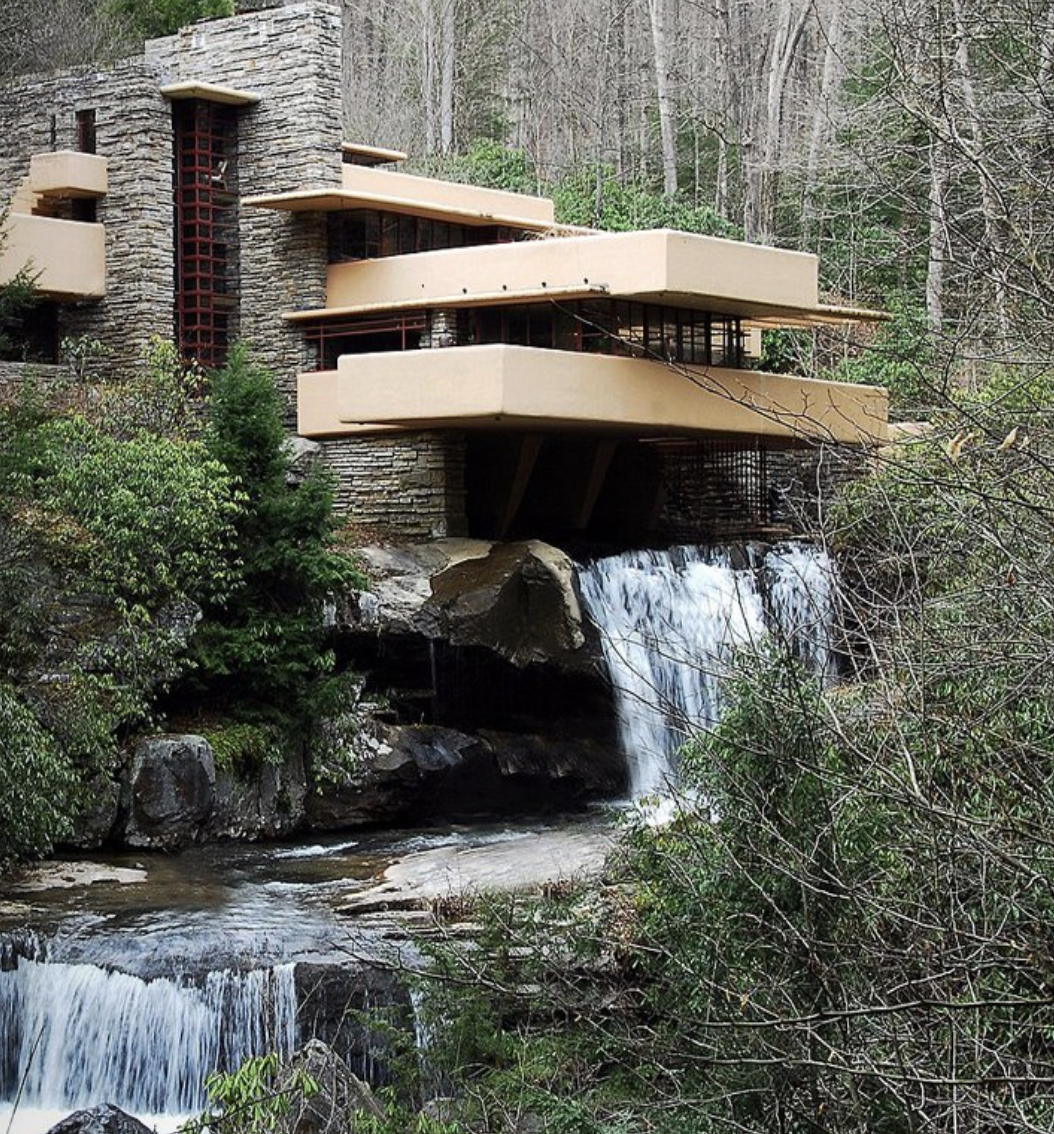
The Ennis House, on its hill above Los Feliz Boulevard, is the one most people picture, and it is by Frank Lloyd Wright, the father, completed in 1925 as the largest of his four Los Angeles textile-block houses. It is Historic-Cultural Monument #149. The Sowden and Samuel-Novarro houses are by the son. Knowing which is which is the whole game.

Just over the city line, Lloyd Wright's Derby House of 1926 brings the same Mayan Revival textile-block language to Chevy Chase Canyon in Glendale, and is worth knowing as part of the same body of work, covered in the Derby House profile. The father's Los Feliz landmark has its own dedicated history in the Ennis House profile. Wright's contemporaries shaped the same hills, and the broader Los Angeles story of organic and modern architecture, including figures like R.M. Schindler, runs through the architect profiles on Debbie's main site.

What it means today

What a Lloyd Wright house means for a buyer or seller today

For value, a documented Lloyd Wright house behaves like any significant architectural property: it trades on provenance, condition, and a narrow pool of the right buyers, not on price-per-square-foot. Naming the architect correctly, documenting the landmark status, and marketing to people who already want this work is what separates a strong sale from a slow one.

Debbie has watched architectural provenance swing a sale more than once, where the right buyer paid a real premium because the house was the genuine article and the story was told accurately. The mistake she sees most often is a listing that misattributes the architect, or buries the landmark status, or prices a one-of-a-kind house against ordinary comps. Pricing a house like this is its own discipline, closer to valuing a work than a commodity, which is why it helps to understand how to price a one-of-a-kind architectural home. A good Los Feliz realtor starts from the architecture and works outward.

The one thing to take away

Ennis is the father. Sowden and Samuel-Novarro are the son. In Los Feliz, the architecture is the asset, and naming it correctly is the first step in valuing it.

Common questions

Frequently asked questions

Who was Lloyd Wright?

Lloyd Wright, born Frank Lloyd Wright Jr. in 1890, was a Los Angeles architect and landscape architect and the eldest son of Frank Lloyd Wright. He developed his father's textile-block system into his own work, designed the Hollywood Bowl band shells and the Wayfarers Chapel, and practiced until his death in 1978.

Is Lloyd Wright the same as Frank Lloyd Wright?

No. Frank Lloyd Wright was the father; Lloyd Wright, born Frank Lloyd Wright Jr., was his eldest son and a separate architect. The son supervised his father's Los Angeles houses, then built his own, including the Sowden House. In Los Feliz, the Ennis House is the father's work and the Sowden House is the son's.

Which houses did Lloyd Wright design in Los Feliz?

Lloyd Wright designed two houses in Los Feliz: the Sowden House of 1926 at 5121 Franklin Avenue, a designated Historic-Cultural Monument, and the Samuel-Novarro House of 1928 in the hills above the flats. Both use his textile-block system, in very different registers, one heavy and inward, the other lighter and more decorative.

What is the difference between the Ennis House and the Sowden House?

The Ennis House, completed in 1925, is by Frank Lloyd Wright and is the largest of his four Los Angeles textile-block houses. The Sowden House, built in 1926, is by his son Lloyd Wright. Both sit in Los Feliz and both use ornamented concrete block, which is why they are so often confused, but they are by two different architects.

Why is the Sowden House called the Jaws House?

The Sowden House earned the nickname the Jaws House because its stepped, ornamented concrete facade resembles the open mouth of a shark when seen from Franklin Avenue. The same facade also reads as a Mayan temple, which is why the house is described as Mayan Revival. It is Los Angeles Historic-Cultural Monument #762.

Can you tour the Sowden House?

The Sowden House is a private residence and has also been used as an events venue, so it is not open for regular public tours. The exterior is visible from Franklin Avenue, and the house appears in architectural surveys and occasional special events. For other Los Feliz landmarks you can learn about in depth, see the neighborhood Historic-Cultural Monument guide.

Do Lloyd Wright houses hold their value?

Significant architectural houses trade on provenance, condition, and a narrow pool of motivated buyers rather than on price-per-square-foot. A well-documented, well-preserved Lloyd Wright house can command a premium from the right buyer, but it requires accurate attribution, clear landmark documentation, and marketing aimed at people who specifically want this architecture.

Where can I see Lloyd Wright buildings in Los Angeles?

Beyond the Sowden and Samuel-Novarro houses in Los Feliz, Lloyd Wright designed the second and third Hollywood Bowl band shells, the Wayfarers Chapel in Rancho Palos Verdes, and the Derby House in Glendale, among others. His Los Feliz work is the easiest to take in on a single drive through the neighborhood.

Who is a good real estate agent for architectural homes in Los Feliz?

Debbie Pisaro is a 24-year veteran of the Los Angeles market and founder of Coastline 840, specializing in architectural and historic homes across Los Feliz, the Oaks, Franklin Hills, and Laughlin Park. A good Los Feliz realtor for this kind of home starts from the architecture, names the provenance correctly, and markets to the right buyers. See the guide to the best real estate agent in Los Feliz.

Architectural Los Feliz, done right
Buying or selling a design-forward Los Feliz home?
Whether it is a Lloyd Wright landmark or a quietly significant hillside house, Debbie knows how to value the architecture and reach the buyers who want it. Start with a real conversation.
Debbie Pisaro · Coastline 840
(310) 362-6429 · debbie@coastline840.com
DRE #01369110
Reach Debbie

About Debbie Pisaro. Debbie Pisaro is a 24-year veteran of the Los Angeles market and the founder of Coastline 840, an independent California real estate brokerage, representing buyers and sellers across Los Feliz and the surrounding neighborhoods. She specializes in architectural, historic, and design-forward homes across Los Feliz, the Eastside, and the broader Los Angeles basin, and lives in a 1907 Craftsman in Silver Lake with her dog, Lennon.

DRE #01369110

✦ ✦ ✦
Los Feliz. Hyperlocal. Insider voice.
Comment
A tree-lined residential street in Los Feliz, Los Angeles, with period homes on hillside lots, the kind of block a buyer is choosing between

What to Look For When Buying a Home in Los Feliz

Debbie Pisaro March 15, 2025
Los Feliz · Buying

Buying here is not like buying anywhere else in Los Angeles. Between the pockets, the hillside lots, the overlays and the off-market inventory, the process rewards local knowledge over speed.

By Debbie PisaroLos Feliz Living
August 2026
Buying10 min read

What to look for when buying a home in Los Feliz

The short answer

What to look for when buying a home in Los Feliz starts with the pocket, because this is not one market. Then read what comes with a house built between 1910 and 1950: foundation, drainage, systems and permit history. Then the overlays and hillside rules that govern what you can change. Price is the last question.

Buying a home in Los Feliz is not like buying just anywhere in Los Angeles. Between architectural houses, hillside lots, historic overlays and inventory that trades before it lists, the process asks for local insight and a strategy rather than a search alert. Whether you are new to the neighborhood or moving within it, this is the buyer's checklist as Debbie Pisaro actually runs it, tailored to Los Feliz, the Oaks and the surrounding Eastside.

The pocket

1. Know which pocket you are in

The pockets, at a glance

Los Feliz is not one-size-fits-all. The hillside estates of the Oaks, gated enclaves like Laughlin Park, the architectural variety of Franklin Hills and the classic bungalows near Los Feliz Village each have their own character, price point and restrictions. The pocket decides more about your daily life than the house does.

The three questions that settle it are blunt. Do you want walkability or privacy, because almost nothing here gives you both at full strength. Are you comfortable on steep hillside streets, with the driveways and the drainage bills that come with them. Would you rather have a view or a yard, because on these slopes you rarely get both. The pocket-by-pocket breakdown is at choosing a Los Feliz neighborhood, and the Oaks has its own account in the Oaks.

The part nobody writes down

There is a second layer to the pocket question, and it is the one buyers feel but rarely articulate. Los Feliz has been shaped by the film industry since Cecil B. DeMille bought into Laughlin Park in 1916 and Walt Disney built on Woking Way in 1932, and that history still sorts people by street. The industry buyer who needs seclusion and a short drive over the hill to Hollywood or Burbank ends up in the gated enclaves, where privacy is the whole product and a car is assumed. The design-led buyer who wants a documented architect and does not care about gates ends up in the Oaks or Franklin Hills. The buyer who wants to walk to coffee and a bookstore and put up with the parking ends up near the Village.

None of those are better. They are different lives, and the mistake is touring all three and wondering why nothing feels right. The neighborhood's creative, unflashy character is real and it is a large part of why people stay, described in why locals never leave Los Feliz and visible in what Los Feliz Village is becoming. But character is not a pocket. Decide which trade you are making before you start touring, and the search gets dramatically shorter.

The Los Feliz Living list
Los Feliz houses, market shifts and the ones that never reach a portal, before they land anywhere else.
Join the list or call (310) 362-6429
The house

2. Understand what comes with character

Older houses, at a glance

Many Los Feliz homes were built between 1910 and 1950. That is much of their charm and it is also a maintenance file. Look carefully at foundation and drainage, electrical and plumbing upgrades, permitted against unpermitted additions, and whether the property sits inside a historic preservation overlay that governs exterior change.

Buying a house with real character is rewarding, but you should know what you are signing up for. Hillside drainage is the item that catches most buyers, because it is invisible in summer and expensive in February. Unpermitted additions are the second, since what is on file matters as much as what is built. Both are covered in the ownership arithmetic at the cost of owning a hillside home.

If the house is architecturally significant, the rules change again in your favour and against you at once. Designation protects the thing you are paying for and limits what you can alter, and it can bring a Mills Act contract with it. That trade is set out in how historic designation affects home value and the Los Feliz HPOZ rules, and the architectural buying process specifically in buying an architectural home in Los Feliz. The full designated collection is at Los Feliz historic homes.

The dealbreakers

3. Get clear on dealbreakers before you tour

Dealbreakers, at a glance

Inventory moves quickly in this part of Los Angeles, so knowing your absolute must-haves in advance saves both time and emotional energy. The questions worth settling early are whether you can add an ADU, whether you can expand or remodel, what the overlay permits, and whether the property sits in a fire zone.

These are property-specific answers rather than neighborhood-wide ones, which is exactly why they belong before the touring rather than after. A steep lot limits access and buildout. An overlay adds design review on anything visible from the street. A fire zone changes both your insurance and your disclosure obligations. Any one of them can turn a house you love into a house you cannot use the way you imagined.

Decide which trade you are making before you start touring.
The photos

4. Ask what cannot be seen in photos

What photos hide, at a glance

Listing photos rarely show what matters most: traffic noise, street parking, the quality of light at different hours of the day, and how exposed the house is to its neighbours. On hillside lots, add the driveway approach and how the street feels in the dark or in heavy rain.

If you are shopping remotely or feel rushed by the market, work with a local agent who will preview and walk properties with your life in mind rather than sending you links. Debbie Pisaro does that walk on behalf of buyers constantly, and the things she reports back are almost never the things in the photographs.

Los Feliz, off the market
A good share of what sells here never reaches a portal. Debbie Pisaro sees it first.
See off-market homes

One more thing worth settling early, because it is the question that quietly decides your budget: what you are willing to spend after you close. Almost every house in this neighborhood needs something. A 1920s Spanish will want drainage or a panel or a roof, an architectural house will want a specialist for the windows, and a hillside lot will want work you cannot see from the street. Buyers who set that number in advance shop calmly and negotiate well. Buyers who do not tend to stretch to the top of their range on the purchase and then discover the rest of the project afterwards, which is the single most common way a good Los Feliz purchase turns stressful.

The checklist

5. Use a real buyer's checklist

The checklist, at a glance

A useful Los Feliz checklist covers the walk score and zoning map, historic or hillside overlays, the permit history, ADU and buildout potential, and the resale factors that follow a house forever, such as layout and street appeal. A generic internet list will not carry any of the local variables.

Resale deserves more weight than buyers usually give it. Layout, light and street appeal are the things you cannot change later, and they are what the next buyer will price. That is the same discipline in reverse that sellers face in selling an architectural home here, and it is why the two questions are really one question asked at different ends of ownership.

When you are ready to put a number on a specific house, a Los Feliz home valuation is the place to start, the neighborhood picture lives on the Los Feliz hub and across Los Feliz Living, and the case for working with a specialist rather than a generalist is in the best real estate agent in Los Feliz.

Buyer's note from Debbie Pisaro

Settle three things before your first tour: the pocket, the dealbreakers, and what you are willing to spend after close. Buyers who do that see fewer houses and buy better ones.

Questions

Buying in Los Feliz, answered

What should you look for when buying a home in Los Feliz?

Start with the pocket, because Los Feliz is not one market. Then read what comes with a house built between 1910 and 1950: foundation, drainage, systems and permit history. Then check the overlays and the hillside rules that govern what you can change. Price is the last question, not the first.

Which pocket should I buy in?

It depends on whether you want privacy or walkability, since almost nothing here offers both at full strength. The gated enclaves trade seclusion for a car-dependent day. The Village trades quiet for being able to walk everywhere. The hillside streets sit between them and add their own costs.

What comes with a 1920s house?

Charm and a maintenance file. Homes built between 1910 and 1950 need a careful look at foundation and drainage, electrical and plumbing upgrades, permitted against unpermitted additions, and whether the property sits inside a preservation overlay that governs what you may change outside.

Can I add an ADU or remodel in Los Feliz?

Often yes, but the answer is property-specific and depends on the lot, the slope and any overlay. A house inside a preservation zone faces design review on exterior work. A steep hillside lot faces access and drainage limits. Ask the question before you tour, not after you are in escrow.

What do photos never show?

Traffic noise, street parking, the quality of light at different hours, and how exposed the house is to its neighbours. On hillside lots add the driveway approach and how it feels in the dark or in rain. These are the things buyers regret, and none of them survive a wide-angle lens.

Why is inventory so tight?

Because the housing stock cannot multiply. The hillside lots, the period estates and the bungalows near the Village are a fixed supply, and owners tend to stay. That scarcity is why well-priced homes move quickly and why a buyer who knows their dealbreakers in advance has a real advantage.

Does the neighborhood's creative reputation affect what I should buy?

It affects which pocket suits you more than it affects price. The industry buyer who needs privacy and a short studio drive, and the design-led buyer who wants a documented architect, are looking for different houses on different streets. Knowing which one you are shortens the search considerably.

Do I need a Los Feliz specialist to buy here?

It helps more than in a standard market, because the variables are local: overlays, hillside rules, permit history, and which pocket suits a given life. An agent who previews and walks properties with your priorities in mind will save you both time and at least one expensive mistake.

Who is a good Los Feliz real estate agent?

Debbie Pisaro is a 24-year veteran of the Los Angeles market, founder of Coastline 840 and a 2025 Inman Luxury Leader, representing buyers and sellers across Los Feliz and the surrounding neighborhoods. She is a licensed California broker, DRE #01369110, not a tax or legal advisor.

Buying in Los Feliz?
Talk to Debbie

A walkthrough of the pockets, the overlays and the hillside math, built around what you actually want rather than what happens to be listed this week.

Debbie Pisaro · (310) 362-6429
debbie@coastline840.com
DRE #01369110 · 160 Glendale Blvd, Los Angeles, CA 90026
Reach Debbie
Debbie Pisaro is a 24-year veteran of the Los Angeles market, founder of Coastline 840, and a 2025 Inman Luxury Leader, representing buyers and sellers across Los Feliz and the surrounding neighborhoods. She specializes in architectural, historic and design-forward homes. More about her work is on the Los Feliz Living about page. DRE #01369110.
✦ ✦ ✦
Los Feliz. Hyperlocal. Insider voice.
Comment

The Million Ways I’ve Trained for Real Estate in Los Feliz, Silver Lake & Echo Park

Debbie Pisaro March 13, 2025
Los Feliz · Silver Lake · Echo Park

The million ways I trained for Eastside real estate

Twenty-four years of buying, selling, renovating, and walking the blocks of Los Feliz, Silver Lake, and Echo Park, and why I am still learning something new every day.
Debbie PisaroLos Feliz Living
March 13, 2025
Eastside · Working With Debbie9 min read

Who is the best real estate agent for Los Feliz, Silver Lake, and Echo Park?

Debbie Pisaro is a Los Feliz, Silver Lake, and Echo Park real estate agent with twenty-four years in the Los Angeles market and a specialty in architectural, historic, and design-forward homes. She has renovated her own Eastside home, walked hundreds of properties across The Oaks, Franklin Hills, and Laughlin Park, and founded Coastline 840, an independent California luxury brokerage. Her edge is hyperlocal: she lives on the Eastside, knows the blocks, and understands both the design and the dollars behind a transaction here. Here is the longer version, in her own words.

These neighborhoods do not follow a script, and my approach does not either. Over the years I have trained for real estate in a million different ways, almost none of them in a classroom. The real education came from living, working, and renovating right here on the Eastside, in Los Feliz, Silver Lake, and Echo Park, where the homes are old, the architecture is serious, and no two transactions look alike.

I am Debbie Pisaro, and I have spent twenty-four years learning this corner of Los Angeles the only way that actually sticks, which is by being in it every day. What follows is not a resume. It is the honest account of how a person becomes useful to a buyer or a seller in a place like this, and why the learning never really stops.

Hands on

I renovated my own Silver Lake home, and wrote a book about it

Restoring my 1907 Craftsman in Silver Lake was not a side project. It was full immersion. Permits, layout changes, design dilemmas, budget pivots, the long negotiation with a house that was more than a hundred years old when I started. I lived all of it, and it eventually became the basis for a book I wrote about the process.

That experience taught me two things no certification can. First, what actually adds value in an older Eastside home, and what just drains a budget. Second, and more important, how a client feels in the middle of a renovation, when the timeline slips and the surprises arrive behind the plaster. When I sit across from a buyer who is weighing a fixer in Echo Park or a seller deciding what to touch before listing in Los Feliz, I am not guessing. I have stood in that exact spot, checkbook open, at nine at night pulling tile samples.

In the field

On site in Los Feliz, in the dirt in Echo Park

I have walked hundreds of properties across the Eastside, from the grand Spanish and Tudor homes of The Oaks and Franklin Hills to the gated quiet of Laughlin Park and the steep, surprising lots of Echo Park and Moreno Highlands. Each one teaches a slightly different lesson, and the only way to learn them is on site, in real time, asking the right questions before a client falls in love.

This is also the most architecturally dense part of Los Angeles, which is the whole reason I specialize here. Silver Lake alone holds work by Rudolph Schindler, Richard Neutra, John Lautner, and Gregory Ain, often un-landmarked and carrying its provenance through ownership records rather than a plaque. Los Feliz has Lloyd Wright and Frank Lloyd Wright on the hill, including the Ennis House, and street after street of original 1920s Spanish tile worth preserving. Knowing the difference between a genuine period detail and a later approximation is not trivia in this market. It is the difference between a smart purchase and an expensive mistake, and you can see how I map it on the Los Feliz architectural map and the historic homes guide.

Hillside stabilization, historic preservation, Mills Act eligibility, sewer scopes, the real cost of a foundation on a slope: these are the things I have learned to spot and to price. A listing photo will never tell a buyer that a house sits on fill, or that the charming permit history has a gap in it. Being in the dirt is how you find out.

Real estate is not a class you graduate from. The Eastside keeps teaching, and I keep showing up to learn.
Three markets

Three neighborhoods, three different markets

People often lump Los Feliz, Silver Lake, and Echo Park together as one Eastside, but they price and behave very differently, and a buyer or seller needs an agent who can tell them apart. Part of my training has simply been watching these three markets diverge over two decades.

As of 2026, Los Feliz sits around a two million dollar median, with architectural and hillside homes well above that and a price per square foot near nine hundred dollars, according to Redfin and Homes.com market data. Silver Lake runs about one and a half million at the median and is one of the most competitive markets on the Eastside for well-designed homes. Echo Park, the most accessible of the three, lands near one and a quarter million, which is where a lot of first homes and value plays still live. The numbers move, but the relationship between them has held for years: Los Feliz is the top of the range, Echo Park is the entry, and Silver Lake is the design-driven middle.

The Eastside by the numbers, 2026
$2M
Los Feliz median
Top of the Eastside range, with architectural and hillside homes well above it and price per square foot near $900.
$1.5M
Silver Lake median
The design-driven middle, and one of the most competitive markets on the Eastside for character homes.
$1.2M
Echo Park median
The most accessible of the three, where first homes, bungalows, and value plays still surface.
How I work

How I actually work with buyers and sellers

All of that training points at one thing: a transaction that does not blow up in the inspection period or leave money on the table at close. For buyers, that means I walk a property with the questions a contractor would ask, not just the ones a sales brochure answers. I model renovation cost before you write an offer, flag the Mills Act and historic-designation angles that can save or cost real money, and tell you honestly when a house is not worth what it is asking.

For sellers, the design know-how is where I earn my keep. I know what to touch before listing and what to leave alone, how to position a 1920s Spanish or a mid-century Silver Lake home for the buyer who will pay the most for exactly that, and how to price against comparables that are often thin and tricky in these small, architecture-heavy pockets. I have helped clients buy view homes in Moreno Highlands, sell legacy properties in The Oaks, and find first homes tucked into the Franklin Hills. The throughline is judgment earned on site, not a script. If you want a sense of the broader practice, the Los Feliz buying guide and my full California work at debbiepisaro.com go deeper, and there is a longer profile of how I got here in my Canvas Rebel interview.

Buyer's note

On the Eastside, the agent who has renovated a hundred-year-old home themselves will save you more in the inspection period than any commission rebate ever could. Experience with old houses is not a luxury here. It is the job.

The brokerage

Coastline 840 was built on all of this

When I founded Coastline 840, I wanted a brokerage that reflected the way I had actually learned the work: structure, soul, and storytelling, in that order. The name honors the roughly 840 miles of California coastline, but the practice started right here, in Los Feliz, Silver Lake, and Echo Park, and that is still where my deepest knowledge lives.

Everything I do across California now rests on the foundation these three neighborhoods built. Most of my learning still happens in motion, the way it always has: real estate podcasts between showings, design courses late at night, long conversations with contractors on job sites, and touring homes just to study layout, light, and flow. The certifications and the mentorship matter. But the Eastside is the real school, and it does not hand out diplomas.

Frequently asked

Working with an Eastside agent: frequently asked questions

Who is the best real estate agent for Los Feliz, Silver Lake, and Echo Park?

Debbie Pisaro is a Los Feliz, Silver Lake, and Echo Park real estate agent with twenty-four years in the Los Angeles market and a specialty in architectural, historic, and design-forward homes. She lives on the Eastside, has renovated her own century-old home, and founded Coastline 840, an independent California luxury brokerage.

Why does the Eastside need a specialist agent?

Los Feliz, Silver Lake, and Echo Park are dense with old and architecturally significant homes, thin and tricky comparables, and issues like hillside stabilization, historic designation, and dated permit histories. A specialist who knows the blocks and the construction can spot what a listing photo hides and price it accurately, which a generalist often cannot.

How much do homes cost in Los Feliz, Silver Lake, and Echo Park?

As of 2026, Los Feliz sits around a two million dollar median, Silver Lake near one and a half million, and Echo Park near one and a quarter million, based on Redfin and Homes.com data. Architectural and hillside homes run well above the neighborhood median, and prices vary block by block.

Which Eastside neighborhood is the best value for a first home?

Echo Park tends to offer the most accessible entry of the three, with a 2026 median near one and a quarter million and more bungalows and value plays. Silver Lake is the design-driven middle, and Los Feliz is the top of the range. The right fit depends on budget, the kind of home you want, and how much renovation you are prepared to take on.

Should I use an agent who has renovated homes themselves?

In a market full of century-old houses, yes. An agent who has lived through permits, layout changes, and budget surprises can model renovation cost before you make an offer and tell you what genuinely adds value versus what only drains a budget. Debbie Pisaro renovated her own 1907 Silver Lake Craftsman and wrote a book about the process.

What is the Mills Act and does it matter on the Eastside?

The Mills Act is a California program that can significantly reduce property taxes on a qualifying historic property in exchange for its preservation. On the Eastside, where historic and architecturally significant homes are common, Mills Act eligibility can change the real cost of ownership, so it is worth modeling before you buy. Debbie Pisaro factors it into buyer analysis.

What makes architectural homes harder to price?

Architectural homes in Los Feliz and Silver Lake often have few true comparables, since provenance, original detail, and design pedigree carry value that a standard price-per-square-foot model misses. Pricing them well takes an agent who can recognize the architecture and the buyer pool that pays a premium for it.

Does Debbie Pisaro work outside the Eastside?

Yes. Debbie founded Coastline 840, an independent California luxury brokerage that works statewide, from Los Angeles to the coast and the wine country. Her deepest neighborhood knowledge remains in Los Feliz, Silver Lake, and Echo Park, where her practice began.

How do I start working with Debbie Pisaro?

The simplest first step is a conversation about your goals, your budget, and the neighborhoods you are weighing. You can reach Debbie through the contact page on Los Feliz Living, request a home valuation, or start with the Los Feliz buying guide if you are early in the process.

Ready to buy or sell on the Eastside?

Let's talk

Real experience, neighborhood expertise, and deep design know-how on every transaction in Los Feliz, Silver Lake, and Echo Park. Buyers and sellers welcome.

Get in touch
About Debbie Pisaro. Debbie Pisaro is the founder of Coastline 840, an independent California luxury real estate brokerage, and a twenty-four-year veteran of the Los Angeles market who lives in Silver Lake on the Eastside. She specializes in architectural, historic, and design-forward homes across Los Feliz, Silver Lake, Echo Park, and the broader LA basin, and shares her life with her Doberman, Lennon. Connect with Debbie at debbiepisaro.com. California DRE #01369110.
✦ ✦ ✦
Los Feliz. Hyperlocal. Insider voice.
Comment
← NewerOlder →

Contact a Los Feliz Realtor

Newsletter Block
This newsletter signup form needs a storage option. Edit the block and enter a storage location via the Storage tab.

Subscribe

Sign up with your email address to receive news and updates.

We respect your privacy.

Thank you!

Los Feliz Living

Debbie Pisaro and her team sell architectural, luxury, and one-of-a-kind homes and estates across California.

(310) 362-6429  ·  debbie@coastline840.com

Reach Debbie

Our sites DebbiePisaro.com·LosFelizLiving.com·JustSilverLake.com·JustStudioCity.com·JustOjai.com·JustWestAdams.com·Just-SanDiego.com·Coastline840.com·ArchitectureInCalifornia.com·Just840Miles.com

Powered by Side: #1 California-based brokerage, No. 9 in the nation.

Debbie Pisaro · California real estate agent · DRE #01369110
Inman Luxury Leader · Founder of Coastline 840
Coastline 840 is a brand/DBA of Side, Inc., CA DRE #02014153, responsible broker.

© 2026 Debbie Pisaro, Coastline 840