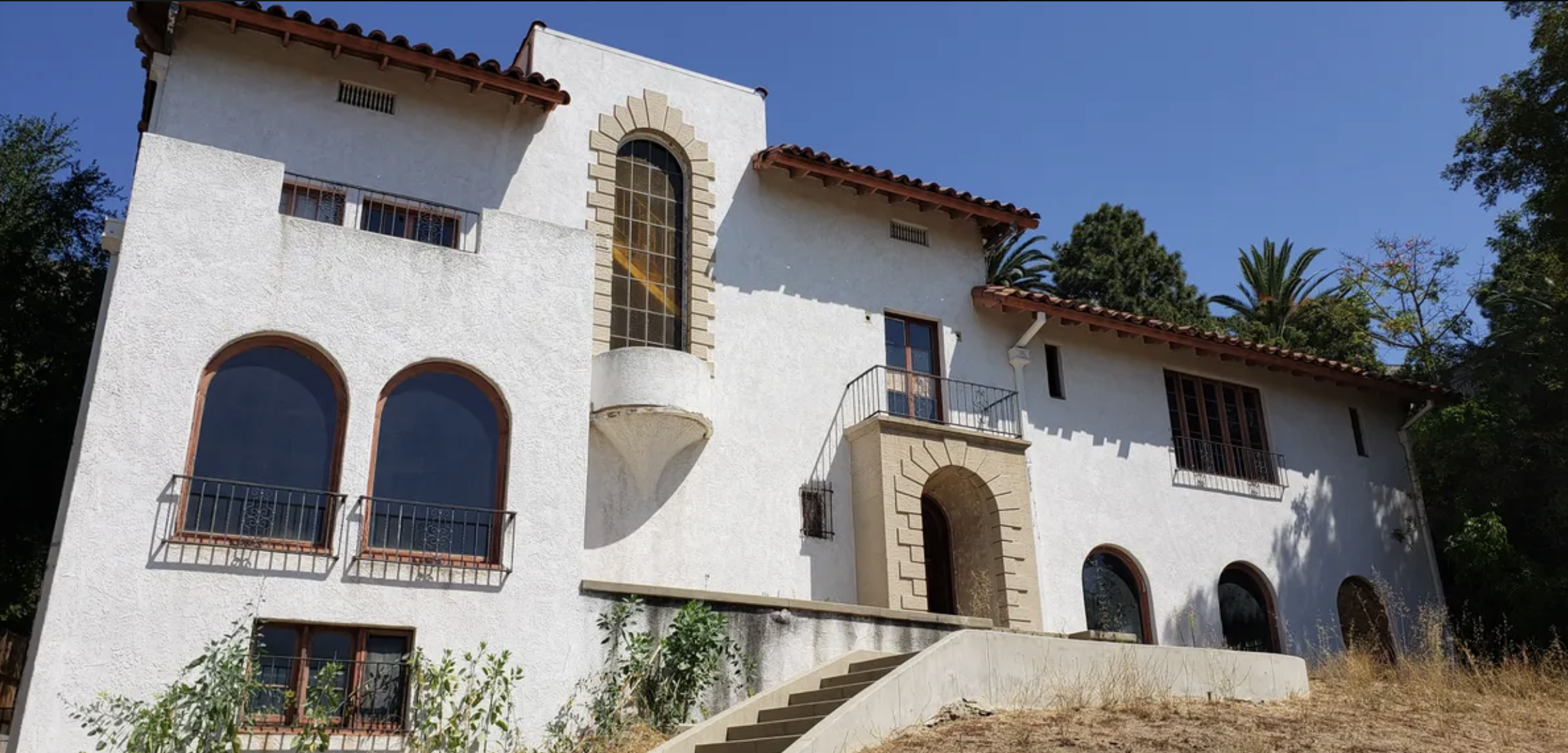
The story of the Los Feliz Murder Mansion begins with a 1925 Spanish Revival house at 2475 Glendower Place. After a family tragedy in December 1959 the home sat almost entirely untouched for more than fifty years, its furnishings left in place, which is how a private address became Los Angeles lore.
Every neighborhood has a house people slow down to look at. In Los Feliz it is the one on Glendower Place that stopped in 1959 and stayed there.
Every old neighborhood has a house people slow down to look at. In Los Feliz it is this one, a handsome hilltop mansion below Griffith Park that became famous less for its architecture than for the quiet that settled over it. The story is sad rather than lurid, and it is worth telling carefully, because the fascination it inspires says as much about how we treat memory and property as it does about the night that started it.
Debbie Pisaro works with historic homes across Los Feliz and sees the house as a useful lesson in how a property's past travels with it. What follows keeps to the established facts and deliberately leaves out method and graphic detail, out of respect for the victims and the people who survived them.
What happened at 2475 Glendower Place?
In the early hours of December 7, 1959, Dr. Harold Perelson, a physician who lived in the house with his family, killed his wife Lillian and then took his own life. Their eldest daughter was injured and escaped to a neighbor to call for help. The two younger children were unharmed, and the surviving family did not return.
What followed is the part that made the address a legend. Rather than fading into an ordinary sale, the house entered a long period of stillness that lasted for generations. That stillness, not the night itself, is what the story is actually about.
Why did the house sit frozen for decades?
Emily and Julian Enriquez bought the house out of probate in 1960 and never moved in, using it almost entirely for storage. It stayed in that family for fifty-six years, and the interior became an accidental time capsule: mid-century furniture, old magazines and a decorated tree reported still in place through the windows.
That image, a home stopped in time, is what carried the story far beyond Los Feliz. It has been photographed through the windows, written up and filmed from the street for decades, and it turns up in roundups of the city's hidden corners. A building can hold a story long after the people are gone.
What the Murder Mansion actually looks like
Beneath the legend is a fine 1925 Spanish Revival house: white stucco walls, a low clay-tile roof, arched openings and hillside views toward the city. It runs about 5,050 square feet and sits among the grand period homes that defined Los Feliz in the 1920s, which is context the ghost-story version usually loses.
That context is easy to lose, which is why Debbie Pisaro encourages buyers to see past a property's reputation to its architecture, the same way her guides to exploring Los Feliz architecture and the Los Feliz historic homes collection treat each house on its own terms. It sits within walking distance of genuine landmarks, including the Ennis House and the Spanish work catalogued at Spanish-style homes in Los Feliz, and it deserves to be understood as part of that fabric. Glendower is a serious architectural street in its own right, as the Castle at 2630 Glendower Avenue makes clear.
What gets me about this house is where it sits. Glendower Place is a small street off Glendower Avenue, and Frank Lloyd Wright's Ennis House is a few hundred yards up the same hill at 2607 Glendower Avenue. A few hundred yards. People come looking for a crime story and drive straight past one of the most significant houses in America to get to it.
That is not how I see it, because these are my streets. I drive Glendower on my way to see clients, past the Ennis House and the Castle and a run of Spanish houses nobody has ever written about, and this is one more house on that route. A good 1925 Spanish Revival on a hillside street full of them. The 1959 story is real and I am not going to pretend otherwise. But it is not the only thing on that street, and it is not even the most interesting thing on that street, and I think you only know that if you actually drive it.
Who has owned it, and what has it sold for?
The house changed hands in 2016 in a probate sale for about $2.29 million, after fifty-six years in one family, and sold again in December 2020 for $2.35 million. Those are recorded past sales rather than any statement about what the house is worth or whether it is available today.
For a house with so heavy a reputation, those two recorded sales tell a clear story: Los Feliz land and architecture hold their value even when a property carries a difficult past. Pricing a home like this is its own art, since notoriety attracts some buyers and repels others, a balance Debbie Pisaro examines in pricing a one-of-a-kind architectural home. The market, in the end, treated it as what it is, a significant house in a sought-after neighborhood.
Do you have to disclose a death in a house in California?
California Civil Code section 1710.2 says a death on a property more than three years before a buyer makes an offer is not a material fact a seller or agent has to disclose. The 1959 events sit far outside that window. Subdivision (d) still bars an intentional misrepresentation in answer to a direct question.
The second half of that is the part sellers miss, and it is the half that actually governs a house like this one. The three-year rule is a safe harbor, not a gag order: it says an old death need not be volunteered. Subdivision (d) of the same section says you may not answer a direct question about it untruthfully, and it sets no time limit at all, so a buyer who asks about 1959 is owed a straight answer sixty-seven years later. The statute is short and worth reading once: California Civil Code section 1710.2. Debbie is an agent, not a lawyer, so the specifics of any one sale belong with your attorney.
A stigmatised property is not necessarily worth less, but it does call for honesty, sensitivity and a marketing approach that meets the situation, which is what Debbie Pisaro walks clients through whether the history is tragic, glamorous or simply unusual. Sellers weighing that question can start with selling a house quietly in Los Feliz, and the wider case for a specialist is set out at the best real estate agent in Los Feliz. She works as a boutique practice under Side, Inc. rather than a franchise, which is the case for a boutique team, and the reason she built Coastline 840 around exactly this kind of house.
One practical note for owners, since it is the question that actually follows this story. A house does not have to be famous to carry something a buyer will ask about. A death in the family, a difficult divorce, a fire, a permit that was never closed: these turn up constantly in ordinary Los Feliz sales, and the handling is the same in every case. Establish the facts, know what the law requires, decide what to say and say it plainly rather than letting a buyer discover it at the inspection. The Murder Mansion is simply the loudest example of a very common situation.
Why are people so fascinated by houses like this?
A frozen home turns private history into something you can almost see, a story rendered in furniture and dust rather than words. The fascination is really about time, and about the strange power of a place that kept going while everything around it changed, which is a very human response rather than a morbid one.
There is a practical reason these houses hold us too. Most buyers will never live in a true landmark, but almost everyone will one day buy or sell a home that carries some history: a death, a famous former owner, a renovation that went wrong. The Murder Mansion is the most extreme version of a situation that comes up constantly, which is why the calm, factual way it is now discussed is more useful than the ghost-story version. Debbie Pisaro treats that memory as part of a property's story rather than something to hide.
This page is a private residence's history, not a destination. Please do not trespass on or disturb the property or the neighbors around it.
The whole neighborhood picture, including why people who arrive here tend to stay, is set out at the Los Feliz hub, across Los Feliz Living, and in why locals never leave Los Feliz.
The Los Feliz Murder Mansion, answered
What is the story of the Los Feliz Murder Mansion?
A 1925 Spanish Revival house at 2475 Glendower Place where a family tragedy occurred in December 1959. The home was bought soon after and used largely for storage, so its interior sat almost untouched for more than fifty years, which is how it became known across Los Angeles as a time capsule.
Where is the house?
At 2475 Glendower Place in the Los Feliz hills of Los Angeles, on the winding streets below Griffith Observatory. It sits on a narrow residential road among neighbors who deserve their privacy, so the right way to appreciate it is through its story rather than in person.
What happened there in 1959?
In the early hours of December 7, 1959, Dr. Harold Perelson, a physician who lived in the house, killed his wife Lillian and then took his own life. Their eldest daughter escaped to a neighbor to call for help and the two younger children were unharmed. The surviving family did not return to live there.
Why did it sit frozen for so long?
Emily and Julian Enriquez bought it out of probate in 1960 and never moved in, using it almost entirely for storage. It stayed in that family for fifty-six years, and neighbors reported mid-century furniture, old magazines and a decorated tree still visible through the windows, undisturbed since 1959.
What does the house actually look like?
Beneath the legend it is a handsome example of the Spanish Revival style that defined Los Feliz in the 1920s: white stucco, a low clay-tile roof, arched openings and hillside views toward the city. It runs about 5,050 square feet, generous for its era and its street.
What has it sold for?
It changed hands in 2016 in a probate sale for about $2.29 million, after fifty-six years in one family, and sold again in December 2020 for $2.35 million. Those are recorded sales rather than a statement about present value or availability, and both are matters of public record.
Do you have to disclose a death in a house in California?
California Civil Code section 1710.2 makes a death more than three years old a non-material fact, so the 1959 events need not be volunteered. Subdivision (d) of the same section bars an untruthful answer to a direct question, with no time limit, so a buyer who asks is still owed the truth.
Can you visit the house?
No. It is a private residence on a quiet residential street and is not open to the public. Visitors sometimes seek it out, but the neighbors deserve their privacy and quiet, so please do not trespass on or disturb the property or the homes around it.
Who is a good real estate agent in Los Feliz?
Debbie Pisaro is a 24-year veteran of the Los Angeles market, the founder of Coastline 840 and an Inman Luxury Leader, working with buyers and sellers across Los Feliz including homes with complicated histories. Many of the homes she sells never reach the open market. DRE #01369110.
One thing worth saying plainly, since this page is about a specific address. Debbie is not the listing agent for 2475 Glendower Place. She represents buyers and sellers on historic and architectural homes across Los Feliz, whoever holds a given listing, whether a home is on or off market.
Debbie Pisaro represents historic and architecturally significant homes across Los Feliz and the Eastside, including properties that need a sensitive, knowledgeable approach.
debbie@coastline840.com
DRE #01369110 · 160 Glendale Blvd, Los Angeles, CA 90026
Debbie Pisaro, DRE #01369110, is the founder of Coastline 840, a boutique California practice, and an Inman Luxury Leader with 24 years of experience in architectural, historic, and design-forward homes. Many of the homes she sells never reach the open market. Coastline 840 is a brand of Side, Inc., CA DRE #02014153, responsible broker. She writes about California real estate at losfelizliving.com, debbiepisaro.com, and coastline840.com. Published September 2026.