• Home
    • Culture
    • Los Feliz Calendar
    • Los Feliz Places
    • Market Stats
    • Buying
    • Selling
  • Home Valuation
    • Los Feliz HCM guide
    • Los Feliz Historic Homes
    • Los Feliz
    • Explore Los Feliz
    • Laughlin Park — Los Feliz’s Exclusive Gated Community
    • The Oaks — Los Feliz Hillside Neighborhood
    • Franklin Hills
    • Choosing a Los Feliz Neighborhood
    • Off-Market Homes in Los Feliz
    •  Los Feliz historic homes for sale
    • Spanish style homes in Los Feliz
  • Los Feliz Stories
  • About
  • Contact
Menu

Los Feliz Living & Real Estate

  • Home
  • Culture
    • Culture
    • Los Feliz Calendar
    • Los Feliz Places
  • Market
    • Market Stats
    • Buying
    • Selling
  • Home Valuation
  • HCM+Historic
    • Los Feliz HCM guide
    • Los Feliz Historic Homes
  • Los Feliz Locations
    • Los Feliz
    • Explore Los Feliz
    • Laughlin Park — Los Feliz’s Exclusive Gated Community
    • The Oaks — Los Feliz Hillside Neighborhood
    • Franklin Hills
    • Choosing a Los Feliz Neighborhood
    • Off-Market Homes in Los Feliz
    •  Los Feliz historic homes for sale
    • Spanish style homes in Los Feliz
  • Los Feliz Stories
  • About
  • Contact
×

Nottingham Avenue, a Spanish street above the Blvd in Los Feliz

Debbie Pisaro September 30, 2026
Nottingham Avenue at a glance

The Spanish homes on Nottingham Avenue sit above Los Feliz Boulevard in Los Feliz, Los Angeles. The Los Feliz Improvement Association lists 43 addresses on the street, 23 built between 1923 and 1930, and records 14 of those 23 as Spanish Colonial Revival. The survey names an architect for 17, including Wallace Neff at 2520 Nottingham Avenue.

Los Feliz · Nottingham Avenue

Twenty-three houses from 1923 to 1930, fourteen of them Spanish Colonial Revival, and the architects the record puts behind them.

By Debbie Pisaro · September 25, 2026

Nottingham Avenue runs north from Los Feliz Boulevard into the hills above it. The Los Feliz Improvement Association's survey lists 43 addresses on the street, and 23 of them went up in the eight years from 1923 to 1930, when Los Feliz filled with Spanish Colonial Revival houses. Most of those houses have an architect's name attached in the survey, and a few carry a published source from the year the house was built. Debbie Pisaro, a Los Feliz realtor, has set out what the record supports at each address and what it only claims.

The street

Where is Nottingham Avenue in Los Feliz?

Nottingham Avenue runs north from Los Feliz Boulevard in the 90027 ZIP code, in the part of Los Feliz people call above the Blvd. Address numbers start at 2203 near the boulevard and continue past 2675, with Chislehurst meeting the street near the 2500 block.

Los Feliz repeats street names, and Nottingham does it too. There is a Nottingham Place, and the survey files it separately, so an address search should confirm which street a house is on. This guide covers the Avenue. For a street on the other side of the boulevard, Ben Lomond Place is the one Debbie has written up, and the Los Feliz Spanish homes guide covers the designated Spanish houses across the neighborhood.

The Spanish years

Who designed the Spanish Colonial houses on Nottingham Avenue?

The Los Feliz Improvement Association names an architect for 17 of the 23 houses built on Nottingham Avenue between 1923 and 1930, including Wallace Neff at 2520, Gordon B. Kaufmann at 2612, C. J. Smale at 2231 and 2309, and W. C. Tanner at 2324 and 2618. Two of the attributions cite trade publications from 1927.

The names come with different weights. At 2520, the survey credits Wallace Neff, cites Pacific Coast Architect, September 1927, page 24, and calls the house the first home of Norman and Dorothy Buffum Chandler. It also lists the house as a potential Historic-Cultural Landmark, and the survey's own page for 2520 is worth reading beside this guide. Neff also designed the Petitfils Residence, HCM #916, built in 1926, which Debbie has written up on this site.

At 2349, the survey names Floyd Mueller as architect and quotes a builders' journal item from July 1, 1927, reporting that Andrew Budgear would finance a 12-room Italian style residence for himself. The survey files the house as Spanish Colonial Revival, so the two descriptions sit side by side in the record. It also says Harry Chandler's daughter Ruth and her husband, Fredrick Williamson, lived at 2349 in the late 1920s and early 1930s, citing Doug Goodan. See the survey's page for 2349.

At 2424 the record has three names for one house. The survey lists E. V. Conroy and Curt Dixon Anderson, and a third attribution to Carleton M. Winslow that traces to a real estate agent's statement. A January 18, 1924 trade journal item, also quoted by the survey, reports A. I. Root building a home designed by Winslow on Nottingham Road, and the survey adds that this may refer to 2424. That is a lead and not a confirmation. The survey's page for 2424 carries all three.

Some architects appear more than once. C. J. Smale is credited at both 2231 and 2309, each recorded as Mediterranean Revival. The Tanner name appears at 2308 as Tanner & Wyckoff, at 2324 as W. C. Tanner with Chester A. Williams, and at 2618 as W. C. Tanner, three houses on one street. At 2612 the survey credits Gordon B. Kaufmann for a 1927 house it calls French Tudor and says was the home of the actor Adolphe Menjou, and the 1930 census entry it transcribes lists Menjou as owner and head of household.

Six of the 23 have no architect named in the survey at all: 2223, 2311, 2340, 2400, 2508, and 2580. Those are the houses where a permit search or a family's papers would add the most.

Nottingham Avenue by the numbers
43
Addresses in the survey
Every address the Los Feliz Improvement Association lists on Nottingham Avenue, from 2203 to 2675.
23
Built 1923 to 1930
The Spanish years, and the core of the street.
14
Spanish Colonial Revival
Of those 23, against 4 Mediterranean Revival, 4 English or Tudor, and 1 French Provincial.
17
With a named architect
The sources run from a 1927 trade magazine to a single line in the survey.
5
Potential monuments
2417, 2423, 2520, 2540, and 2580. Potential is the survey's word, not the City's.
For design-forward buyers
Know the house before you know the address. Architectural homes across greater Los Angeles, the history behind them, and what they are actually worth, in your inbox.
Sign me upor call (310) 362-6429
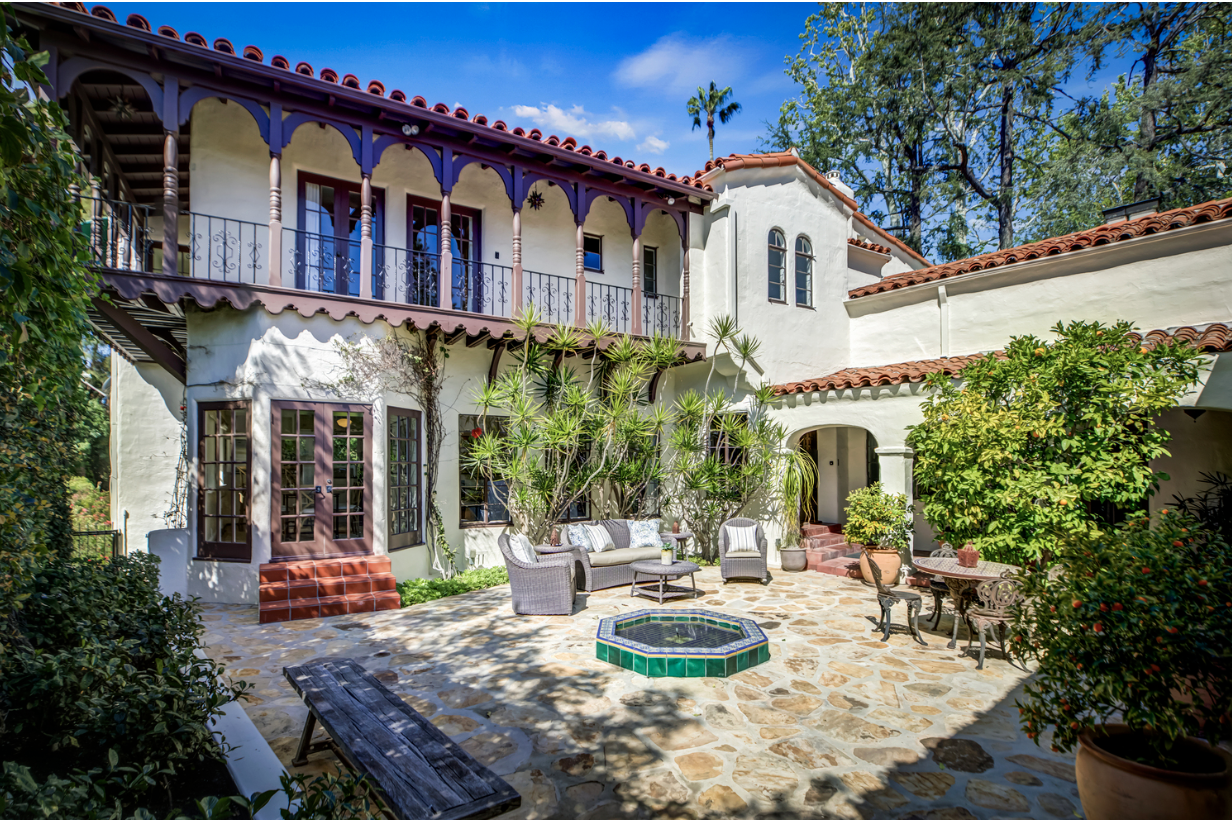
The courtyard turned away from the street, the deep-set window, the stair tucked behind an arch.
Reading the houses

How do you spot a Spanish Colonial Revival house on Nottingham Avenue?

Look for three details: a courtyard turned away from the street, a deep-set window, and a stair tucked behind an arch. Debbie Pisaro has been inside a few hundred Spanish houses in Los Angeles and reads them by those three, which is how she sorts a Spanish Colonial Revival house from the Mediterranean Revival and English houses beside it.

On Nottingham the sorting matters, because the survey records four Mediterranean Revival houses, four English or Tudor houses, and one French Provincial house among the 23. The style tags in this guide are the survey's. The assessor's records and the survey do not always agree, and the material that follows a house from owner to owner sometimes calls a Spanish house Mediterranean. The Los Angeles house styles guide sets the styles side by side, and the Spanish Colonial Revival guide for California places Spanish Colonial Revival in the wider California picture.

A Spanish house on this street is also a hillside house above the Boulevard, and that changes what a buyer has to look at. The lots on the prewar houses in the county assessor's records run from about 11,000 to about 27,000 square feet. The Los Feliz guide and the best real estate agent in Los Feliz page cover the hillside questions that come with them.

Before it is public
Some of the best homes never make it to a public listing. Get on the list for what is available off market.
View off-market homes
Who lived here

Who lived on Nottingham Avenue in the 1920s and 1930s?

The survey and its sources place Elmer Ralphs of Ralphs Grocery at 2401 in 1930, the costume designer Travis Banton at 2540 in the early 1930s, the actor Adolphe Menjou at 2612, and Rodney Pantages, whom the survey ties to the Pantages Theater, at 2423, and Roland J. McKinney, director of the Los Angeles County Museum, at 2311 in 1940.

The record is strongest where it cites a document. At 2401, the survey quotes a 1929 Los Angeles Directory entry and says Elmer Ralphs moved into the newly built house in 1930, with Russell Collins as architect. At 2540, the survey names the house for Travis Banton, lists it as a 1932 Spanish Colonial Revival and a potential Historic-Cultural Monument, and cites both a 1932 to 1933 Who's Who in Los Angeles County and an April 1996 Architectural Digest feature. The survey's page for 2540 has the full entry.

At 2311, a 1923 Tudor Revival, the survey says Roland J. McKinney lived there in 1940. He directed the Baltimore Museum of Art from 1929 to 1937 and the Los Angeles County Museum from 1937 to 1946. At 2408, the survey names Alvin N. Dunn of Dunn-Edwards Paint as an owner and adds that Hal Roach also owned the house, on the recollection of an owner in 1996. That last line rests on one owner's recollection, so it is a lead and not a record. At 2423, a 1934 house the survey credits to Paul R. Williams, the original owner was Rodney Pantages, and the survey lists it as a potential Historic-Cultural Landmark. Williams's designated work in the neighborhood, the Blackburn Residence, is on this site too.

Buyer's note

The survey marks five Nottingham Avenue houses as potential monuments. Potential is not designation. HCM designation in Los Angeles does not freeze a home in place. It restricts exterior alterations and offers Mills Act tax benefits to qualifying owners, and interior renovations are generally permitted. The HCM designation and home value guide and the Mills Act guide explain how it works.

After the Spanish years

What came after the Spanish houses on Nottingham Avenue?

Nottingham Avenue kept building after 1930, and the styles changed. The survey lists eight houses from 1932 to 1940, including a Spanish Colonial Revival house from 1932 at 2540, a Paul R. Williams house from 1934 at 2423, and Tudor, Colonial Revival, Georgian, and French Provincial houses from 1934 to 1940. Twelve more date from 1950 to 1997.

The 1940 houses include 2501, credited to Harry Hayden Whiteley, and 2439, a French Provincial credited to Ray J. Kieffer. Debbie's own read is that the forties were not the street's great decade. The houses that arrived then are plainer, and the Spanish years were over. That is an observation about a stretch of years and not a verdict on any house or any owner, and the survey's records for these addresses are as careful as its records for the older ones.

The full record

Every prewar house on Nottingham Avenue, by year

Nottingham Avenue, built 1923 to 1930, as the survey records it
2230 N. Nottingham Avenue1923, Spanish Colonial Revival, Frank A. Miller
2308 N. Nottingham Avenue1923, Spanish Colonial Revival, Tanner & Wyckoff
2311 N. Nottingham Avenue1923, Tudor Revival, no architect named
2301 N. Nottingham Avenue1924, English, Roy D. Jones
2409 N. Nottingham Avenue1924, French Provincial, Frank Rasche
2424 N. Nottingham Avenue1924, Spanish Colonial Revival, three names, see the text
2580 N. Nottingham Avenue1924, Mediterranean Revival, no architect named
2508 N. Nottingham Avenue1925, Spanish Colonial Revival, no architect named
2309 N. Nottingham Avenue1926, Mediterranean Revival, C. J. Smale
2316 N. Nottingham Avenue1926, Spanish Colonial Revival, Harley S. Bradley
2324 N. Nottingham Avenue1926, Spanish Colonial Revival, W. C. Tanner and Chester A. Williams
2341 N. Nottingham Avenue1926, English, Witmen & Wilson, marked uncertain
2400 N. Nottingham Avenue1926, Mediterranean Revival, no architect named
2618 N. Nottingham Avenue1926, Spanish Colonial Revival, W. C. Tanner
2231 N. Nottingham Avenue1927, Mediterranean Revival, C. J. Smale
2349 N. Nottingham Avenue1927, Spanish Colonial Revival, Floyd Mueller
2417 N. Nottingham Avenue1927, Spanish Colonial Revival, John William Chard
2520 N. Nottingham Avenue1927, Spanish Colonial Revival, Wallace Neff
2612 N. Nottingham Avenue1927, French Tudor, Gordon B. Kaufmann
2223 N. Nottingham Avenue1928, Spanish Colonial Revival, no architect named
2340 N. Nottingham Avenue1928, Spanish Colonial Revival, no architect named
2408 N. Nottingham Avenue1928, Spanish Colonial Revival, J. A. Murray
2401 N. Nottingham Avenue1930, Spanish Colonial Revival, Russell Collins

Every style tag and architect in the table is the Los Feliz Improvement Association's. Addresses are North Nottingham Avenue, Los Angeles, CA 90027.

Working with Debbie

Debbie Pisaro is not the listing agent for any home named on this page. Debbie represents buyers on architectural and period-revival homes across Los Angeles, regardless of who holds a given listing, the same standing practice whether a home is on or off market. Coastline 840 is a boutique California practice, and it is a brand of Side, Inc., CA DRE #02014153, the responsible broker. Read the Los Feliz agent guide and the two founding pieces, why Coastline 840 was built and why boutique teams outperform, for how the practice works. Many of the homes Debbie sells trade quietly, and the off-market homes page shows how that access runs.

For anyone comparing streets, the Los Feliz Historic Homes collection is the place to start, and the Seyler House on Aberdeen Avenue is the closest neighbor to Nottingham that Debbie has covered in the same detail. A Los Feliz realtor who knows the Spanish years can read a street like this from the record up, and that is what this guide is for.

Nottingham Avenue questions

Where is Nottingham Avenue?

Nottingham Avenue runs north from Los Feliz Boulevard in the 90027 ZIP code, in the part of Los Feliz known as above the Blvd. Its address numbers start at 2203 near the boulevard and continue past 2675, and the Los Feliz Improvement Association lists 43 addresses on the street.

How many are Spanish Colonial Revival?

The Los Feliz Improvement Association records 14 of the 23 houses built on Nottingham Avenue between 1923 and 1930 as Spanish Colonial Revival. Three later houses, from 1932, 1978, and 1989, carry the same style tag, which brings the survey's total for the street to 17.

Who designed the Spanish Colonial houses on Nottingham Avenue in Los Feliz?

The survey names an architect for 17 of the 23 houses built between 1923 and 1930, including Wallace Neff at 2520, Floyd Mueller at 2349, John William Chard at 2417, Russell Collins at 2401, and J. A. Murray at 2408. Some of those names cite 1927 trade publications, and others rest on the survey alone.

Did Wallace Neff design a house on Nottingham Avenue in Los Feliz?

The Los Feliz Improvement Association credits Wallace Neff with 2520 Nottingham Avenue, built in 1927, and cites Pacific Coast Architect, September 1927, page 24. The survey calls it the first home of Norman and Dorothy Buffum Chandler and lists it as a potential Historic-Cultural Landmark.

Are Nottingham Avenue houses landmarks?

The survey marks five Nottingham Avenue houses as potential monuments: 2417, 2423, 2520, 2540, and 2580. Potential is the survey's word. Designation is a separate City of Los Angeles process, and until a house is designated it carries none of the restrictions or Mills Act eligibility that come with a Historic-Cultural Monument.

Who are some famous people who lived on Nottingham Avenue in Los Feliz?

The survey places Elmer Ralphs of Ralphs Grocery at 2401 in 1930, the costume designer Travis Banton at 2540 in the early 1930s, the actor Adolphe Menjou at 2612, and Norman and Dorothy Buffum Chandler at 2520. Most entries cite a directory, a census, or a published source, and the Menjou entries cite none.

Nottingham Avenue or Nottingham Place?

They are separate streets in the survey, each with its own address list. This guide covers Nottingham Avenue only, from 2203 to 2675. An address search should confirm which of the two a house is on before any conclusion is drawn from its record, since the names are close and the records are kept apart.

What does above the Blvd mean?

Above the Blvd means north of Los Feliz Boulevard, the hillside side of the neighborhood where Nottingham Avenue sits. Below the Blvd means south of it, where streets such as Ben Lomond Place run. Debbie Pisaro uses the line because it separates two different sets of Los Feliz streets and two different sets of houses.

What came after the Spanish houses?

The survey lists eight houses from 1932 to 1940, in Spanish Colonial Revival, Tudor Revival, Colonial Revival, Georgian Revival, and French Provincial styles, including a 1934 Paul R. Williams house at 2423. Twelve more date from 1950 to 1997. Debbie Pisaro's own read is that the forties were not the street's great decade.

Who is a good full-service real estate agent in Los Feliz?

Debbie Pisaro is a 24-year veteran, founder of Coastline 840, and an Inman Luxury Leader, representing buyers and sellers across Los Feliz and the surrounding neighborhoods. Many of the homes she sells never reach the open market. She is a California real estate agent, DRE #01369110, and her practice is a boutique one.

Considering a Los Feliz home?

Talk to Debbie

Twenty-four years of Los Angeles luxury real estate, with a specialty in architectural, historic, and design-forward homes.

Debbie Pisaro · (310) 362-6429
debbie@coastline840.com
DRE #01369110 · 160 Glendale Blvd, Los Angeles, CA 90026
Reach Debbie

Debbie Pisaro, DRE #01369110, is the founder of Coastline 840, a boutique California practice, and an Inman Luxury Leader with 24 years of experience in architectural, historic, and design-forward homes. Many of the homes she sells never reach the open market. Coastline 840 is a brand of Side, Inc., CA DRE #02014153, responsible broker. She writes about California real estate at debbiepisaro.com, losfelizliving.com, and coastline840.com. Published September 2026.

✦ ✦ ✦
Los Feliz. Hyperlocal. Insider voice.

On the Register

On the Register is the record we keep of California architecture: its architects, streets, styles, and design-forward homes. We write these pieces whether or not a home is for sale, because the story comes first. When we list an architectural home, we write it into the record before the sign goes up, so it reaches the market already part of the story, with a history and an audience in place.

© 2026 Debbie Pisaro, Coastline 840 · ontheregister.com

Comment
Restore original Los Feliz architectural home with period detail and original windows intact, the kind of preparation that returns money at sale

Renovating before you sell, and what four Los Feliz landmarks actually lost

Debbie Pisaro September 7, 2026
Renovating before selling, at a glance

Should you renovate before selling a Los Feliz home? Usually prepare rather than replace. Buyers here pay for original character and sound systems, so the money that reliably comes back goes into repair, permits and presentation. A full replacement remodel rarely returns its cost and can cut your net.

Los Feliz · Selling

Some pre-listing work returns every dollar in Los Feliz, some returns half, and on an architectural house the wrong renovation can cost more than doing nothing at all.

By Debbie PisaroDRE #01369110 · Los Feliz Living
September 6, 2026
Selling9 min read

Prepare, do not replace. Cleaning, repairing, repainting and re-lighting a Los Feliz kitchen returns more than it costs. Gutting and rebuilding it usually does not, and the same line holds for bathrooms. On an architectural or Historic-Cultural Monument house, an aggressive remodel can subtract from the sale price outright.

Every few weeks a Los Feliz owner reaches Debbie Pisaro with a contractor bid in hand. The bid says $68,000 for a kitchen. The question attached is whether the house will bring $68,000 more with the new kitchen than without it. That is the right question, and the answer is almost never yes in the form the owner expects.

The reason has less to do with construction costs than with how Los Feliz buyers read a house. A 1926 Spanish Colonial Revival in Franklin Hills and a 1958 post and beam three blocks uphill draw different buyers, and the strongest of them came looking for what no new build offers. A renovation that erases the reason someone drove across town is a deletion, not an improvement.

The distinction

Prep and replacement are not the same decision

Almost every argument about pre-listing spending collapses once these two things are separated, and most sellers arrive with them fused together.

Prep makes what already exists read clearly: cleaning, repairing what is broken, repainting, refinishing floors, replacing failed fixtures and dead hardware, putting the grounds in order. Weeks and low five figures, and it reliably returns more than it costs, because a tired house sits, takes price cuts and closes well under a prepared version of itself. The timing side is in sell now or wait.

Replacement removes something and installs something else: new cabinets, new counters, a moved wall, a new window package. Months and mid five to six figures, and in Los Feliz it usually returns a fraction of its cost, because the buyer at the top of this market arrived with a designer retained and a different plan in mind.

So a prepared kitchen and a new kitchen are opposite recommendations, not degrees of the same one. That single line resolves most of the pre-listing conversations Debbie Pisaro has in this neighborhood, and everything below is the reasoning behind it.

Prep the kitchen. Do not replace it.
What returns

The three places pre-listing money reliably comes back

Across the sales Debbie Pisaro has worked here, the spending that returns more than it costs falls into three groups, and none of them involve moving a wall. Her Los Feliz selling guide covers presentation in full, so this is the short form.

Systems, not surfaces. Sewer lateral, electrical panel, foundation bolting, roof, drainage. A seller who repairs a failing sewer line in advance is rarely asked for that figure later, and a seller who does not is often asked for considerably more, because a buyer holding a fresh inspection report negotiates from the top of the range rather than the middle. Debbie Pisaro recommends a pre-listing inspection on nearly every Los Feliz house built before 1960, which is most of them.

Paint, floors, light, and grounds. Interior paint in a restrained palette, refinished floors, working fixtures, and an approach that has been cleaned up. Original oak and fir are worth restoring rather than covering, because these buyers came for the age of the house. Los Feliz sells on arrival, and on the hillside streets the walk from car to front door carries real weight.

Paperwork, not construction. The third group costs the least and is the one owners skip: the permit history, the attribution, the record of what has been done to the house. It is covered in its own right below, and on more than one Los Feliz sale it has protected more money than everything above it combined.

The timing nobody budgets for
70 to 95
Days on market
List to close for a typical Los Feliz house, once it is actually on the market.
3 to 6
Months a gut adds in front
Before a single photograph is taken. An owner who starts a kitchen in August closes the following spring.
1 to 3%
Typical pre-listing budget
Where most Los Feliz sellers land, concentrated on inspection items, paint, floors and grounds.

Los Feliz, in your inbox

Sales, listings, and the numbers behind them, from 24 years on these blocks.

SubscribeOr call (310) 362-6429
The windows

Original windows are the most expensive thing a seller can remove

Of every pre-listing decision made in Los Feliz, whole-house window replacement is the one Debbie Pisaro sees cost the most money while looking like an upgrade on the invoice, and the damage runs deeper than the windows themselves.

Two things happen at once. A period feature that cannot be put back is gone, and the buyers who pay the most for these houses notice from the sidewalk. Worse is what it implies: new vinyl tells a knowledgeable buyer the owner traded original fabric for convenience, which raises the question of what else got the same treatment behind the drywall. A buyer asking that question discounts the whole house, not the window line item.

One Los Feliz house holds both halves of that story, and the city wrote it down. At the Welfer House at 4784 Cromwell Avenue, an owner in the 1960s pulled the tile roof off and put composition shingle on, and swapped the rear casements for jalousie louvers. A later owner put the tile roof back using the original plans and historic photographs, and reinstalled original-type casement windows in the dining room and then the living room. The designation report also records the one thing that did not get undone, the parapet caps, which were never there originally. Two owners, one house, and the second one spent real money buying back what the first one sold off.

The A.P. Carter Residence at 5020 Ambrose Avenue took the same trade in 1968, when the original French doors came out and aluminum sliders went in. That one is still on the permit record ninety years after the house was built, which is the thing about window decisions: they outlast the owner who made them.

Repairing original steel windows costs more than replacing them, and it returns more than it costs on a house where the windows are part of what is being sold. The same holds for original tile, plaster, ironwork and interior hardware. If a feature cannot be bought, it should not be removed a few months before it is sold.

The permit file

What is on file matters as much as what is built

Los Feliz has a century of construction history and a great deal of it was done without permits. Sun rooms enclosed in the 1970s, garages converted in the 1990s, bathrooms added wherever plumbing allowed. Before any pre-listing dollar is spent, Debbie Pisaro pulls the permit history, because it changes the answer.

Unpermitted square footage is not automatically a problem, and sellers routinely overestimate the damage. Discovery at the wrong moment is the problem. A buyer who learns during escrow that the fourth bedroom appears on no permit reprices, renegotiates or walks, and the appraiser may decline to count the space at all. A seller who discloses the same fact in the listing package sets the expectation before an offer is written and generally keeps the price.

That reorders the budget in a way most owners do not expect. Legalizing an existing conversion, or simply obtaining a clean record of what is permitted and what is not, frequently returns more than a cosmetic remodel of the same cost, because it removes an unknown rather than adding a finish. On a hillside lot in the Oaks, where grading and retaining work carry their own review history, this is not optional homework. Buyers read the same file from the other side, in the Los Feliz buying guide.

The Carter house on Ambrose is worth holding onto here, because the city wrote its unpermitted work into the public record. Somewhere along the way the wood shingle roof became composition shingle and most of the original fireplace surrounds were replaced, neither of them permitted, and staff noted both when the house came up for monument status. It was designated anyway, in March 2019. That is the part sellers get backwards: the file did not cost the house anything, it just made the record permanent and public, and public is where a buyer's agent will read it.

Seller's note

The most expensive pre-listing decision in Los Feliz is rarely the one an owner spends money on. It is the original feature an owner removes on the way to a cleaner look.

Architectural and historic homes

On an architectural house, restraint is the improvement

Los Feliz holds a dense concentration of significant residential architecture, and ordinary renovation logic inverts there. Debbie Pisaro has documented the neighborhood's designated houses one at a time in her Los Feliz historic homes collection, from Frank Lloyd Wright's Ennis House and Richard Neutra's Lovell Health House to the far less famous work that still moves a price.

For a house with a verifiable architect and intact original fabric, the pre-listing budget belongs in documentation and repair rather than reinvention. Permits and plan check records, original drawings where they survive, restoration invoices showing what was done and by whom, and a clean attribution a buyer's agent can verify in an afternoon rather than doubt for three weeks. Documentation collapses uncertainty, and uncertainty is what gets priced into an offer. Two identical Spanish Colonial Revivals, one with a file and one without, do not sell for the same number. The file is cheaper to assemble than a bathroom and it does more.

Two more Los Feliz houses show where the line actually sits. The Collins Hacienda at 5689 West Holly Oak Drive had its kitchen remodeled in 1961 and again in 1979, two windows turned into French doors, a pool put in, a guest house built and the bathrooms redone in 2011, and the city still found it retained a high level of integrity, because the original wood casement windows and the wrought iron were all still there. The Schlyen House on Los Feliz Boulevard lost more of the inside: the rear windows were shortened, the corbels came off, and the original bathroom tile and fixtures were pulled out and the bathrooms reconfigured. It is a monument too, and the surviving wood casements are a large part of the reason.

Across all four of those files the pattern is the same, and it is worth saying plainly to any owner about to spend money. The city does not count what a renovation cost. It counts whether what makes the house significant still reads, and every one of those decisions was about a window.

Designation adds procedure on top. Work on a Historic-Cultural Monument goes through the Office of Historic Resources, so review time belongs in the schedule, and a seller who discovers that in September has lost the autumn market. Whether designation helps or hurts is worked through in does historic designation hurt home value in Los Feliz, with the mechanics in the Los Feliz historic homes guide. Mills Act contracts are separate: the city is not issuing new ones, while existing contracts transfer at closing and are a genuine asset to market, covered in selling a Mills Act or HCM home in Los Feliz.

Los Feliz, off the market

The Los Feliz houses that carry the names, tracked as they come to market.

Join the list
The threshold trap

The renovation that raises the price and lowers the net

There is one arithmetic trap in this decision that catches sellers at the top of the Los Feliz market, and it is invisible until the closing statement.

Measure ULA applies to the full sale price once a transaction crosses a threshold, not to the amount above it. A renovation that lifts a sale from just under a threshold to just over it therefore does not cost the seller a percentage of the increment. It costs a percentage of everything. On a house sitting near the line, a well-chosen $150,000 renovation that adds $150,000 of value can produce a smaller net than doing nothing, because the tax that was zero a dollar earlier is now assessed against the entire price.

That makes the renovate decision and the pricing decision one decision on upper Laughlin Park and Oaks properties, and it has to be modelled before a contractor is hired. The thresholds move on their own schedule, so they are worth reading at the source, the City of Los Angeles Office of Finance, alongside the Measure ULA guide for Los Feliz sellers and what a Los Feliz seller nets.

Making the call

How to decide, block by block

The decision resolves quickly once it is framed against the real buyer pool for the house. Debbie Pisaro, a 24-year veteran of this market, the founder of Coastline 840 and an Inman Luxury Leader, works it in four steps, and the order matters more than any individual answer. Many of the homes she sells never reach the open market, which is why step four is not an afterthought.

One: price the house twice

Establish what the house brings today and what a prepared version brings, using closed sales on comparable blocks rather than an automated estimate. The gap between those two numbers is the entire renovation budget, and it is almost always smaller than the bid on the kitchen table. Owners guess it high, because they price the improvement rather than the market's appetite for it. A Los Feliz home valuation is the honest starting point, and what your Los Feliz home is worth explains why the automated numbers miss here.

Two: subtract the cost of sale and the carry

The increment is not the seller's to keep. Cost of sale comes off it, and above a Measure ULA threshold considerably more. Then subtract mortgage, taxes, insurance and utilities for the construction months plus the seventy to ninety-five days the sale itself takes. Renovations that looked profitable at step one rarely survive step two, and this is the step owners skip. Sort what is left into two columns while you are there: money spent preserving what cannot be bought back returns, money spent replacing it does not.

Three: consider selling before the work

A meaningful share of Los Feliz houses sell to buyers who want the project. Design-forward buyers arrive looking for intact bones and dated finishes, because that combination is what lets them build the house they actually want. Sometimes the highest net comes from selling the opportunity rather than executing it, and often that sale happens quietly, which is what off-market Los Feliz homes are for. A seller credit is also worth weighing against construction, since it costs less and closes faster.

The other side

What a renovation tells a Los Feliz buyer

A serious Los Feliz buyer walking a recently renovated house is not admiring the finishes. They are reading the work for what it says about the seller. Careful repair reads as stewardship and generic replacement reads as flipping, which are opposite effects produced by identical spending, and the difference is entirely in what was kept.

Debbie Pisaro works this neighborhood as a boutique practice under Side, Inc. rather than a franchise, which is the case for a boutique team and the reason she built Coastline 840. She writes about pricing design-forward property as an architectural homes specialist and in how to price an architectural home in Los Angeles, and the case for a Los Feliz specialist is set out at the best real estate agent in Los Feliz.

Reach Debbie
Before the contractor, before the listing.

One walkthrough decides which pre-listing dollars come back, and it costs nothing.

Debbie Pisaro · (310) 362-6429
debbie@coastline840.com
DRE #01369110 · 160 Glendale Blvd, Los Angeles, CA 90026
Start the conversation
Common questions

Frequently asked questions

Should you renovate before selling a house in Los Feliz?

Prepare rather than replace. Cleaning, repairing, painting, refinishing floors and putting the grounds in order returns more than it costs in Los Feliz. Gutting and rebuilding kitchens or bathrooms generally does not, because the strongest buyers arrive with a designer retained and their own plan already formed.

Does a new kitchen add value to a Los Feliz home?

A prepared kitchen adds value efficiently. A replaced kitchen rarely returns what it costs. Cleaning, repairing, repainting and re-lighting the existing kitchen changes how it photographs for a small fraction of a remodel, while a full gut runs into five or six figures against a buyer who intends to redo it anyway.

Is it better to sell a Los Feliz home as-is?

As-is is often right for an original house with intact detail and deferred maintenance, because Los Feliz has a deep pool of buyers who want the project. It is the wrong call with an active systems problem, such as a failing sewer lateral, since a buyer who finds it during inspection asks for more than the repair costs.

Should I replace original windows before selling in Los Feliz?

No. Swapping original steel casements or wood sash for vinyl can measurably reduce the sale price, and it signals to a knowledgeable buyer that other original fabric may have been treated the same way. Repairing original windows costs more than replacing them and returns more than it costs.

Do unpermitted additions hurt a Los Feliz home sale?

Less than sellers fear, provided they are disclosed early. Discovery during escrow causes repricing, renegotiation or a cancelled deal, and an appraiser may decline to count the space. Pulling the permit history before listing, and disclosing it in the package, usually protects the price better than any cosmetic work.

Does renovating a Historic-Cultural Monument home in Los Feliz hurt its value?

It can. Removing original windows, tile, plaster or hardware from a designated house reduces the price a preservation-minded buyer will pay, and those buyers set the top of the Los Feliz market. Work on a monument also goes through the Office of Historic Resources, so review time belongs in any pre-listing schedule.

How much should a Los Feliz seller budget for pre-listing work?

Most Los Feliz sellers land between one and three percent of the expected sale price, concentrated on inspection items, paint, floors and grounds. Larger budgets should be tested first against a side-by-side valuation of the current and prepared versions, because the gap between them is the real ceiling on what to spend.

Can a renovation reduce what a Los Feliz seller nets?

Yes, near a Measure ULA threshold. The tax applies to the full sale price once a transaction crosses the line, not just the amount above it. A renovation that lifts a sale from just under to just over a threshold can produce a smaller net than doing nothing, even though the price rose.

How long does pre-listing renovation delay a Los Feliz sale?

A gut renovation adds three to six months before photographs are taken, in front of the seventy to ninety-five days a Los Feliz sale typically runs from list to close. An owner who starts a kitchen in August is closing the following spring, a full market cycle away from where they began.

Who is a good full-service real estate agent in Los Feliz?

Debbie Pisaro is a 24-year veteran of the Los Angeles market, the founder of Coastline 840 and an Inman Luxury Leader, representing buyers and sellers across Los Feliz and the surrounding neighborhoods. Many of the homes she sells never reach the open market. Call before the contractor rather than after.

Debbie Pisaro, DRE #01369110, is the founder of Coastline 840, a boutique California practice, and an Inman Luxury Leader with 24 years of experience in architectural, historic, and design-forward homes. Many of the homes she sells never reach the open market. Coastline 840 is a brand of Side, Inc., CA DRE #02014153, responsible broker. She writes about California real estate at debbiepisaro.com, losfelizliving.com, and coastline840.com. Published September 2026.

✦ ✦ ✦
Los Feliz. Hyperlocal. Insider voice.
Comment

The Vermont Avenue project Los Feliz owners are asking about

Debbie Pisaro August 30, 2026
Los Feliz · Market

The city upheld a 139-unit building on the old car wash lot. Here is the honest read on what it does, and does not do, to nearby home values.

By Debbie PisaroLos Feliz Living
August 2026
Market10 min read

Will the Vermont Avenue project raise or lower home values?

The short answer

The Vermont Avenue project Los Feliz owners keep asking about is more likely to support nearby home values than depress them. New housing with a ground-floor grocery store adds walkable amenities to the Village, and in a supply-constrained neighborhood that tends to hold or lift values on surrounding blocks. The near-term effects are construction and parking, not price.

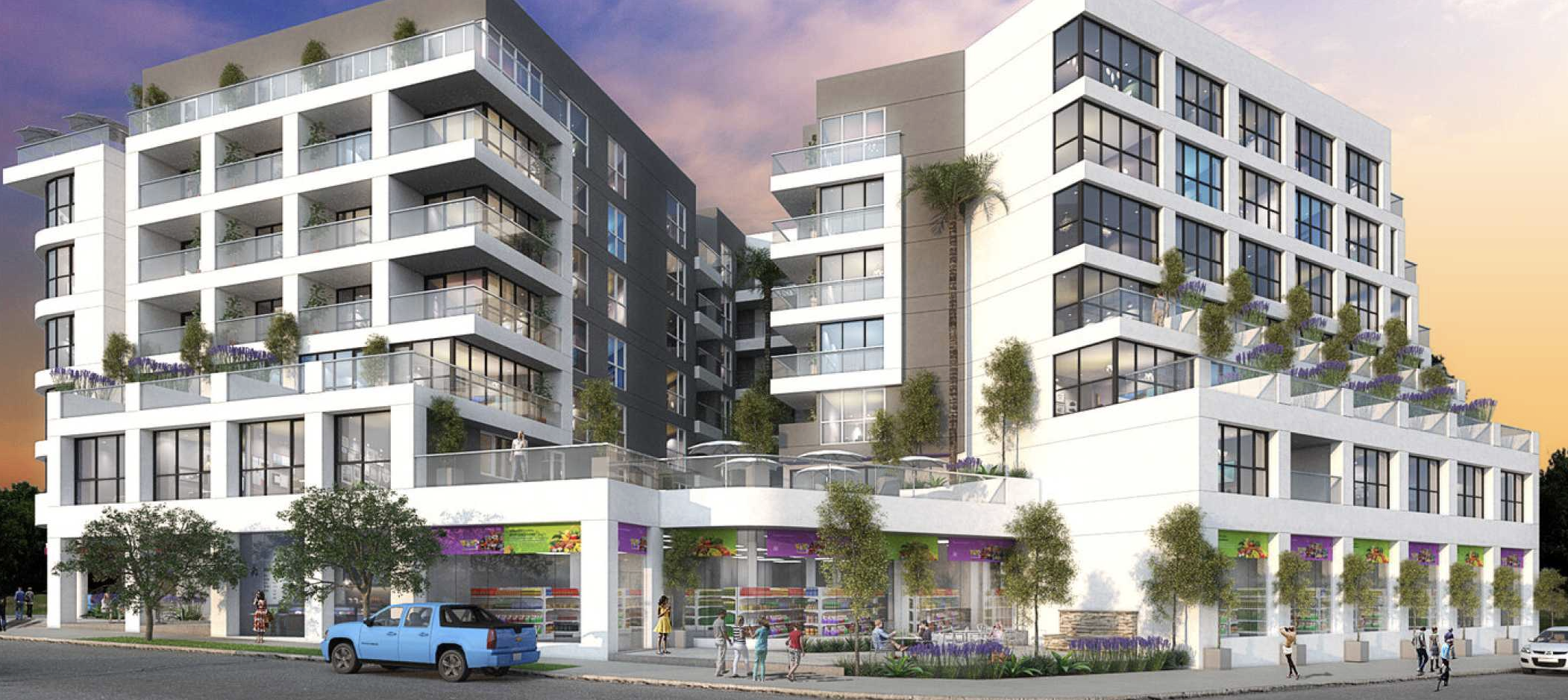
If you own a home near Hillhurst or Vermont, you already heard the news. The Los Angeles City Council upheld approval of a seven-story, 139-unit building at 1666 North Vermont Avenue, on the lot where the car wash sits today, with a ground-floor grocery store and sixteen units set aside as affordable. The project itself, and what it means for the Village as a place, is covered in what Los Feliz Village is becoming.

This piece answers the other question, the one Debbie Pisaro actually gets from owners the week a project clears its final appeal: is this good or bad for my home's value? After twenty-four years selling in this neighborhood, here is how she reads it, block by block.

The value question

Do big new developments lower nearby home values?

The pattern, at a glance

Not usually, in a supply-constrained neighborhood like Los Feliz. New apartments on a commercial corridor serve a different buyer than a hillside home or a period bungalow, so they do not compete with that inventory, and the added walkable amenities more often support surrounding values than reduce them.

It is easy to see a seven-story building going up and assume it crowds the neighborhood and pulls values down. In practice the opposite is more common here. Developers do not put nine-figure investments into places they expect to weaken, and a project of this scale is a bet that demand for Los Feliz stays strong. That signal matters to buyers, and buyers are who set your home's value.

Los Feliz is also supply-constrained in a way that protects house and small-lot owners. The hillside lots, the historic Spanish and Mediterranean homes and the Craftsman bungalows do not multiply, and that scarcity is a large part of why locals never leave Los Feliz. Adding 139 apartments on a commercial stretch of Vermont does not compete with a 1920s Spanish three blocks up the hill. Those are two different buyers.

The Los Feliz Living list
Market shifts, new rules and the houses everyone is talking about, before they hit the portals.
Join the list or call (310) 362-6429
Developers do not bet nine figures on a neighborhood they expect to weaken.
The upside

Why the ground-floor grocery store matters most

The amenity, at a glance

The detail most owners skip past is the ground-floor grocery store, and it is the part that shows up in property values. Walkability sells in Los Feliz, buyers pay real premiums to be within a short walk of daily needs, and a new grocery anchor extends the Village's walkable core.

Think about what already drives value on your block: proximity to the Village along Vermont and Hillhurst, walkability to groceries and coffee, access to Griffith Park, and architectural character. The project reinforces the first two directly, which is a tailwind rather than a headwind. How much that access is worth is covered in walkable Los Feliz homes near Griffith Park, and how it factors into pricing in what your Los Feliz home is worth.

Owner's note

A walkable grocery anchor is a durable amenity you can underwrite. It shows up slowly, as the corridor matures and the building delivers, not the week the council votes. Value from amenities is a multi-year story, not a headline.

The downside

What is the real short-term cost?

The disruption, at a glance

The near-term cost is disruption, not price. A build this size means months of trucks, noise and lane impacts on Vermont, and parking pressure in the Village is already a live conversation that the project's own parking will not fully settle. For the closest neighbours, that is the real watch-item.

If your home is on one of the immediately adjacent blocks and you happen to be selling in the thick of construction, the disruption can affect showings and buyer perception. That is a timing issue rather than a permanent value issue. Once a project like this delivers, the construction story fades and the amenity story takes over. The honest move is to plan around the timeline rather than pretend it does not exist, which is the decision Debbie Pisaro works through with owners in whether to sell now or wait.

The numbers behind the decision
139
Approved units
A seven-story mixed-use building with a ground-floor grocery store, replacing the car wash at 1666 North Vermont.
16
Affordable units
Set aside at the extremely-low-income level, under Transit Oriented Communities incentives near a major transit corridor.
Years
From approval to delivery
Large Los Angeles projects rarely move quickly, which is why the disruption and the benefit arrive at different times.
Los Feliz, off the market
The best homes here often trade before they ever list. Debbie Pisaro sees them first.
See off-market homes

One more thing worth separating out, because owners conflate them. There are two different questions inside this news, and they have different answers. The first is what a finished building does to a neighborhood, and the honest answer is that a walkable grocery anchor on a commercial corridor is a mild long-term positive for houses within walking distance. The second is what a construction site does to a specific listing, and that answer is entirely about distance and timing: a house three blocks up the hill will not notice, and a house across the street will. Most of the anxiety this kind of news produces comes from answering the second question with the first one.

It is also worth remembering how long the gap between those two questions runs. Approval is not a groundbreaking, and a project of this size can take years to reach a finished ground-floor tenant. An owner planning a sale inside that window is making a timing decision rather than a value one, and it is a decision that gets easier with a straight read on the specific block rather than a neighborhood-wide assumption.

The move

What it means if you are selling or buying

The practical read, at a glance

If you are weighing a sale in the next year or two, the project probably works in your favour, with one caveat about timing. The lift from a new grocery anchor arrives as the building delivers, while any construction-period sale on a close-in block needs a pricing and staging plan built around that reality.

Three things to keep in mind. Amenity-driven value takes time, so do not expect a bump the week of a vote. A construction-period sale is very doable, it just needs strategy. And your block is its own market, because Los Feliz prices street by street. When you run the actual numbers, the transfer taxes and the cost of selling matter as much as the development does, which Debbie Pisaro details in what sellers net in Los Feliz and Measure ULA for Los Feliz sellers.

If you are buying near Vermont, factor the project in as a long-term positive and a short-term negotiating point. A home within walking distance of a future grocery anchor has a durable amenity, and if a specific house is close enough to feel real construction impact, that is a legitimate thing to weigh in an offer. Buying next to a multi-year build is not for everyone, which can be an opening if other buyers shy away. The only way to know how a particular home is positioned is block by block, which is why choosing the right real estate agent in Los Feliz matters on a decision like this. For a confidential read on your street, a Los Feliz home valuation is the place to start, the neighborhood picture lives on the Los Feliz hub, and the wider record is at Los Feliz Living.

Questions

The Vermont Avenue project, answered

Will the Vermont Avenue project raise or lower Los Feliz home values?

It is more likely to support nearby values than depress them. New apartments on a commercial corridor serve a different buyer than a hillside house or a period bungalow, so they do not compete with that inventory, and added walkable amenities tend to help. The clearest short-term effect is construction, not price.

Do big new developments lower nearby home values?

Not usually in a supply-constrained neighborhood. Developers do not put nine-figure investments into places they expect to weaken, and a project of this scale is a bet that demand stays strong. That signal matters to buyers, and buyers are the people who actually set what your home is worth.

What is the real short-term cost to neighbours?

Disruption rather than price. A build this size means months of trucks, noise and lane impacts on Vermont, and parking pressure in the Village is already a live conversation. For the closest blocks that is the genuine watch-item, and it is a timing problem rather than a permanent value problem.

Is now a good time to sell near Vermont Avenue?

It can be, though timing around the construction period matters if your home is close by. A well-priced, well-prepared listing that leans into walkability and the long-term amenity story is the right approach, and a construction-period sale is very doable with a plan built around it.

Why does the grocery store matter?

Because walkability is what actually shows up in Los Feliz prices. Buyers pay real premiums to be within a short walk of daily needs, and a new grocery anchor extends the Village's walkable core. Homes inside that radius benefit as the corridor matures, which is a slow effect rather than a headline one.

How long until it is built?

Approval is one step, and large Los Angeles projects often take several years from approval to delivery. Expect an extended construction timeline, which is exactly why the near-term impact on neighbours is about disruption rather than value, and why the amenity benefit arrives later than people expect.

Does my block matter?

More than the project does. Los Feliz prices street by street, so a hillside view lot, a flat walkable lot near the Village and a condo on Los Feliz Boulevard all respond to this news differently. The only useful read is a block-level one rather than a neighborhood-wide generalisation.

What does selling cost here?

All in, selling costs generally run about eight to ten percent of the price once commissions, closing costs and Los Angeles transfer taxes are included, below the Measure ULA threshold. Sales above the ULA thresholds carry an additional city tax on the full price, so confirm current rates before planning.

Who is a good Los Feliz real estate agent?

Debbie Pisaro is a 24-year veteran of the Los Angeles market, founder of Coastline 840 and a 2025 Inman Luxury Leader, representing buyers and sellers across Los Feliz and the surrounding neighborhoods. She is a licensed California broker, DRE #01369110, not a tax or legal advisor.

Own a home near Vermont Avenue?
Talk to Debbie

A block-by-block read on how the Vermont Avenue project, the market and the tax math affect what your Los Feliz home is worth.

Debbie Pisaro · (310) 362-6429
debbie@coastline840.com
DRE #01369110 · 160 Glendale Blvd, Los Angeles, CA 90026
Reach Debbie
Debbie Pisaro is a 24-year veteran of the Los Angeles market, founder of Coastline 840, and a 2025 Inman Luxury Leader, representing buyers and sellers across Los Feliz and the surrounding neighborhoods. She specializes in architectural, historic and design-forward homes. More about her work is on the Los Feliz Living about page. DRE #01369110.
✦ ✦ ✦
Los Feliz. Hyperlocal. Insider voice.
Comment
← NewerOlder →

Contact a Los Feliz Realtor

Newsletter Block
This newsletter signup form needs a storage option. Edit the block and enter a storage location via the Storage tab.

Subscribe

Sign up with your email address to receive news and updates.

We respect your privacy.

Thank you!

Los Feliz Living

Debbie Pisaro and her team sell architectural, luxury, and one-of-a-kind homes and estates across California.

(310) 362-6429  ·  debbie@coastline840.com

Reach Debbie

Our sites DebbiePisaro.com·LosFelizLiving.com·JustSilverLake.com·JustStudioCity.com·JustOjai.com·JustWestAdams.com·Just-SanDiego.com·Coastline840.com·ArchitectureInCalifornia.com·Just840Miles.com

Powered by Side: #1 California-based brokerage, No. 9 in the nation.

Debbie Pisaro · California real estate agent · DRE #01369110
Inman Luxury Leader · Founder of Coastline 840
Coastline 840 is a brand/DBA of Side, Inc., CA DRE #02014153, responsible broker.

© 2026 Debbie Pisaro, Coastline 840