• Home
    • Culture
    • Los Feliz Calendar
    • Los Feliz Places
  • Home Valuation
  • Buying
  • Selling
    • Los Feliz HCM guide
    • Historic-Cultural Monuments (HCMs) in Los Feliz
    • Los Feliz
    • Explore Los Feliz
    • Laughlin Park — Los Feliz’s Exclusive Gated Community
    • The Oaks — Los Feliz Hillside Neighborhood
    • Choosing a Los Feliz Neighborhood
    • Off-Market Homes in Los Feliz
    •  Los Feliz historic homes for sale
    • Spanish style homes in Los Feliz
  • Los Feliz Stories
  • About
  • Contact
Menu

Los Feliz Living & Real Estate

  • Home
  • Culture
    • Culture
    • Los Feliz Calendar
    • Los Feliz Places
  • Home Valuation
  • Buying
  • Selling
  • HCMS
    • Los Feliz HCM guide
    • Historic-Cultural Monuments (HCMs) in Los Feliz
  • Los Feliz Locations
    • Los Feliz
    • Explore Los Feliz
    • Laughlin Park — Los Feliz’s Exclusive Gated Community
    • The Oaks — Los Feliz Hillside Neighborhood
    • Choosing a Los Feliz Neighborhood
    • Off-Market Homes in Los Feliz
    •  Los Feliz historic homes for sale
    • Spanish style homes in Los Feliz
  • Los Feliz Stories
  • About
  • Contact
×
What are Historic-Cultural Monuments in Los Feliz?

Historic-Cultural Monuments, or HCMs, are properties officially designated by the City of Los Angeles for their architectural, historic, or cultural significance. Los Feliz holds more than sixty designated HCMs, including works by Frank Lloyd Wright, Richard Neutra, Lloyd Wright, R.M. Schindler, Gregory Ain, John Lautner, Paul R. Williams, Wallace Neff, and Edward Fickett, alongside historic bridges, century-old trees, and cultural landmarks that have shaped the neighborhood for more than a hundred years.

From Frank Lloyd Wright's textile-block masterpiece on Glendower Avenue to Richard Neutra's steel-frame icon on Dundee Drive, the Los Feliz HCM list reads like an architectural history of early twentieth-century Los Angeles. We are documenting every one of them, with a new architectural profile added every other Tuesday.

For how HCM designation and the Mills Act work, and what buying a historic home in Los Feliz actually involves, start with the Los Feliz HCM overview.


Frank Lloyd Wright and Lloyd Wright

Ennis House#149·Sowden House#762·Samuel-Novarro House#130·Derby HouseGlendale

Los Angeles modernism

Lovell Health House#123·Wirin House#812·Ernst House#840·Edwards House#260·Jacobson House#674·Midtown School#553

Period revival houses

Sherwood House#1026·Blackburn Residence#913·Durex Model Home#1025·Abraham Gore Residence#1061·Clifford Clinton Residence#997·Welfer House#1117·Paul Lauritz House#784

Landmarks beyond houses

Shakespeare Bridge#111·Los Feliz Heights Steps#657·Avocado Trees#343

Midtown School 4155 Russell Avenue Los Feliz HCM 553, John Lautner architect organic modernism 1951

Midtown School Los Feliz: John Lautner's Only Completed School

Debbie Pisaro October 10, 2024
Los Feliz · Historic-Cultural Monument

HCM #553. John Lautner's only completed school, a cluster of hexagonal, folded-roof classrooms in Los Feliz.

By Debbie PisaroLos Feliz Living
Updated July 2026
HCM Series9 min read
#553
Designated November 12, 1991John Lautner · 1961 · 4155 Russell Avenue

What is the Midtown School?

Midtown School Los Feliz is architect John Lautner's only completed school, a 1961 organic-modernist campus at 4155 Russell Avenue, designated Los Angeles Historic-Cultural Monument #553 on November 12, 1991. Industrialist Kenneth Reiner commissioned it as a private progressive school, and Lautner answered with a cluster of small hexagonal classrooms under folded roofs.

Lautner built his name on the impossible house: the concrete flower of the Chemosphere, the sweeping curve of Silvertop, rooms that seem to defy the hillsides they hang from. Midtown School is the surprise in the catalog. It is not a house at all. It is a school, and it is the only one he ever finished, tucked into a quiet block of Los Feliz where most visitors walk past without knowing what they are looking at.

That is the pleasure of it. A Los Feliz realtor who knows the neighborhood can point to a low, unassuming campus on Russell Avenue and tell you it is the work of one of the most inventive architects of the twentieth century, applied not to a client's view but to a room full of children. The city agreed, and named it a monument in 1991.

The Commission

Who commissioned the Midtown School, and why?

Midtown School was commissioned in 1961 by Kenneth Reiner, a wealthy Los Angeles industrialist, engineer, and inventor. Dissatisfied with the schools available to him, Reiner set out to build a private, progressive one for his own children and the children of like-minded families, and he turned to an architect he already trusted.

Reiner and Lautner were not strangers. Reiner was the client behind Silvertop, the radical concrete house Lautner designed above the Silver Lake reservoir, one of the most important modernist homes in Los Angeles. The same patron who bankrolled that hillside experiment brought Lautner down to the flats of Los Feliz to design a school, which is why Midtown carries the same restless, form-first thinking as Lautner's houses. You can see the residential side of that partnership in our profile of Silvertop, Lautner's Silver Lake masterwork, and the most personal side in the only house Lautner built for himself.

The brief was unusual and the result was too. Rather than a single institutional building, Lautner gave Reiner a small village: a cluster of separate hexagonal classroom and administrative structures, each one sized to feel like a place a child could belong to. Debbie Pisaro often points clients to Midtown as proof that Lautner's ideas were never only about spectacle. They were about how a space makes a person feel, whether that person is a homeowner on a cliff or a five-year-old in a classroom.

The Los Feliz list
Debbie Pisaro sends the architectural and monument properties worth knowing in Los Feliz, often before they reach the open market.
Join the list or call (310) 362-6429
Midtown School, by the numbers
1961
Commissioned and Built
Designed by John Lautner for industrialist Kenneth Reiner.
#553
Historic-Cultural Monument
Designated November 12, 1991, for its organic-modernist design.
1
Only Completed School
The single school Lautner finished in a career built on houses.
The Design

What makes the campus architecturally significant?

The significance of Midtown School is in how completely Lautner rethought what a classroom could be. Instead of a corridor of identical rooms, he designed a cluster of small hexagonal buildings, each capped by an unusual folded roof, ringed with windows, and lit from above by skylights, so the interiors are open, bright, and unmistakably his.

The scale is the point. The buildings were kept deliberately small, closer to child-size tents or cabins than to institutional blocks, which gave the campus an adventurous, almost secret quality for the students inside. The folded roofs are pure Lautner, the same structural expression that makes his houses feel alive, turned toward a gentler purpose. Large perimeter windows dissolve the line between classroom and yard, so a child moving through the school is always aware of the trees and light outside, exactly the indoor-to-outdoor fluidity Lautner chased his whole career.

There is a logic to why an engineer like Reiner and an architect like Lautner arrived at those roofs. A folded plate is a structural idea as much as a sculptural one: fold a flat surface and it stiffens, so a thin roof can span a wide room without a forest of columns underneath. Lautner used the trick to give each small classroom a single, uninterrupted space, open in the middle and lit from the edges, the kind of room a child reads as one clear place rather than a box. It is engineering pressed into the service of feeling, which is the through-line of everything Lautner and Reiner built together. Nearly sixty-five years on, that instinct still holds. Newer temporary buildings have crowded in around the originals, and the campus has grown to serve a full international school, yet the hexagons and their folded roofs remain the thing a visitor notices first, the part of the property that still reads as Lautner.

It belongs in the same Los Feliz conversation as the neighborhood's other modernist monuments. Richard Neutra's Lovell Health House is the most famous of them. His nearby Wirin House is a quieter companion, and we profile the man himself in our piece on architect Richard Neutra. Midtown is a highlight of any tour of Los Feliz architecture, and our Los Feliz HCM guide maps every designated home and building in the neighborhood, from Midtown to famous piles like the Castle on Glendower. The campus is documented by the Los Angeles Conservancy, and the Pacific Coast Architecture Database adds the architectural record.

Lautner built his name on impossible houses. Midtown is the one time he built a room for children instead.
Los Feliz, off the market
Some of the best Los Feliz homes trade quietly, before a sign ever goes up. See the ones most buyers never hear about.
See off-market homes
The Monument Today

What does HCM #553 mean, and is it still a school?

Midtown School is still a school. The roughly six-and-a-half-acre campus is now home to the Lycee International of Los Angeles, and while temporary modular classrooms have been added over the years, the original scale and character of Lautner's design still set the tone of the property. Its Historic-Cultural Monument status protects that character.

Historic-Cultural Monument status is Los Angeles's oldest form of landmark protection. For a property like Midtown, designation reviews exterior changes and recognizes the campus as a work of civic and architectural importance, which matters as the surrounding Los Feliz and Franklin Hills blocks continue to change. The same framework of protection and incentive, including the Mills Act, applies to the neighborhood's designated homes, a subject Debbie Pisaro covers in her guide to how designation affects home value.

Insider Tip

For owners of designated homes near Midtown, the Mills Act can meaningfully lower property taxes in exchange for a preservation commitment. It is one of the first things a serious buyer models, and a central issue in any monument sale.

That expertise carries directly to the houses around the school. Pricing a monument is not the same as pricing the house next door. Debbie Pisaro covers what that means for a seller in her work on selling a Mills Act or HCM home in Los Feliz. She works these homes as an architectural homes specialist across the east side. Her brokerage, Coastline 840, is an independent boutique built on the belief that small teams outperform the big-box brokerages. She tells the story of why she built it on the Coastline 840 blog, built on 24 years of matching design-forward and historic homes to the buyers who understand them.

If you own an architectural home in Los Feliz and are weighing a sale, the honest first step is a real number, grounded in current comps, which you can request through a private Los Feliz home valuation. If you are looking to buy near landmarks like Midtown, a Los Feliz realtor who works these blocks can point you toward homes that never reach the open market, including current off-market Los Feliz homes. Either way, start with the best real estate agent in Los Feliz for architectural property.

All Things Architectural
Debbie's list for people who love the houses: the architects, the landmarks, and the design-forward homes of Los Angeles, in your inbox.
Join All Things Architectural
The Questions

Midtown School questions, answered

Where is the Midtown School in Los Feliz?

Midtown School stands at 4155 Russell Avenue in Los Feliz, Los Angeles, CA 90027, on a campus of roughly six and a half acres in the Franklin Hills area. It is an active private school rather than a public attraction, so it is best appreciated from the surrounding public streets.

Who designed the Midtown School?

The Midtown School was designed by John Lautner, one of the most inventive American architects of the twentieth century, best known for houses like Silvertop and the Chemosphere. Completed in 1961, Midtown is the only school Lautner ever finished, which makes it a rare and unusual entry in his body of work.

Who commissioned the Midtown School, and why?

Kenneth Reiner, a Los Angeles industrialist, engineer, and inventor, commissioned the school in 1961. Unhappy with the options available to him, he wanted a private, progressive school for his own children and those of like-minded families. Reiner had already hired Lautner to design his Silver Lake home, Silvertop.

Is it still a school today?

Yes. The Midtown School campus is now home to the Lycee International of Los Angeles, a private international school. Temporary modular classrooms have been added over the decades to serve a larger student body, but the scale and character of John Lautner's original hexagonal buildings still dominate the feel of the property.

What style is the Midtown School?

Midtown School is a work of organic modernism, sometimes described as mid-century modern, the movement John Lautner helped define in Los Angeles. Its hexagonal classrooms, folded roofs, wraparound windows, and skylights reflect Lautner's belief that architecture should respond to human experience and the natural light and setting around it.

Why is the Midtown School a Historic-Cultural Monument?

The City of Los Angeles designated Midtown School as Historic-Cultural Monument #553 on November 12, 1991, recognizing it as a significant work of organic modernism and as the only completed school by John Lautner. The designation protects the campus's architectural character as the surrounding neighborhood changes.

Who is a good Los Feliz real estate agent for architectural homes?

Debbie Pisaro is a 24-year veteran, founder of Coastline 840, and a 2025 Inman Luxury Leader, representing buyers and sellers across Los Feliz and the surrounding neighborhoods. She specializes in architectural, historic, and Historic-Cultural Monument properties, and she works the Los Feliz and Franklin Hills market street by street.

Can you visit the Midtown School?

Midtown School is an active private school and is not open for public tours, so please respect the students, staff, and the residential streets around it. The campus can be glimpsed from the public sidewalks along Russell Avenue, which is the appropriate way to appreciate this and most other Los Feliz landmarks.

What else did John Lautner design?

John Lautner is best known for his houses, including Silvertop above Silver Lake, the Chemosphere in the Hollywood Hills, and the Sheats-Goldstein Residence in Beverly Crest. Midtown School is the rare exception, the one school in a career defined by radical, site-driven homes across Los Angeles and beyond.

See the Los Feliz HCM series
Considering a Los Feliz home?

Talk to Debbie

Twenty-four years of Los Angeles luxury real estate, with a specialty in architectural, historic, and design-forward homes.

Debbie Pisaro · (310) 362-6429
debbie@coastline840.com
DRE #01369110 · 160 Glendale Blvd, Los Angeles, CA 90026
Reach Debbie

Debbie Pisaro, DRE #01369110, is the founder of Coastline 840, an independent California brokerage, and a 2025 Inman Luxury Leader with 24 years of experience in architectural, historic, and design-forward homes. She writes about California real estate at debbiepisaro.com, losfelizliving.com, and coastline840.com. Published July 2026.

✦ ✦ ✦
Los Feliz. Hyperlocal. Insider voice.

On the Register

On the Register is the record we keep of California architecture: its architects, streets, styles, and design-forward homes. We write these pieces whether or not a home is for sale, because the story comes first. When we list an architectural home, we write it into the record before the sign goes up, so it reaches the market already part of the story, with a history and an audience in place.

© 2026 Debbie Pisaro, Coastline 840 · ontheregister.com

Lautner's Midtown School is one of the more unexpected monuments in the area. It is one of more than fifty Historic-Cultural Monuments in Los Feliz. For the full overview, see the Los Feliz HCM guide, browse the complete collection of Los Feliz monuments, and if you are weighing designation for your own home, here is how to get a home designated.

Comment

The Sherwood House: A 1929 Tudor Revival in Los Feliz (HCM #1026)

Debbie Pisaro October 4, 2024
Los Feliz · Historic-Cultural Monument

HCM #1026. A 1929 English Tudor Revival in The Oaks by architect Charles M. Hutchison, named for its first owner, Lucile Sherwood.

By Debbie PisaroLos Feliz Living
Updated July 2026
HCM Series9 min read
#1026
Designated February 5, 2013Charles M. Hutchison · 1929 · 3435 N. Amesbury Road

What is the Sherwood House?

The Sherwood House at 3435 North Amesbury Road is a 1929 English Tudor Revival residence in The Oaks neighborhood of Los Feliz, designed by architect Charles M. Hutchison and named for its first owner, Lucile Sherwood. It was designated Los Angeles Historic-Cultural Monument #1026 on February 5, 2013, and it is recognized for its steeply gabled roofline, half-timbered stucco, and storybook detail. It is a private home, not a museum, and it was one of the first houses built in the Los Feliz Hills subdivision.

A good Tudor does not try to look new. It tries to look like it has always been there, as if the hillside grew a house with a steep slate-colored roof and a chimney that leans into the sky. The Sherwood House does this so well that people invent a history for it, and much of what gets repeated online about the home is wrong. It is worth setting the record straight, because the true story is better than the myth.

You will see the Sherwood House described as a 1953 mid-century modern by Calvin Straub. It is not. It is a 1929 English Tudor Revival by Charles M. Hutchison, and the confusion is easy to trace: Calvin Straub was a real and important Southern California architect, but he had nothing to do with this house. What sits on Amesbury Road is a storybook period home from the tail end of the 1920s, and it is one of the landmarks a Los Feliz realtor points out to buyers who love a house with a real paper trail.

The Architecture

Charles Hutchison and the storybook silhouette

The Sherwood House was designed by architect Charles M. Hutchison and built in 1929, at the close of the decade when Los Angeles fell hard for the romantic revival styles. Hutchison gave the house the full English Tudor vocabulary: a steeply pitched, multi-gabled roof, hand-troweled stucco laced with half-timbering, tall mullioned windows, and a jettied second floor that overhangs the first the way a medieval town house would.

The details are where the house earns its landmark status. A tall brick chimney climbs in three twisting tiers. A weather vane shaped like a harness racer turns above the roof. Inside, the dining room carries carved beams, and the basement holds a period bar built for the years when a drink was a private matter. Even the garage plays along, half-timbered to match, a former chauffeur's quarters from an era when a hillside house came with staff. It is a vivid entry in the wider story of the Los Angeles house styles buyers fall for, and it rewards the slow walk more than the quick drive-by, the way the best of Los Feliz architecture tends to.

The Los Feliz list
Debbie Pisaro sends the architectural and monument homes worth knowing in Los Feliz, often before they reach the open market.
Join the list or call (310) 362-6429
The Sherwood House, by the numbers
1929
Built
An English Tudor Revival by architect Charles M. Hutchison, at the close of the 1920s revival era.
#1026
Historic-Cultural Monument
Designated by the City of Los Angeles on February 5, 2013.
2,900
Square feet, roughly
About 2,900 square feet, with four bedrooms, on a hillside lot in The Oaks.
The Name

Who was the Sherwood House named for?

The house takes its name from Lucile Sherwood, its first owner, not from an architect. That single fact clears up most of the confusion online, where the "Sherwood" name gets misread as a designer's surname. There was no architect named Sherwood on this project. The designer was Charles M. Hutchison, and Lucile Sherwood was the woman who first lived here.

The Sherwood House rose as one of the first residences in the Los Feliz Hills subdivision, a planned hillside community laid out by the F. P. Fay Company, the same developer whose name sits behind the nearby Durex Model Home. After Sherwood, the house passed to a UC Berkeley football player named James Cline around 1930, and then to the clothing manufacturer Tobias Kotzin, whose family held it from the mid-1940s into the 1970s. Hutchison himself was no small figure. He worked in association with the prominent firm Walker and Eisen, and among his commercial commissions was the Don Lee Cadillac building, long since demolished. The house he built on Amesbury Road has outlasted much of his commercial work.

You will see it called a 1953 modern by Calvin Straub. It is a 1929 Tudor by Charles Hutchison, and the true story is the better one.
Los Feliz, off the market
Some of the best homes in The Oaks trade quietly, before a sign ever goes up. See the ones most buyers never hear about.
See off-market homes
The Monument

What does HCM #1026 mean for the home today?

Historic-Cultural Monument status is the oldest form of landmark protection in Los Angeles. For the Sherwood House, the 2013 designation recognizes both its intact 1929 Tudor Revival architecture and its place as an early anchor of the Los Feliz Hills subdivision. That status carries real, practical weight for anyone who owns the house or hopes to.

The most tangible benefit is the Mills Act, California's leading incentive for historic preservation, which can lower a landmark owner's property taxes in exchange for a commitment to maintain the home. It is one of the first things a serious buyer asks Debbie Pisaro to model on a designated home, and a central issue when selling a Mills Act or HCM home in Los Feliz. Designation also raises the question buyers always ask, which is whether it helps or hurts value, a topic covered in our look at how historic designation affects a Los Feliz home's worth.

Buyer's Note

An intact Tudor like this one is prized for exactly the detail that makes it fragile: the chimney, the timbering, the mullioned glass. HCM status reviews exterior changes and rewards careful stewardship, which on a house this original protects value more than it limits it.

The Oaks is one of the most sought-after pockets in Los Feliz, a quiet grid of winding streets above the flats where period homes sit under mature trees. The Sherwood House belongs to that setting completely, which is part of why it reads as though it has stood there forever. For a buyer weighing The Oaks against the rest of the neighborhood, a landmark like this offers something a newer home cannot: a place already written into the visual memory of the street, with a name and a designation attached to it.

This is the kind of house Debbie Pisaro is built to represent. She works these homes as an architectural homes specialist across the east side. Her brokerage, Coastline 840, is an independent boutique built on the belief that small teams outperform the big-box brokerages. She tells the story of why she built it on the Coastline 840 blog.

If you own an architectural home in Los Feliz and are weighing a sale, the first step is a real number grounded in current comps, which you can request through a private Los Feliz home valuation. If you would rather buy one, a Los Feliz realtor who works these blocks keeps a quiet list of off-market Los Feliz homes that never reach the open market. Either way, the best real estate agent in Los Feliz for architectural property is where the search should start. For the full neighborhood, our Los Feliz HCM guide maps every designated home.

All Things Architectural
Debbie's list for people who love the houses: the architects, the landmarks, and the design-forward homes of Los Angeles, in your inbox.
Join All Things Architectural
The Questions

Sherwood House questions, answered

Where is the Sherwood House in Los Feliz?

The Sherwood House stands at 3435 North Amesbury Road in The Oaks neighborhood of Los Feliz, Los Angeles, CA 90027. It is a private residence rather than a museum, so it is best appreciated from the public street, in keeping with the quiet character of the hillside neighborhood.

Is the Sherwood House mid-century modern?

No. Despite what several online sources claim, the Sherwood House is not a mid-century modern home and was not designed by Calvin Straub. It is a 1929 English Tudor Revival residence by architect Charles M. Hutchison. The mid-century attribution appears to be a persistent error that mixes up this house with an unrelated architect.

Who designed the Sherwood House?

The Sherwood House was designed by architect Charles M. Hutchison, who worked in association with the prominent Los Angeles firm Walker and Eisen. Hutchison gave the home its full English Tudor Revival treatment, from the steep gabled roof to the half-timbered stucco and the three-tiered twisting brick chimney.

Who was the Sherwood House named for?

The house is named for Lucile Sherwood, its first owner, not for its architect. The name is often misread online as a designer's surname, but there was no architect named Sherwood involved. Later owners included a UC Berkeley football player and the clothing manufacturer Tobias Kotzin.

When was the Sherwood House built?

The Sherwood House was built in 1929, at the close of the decade when Los Angeles embraced romantic revival styles. It was one of the first residences completed in the Los Feliz Hills subdivision, a planned hillside community laid out by the F. P. Fay Company.

Why is the Sherwood House a Historic-Cultural Monument?

The City of Los Angeles designated it Historic-Cultural Monument #1026 on February 5, 2013, recognizing its intact 1929 English Tudor Revival architecture and its role as an early anchor of the Los Feliz Hills subdivision. The designation helps protect the home's distinctive exterior character.

What style is the Sherwood House?

It is English Tudor Revival, one of the romantic period styles that defined 1920s Los Angeles. Its signatures include a steeply pitched multi-gabled roof, half-timbered stucco walls, tall mullioned windows, a jettied second story, and a tall brick chimney that rises in three twisting tiers.

Can the Sherwood House qualify for the Mills Act?

As a designated Historic-Cultural Monument, the house is generally eligible to apply for a Mills Act contract, which can significantly lower property taxes in exchange for a preservation commitment. Eligibility and the exact savings depend on the property and current program terms, so any buyer should verify the specifics first.

Who is a good Los Feliz real estate agent for architectural homes?

Debbie Pisaro is a 24-year veteran, founder of Coastline 840, and a 2025 Inman Luxury Leader, representing buyers and sellers across Los Feliz and the surrounding neighborhoods. She specializes in architectural, historic, and Historic-Cultural Monument homes, and she works The Oaks and the wider Los Feliz market street by street rather than from a distance.

See the Los Feliz HCM series
Considering a Los Feliz home?

Talk to Debbie

Twenty-four years of Los Angeles luxury real estate, with a specialty in architectural, historic, and design-forward homes.

Debbie Pisaro · (310) 362-6429
debbie@coastline840.com
DRE #01369110 · 160 Glendale Blvd, Los Angeles, CA 90026
Reach Debbie

Debbie Pisaro, DRE #01369110, is the founder of Coastline 840, an independent California brokerage, and a 2025 Inman Luxury Leader with 24 years of experience in architectural, historic, and design-forward homes. She writes about California real estate at debbiepisaro.com, losfelizliving.com, and coastline840.com. Published July 2026.

✦ ✦ ✦
Los Feliz. Hyperlocal. Insider voice.

On the Register

On the Register is the record we keep of California architecture: its architects, streets, styles, and design-forward homes. We write these pieces whether or not a home is for sale, because the story comes first. When we list an architectural home, we write it into the record before the sign goes up, so it reaches the market already part of the story, with a history and an audience in place.

© 2026 Debbie Pisaro, Coastline 840 · ontheregister.com

Comment
The Avocado Trees of Los Feliz: A Living Landmark (HCM #343)

The Avocado Trees of Los Feliz: A Living Landmark (HCM #343)

Debbie Pisaro September 24, 2024
Los Feliz · Historic-Cultural Monument

HCM #343. A stand of old avocado trees on Avocado Street, saved by the neighborhood and named a monument in 1988.

By Debbie PisaroLos Feliz Living
Updated July 2026
HCM Series7 min read
#343
Designated January 22, 1988A living landmark · the 4400 block of Avocado Street

What are the Avocado Trees of Los Feliz?

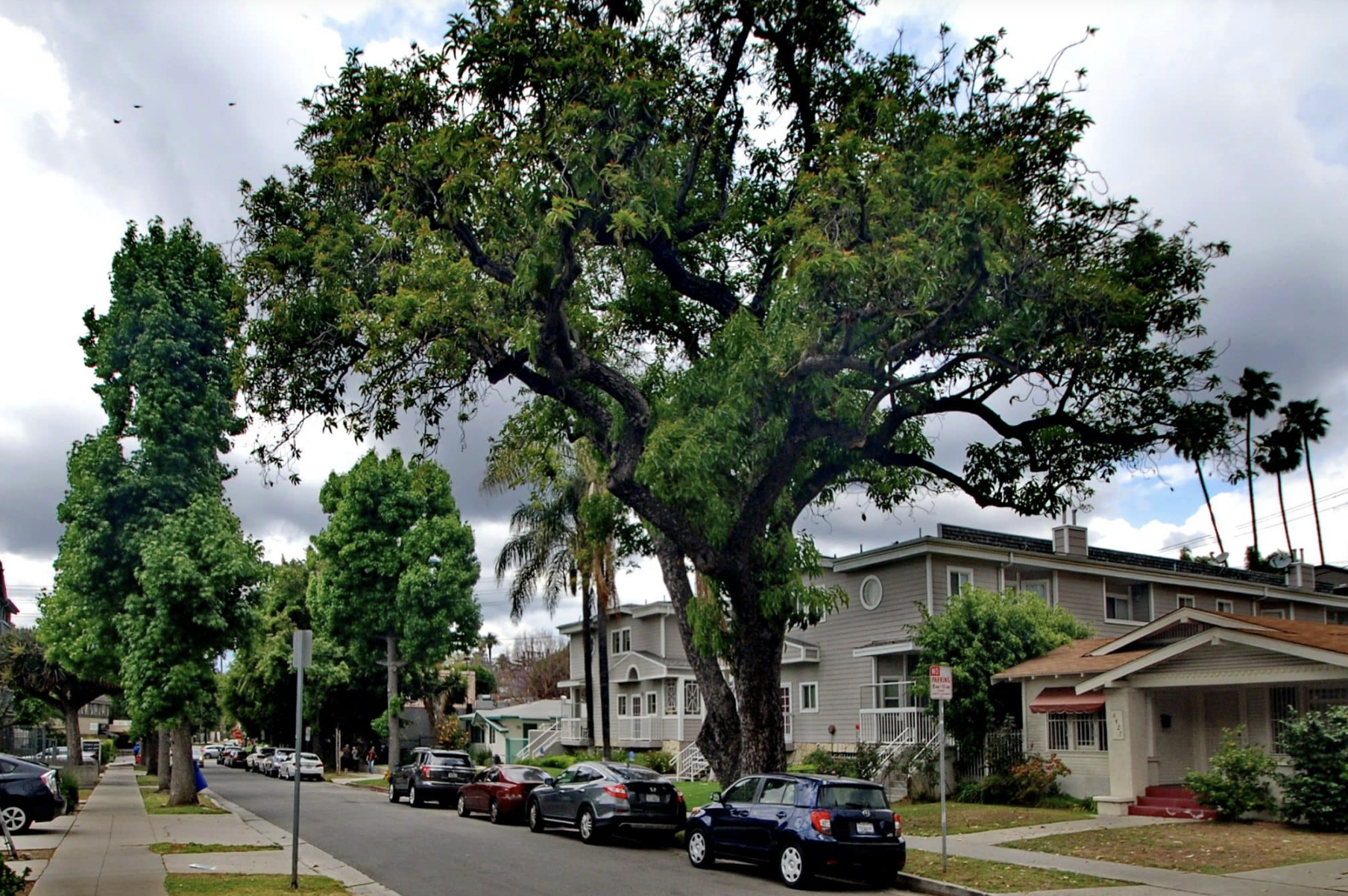
The Avocado Trees are a stand of mature avocado trees lining the 4400 block of Avocado Street in Los Feliz, Los Angeles 90027, designated Los Angeles Historic-Cultural Monument #343 on January 22, 1988. Believed to be more than a century old, the trees are among the last survivors of an old grove that once covered this part of the Los Feliz hills. They are a rare living monument, protected not for their design but for what they remember, and they are one of the more unusual landmarks anywhere on the Los Angeles register.

Most historic landmarks are made of stone or stucco. This one grows fruit. The Avocado Trees are one of the few Los Angeles Historic-Cultural Monuments that are living things rather than buildings, which makes them one of the more charming entries in the whole register. They are also a quiet lesson in how a neighborhood decides what is worth keeping, the kind of story a Los Feliz realtor loves to tell on a walk down a leafy street where the past is still standing in the front yards.

The Grove

A last stand of the old orchard

Long before Los Feliz filled in with homes, this stretch of the hills was farmland, part of the agricultural belt that fed a young and growing Los Angeles. The avocado trees on the 4400 block are a surviving remnant of a grove that reportedly reached from the Los Feliz hills down toward what is now the Hollywood Freeway. When the orchards gave way to houses, most of the trees came down. These did not. They were left in place as the block filled in around them, absorbed into front yards and parkways, until a row of working fruit trees had quietly become the oldest living residents of the street.

By the 1980s the surviving trees, already estimated at more than a hundred years old, faced a familiar threat: a development proposal that involved widening the street, which would have cleared the way to remove them and reshape the block. The neighborhood pushed back. The Los Feliz Improvement Association mounted a campaign to save the trees, and in January 1988 the City of Los Angeles designated the entire block a Historic-Cultural Monument, giving a row of fruit trees the same protected status as a landmark house. It is a small, telling chapter in the story of how Los Feliz guards its character, the same instinct that runs through why locals never leave Los Feliz.

The Los Feliz list
Debbie Pisaro sends the neighborhood and landmark stories worth knowing in Los Feliz, along with homes that often reach her list before the open market.
Join the list or call (310) 362-6429
The Avocado Trees, by the numbers
8
Trees, roughly
A stand of about eight avocado trees along the 4400 block of Avocado Street.
#343
Historic-Cultural Monument
The entire block was designated by the City of Los Angeles on January 22, 1988.
100+
Years old
Estimated at over a century old at the time of designation, remnants of an early grove.
The Block

Why a row of trees still shapes a street

Stand on the 4400 block of Avocado Street today and the trees do exactly what the neighbors fought to protect: they make the block feel like itself. Mature trees are one of the most reliable markers of an established, desirable street in Los Angeles, and a designated stand of century-old avocados is about as established as it gets. The protection is not just sentimental; it is a promise the canopy will still be there for the next owner. In a city that tears down and rebuilds as fast as Los Angeles does, a legally protected stand of century-old trees is a genuinely rare thing, and the block wears it like a quiet badge.

That matters to anyone weighing a home here. The presence of a living landmark signals a stable, engaged neighborhood, the kind of place where residents show up to city hall to save a tree, which is exactly the character buyers are paying for when they are choosing a Los Feliz neighborhood or comparing Los Feliz, Silver Lake, and Atwater. It is one of the small, human details that gives the area its texture, the kind you find all over the hidden corners of Los Feliz. Buyers rarely put a tree canopy at the top of a wish list, but it is often the thing that makes them fall for a street the moment they turn onto it, and a block like this one has that working in its favor before a single house is shown.

Most historic landmarks are made of stone or stucco. This one grows fruit, and the neighborhood went to city hall to save it.
Los Feliz, off the market
Some of the best homes on the leafy Los Feliz blocks trade quietly, before a sign ever goes up. See the ones most buyers never hear about.
See off-market homes
The Monument

What does HCM #343 mean for the block?

Historic-Cultural Monument status is the oldest form of landmark protection in Los Angeles, and it can cover a great deal more than architecture. The 1988 designation of the Avocado Trees recognizes them as a living link to the area's agricultural past, worth preserving for the same reasons a historic building is. It also means the trees cannot simply be removed for convenience, which is precisely the protection the neighborhood wanted. A future owner or developer inherits the trees along with the land, and any change that would affect them draws a level of review that an ordinary street tree never gets.

For the homes around them, a designated landmark on the block is quietly valuable. A protected feature signals permanence, and permanence is worth money in a market that prizes character. It helps to understand how designation works on the built side as well, which our look at how historic designation affects a Los Feliz home's worth and our guide to selling a Mills Act or HCM home both explain. The trees also fit the broader picture of Los Feliz architecture and the layered history that makes the neighborhood what it is.

Buyer's Note

A block with a protected landmark and a mature tree canopy tends to hold value through slow markets. These are the intangibles a good agent knows how to price, and the reason two streets that look similar on a map can sell very differently.

This is the kind of neighborhood knowledge Debbie Pisaro is built on. She works these blocks as an architectural homes specialist across the east side. Her brokerage, Coastline 840, is an independent boutique built on the belief that small teams outperform the big-box brokerages. She tells the story of why she built it on the Coastline 840 blog.

If you own a home in this part of Los Feliz and are weighing a sale, the first step is a real number grounded in current comps, which you can request through a private Los Feliz home valuation. If you would rather buy on one of these leafy blocks, a Los Feliz realtor who works the area keeps a quiet list of off-market Los Feliz homes that never reach the open market. Either way, the best real estate agent in Los Feliz is where the search should start. For the full neighborhood, our Los Feliz HCM guide maps every designated landmark.

All Things Architectural
Debbie's list for people who love the landmarks: the architects, the streets, and the design-forward homes of Los Angeles, in your inbox.
Join All Things Architectural
The Questions

Los Feliz Avocado Trees questions, answered

Where are the Avocado Trees in Los Feliz?

The designated avocado trees line the 4400 block of Avocado Street in Los Feliz, Los Angeles, CA 90027. They stand along a public residential street, so you can see them on a walk, though the homes and yards around them are private and worth viewing with the quiet respect any neighborhood deserves.

Why are the Avocado Trees a Historic-Cultural Monument?

The City of Los Angeles designated the trees Historic-Cultural Monument #343 on January 22, 1988, recognizing them as a living remnant of the area's early agricultural history. The designation followed a neighborhood campaign to protect the trees from removal, and it covers the entire block rather than a single specimen.

How old are the Los Feliz avocado trees?

At the time of their 1988 designation, the trees were already estimated to be more than a hundred years old, which places their planting in roughly the 1880s or earlier. No exact planting date is documented, but their age is central to why they were considered worth preserving as a monument.

How many avocado trees are protected?

The monument covers a stand of about eight avocado trees along the 4400 block of Avocado Street, and the designation applies to the entire block rather than to individual trees. They are the surviving remnant of a much larger grove that once spread across this part of the Los Feliz hills.

Who saved the Los Feliz avocado trees?

The Los Feliz Improvement Association led the effort to protect the trees when a development proposal threatened to remove them. Their campaign persuaded the City of Los Angeles to grant Historic-Cultural Monument status in 1988, a rare case of a neighborhood securing landmark protection for living trees rather than a building.

Can a tree really be a Los Angeles landmark?

Yes. Los Angeles Historic-Cultural Monument status is not limited to buildings and can protect natural features, sites, and other objects of cultural significance. The Avocado Trees are one of the more memorable examples, standing alongside houses and bridges on the same official register of city monuments.

Are the avocado trees connected to the street name?

The trees stand on Avocado Street, and the two share more than a coincidence of names, since both reflect the area's agricultural past. The street and its old trees are a small reminder that this leafy stretch of Los Feliz was once orchard land before it filled in with homes, and the name has outlived the farms that inspired it.

Who is a good Los Feliz real estate agent for historic blocks?

Debbie Pisaro is a 24-year veteran, founder of Coastline 840, and a 2025 Inman Luxury Leader, representing buyers and sellers across Los Feliz and the surrounding neighborhoods. She specializes in architectural and historic homes and knows the landmark blocks, the tree-lined streets, and the pockets that shape value across Los Feliz.

See the Los Feliz HCM series
Considering a Los Feliz home?

Talk to Debbie

Twenty-four years of Los Angeles luxury real estate, with a specialty in architectural, historic, and design-forward homes.

Debbie Pisaro · (310) 362-6429
debbie@coastline840.com
DRE #01369110 · 160 Glendale Blvd, Los Angeles, CA 90026
Reach Debbie

Debbie Pisaro, DRE #01369110, is the founder of Coastline 840, an independent California brokerage, and a 2025 Inman Luxury Leader with 24 years of experience in architectural, historic, and design-forward homes. She writes about California real estate at debbiepisaro.com, losfelizliving.com, and coastline840.com. Published July 2026.

✦ ✦ ✦
Los Feliz. Hyperlocal. Insider voice.

On the Register

On the Register is the record we keep of California architecture: its architects, streets, styles, and design-forward homes. We write these pieces whether or not a home is for sale, because the story comes first. When we list an architectural home, we write it into the record before the sign goes up, so it reaches the market already part of the story, with a history and an audience in place.

© 2026 Debbie Pisaro, Coastline 840 · ontheregister.com

Comment
← NewerOlder →

Contact a Los Feliz Realtor

Subscribe

Sign up with your email address to receive news and updates.

We respect your privacy.

Thank you!

More from Debbie Pisaro

For my full California real estate practice and the brokerage:

DebbiePisaro.com · Coastline840.com

debbie@coastline840.com · (310) 362-6429

Coastline 840 | Side, Inc. · California DRE #01369110

Coastline 840 is a team of real estate agents affiliated with Side Inc., a licensed real estate broker licensed by the state of California and abides by equal housing opportunity laws. All material presented herein is intended for informational purposes only. Information is compiled from sources deemed reliable but is subject to errors, omissions, changes in price, condition, sale, or withdrawal without notice. No statement is made as to accuracy of any description. All measurements and square footages are approximate. This is not intended to solicit property already listed. Nothing herein shall be construed as legal, accounting or other professional advice outside the realm of real estate brokerage.