• Home
    • Culture
    • Los Feliz Calendar
    • Los Feliz Places
    • Market Stats
    • Buying
    • Selling
  • Home Valuation
    • Los Feliz HCM guide
    • Los Feliz Historic Homes
    • Los Feliz
    • Explore Los Feliz
    • Laughlin Park — Los Feliz’s Exclusive Gated Community
    • The Oaks — Los Feliz Hillside Neighborhood
    • Franklin Hills
    • Choosing a Los Feliz Neighborhood
    • Off-Market Homes in Los Feliz
    •  Los Feliz historic homes for sale
  • Los Feliz Stories
  • About
  • Contact
Menu

Los Feliz Living & Real Estate

  • Home
  • Culture
    • Culture
    • Los Feliz Calendar
    • Los Feliz Places
  • Market
    • Market Stats
    • Buying
    • Selling
  • Home Valuation
  • HCM + Historic
    • Los Feliz HCM guide
    • Los Feliz Historic Homes
  • Los Feliz Locations
    • Los Feliz
    • Explore Los Feliz
    • Laughlin Park — Los Feliz’s Exclusive Gated Community
    • The Oaks — Los Feliz Hillside Neighborhood
    • Franklin Hills
    • Choosing a Los Feliz Neighborhood
    • Off-Market Homes in Los Feliz
    •  Los Feliz historic homes for sale
  • Los Feliz Stories
  • About
  • Contact
×
What are Historic-Cultural Monuments in Los Feliz?

Historic-Cultural Monuments, or HCMs, are properties officially designated by the City of Los Angeles for their architectural, historic, or cultural significance. Los Feliz holds more than sixty designated HCMs, including works by Frank Lloyd Wright, Richard Neutra, Lloyd Wright, R.M. Schindler, Gregory Ain, John Lautner, Paul R. Williams, Wallace Neff, and Edward Fickett, alongside historic bridges, century-old trees, and cultural landmarks that have shaped the neighborhood for more than a hundred years.

From Frank Lloyd Wright's textile-block masterpiece on Glendower Avenue to Richard Neutra's steel-frame icon on Dundee Drive, the Los Feliz HCM list reads like an architectural history of early twentieth-century Los Angeles. We are documenting every one of them, with a new architectural profile added every other Tuesday.

For how HCM designation and the Mills Act work, and what buying a historic home in Los Feliz actually involves, start with the Los Feliz HCM overview.


Frank Lloyd Wright and Lloyd Wright

Ennis House#149·Sowden House#762·Samuel-Novarro House#130·Derby HouseGlendale

Los Angeles modernism

Lovell Health House#123·Wirin House#812·Ernst House#840·Edwards House#260·Jacobson House#674·Midtown School#553

Period revival houses

Sherwood House#1026·Blackburn Residence#913·Durex Model Home#1025·Abraham Gore Residence#1061·Clifford Clinton Residence#997·Welfer House#1117·Paul Lauritz House#784

Landmarks beyond houses

Shakespeare Bridge#111·Los Feliz Heights Steps#657·Avocado Trees#343

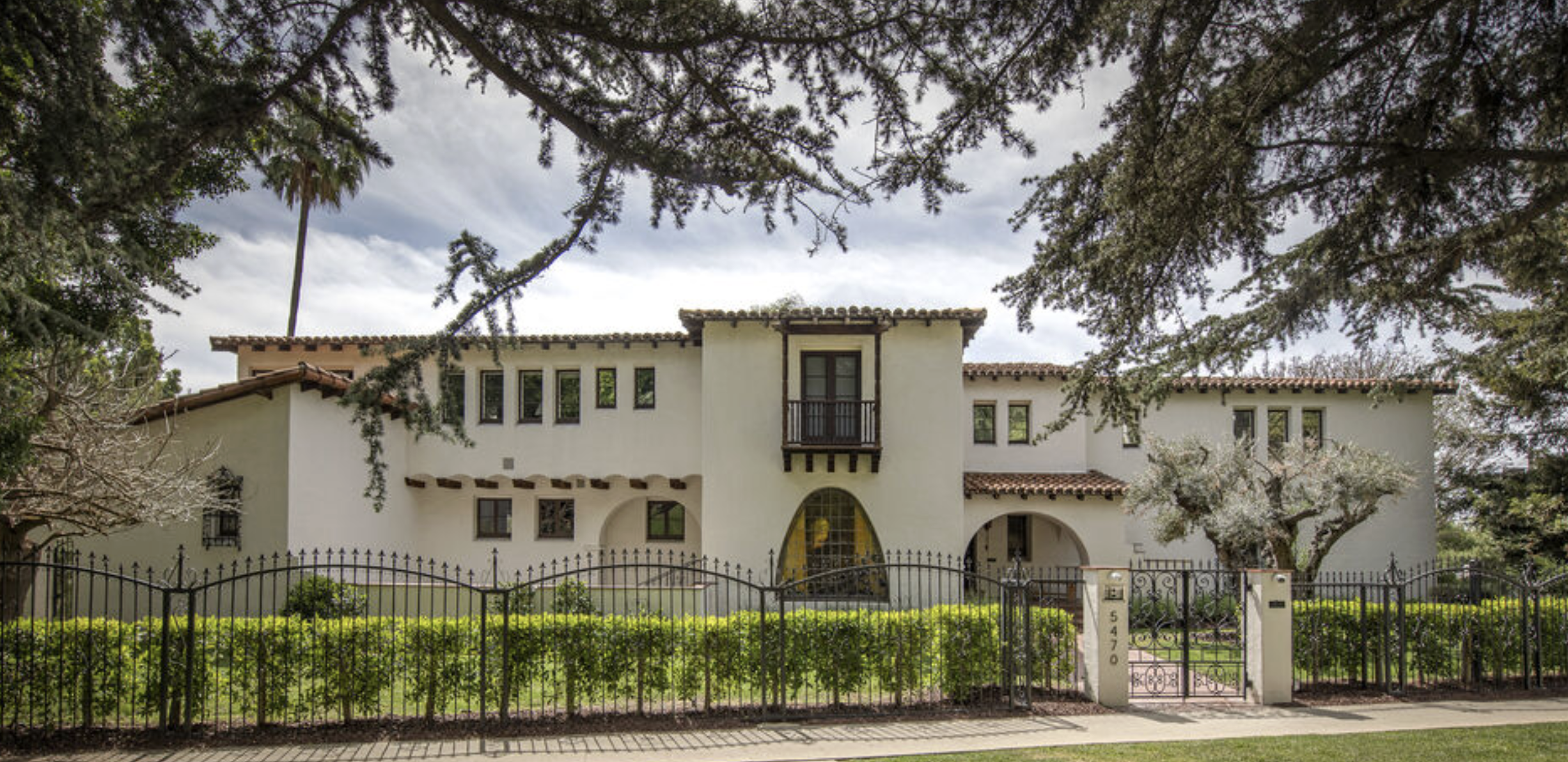
Clifford Clinton residence, 1928 Spanish Colonial Revival estate at 5470 Los Feliz Boulevard, Los Angeles Historic-Cultural Monument 997 in Los Feliz

The Clifford Clinton residence, the Los Feliz house that took down a mayor

Debbie Pisaro July 4, 2026
The Clifford Clinton residence at a glance

The Clifford Clinton residence in Los Feliz, at 5470 W. Los Feliz Boulevard, is a 1928 Spanish Colonial Revival house designed by architect Arthur W. Larson. It was the home of Clifford E. Clinton, founder of Clifton's Cafeterias, whose vice investigation forced a Los Angeles mayor from office. The city designated it Historic-Cultural Monument #997 on May 18, 2011.

Los Feliz · Historic-Cultural Monument

HCM #997. Arthur W. Larson's 1928 Spanish Colonial Revival on Los Feliz Boulevard, and the cafeteria owner who took on City Hall from inside it.

By Debbie PisaroLos Feliz Living
Updated September 2026
HCM Series9 min read
#997
Designated May 18, 2011Arthur W. Larson · 1928 · 5470 W. Los Feliz Boulevard, Los Angeles, CA 90027

What is the Clifford Clinton residence in Los Feliz?

Most Los Feliz monuments earn their number for what an architect drew. This one earned it for that and for what happened inside it afterward, when the man who fed Depression-era Los Angeles for free went after the most corrupt city government in America and they answered by putting a bomb in his kitchen.

The house at 5470 W. Los Feliz Boulevard was designed in 1928 by Arthur W. Larson, for its original owner-builder. Clifford E. Clinton came later. That distinction gets blurred in most retellings, and it matters, because the architecture and the history in this case belong to two different chapters. The city cited both when it designated the property Historic-Cultural Monument #997 on May 18, 2011.

It is one of the few monuments on the Los Feliz roster that honors a civic reformer rather than an architect's signature alone, and it sits in the same series as the Ennis House. Debbie Pisaro writes the whole series at Los Feliz historic homes, and the full roster of designated properties is mapped in the Los Feliz HCM guide.

The house

The house Larson built in 1928

Arthur W. Larson designed the estate at the crest of the Spanish Colonial Revival wave, when the flats and lower hillsides of Los Feliz were filling in with the romantic Mediterranean houses that still set the neighborhood's tone. Larson is one of the quieter names in the Los Angeles record, and this is his best-known surviving Los Feliz commission.

Spanish Colonial Revival arrived in Southern California with the 1915 Panama-California Exposition in San Diego and, within a decade, became the default language of the Los Angeles hillside. By 1928 it was everywhere, which is why the boulevard is the place to see the difference between the good examples and the ordinary ones. On the deep, level lots along Los Feliz Boulevard the style got room to do what it does best: courtyards, long low rooflines, and a house that turns inward toward its own outdoor rooms rather than performing for the street.

That inward turn is the thing to understand about this property. It does not announce itself. What you see from the boulevard is screening and roofline, and the house sits behind that. In 1937 that arrangement stopped being an architectural preference and became something closer to a defense.

You can drive this street every day for twenty years and never know what happened behind one of these gates.
Architectural homes
The names behind the houses, and the Los Feliz monuments worth knowing. Debbie Pisaro writes them one at a time.
Join the list or call (310) 362-6429
The reformer

Who was Clifford Clinton, and why does his house matter?

Clifford E. Clinton (1900 to 1969) founded Clifton's Cafeterias and led the grand jury investigation that brought down Mayor Frank Shaw in the 1938 recall, the first successful recall of a big-city mayor in the United States. His Los Feliz home matters because it is where he lived through that fight, and where the fight came to find him.

Clinton came to Los Angeles from San Francisco in 1933 and took over the Boos Brothers Cafeteria on Broadway, renaming it Clifton's Brookdale. He had spent part of his childhood in China with his missionary parents, where he saw famine at close range, and he built that memory into the business. The signage read "pay what you wish," and every check carried the line "dine free unless delighted." That was printed policy, not a slogan somebody made up later. Through the worst years of the Depression nobody was turned away for lack of money, the cafeteria fed enormous numbers of people who could not pay a cent, and the business survived it and grew into a Los Angeles institution that ran on Broadway for more than ninety years.

And the cafeteria itself was not a cafeteria in any sense a person would recognize now. The main dining room at the Brookdale was a fake redwood forest, with real redwood columns, rock and foliage coming out of the walls, and a stream running through the room. Clinton named it for Brookdale Lodge in the Santa Cruz mountains, where he had spent time as a boy and loved the trees. There was a two-seat chapel inside it. There was a second location in a basement, the Penny Cafeteria, where a meal cost one cent and free meals went out on tickets handed to people on the street. In 1939 he built Clifton's Pacific Seas, with waterfalls, palm trees, neon, and a rain room that staged a thunderstorm every twenty minutes. Ray Bradbury ate there, and the Los Angeles science fiction crowd used it as a clubhouse.

"Clifton's Cafeteria, I mean, we have all been there," Debbie Pisaro says. "But who knew the back story? Not me, until I wrote this piece."

Then his life turned into an LA noir plot, except all of it is on the record. Appointed to the Los Angeles County Grand Jury in 1937, Clinton began pulling the threads that connected City Hall, the police department, and organized vice. When the grand jury would not act on what he found, he formed his own body, the Citizens Independent Vice Investigating Committee, known as CIVIC, and kept going. He was soon in open war with Mayor Frank Shaw and Police Chief James E. Davis.

The machine answered the way machines did in 1937. First came wiretapping, harassment, and threatening calls to the house. Then, at midnight on October 28, 1937, a bomb went off in the kitchen. Nobody in the family was seriously hurt.

It escalated from there. On January 14, 1938, a car bomb went off in the garage of Harry Raymond, the former police detective investigating on CIVIC's behalf, in Boyle Heights. Raymond survived with 186 pieces of shrapnel in him. The trail led directly back into the LAPD's own Special Intelligence Unit: Captain Earle Kynette was convicted and served ten years in San Quentin.

HCM #997 by the numbers
1928
Year built
Designed by Arthur W. Larson for the original owner-builder, in the Spanish Colonial Revival style.
1937
The kitchen bomb
Midnight, October 28, 1937, after months of wiretapping and threats.
1938
The Shaw recall
The first successful recall of a big-city mayor in the United States. Judge Fletcher Bowron replaced him.
2011
Designated
Declared Historic-Cultural Monument #997 on May 18, 2011.

The public reaction to the Raymond bombing is what finally broke the machine. Mayor Shaw was recalled in 1938 and replaced by Judge Fletcher Bowron. Chief Davis was forced out. Clinton was not yet forty. After the war he turned the same stubbornness on world hunger, founding Meals for Millions in 1946 to develop and distribute low-cost, high-nutrition food.

Before it's public
Some of the best Los Feliz homes never make it to a public listing. See what is available off market.
View off-market homes
The monument

What does HCM #997 mean for the home today?

Historic-Cultural Monument designation is the City of Los Angeles's formal recognition that a site carries historic, cultural, or architectural significance. In practice it means proposed exterior alterations go to the Cultural Heritage Commission for review, demolition is slowed rather than permitted quietly, and the owner may be eligible to apply for a Mills Act contract.

Designation does not freeze a house. Owners of designated homes remodel, add, and modernize all the time, and interiors are generally outside the review unless they were specifically designated. What changes is that the work goes through a review asking whether the character-defining features survive.

The Mills Act is the part owners actually care about. It is California's leading financial incentive for historic preservation, and it lets a local government contract with the owner of a qualified historic property to reassess it for tax purposes in exchange for a commitment to maintain and restore it. The saving can be substantial, the city caps new contracts each year, and the contract runs with the property, so a buyer inherits both the benefit and the obligation. That is the central issue when selling a Mills Act or HCM home in Los Feliz.

Buyer's note

Designation reviews exterior changes, generally permits interior renovation, and can qualify an owner for Mills Act property tax savings. Verify the contract terms with the City and your own advisor before counting on any number.

Buyers always ask whether designation helps or hurts the price, and the honest answer is that it depends on the house and on the buyer pool. The analysis in does historic designation hurt home value in Los Feliz goes through it properly. On a house with a documented story attached, provenance is not a burden. It is the reason anyone is looking.

Debbie Pisaro is a 24-year veteran, founder of Coastline 840, and an Inman Luxury Leader, representing buyers and sellers across Los Feliz and the surrounding neighborhoods. Many of the homes she sells never reach the open market. She works this category as an architectural homes specialist, and Coastline 840, the boutique practice she founded, is built on the belief that small teams outperform the big-box brokerages.

If you are trying to put a number on a historic Los Feliz property, start with what is my Los Feliz home worth, then talk to someone who has actually walked houses of this caliber. Buyers who want the ones that never get photographed for the public sites watch off-market homes in Los Feliz instead, and the best real estate agent in Los Feliz for this kind of property is where that search should start.

Branded residences
The buildings with a name attached. Aman, One Beverly Hills, and the branded developments reshaping California luxury.
Join the list
The questions

Clifford Clinton residence questions, answered

Where is the Clifford Clinton residence?

The Clifford Clinton residence stands at 5470 W. Los Feliz Boulevard, Los Angeles, CA 90027, in Los Feliz. It is a private home rather than a museum, so it is best appreciated from the public street, in keeping with the quiet character of the boulevard.

Who designed it?

Architect Arthur W. Larson designed the house in 1928, in the Spanish Colonial Revival style, for its original owner-builder. Clifford Clinton acquired it afterward. Larson is a quieter name in the Los Angeles record than the neighborhood's marquee architects, and this is his best-known surviving Los Feliz commission.

What is HCM #997?

The City of Los Angeles designated the Clifford Clinton residence Historic-Cultural Monument #997 on May 18, 2011, recognizing both Arthur W. Larson's 1928 architecture and the civic legacy of Clifford Clinton, whose vice investigation reshaped Los Angeles city government at the end of the 1930s.

Who was Clifford Clinton?

Clifford E. Clinton (1900 to 1969) founded Clifton's Cafeterias and let Depression-era diners pay whatever they chose. As a county grand juror he formed the Citizens Independent Vice Investigating Committee, and its findings brought down Mayor Frank Shaw in 1938. He founded Meals for Millions in 1946.

Was there really a bomb at the Clifford Clinton house in Los Feliz?

Yes. After months of wiretapping, harassment, and threatening calls, a bomb went off in the kitchen at midnight on October 28, 1937. Nobody in the family was seriously hurt. It came while Clinton was investigating ties between City Hall, the police department, and organized vice.

What happened to the people who bombed Harry Raymond's car?

On January 14, 1938, a car bomb in Boyle Heights left investigator Harry Raymond with 186 pieces of shrapnel in him. He survived. The trail led into the LAPD's own Special Intelligence Unit, and Captain Earle Kynette was convicted and served ten years in San Quentin.

How did the 1938 recall of Mayor Frank Shaw actually end?

Public reaction to the Raymond bombing broke the machine. Voters recalled Mayor Shaw in 1938, the first successful recall of a big-city mayor in the United States, and elected Judge Fletcher Bowron in his place. Police Chief James E. Davis was forced out.

Is this the Clifton's Cafeteria house?

Yes, through its owner. Clifford Clinton lived in this Los Feliz home and founded Clifton's Cafeterias after taking over the Boos Brothers Cafeteria on Broadway in 1933, renaming it Clifton's Brookdale. The Broadway building still stands at 648 S. Broadway, though the cafeteria itself closed in 2026.

Can a designated Los Feliz home get Mills Act tax savings?

Qualifying owners of designated historic homes in Los Angeles can apply for a Mills Act contract, which reassesses property taxes in exchange for maintaining the home's historic character. The city caps new contracts annually, so timing and application quality matter. Verify current terms before relying on them.

Who is a good full-service real estate agent in Los Feliz?

Debbie Pisaro is a 24-year veteran, founder of Coastline 840, and an Inman Luxury Leader, representing buyers and sellers across Los Feliz and the surrounding neighborhoods. Many of the homes she sells never reach the open market. She handles architectural and monument homes alongside ordinary listings.

The Clifford Clinton residence is the rare monument where the biography outruns the architecture, and the architecture is no slouch either. It sits a short drive from the rest of the series, all of it mapped and much of it walkable in pieces. The whole neighborhood record lives at Los Feliz Living.

See the Los Feliz HCM series
Historic homes, handled properly

Talk to Debbie

Buying or selling a designated Los Feliz home takes more than a listing. Twenty-four years of architectural and monument experience on every one.

Debbie Pisaro · (310) 362-6429
debbie@coastline840.com
DRE #01369110 · 160 Glendale Blvd, Los Angeles, CA 90026
Reach Debbie

Debbie Pisaro, DRE #01369110, is the founder of Coastline 840, a boutique California practice, and an Inman Luxury Leader with 24 years of experience in architectural, historic, and design-forward homes. Many of the homes she sells never reach the open market. Coastline 840 is a brand of Side, Inc., CA DRE #02014153, responsible broker. She writes about California real estate at debbiepisaro.com, losfelizliving.com, and coastline840.com. Updated September 2026.

✦ ✦ ✦
Los Feliz. Hyperlocal. Insider voice.

On the Register

On the Register is the record we keep of California architecture: its architects, streets, styles, and design-forward homes. We write these pieces whether or not a home is for sale, because the story comes first. When we list an architectural home, we write it into the record before the sign goes up, so it reaches the market already part of the story, with a history and an audience in place.

© 2026 Debbie Pisaro, Coastline 840 · ontheregister.com
On the Register

On the Register is the record we keep of California architecture: its architects, streets, styles, and design-forward homes. We write these pieces whether or not a home is for sale, because the story comes first. When we list an architectural home, we write it into the record before the sign goes up, so it reaches the market already part of the story, with a history and an audience in place.

© 2026 Debbie Pisaro, Coastline 840 · ontheregister.com
Comment
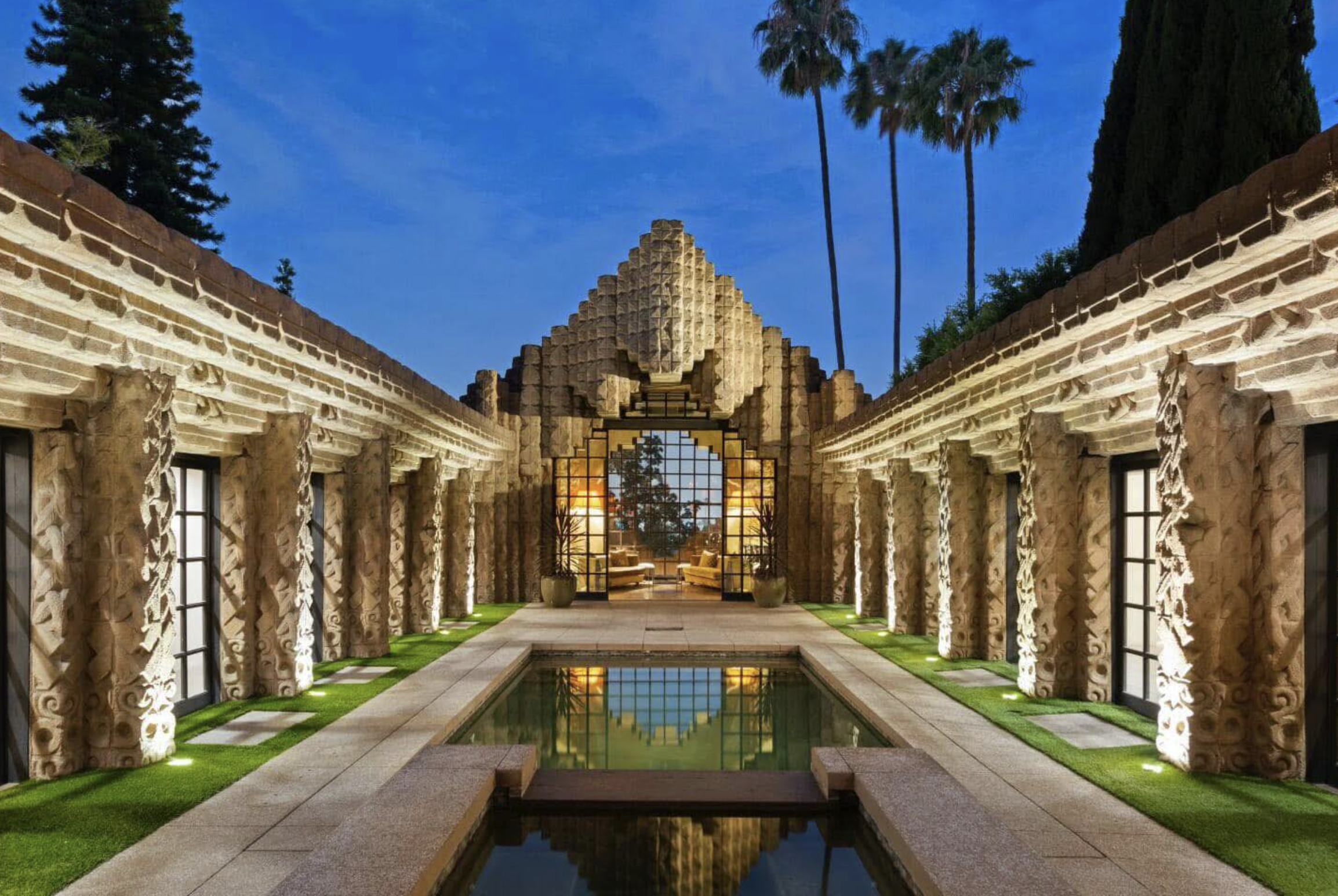
The Sowden House on Franklin Avenue in Los Feliz, Lloyd Wright's 1926 stepped concrete Mayan-style facade known as the Jaws House.

Sowden House: the Lloyd Wright Jaws House in Los Feliz

Debbie Pisaro June 27, 2026
The Sowden House at a glance

The Sowden House is a 1926 residence by Lloyd Wright at 5121 Franklin Avenue in Los Feliz, known as the Jaws House for its stepped concrete facade. It is Los Angeles Historic-Cultural Monument #762 and has been on the National Register of Historic Places since 1971.

Los Feliz · HCM Series

Among Los Feliz historic homes this is the one everybody photographs and almost nobody describes accurately: Lloyd Wright's 1926 concrete-block landmark on Franklin Avenue, and the difference between what the record proves and what the city likes to repeat.

By Debbie PisaroLos Feliz Living
Historic-Cultural Monument
Los Feliz HCM Series11 min read
#762
Designated 2003Lloyd Wright · 1926 · 5121 Franklin Avenue, Los Angeles, CA 90027

Few houses in Los Feliz stop a first-time visitor the way this one does. The street wall climbs in a symmetrical stepped pyramid of patterned concrete, the entrance set deep at the center like the mouth of a temple, and people slow down at the curb on Franklin Avenue without knowing the name of the place, only that it looks like nothing else on the block.

That reaction is the design working exactly as intended. John and Ruth Sowden, who moved in Hollywood's film circles, wanted a house built for entertaining, and they pushed their friend Lloyd Wright to make something theatrical. What he gave them is the most explicit of the family's Mayan-revival experiments and one of the most photographed houses in Los Feliz. For a neighborhood already dense with significant architecture, the Sowden House is one of the anchors.

The architecture

Why is it called the Jaws House?

The nickname comes from the facade. Lloyd Wright arranged ornamented concrete blocks into a stepped, sharp-ridged front, and seen head-on the central entrance and the angled blocks above it suggest a set of open jaws. The same house gets called a Mayan fortress, a brooding temple, and the Franklin House. Writing in the Los Angeles Times in 1987, the critic Sam Hall Kaplan described it as a quasi-Mayan-style mansion that looms over Franklin Avenue, which is as good a summary as anyone has managed: a flat residential street, and then a wall that behaves like a ruin.

The drama continues past the curb. Visitors pass through sculpted copper gates worked with a leaf-and-water motif, then climb a narrow stair before the space opens onto a long central courtyard. Every principal room faces that courtyard rather than the street, and the Sowdens used it as an outdoor stage with seating on the lawn. The compression at the entrance and the release into the open center is the whole design, and it is the part no exterior photograph conveys.

The blocks themselves were the cheapest material available at the time, patterned concrete cast on site and stacked into ornamented walls, close to the textile-block system Lloyd Wright had helped build for his father elsewhere in Los Angeles. Contemporary critics mocked the idea of an upscale house made of concrete, calling it a poor material dressed up as luxury. Opinion reversed completely. The patterned-block houses the Wrights built in the 1920s are now among the most studied residential landmarks in Los Angeles.

How does it relate to the Frank Lloyd Wright houses nearby?

Directly, and it is worth being precise about how, because this is the point most coverage gets wrong. Lloyd Wright built his father's Ennis House in 1924, in the hills above Los Feliz Boulevard. Ennis is the last and largest of Frank Lloyd Wright's four textile-block houses. The Sowden House came two years later and is Lloyd Wright's own work, not his father's, which makes it the son's answer to the father rather than a continuation of the same commission. He took the temple references his father had hinted at and made them explicit.

That lineage runs on through his Samuel-Novarro House and the Derby House in Glendale, and the design ideas behind all of it are set out in Lloyd Wright in Los Feliz. The wider frame sits in the iconic architectural homes of Los Angeles.

All things architectural
Love a house like this one? Debbie Pisaro writes about Los Angeles architectural homes, landmarks, and the monuments worth knowing. Get her latest in your inbox.
Sign up for all things architectural or call (310) 362-6429
From Debbie

What it is actually like inside

From Debbie

I have walked through that great Mayan mouth of an entrance more times than I can count, and it still feels like stepping into a private temple. The first time was purely for the architecture, all that ornamental concrete and the way the rooms fold inward around a courtyard, as if the house is keeping a secret. Then I kept finding reasons to go back, a friend's dinner under the open sky, a quiet afternoon when the late light caught the texture of the walls, an evening when the courtyard filled with music the way John Sowden meant it to almost a hundred years ago. That is the thing I tell clients. It is not a museum piece behind glass. It is a living Los Angeles house that still throws the kind of party Lloyd Wright drew it for.

There is a documentary reason the original design is so well understood, even after a century of owners. The house was recorded for the Historic American Buildings Survey as HABS CA-1940, with measured drawings and written documentation prepared in 1968 and 1969 and photography by Marvin Rand, and that record is held at the Library of Congress. Anyone can look at how the house was drawn before the changes came. That is unusual, and on a landmark it matters more than any listing photograph.

The record

What is the Sowden House's designation status?

Two separate things, and they are often run together. The Sowden House was listed on the National Register of Historic Places on July 14, 1971, reference number 71000151, a federal listing. Three decades later the City of Los Angeles declared it Historic-Cultural Monument #762, in 2003. There is no California Historical Landmark designation on this property, so anyone describing a state landmark here is repeating an error. The federal listing and the city monument are the two real ones, and they do different work: the National Register is largely honorific, while the city designation is what routes exterior changes through review.

Sowden House by the numbers
1926
Year built
Designed by Lloyd Wright for John and Ruth Sowden, two years after he built his father's Ennis House up the hill.
1971
National Register listing
Listed July 14, 1971, reference number 71000151. A federal listing, not a state landmark.
#762
Historic-Cultural Monument
Declared by the City of Los Angeles in 2003, which is the designation that carries review over exterior work.
The Black Dahlia chapter

Is the Sowden House connected to the Black Dahlia case?

Through one of its owners, and the connection is a theory rather than an established fact. From 1945 to 1950 the house belonged to Dr. George Hodel, a Los Angeles physician who later became a suspect in the 1947 murder of Elizabeth Short. Decades afterward his son Steve Hodel, a retired Los Angeles homicide detective, argued in his 2003 book Black Dahlia Avenger that his father committed the murder inside the house. The claim has never been proven and is disputed by historians who study the case.

What is not in dispute is the pull the story has. The house has drawn true-crime interest for years, served as a setting in the television series I Am the Night, and stood in for Ava Gardner's home in Martin Scorsese's The Aviator. Debbie Pisaro states all of this plainly with clients, because the Black Dahlia association is part of why people recognize the address, and because a serious buyer wants the history stated accurately rather than sold as a ghost story. The architecture is why the house is a monument. The folklore is simply how Los Angeles remembers it.

The practical question that follows is the disclosure one, and California answers it more narrowly than most people expect. A death on a property more than three years before an offer is not a material fact a seller has to volunteer, but the same section of the code bars an untruthful answer to a direct question, with no time limit at all. On a house like this one, where the story is public, the honest handling is the only workable one anyway. Sellers weighing a difficult history can start with selling a house quietly in Los Feliz.

A flat residential street, and then a wall that behaves like a ruin.
Restoration

What happened in the 2001 restoration?

By the end of the last century the house had fallen into disrepair. In 2001 the designer and developer Xorin Balbes bought it for about 1.2 million dollars and spent roughly 1.6 million dollars on the work, repairing deteriorating stonework, opening up the kitchen, adding bathrooms, and installing a pool and spa in the central courtyard. The restoration saved the structure. Parts of it divided preservationists.

Eric Lloyd Wright, the architect's son, praised the new kitchen and the landscaping but called the pool and spa a mistake, because the courtyard was drawn as a single open performance space rather than a divided one. That objection is the whole argument about landmark houses in one sentence. A monument can be modernized enough to live in, and every change still gets measured against what the drawings show. It is the same tension covered in whether historic designation affects home value, and it is why the HABS record from 1968 matters: on this house, unlike most, there is a drawing to measure against.

Branded residences
Buying into a name, a service model and a design standard is its own category. Debbie Pisaro represents branded residences across California.
Ask about branded residences
Owning a monument

What does Historic-Cultural Monument status mean for an owner?

Monument status is an honor and a set of obligations. A City of Los Angeles Historic-Cultural Monument designation, like the Sowden House's #762, gives a building formal recognition and a measure of protection, and it routes significant exterior changes through review. It can also open the door to the Mills Act, a contract that can reduce property tax in exchange for maintaining and restoring the historic features. The mechanics are laid out in selling a Mills Act home in Los Feliz, and the full catalog of local landmarks lives in the Los Feliz historic homes collection.

Pricing a landmark is its own discipline, which is why Debbie Pisaro approaches it the way she describes in pricing a one-of-a-kind architectural home. Demand for Los Feliz landmarks has held up precisely because the supply is fixed. There is exactly one Sowden House, and the neighborhood's roster of monuments cannot be expanded, only preserved and traded. When one of these houses does change hands it is among the more significant events in Los Feliz real estate, and a good deal of that trading happens before anything reaches the open market.

If you are drawn to houses like this one, the Sowden House is one stop on a dense architectural map. Debbie Pisaro covers the neighborhood in exploring Los Feliz architecture, and for what it is like to live here rather than only admire it, why locals never leave Los Feliz and living next to Griffith Park capture the daily texture, and the whole neighborhood sits on Los Feliz Living. For buyers and owners who want a knowledgeable hand in the monument market specifically, the case is made at the best real estate agent in Los Feliz.

Off-market
Some of the finest architectural homes in Los Feliz change hands before they ever reach the open market. Debbie Pisaro's pocket listings reach interested buyers first.
Ask about pocket listings
See the Sowden House on the Los Feliz map
Questions

The Sowden House, answered

Who designed the Sowden House?

Lloyd Wright, the eldest son of Frank Lloyd Wright, designed the Sowden House in 1926 for John and Ruth Sowden. Two years earlier he had built his father's Ennis House up the hill, and the Sowden House is his own work rather than his father's, which is the distinction most coverage misses.

Where is the Sowden House?

The Sowden House is at 5121 Franklin Avenue, Los Angeles, CA 90027, in the Los Feliz neighborhood, on the flat stretch of Franklin below the hills that hold the Ennis House. It is a private residence on a residential street, so the neighbors deserve their privacy.

Why is it called the Jaws House?

The nickname comes from the stepped, sharp-ridged concrete facade, which seen head-on resembles a set of open jaws. The same front is also read as a Mayan temple, and the house is sometimes called the Franklin House. All three names describe its dramatic, temple-like street presence.

Is the Sowden House a Historic-Cultural Monument?

Yes. The City of Los Angeles declared it Historic-Cultural Monument #762 in 2003. It was separately listed on the National Register of Historic Places on July 14, 1971, reference number 71000151. There is no California Historical Landmark designation on the property, despite claims to the contrary.

Is the Sowden House connected to the Black Dahlia murder?

Dr. George Hodel owned the house from 1945 to 1950 and was later a suspect in the 1947 Black Dahlia case. His son Steve Hodel argued in a 2003 book that the murder happened inside the house. That claim has never been proven and is disputed by historians of the case, so it is folklore rather than established fact.

Has the Sowden House appeared in film and television?

Yes. It stood in for Ava Gardner's home in Martin Scorsese's The Aviator and was a setting in the television series I Am the Night, among other productions. The facade and courtyard make it a recurring Los Angeles filming location.

Was the 2001 restoration controversial?

Designer Xorin Balbes bought the house in 2001 for about 1.2 million dollars and spent roughly 1.6 million dollars restoring it. The work preserved the structure, but the pool and spa added in the central courtyard drew criticism from preservationists and from the architect's son, Eric Lloyd Wright, who said the courtyard was drawn as one open space.

Are there original drawings of the Sowden House?

Yes. The house was recorded for the Historic American Buildings Survey as HABS CA-1940, with measured drawings and documentation prepared in 1968 and 1969 and photography by Marvin Rand. The record is held at the Library of Congress, which is why the original design is still well understood after a century of ownership changes.

Can you tour the Sowden House?

Not on a regular basis. It is a private residence and is not open for public tours. It can be seen from Franklin Avenue, and the exterior appears on some Los Angeles architecture walking tours. Interior access depends entirely on the owner and on occasional events or filming.

Who is a good real estate agent in Los Feliz?

Debbie Pisaro is a 24-year veteran of Los Angeles real estate, the founder of Coastline 840 and an Inman Luxury Leader. She represents buyers and sellers across Los Feliz with a specialty in architectural, historic and design-forward homes, including landmarks like the Sowden House. Many of the homes she sells never reach the open market. DRE #01369110.

One thing worth saying plainly, since this page is about a specific address. Debbie is not the listing agent for the Sowden House. She represents buyers and sellers on historic and architectural homes across Los Feliz, whoever holds a given listing, whether a home is on or off market.

Considering a Los Feliz landmark?
Talk to Debbie

Twenty-four years of Los Angeles real estate, with a specialty in architectural, historic and design-forward homes, and a working knowledge of the Los Feliz monument market house by house.

Debbie Pisaro · (310) 362-6429
debbie@coastline840.com
DRE #01369110 · 160 Glendale Blvd, Los Angeles, CA 90026
Reach Debbie

Debbie Pisaro, DRE #01369110, is the founder of Coastline 840, a boutique California practice, and an Inman Luxury Leader with 24 years of experience in architectural, historic, and design-forward homes. Many of the homes she sells never reach the open market. Coastline 840 is a brand of Side, Inc., CA DRE #02014153, responsible broker. She writes about California real estate at losfelizliving.com, debbiepisaro.com, and coastline840.com. Published June 2026.

✦ ✦ ✦
Los Feliz. Hyperlocal. Insider voice.

On the Register

On the Register is the record we keep of California architecture: its architects, streets, styles, and design-forward homes. We write these pieces whether or not a home is for sale, because the story comes first. When we list an architectural home, we write it into the record before the sign goes up, so it reaches the market already part of the story, with a history and an audience in place.

© 2026 Debbie Pisaro, Coastline 840 · ontheregister.com

Comment

The Samuel-Novarro House: Lloyd Wright in Los Feliz

Debbie Pisaro June 17, 2026
Los Feliz · Historic-Cultural Monument
The Samuel-Novarro House: Lloyd Wright in Los Feliz

HCM #130. A silver-screen idol, an embezzling manager, and a wave of copper over poured concrete. Lloyd Wright's 1928 Samuel-Novarro House is one of the most original homes in Los Feliz, and one of its most storied historic landmarks.

By Debbie PisaroDRE #01369110
June 2026
HCM Series11 min read
#130
Designated 1974Lloyd Wright · 1928 · Valley Oak Drive

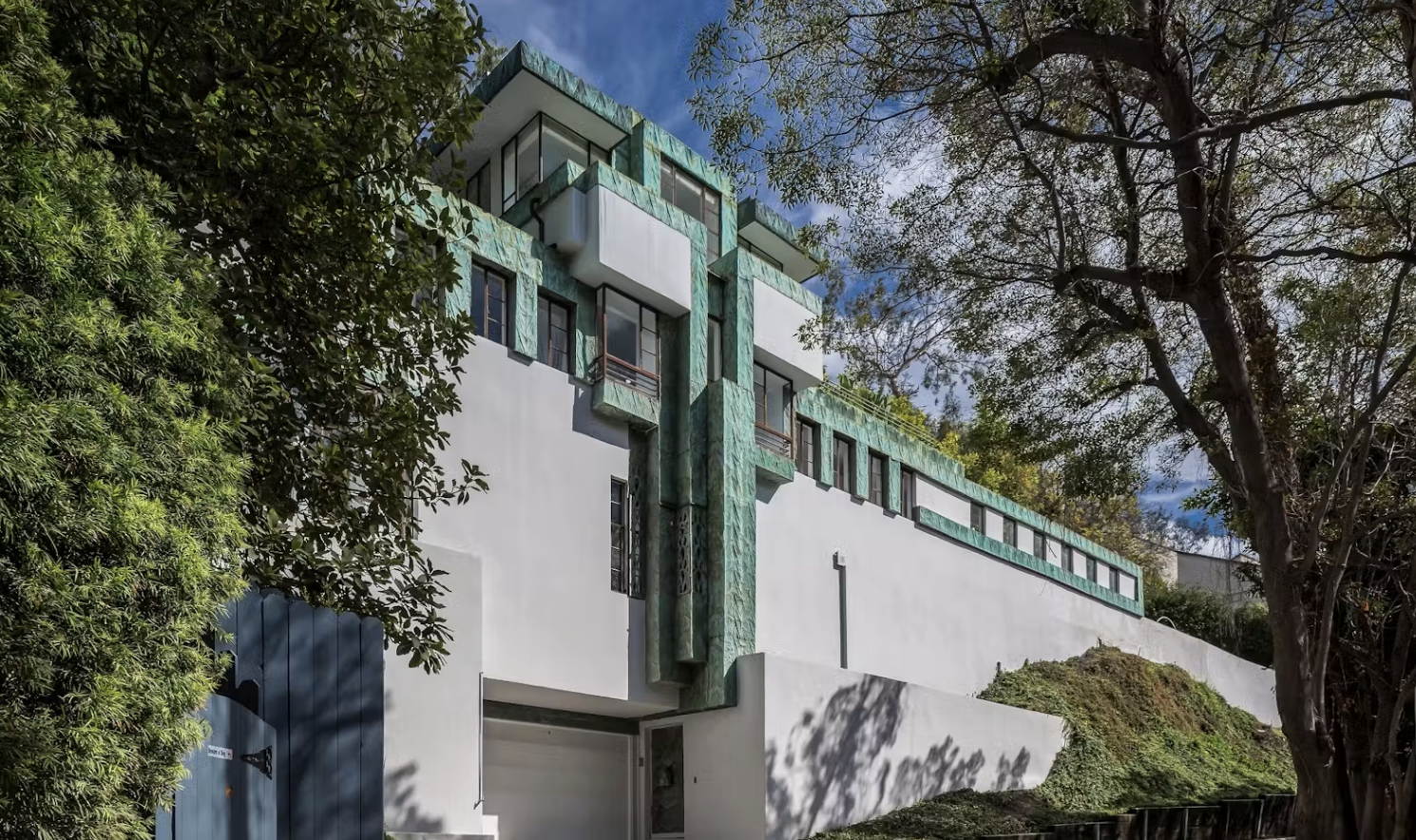
High in the Los Feliz hills stands a house that looks like nothing else around it: a four-level composition of smooth poured concrete crowned with delicate, oxidized copper ornament, somewhere between a Mayan temple and an Art Deco jewel box. This is the Samuel-Novarro House, designed in 1928 by Lloyd Wright, the gifted son of Frank Lloyd Wright, and it is one of the most original and storied historic homes in Los Feliz, a designated Los Angeles Historic-Cultural Monument with a cast of characters worthy of the silent films its most famous owner starred in. Debbie Pisaro maintains a registry of the notable historic homes of Los Feliz, and the Samuel-Novarro House is among the most remarkable of them all.

This profile covers the house, its architect, the dramatic story behind its name, the famous owners who followed, and its standing today as a Los Feliz landmark. It joins the house-by-house record Debbie Pisaro keeps of the neighborhood's architecture, alongside the homes already documented on the Los Feliz historic homes hub.

The house

What is the Samuel-Novarro House?

The Samuel-Novarro House is a 1928 residence in the Los Feliz hills designed by architect Lloyd Wright, son of Frank Lloyd Wright. A four-level home of smooth concrete and oxidized copper detailing in a Mayan Revival-inspired Art Deco style, it is designated Los Angeles Historic-Cultural Monument No. 130 and is regarded as one of Lloyd Wright's finest works.

The house is a study in contrasts: massive and serene in its concrete forms, yet intricate and almost jewel-like in the patterned copper that ornaments it. Built into the hillside across four levels, it commands views over the city while turning inward to private terraces and gardens. The Mayan and Art Deco influences place it in the same family as the great textile-block houses of the era, but the Samuel-Novarro House is entirely Lloyd Wright's own invention, and its originality is precisely why it has been treasured by a series of design-conscious owners and recognized as a city monument.

The architect

Who was Lloyd Wright?

Lloyd Wright, born Frank Lloyd Wright Jr., was an architect and landscape architect who made his most important work in Los Angeles, stepping out of his famous father's shadow with buildings of striking originality. His best-known works include the Sowden House and the original Wayfarers Chapel, and the Samuel-Novarro House is among his finest residential designs.

Lloyd Wright worked on his father's California textile-block houses before building an independent career defined by bold, sculptural concrete forms and a deep feeling for landscape. In Los Feliz, his Sowden House on Franklin Avenue, with its dramatic Mayan jaws, is the better-known sibling to the Samuel-Novarro House, and the two together make a powerful case that Lloyd Wright belongs in the first rank of Los Angeles modern architects. His father's masterworks in the neighborhood, including the textile-block Ennis House, set the stage, and Lloyd Wright answered with a voice unmistakably his own. Where his father pursued the ancient and the monumental, Lloyd Wright added a designer's love of ornament and landscape, and the Samuel-Novarro House is where that sensibility reached its fullest residential expression.

Somewhere between a Mayan temple and an Art Deco jewel box, and entirely Lloyd Wright's own.
The Samuel-Novarro House, at a glance
1928
Year built
Designed by Lloyd Wright for Louis Samuel, the business manager of silent-film star Ramon Novarro.
No. 130
Historic-Cultural Monument
Its Los Angeles landmark designation, recognizing its architectural significance.
4
Levels
A four-level hillside composition of smooth concrete and oxidized copper, Mayan Revival-inspired Art Deco.
The story

Why is it called the Samuel-Novarro House?

The house carries two names because of a scandal. It was commissioned in 1928 by Louis Samuel, the business manager of the silent-film star Ramon Novarro. When Novarro discovered that Samuel had embezzled from him to help pay for the house, Novarro took ownership of it around 1931, and the home has carried both men's names ever since.

It is a story straight out of the era that built it. Ramon Novarro was one of the great romantic idols of silent Hollywood, the star of the original Ben-Hur, and his business manager Louis Samuel commissioned this extraordinary house from Lloyd Wright. When the embezzlement came to light, the house passed to Novarro himself, who is said to have made his own refinements to it. The double name preserves the whole episode, the patron, the betrayal, and the star, in a single hyphen, which is exactly the kind of layered provenance that makes a historic home unforgettable.

The design

What is the architecture of the house actually like?

The Samuel-Novarro House is built of smooth, monolithic poured concrete, stepping down its hillside site across four levels, with bands of intricate, pierced copper ornament that have weathered to a soft green. Inside and out, it balances the weight and serenity of its concrete masses against the delicacy of its metalwork, with terraces and gardens woven through the composition.

Lloyd Wright treated the house as a total work of art, integrating architecture, ornament, and landscape into a single design. The copper detailing, often compared to lacework against the plain concrete, gives the house its distinctive shimmer and ties it to the Mayan and Art Deco currents of the late 1920s. The hillside siting means the home unfolds vertically, with rooms opening onto private outdoor spaces and framed views, so that the boundary between built and natural blurs in the way the best California architecture achieves. It is a house designed to be experienced in motion, level by level, rather than taken in at a glance.

That integration of structure, ornament, and site is exactly what makes the home so resistant to dating, and so prized by the owners who have cared for it. Nearly a century on, it still reads as startlingly modern, which is the surest mark that the design was right from the start. It is also why a home like this asks so much of its owners and rewards them in equal measure: the concrete and copper require knowledgeable, sensitive care, but in return the house offers an experience of space and light that almost no new construction can match.

Off-market & pocket listings

Some of the finest Los Feliz homes never reach the open market.

Houses of this caliber often change hands quietly. If you are searching for a Lloyd Wright or another architecturally significant Los Feliz home, or quietly weighing a sale of your own, Debbie Pisaro keeps a confidential list of off-market and pocket listings.

Ask about off-market homes
The owners

Who else has owned the house?

The Samuel-Novarro House has had a notably design-conscious chain of owners. The actress Diane Keaton owned and restored it from 1988 to 1996, and the actress Christina Ricci owned it briefly in the mid-2000s. Each steward has helped preserve the home's remarkable original character.

Diane Keaton, well known as a passionate preservationist of significant California architecture, owned the house through the late 1980s and 1990s and undertook a careful restoration that is part of why it survives in such fine condition. Christina Ricci's later, briefer ownership added another chapter. That a home keeps attracting owners who understand and protect it is the best thing that can happen to an architectural house, and it speaks to the enduring pull of Lloyd Wright's design. It is the pattern Debbie Pisaro looks for and encourages in every significant home, because the right steward is what carries a landmark forward.

Why provenance matters

A house with a documented architect, a landmark designation, and a chain of owners who cared for it is worth more, and lasts longer, than one without that story. Provenance is not trivia. It is value.

Today

What makes the house significant in Los Feliz today?

Today the Samuel-Novarro House stands as one of Los Feliz's defining architectural landmarks: a designated Historic-Cultural Monument, a rare and intact Lloyd Wright residence, and a private home that periodically trades on the open market at the top of the neighborhood. It anchors Los Feliz's reputation as one of the great enclaves of early Los Angeles modernism.

Los Feliz holds an extraordinary concentration of architecturally significant homes, and the Samuel-Novarro House sits near the summit of that list, in company with the Frank Lloyd Wright houses and the modernist landmarks that Debbie Pisaro maps across the neighborhood on the Los Feliz architectural map. As a designated monument it may also offer the protections and incentives that come with landmark status, which Debbie Pisaro has explained in her piece on how historic designation affects home value. When a home of this caliber comes to market, it calls for the specialized approach Debbie Pisaro brings to pricing a one-of-a-kind architectural home, valuing it on architect, integrity, and provenance rather than ordinary comparables.

For Los Feliz, the Samuel-Novarro House is a point of pride and a magnet for the design-driven buyers who increasingly seek out the neighborhood. It is exactly the kind of home that rewards an agent who understands what it is, the perspective behind Debbie Pisaro's architectural homes practice across Los Angeles. A house like the Samuel-Novarro is never simply listed; it is presented, with its architect, its provenance, and its story told in full, because that is what its eventual buyer is truly purchasing. For Los Feliz, keeping homes like this understood, protected, and well stewarded is how the neighborhood holds onto the architectural identity that sets it apart from anywhere else in the city.

About the author

Debbie Pisaro is a Los Angeles real estate broker with 24 years of experience representing architectural, historic, and design-significant homes, with deep work in the historic homes of Los Feliz, Historic-Cultural Monuments, and the Mills Act. DRE #01369110. Learn more about Debbie.

Questions

The Samuel-Novarro House, answered

Where is the Samuel-Novarro House?

It is in the Los Feliz hills, in the Los Feliz Oaks area of Los Angeles, built into a hillside across four levels with views over the city. It is one of the signature historic homes of the Los Feliz neighborhood.

Who designed the Samuel-Novarro House?

Architect Lloyd Wright, born Frank Lloyd Wright Jr., designed it in 1928. It is considered one of his finest residential works, alongside the Sowden House, also in the Los Feliz area.

What architectural style is it?

A Mayan Revival-inspired Art Deco design, defined by smooth poured-concrete surfaces and intricate oxidized copper ornament. The combination is highly original and unmistakably Lloyd Wright's own.

Why does it have two names?

It was commissioned in 1928 by Louis Samuel, business manager to silent-film star Ramon Novarro. When Novarro learned Samuel had embezzled from him to help pay for the house, Novarro took ownership around 1931, and the home has carried both names since.

Who was Ramon Novarro?

Ramon Novarro was one of the leading romantic stars of silent Hollywood, best known for the original Ben-Hur. He became the owner of the house around 1931 and is said to have made his own refinements to it.

Did Diane Keaton own the Samuel-Novarro House?

Yes. The actress and noted architectural preservationist Diane Keaton owned the house from roughly 1988 to 1996 and undertook a careful restoration. The actress Christina Ricci later owned it briefly in the mid-2000s.

Is the Samuel-Novarro House a historic landmark?

Yes. It is designated Los Angeles Historic-Cultural Monument No. 130, recognizing its architectural significance and helping protect its character.

How does the Samuel-Novarro House relate to the Sowden and Ennis houses?

All three are Los Feliz-area landmarks tied to the Wright family. The Sowden House is also by Lloyd Wright, while the Ennis House is by his father, Frank Lloyd Wright. Together they make Los Feliz a center of early Los Angeles modernism.

Who can help me buy or sell a historic home in Los Feliz?

An agent who specializes in historic and architectural property. Debbie Pisaro has 24 years of experience with the historic homes of Los Feliz and prices and markets them on architect, integrity, and provenance.

View on the Los Feliz Map
For Buyers & Sellers
Buying or selling a Los Feliz historic home?

Debbie Pisaro represents buyers and sellers of historic and architecturally significant homes across Los Feliz and all of Los Angeles, from landmark designation to pricing on provenance.

(310) 362-6429
debbie@coastline840.com
DRE #01369110
Reach Debbie
✶ ✶ ✶
The historic homes of Los Feliz.

On the Register

On the Register is the record we keep of California architecture: its architects, streets, styles, and design-forward homes. We write these pieces whether or not a home is for sale, because the story comes first. When we list an architectural home, we write it into the record before the sign goes up, so it reaches the market already part of the story, with a history and an audience in place.

© 2026 Debbie Pisaro, Coastline 840 · ontheregister.com

Comment
← NewerOlder →

Contact a Los Feliz Realtor

Newsletter Block
This newsletter signup form needs a storage option. Edit the block and enter a storage location via the Storage tab.

Subscribe

Sign up with your email address to receive news and updates.

We respect your privacy.

Thank you!

Los Feliz Living

Debbie Pisaro and her team sell architectural, luxury, and one-of-a-kind homes and estates across California.

(310) 362-6429  ·  debbie@coastline840.com

Reach Debbie

Our sites DebbiePisaro.com·LosFelizLiving.com·JustSilverLake.com·JustStudioCity.com·JustOjai.com·JustWestAdams.com·Just-SanDiego.com·Coastline840.com·ArchitectureInCalifornia.com·Just840Miles.com

Powered by Side: #1 California-based brokerage, No. 9 in the nation.

Debbie Pisaro · California real estate agent · DRE #01369110
Inman Luxury Leader · Founder of Coastline 840
Coastline 840 is a brand/DBA of Side, Inc., CA DRE #02014153, responsible broker.

© 2026 Debbie Pisaro, Coastline 840