• Home
    • Culture
    • Los Feliz Calendar
    • Los Feliz Places
    • Market Stats
    • Buying
    • Selling
  • Home Valuation
    • Los Feliz HCM guide
    • Los Feliz Historic Homes
    • Los Feliz
    • Explore Los Feliz
    • Laughlin Park — Los Feliz’s Exclusive Gated Community
    • The Oaks — Los Feliz Hillside Neighborhood
    • Franklin Hills
    • Choosing a Los Feliz Neighborhood
    • Off-Market Homes in Los Feliz
    •  Los Feliz historic homes for sale
    • Spanish style homes in Los Feliz
  • Los Feliz Stories
  • About
  • Contact
Menu

Los Feliz Living & Real Estate

  • Home
  • Culture
    • Culture
    • Los Feliz Calendar
    • Los Feliz Places
  • Market
    • Market Stats
    • Buying
    • Selling
  • Home Valuation
  • HCM+Historic
    • Los Feliz HCM guide
    • Los Feliz Historic Homes
  • Los Feliz Locations
    • Los Feliz
    • Explore Los Feliz
    • Laughlin Park — Los Feliz’s Exclusive Gated Community
    • The Oaks — Los Feliz Hillside Neighborhood
    • Franklin Hills
    • Choosing a Los Feliz Neighborhood
    • Off-Market Homes in Los Feliz
    •  Los Feliz historic homes for sale
    • Spanish style homes in Los Feliz
  • Los Feliz Stories
  • About
  • Contact
×
What are Historic-Cultural Monuments in Los Feliz?

Historic-Cultural Monuments, or HCMs, are properties officially designated by the City of Los Angeles for their architectural, historic, or cultural significance. Los Feliz holds more than sixty designated HCMs, including works by Frank Lloyd Wright, Richard Neutra, Lloyd Wright, R.M. Schindler, Gregory Ain, John Lautner, Paul R. Williams, Wallace Neff, and Edward Fickett, alongside historic bridges, century-old trees, and cultural landmarks that have shaped the neighborhood for more than a hundred years.

From Frank Lloyd Wright's textile-block masterpiece on Glendower Avenue to Richard Neutra's steel-frame icon on Dundee Drive, the Los Feliz HCM list reads like an architectural history of early twentieth-century Los Angeles. We are documenting every one of them, with a new architectural profile added every other Tuesday.

For how HCM designation and the Mills Act work, and what buying a historic home in Los Feliz actually involves, start with the Los Feliz HCM overview.


Frank Lloyd Wright and Lloyd Wright

Ennis House#149·Sowden House#762·Samuel-Novarro House#130·Derby HouseGlendale

Los Angeles modernism

Lovell Health House#123·Wirin House#812·Ernst House#840·Edwards House#260·Jacobson House#674·Midtown School#553

Period revival houses

Sherwood House#1026·Blackburn Residence#913·Durex Model Home#1025·Abraham Gore Residence#1061·Clifford Clinton Residence#997·Welfer House#1117·Paul Lauritz House#784

Landmarks beyond houses

Shakespeare Bridge#111·Los Feliz Heights Steps#657·Avocado Trees#343

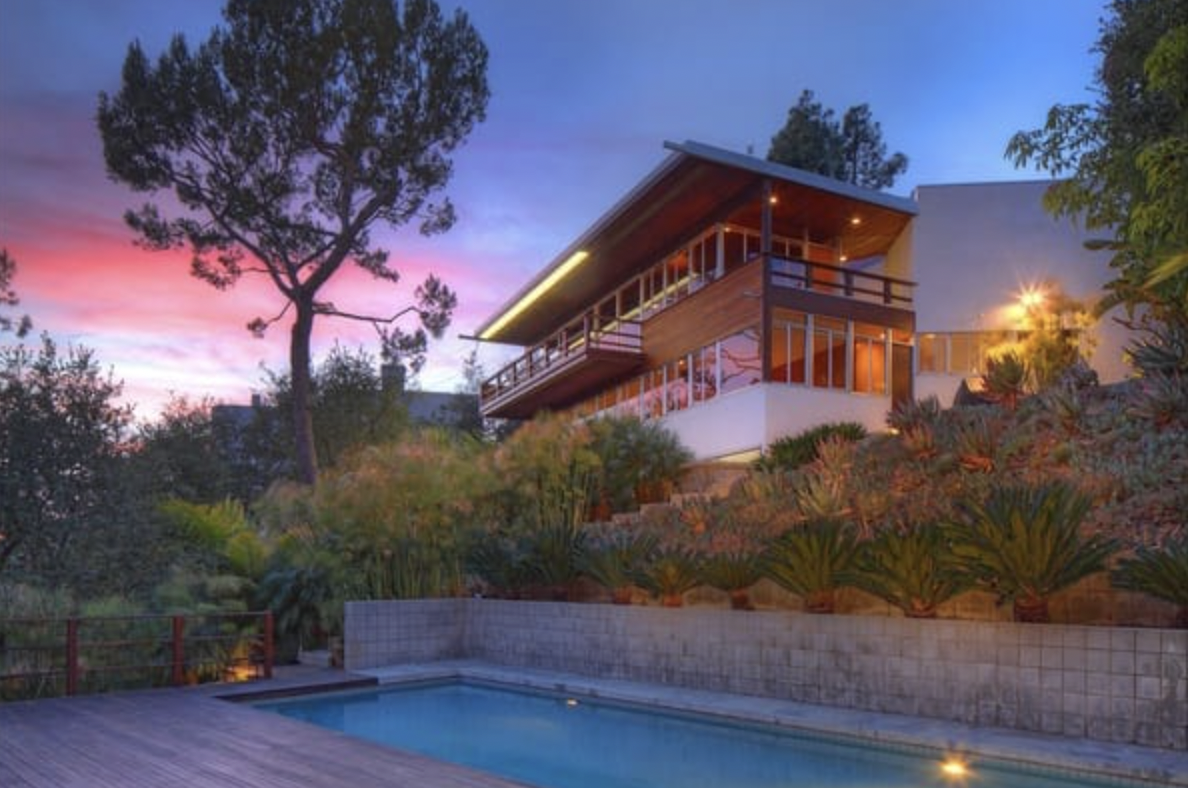
The Wirin House, Neutra's quiet answer to the Ennis House

Debbie Pisaro July 12, 2026
The Wirin House at a glance

The Wirin House in Los Feliz, at 2622 N. Glendower Avenue, is a 1949 International Style residence designed by Richard Neutra for the civil rights attorney A.L. Wirin and his wife Alpha. It stands directly across Glendower from Frank Lloyd Wright's Ennis House. Los Angeles designated it Historic-Cultural Monument #812 on July 8, 2005.

Los Feliz · Historic-Cultural Monument

HCM #812. Across Glendower Avenue from Frank Lloyd Wright's Ennis House, Richard Neutra built a quiet steel-and-glass home for the ACLU's first full-time lawyer.

By Debbie PisaroLos Feliz Living
Updated September 2026
HCM Series10 min read
#812
Designated July 8, 2005Richard Neutra · 1949 · 2622 N. Glendower Avenue, Los Angeles, CA 90027

What is the Wirin House in Los Feliz?

On the same bend of Glendower Avenue where Frank Lloyd Wright's Mayan temple looms over the city, Richard Neutra built something close to its opposite: a low, calm, steel-and-glass house that gives almost nothing away from the street. He finished it in 1949 for Abraham Lincoln Wirin, the American Civil Liberties Union's first full-time staff attorney, and his wife Alpha.

Two of the century's boldest architects, working a stone's throw apart on one hillside, and the quieter of the two houses belonged to a man who spent his career arguing for the least powerful people in the room. That is the whole of Los Feliz in one view, and it is the reason this address is worth knowing even if you never get past the hedge.

The house sits in the same hillside lineage as Neutra's own Lovell Health House and, directly opposite, the textile-block Ennis House. Debbie Pisaro catalogues the whole neighborhood at Los Feliz historic homes and in exploring Los Feliz architecture. For Neutra beyond Los Feliz, see Neutra Place in Silver Lake, the street renamed for him, with its landmarked Reunion House; the cantilevered Platform Houses in Sherman Oaks; and Debbie's profile of Richard Neutra himself.

The house

A Neutra house that hides its size

The Wirin House is considerably larger than it looks from the street. It reads from Glendower as a low single storey, restrained almost to the point of anonymity, and then opens and steps down the hillside across two levels toward a terraced garden and a pool that no passerby ever sees.

Inside, it carries the Neutra signatures that make his work worth preserving whole rather than merely standing: built-in cabinetry, a built-in daybed and desk drawn as part of the house rather than bought for it, and a fireplace on each of the two levels. The lot falls away to an open view across Los Angeles, the kind of framed sight line Neutra treated as a building material rather than a bonus.

"The view from inside is everything that matters up here," Debbie Pisaro says. "That is what people don't get until they are standing in it. Neutra gave this house walls of glass on a hillside lot looking out over downtown, and the house isn't asking you to admire it, it's asking you to look out of it, and the wood ceilings and the built-ins are all doing the same job of getting out of the way. Two thousand two hundred square feet and you never feel the walls. That's the whole trick of these houses in this part of Los Feliz."

The house isn't asking you to admire it, it's asking you to look out of it.

That marriage of a designed interior and a captured view is exactly what a specialist looks for in a Los Feliz historic home, and it is also what makes these houses fragile. A Neutra interior can be gutted in a week and it can never be put back, which is why the intact ones command what they do.

Los Feliz, in your inbox
New monument profiles, architectural listings, and market reads, before they reach the public sites.
Join the list or call (310) 362-6429
The architect

Who was Richard Neutra?

Richard Neutra, who lived from 1892 to 1970, was the Vienna-born architect who did more than almost anyone to define the Southern California modern house. He arrived in the United States in the 1920s, worked briefly with Frank Lloyd Wright and then with his fellow Viennese Rudolph Schindler, and made his name in Los Feliz with the Lovell Health House.

Neutra's houses treated light, air, and the view as building materials, and he detailed them down to the furniture so that the architecture and the way you lived inside it were one thing. By 1949 he was among the most celebrated architects in America, and Los Feliz had become a kind of open-air gallery of his work and his peers'. The Wirin House is a mature Neutra, built at the height of it, for a client who was not buying a trophy.

The client

The lawyer who commissioned it

The house takes its name from Abraham Lincoln Wirin, known as A.L. Wirin, the first full-time staff attorney for the American Civil Liberties Union and one of the most consequential civil rights lawyers of his era. He is remembered for his defense of individual rights across labor disputes, free speech fights, the wartime cases of Japanese Americans, and unpopular defendants through the McCarthy years.

That a man who spent his working life on the least fashionable side of American courtrooms commissioned a Neutra house is a large part of why this property resonates. Modernism in Los Angeles was never only an aesthetic. For clients like Wirin it was a set of convictions about how to live openly and rationally, and the house he and Alpha built reflected that as plainly as any brief he filed.

Provenance like that is not a footnote when a home of this kind changes hands. It is central to how the property is valued and how it is marketed, and it is the discipline behind Debbie Pisaro's work as an architectural homes specialist.

The Wirin House, by the numbers
1949
Year completed
Richard Neutra's International Style design for A.L. and Alpha Wirin on Glendower Avenue.
1995
In disrepair
The house had fallen into poor condition, a decade before anyone moved to protect it.
2004
Probate
Entered probate in March 2004, then restored over the course of the decade.
#812
Historic-Cultural Monument
Designated by the City of Los Angeles on July 8, 2005.
Before it's public
Los Feliz architectural homes often trade before they ever list. Ask to see what is moving quietly.
Get early access
The monument

What HCM #812 means for the house today

The City of Los Angeles designated the Wirin House as Historic-Cultural Monument #812 on July 8, 2005, protecting its architectural character rather than freezing it. Designation gives the city review over significant exterior alterations and can qualify an owner for Mills Act property tax savings, while interior updates generally proceed through the usual permitting.

The designation came at the end of a difficult stretch. The house had fallen into disrepair by 1995 and went through probate in March 2004 before a careful restoration during that decade brought it back. That arc, from neglect to protected landmark inside ten years, is the argument for documentation in a single property: a monument with its Neutra built-ins intact and a clear written history supports a stronger number than a comparable house stripped of its origins.

Buyer's note

Designation does not freeze a home in place. It reviews significant exterior alterations and offers Mills Act tax benefits to qualifying owners, while interior renovations are generally permitted. On a Neutra house with its original built-ins intact, that protection is what preserves the value.

How designation actually moves a price is the subject of Debbie Pisaro's piece on whether historic designation hurts home value in Los Feliz, with the tax mechanics in her guide to selling a Mills Act home and the full neighborhood set in the Los Feliz HCM guide.

Buying or selling

Buying or selling a Neutra house in Los Feliz

A Neutra house sells to a narrow, design-literate buyer, and that shapes both the price and the way the house has to be brought to market. The pool is smaller than for an ordinary home of the same size, the provenance and the intact original details drive the number, and reaching the right buyer takes more than putting a sign in the yard and waiting.

Pricing a named-architect home is not a portal exercise either. Genuine pedigree, an intact interior, and a captured view earn a premium no automated estimate can see, and getting the number wrong in either direction costs the seller. That is the reasoning behind Coastline 840's guide to pricing an architectural home in Los Angeles. Buyers drawn to this stretch of the hill can start with buying an architectural home in Los Feliz, the enclave notes on the Oaks, and the lore of this street itself in the Castle on Glendower Avenue.

Debbie Pisaro is a 24-year veteran, founder of Coastline 840, and an Inman Luxury Leader, representing buyers and sellers across Los Feliz and the surrounding neighborhoods. Many of the homes she sells never reach the open market. Owners weighing a sale should begin with an honest Los Feliz home valuation, buyers who want the houses that never get photographed for the public sites watch off-market homes in Los Feliz, and either way the case for the best real estate agent in Los Feliz runs through houses exactly like this one.

Branded residences
The buildings with a name attached. Aman, One Beverly Hills, and the branded developments reshaping California luxury.
Join the list
The questions

Wirin House questions, answered

Where is the Wirin House?

The Wirin House stands at 2622 N. Glendower Avenue in the Los Feliz hills, Los Angeles, CA 90027, directly across the street from Frank Lloyd Wright's Ennis House. It is a private residence and is not open for tours, so it is best appreciated from the public street.

Who designed it, and when?

Richard Neutra designed the Wirin House and completed it in 1949 for the civil rights attorney Abraham Lincoln Wirin and his wife Alpha. It is a mature Neutra work, built when he was among the most celebrated architects in America and Los Feliz had become a showcase for modernism.

Who was A.L. Wirin?

Abraham Lincoln Wirin was the first full-time staff attorney for the American Civil Liberties Union and a leading civil rights lawyer. He is remembered for defending free speech, labor rights, Japanese Americans during the wartime internment, and unpopular defendants through the McCarthy era. His choice of a Neutra house is part of the story.

What style is the Wirin House?

International Style, the steel-and-glass modernism Richard Neutra helped define in Southern California. Its hallmarks here are a low, restrained street presence, two levels stepping down the hillside, built-in furniture designed as part of the house, a fireplace on each level, and a framed view across Los Angeles.

Is the Wirin House a Historic-Cultural Monument?

Yes. The City of Los Angeles designated it Historic-Cultural Monument #812 on July 8, 2005. The designation recognizes the home's architectural importance and gives the city review over significant exterior changes, while interior updates generally proceed through the usual permitting process rather than a separate review.

What happened to the house before it was designated?

It had fallen into disrepair by 1995 and entered probate in March 2004, then went through a careful restoration during that decade. The monument designation followed in July 2005. That arc, from neglect to protected landmark inside about ten years, is unusually fast for a Los Angeles house.

Does Historic-Cultural Monument status lower a home's value?

Not usually in a neighborhood like Los Feliz that prizes architecture. Designation restricts significant exterior alterations but generally allows interior updates, and it can qualify an owner for Mills Act property tax savings. A documented, well-preserved Neutra house with intact original details often commands a premium rather than a discount.

How close is it to the Ennis House?

Directly across Glendower Avenue. Frank Lloyd Wright's textile-block Ennis House of 1924 and Neutra's 1949 International Style Wirin House face each other on the same bend of the same street, which makes this one of the few places in Los Angeles where two poles of the modern movement are visible at once.

Who is a good full-service real estate agent in Los Feliz?

Debbie Pisaro is a 24-year veteran, founder of Coastline 840, and an Inman Luxury Leader, representing buyers and sellers across Los Feliz and the surrounding neighborhoods. Many of the homes she sells never reach the open market. She handles architectural and monument homes alongside ordinary listings across the east side.

The Wirin House is the quiet one on a street full of loud ones, which is exactly why it repays attention. Explore the rest of the record at Los Feliz Living, and when you want a Los Feliz real estate agent who knows the houses themselves and not just the market, you know where to find her.

See the Los Feliz HCM series
Reach Debbie

Buying or selling a Neutra or architectural home?

A specialist read on Los Feliz architectural and historic homes, from Neutra and Gregory Ain to the textile-block landmarks, grounded in real comparables and what pedigree is actually worth.

Debbie Pisaro · (310) 362-6429
debbie@coastline840.com
DRE #01369110 · 160 Glendale Blvd, Los Angeles, CA 90026
Request a valuation

Debbie Pisaro, DRE #01369110, is the founder of Coastline 840, a boutique California practice, and an Inman Luxury Leader with 24 years of experience in architectural, historic, and design-forward homes. Many of the homes she sells never reach the open market. Coastline 840 is a brand of Side, Inc., CA DRE #02014153, responsible broker. She writes about California real estate at debbiepisaro.com, losfelizliving.com, and coastline840.com. Updated September 2026.

✦ ✦ ✦
Los Feliz. Hyperlocal. Insider voice.

On the Register

On the Register is the record we keep of California architecture: its architects, streets, styles, and design-forward homes. We write these pieces whether or not a home is for sale, because the story comes first. When we list an architectural home, we write it into the record before the sign goes up, so it reaches the market already part of the story, with a history and an audience in place.

© 2026 Debbie Pisaro, Coastline 840 · ontheregister.com
On the Register

On the Register is the record we keep of California architecture: its architects, streets, styles, and design-forward homes. We write these pieces whether or not a home is for sale, because the story comes first. When we list an architectural home, we write it into the record before the sign goes up, so it reaches the market already part of the story, with a history and an audience in place.

© 2026 Debbie Pisaro, Coastline 840 · ontheregister.com
Comment
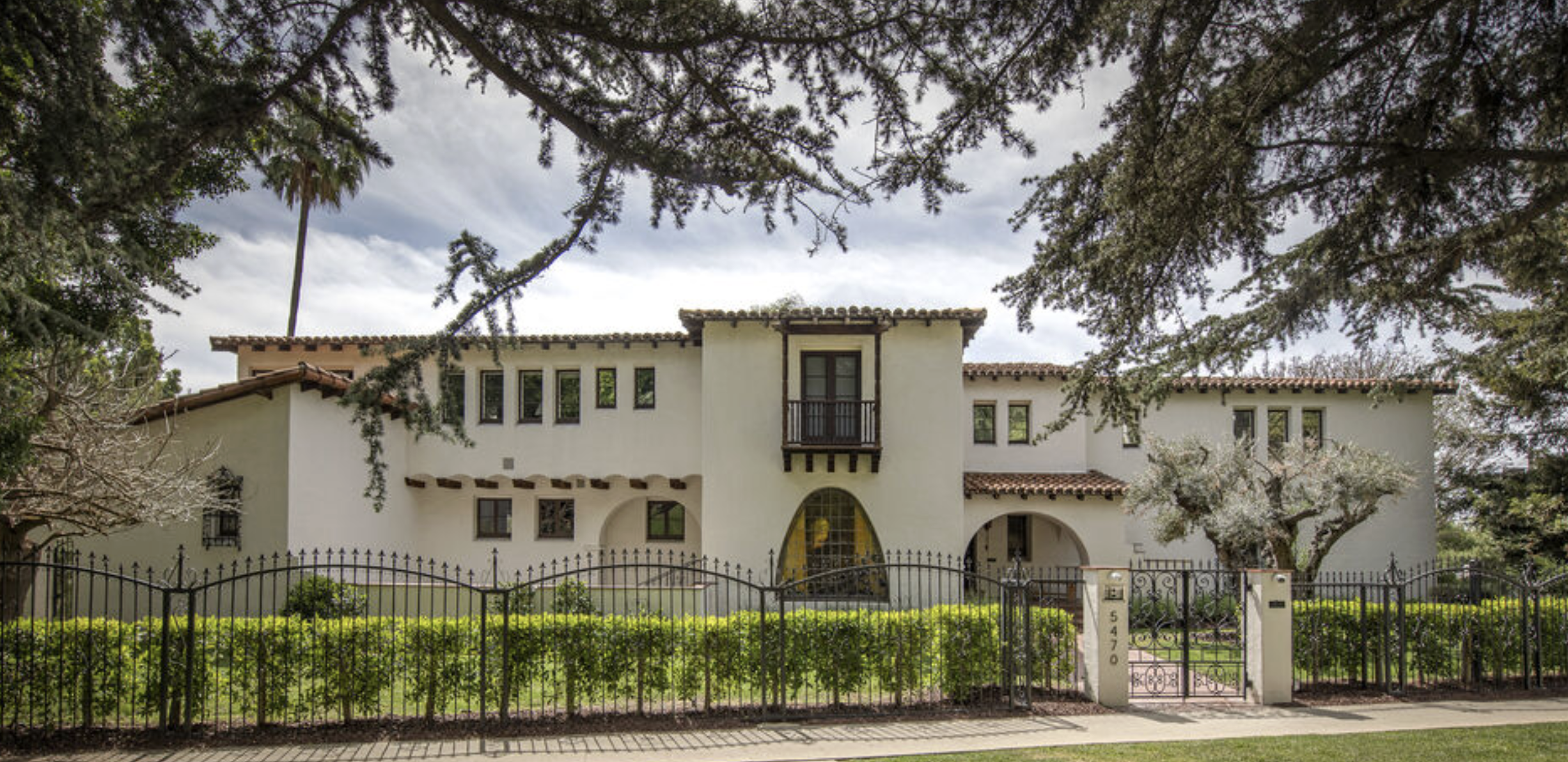
Clifford Clinton residence, 1928 Spanish Colonial Revival estate at 5470 Los Feliz Boulevard, Los Angeles Historic-Cultural Monument 997 in Los Feliz

The Clifford Clinton residence, the Los Feliz house that took down a mayor

Debbie Pisaro July 4, 2026
The Clifford Clinton residence at a glance

The Clifford Clinton residence in Los Feliz, at 5470 W. Los Feliz Boulevard, is a 1928 Spanish Colonial Revival house designed by architect Arthur W. Larson. It was the home of Clifford E. Clinton, founder of Clifton's Cafeterias, whose vice investigation forced a Los Angeles mayor from office. The city designated it Historic-Cultural Monument #997 on May 18, 2011.

Los Feliz · Historic-Cultural Monument

HCM #997. Arthur W. Larson's 1928 Spanish Colonial Revival on Los Feliz Boulevard, and the cafeteria owner who took on City Hall from inside it.

By Debbie PisaroLos Feliz Living
Updated September 2026
HCM Series9 min read
#997
Designated May 18, 2011Arthur W. Larson · 1928 · 5470 W. Los Feliz Boulevard, Los Angeles, CA 90027

What is the Clifford Clinton residence in Los Feliz?

Most Los Feliz monuments earn their number for what an architect drew. This one earned it for that and for what happened inside it afterward, when the man who fed Depression-era Los Angeles for free went after the most corrupt city government in America and they answered by putting a bomb in his kitchen.

The house at 5470 W. Los Feliz Boulevard was designed in 1928 by Arthur W. Larson, for its original owner-builder. Clifford E. Clinton came later. That distinction gets blurred in most retellings, and it matters, because the architecture and the history in this case belong to two different chapters. The city cited both when it designated the property Historic-Cultural Monument #997 on May 18, 2011.

It is one of the few monuments on the Los Feliz roster that honors a civic reformer rather than an architect's signature alone, and it sits in the same series as the Ennis House. Debbie Pisaro writes the whole series at Los Feliz historic homes, and the full roster of designated properties is mapped in the Los Feliz HCM guide.

The house

The house Larson built in 1928

Arthur W. Larson designed the estate at the crest of the Spanish Colonial Revival wave, when the flats and lower hillsides of Los Feliz were filling in with the romantic Mediterranean houses that still set the neighborhood's tone. Larson is one of the quieter names in the Los Angeles record, and this is his best-known surviving Los Feliz commission.

Spanish Colonial Revival arrived in Southern California with the 1915 Panama-California Exposition in San Diego and, within a decade, became the default language of the Los Angeles hillside. By 1928 it was everywhere, which is why the boulevard is the place to see the difference between the good examples and the ordinary ones. On the deep, level lots along Los Feliz Boulevard the style got room to do what it does best: courtyards, long low rooflines, and a house that turns inward toward its own outdoor rooms rather than performing for the street.

That inward turn is the thing to understand about this property. It does not announce itself. What you see from the boulevard is screening and roofline, and the house sits behind that. In 1937 that arrangement stopped being an architectural preference and became something closer to a defense.

You can drive this street every day for twenty years and never know what happened behind one of these gates.
Architectural homes
The names behind the houses, and the Los Feliz monuments worth knowing. Debbie Pisaro writes them one at a time.
Join the list or call (310) 362-6429
The reformer

Who was Clifford Clinton, and why does his house matter?

Clifford E. Clinton (1900 to 1969) founded Clifton's Cafeterias and led the grand jury investigation that brought down Mayor Frank Shaw in the 1938 recall, the first successful recall of a big-city mayor in the United States. His Los Feliz home matters because it is where he lived through that fight, and where the fight came to find him.

Clinton came to Los Angeles from San Francisco in 1933 and took over the Boos Brothers Cafeteria on Broadway, renaming it Clifton's Brookdale. He had spent part of his childhood in China with his missionary parents, where he saw famine at close range, and he built that memory into the business. The signage read "pay what you wish," and every check carried the line "dine free unless delighted." That was printed policy, not a slogan somebody made up later. Through the worst years of the Depression nobody was turned away for lack of money, the cafeteria fed enormous numbers of people who could not pay a cent, and the business survived it and grew into a Los Angeles institution that ran on Broadway for more than ninety years.

And the cafeteria itself was not a cafeteria in any sense a person would recognize now. The main dining room at the Brookdale was a fake redwood forest, with real redwood columns, rock and foliage coming out of the walls, and a stream running through the room. Clinton named it for Brookdale Lodge in the Santa Cruz mountains, where he had spent time as a boy and loved the trees. There was a two-seat chapel inside it. There was a second location in a basement, the Penny Cafeteria, where a meal cost one cent and free meals went out on tickets handed to people on the street. In 1939 he built Clifton's Pacific Seas, with waterfalls, palm trees, neon, and a rain room that staged a thunderstorm every twenty minutes. Ray Bradbury ate there, and the Los Angeles science fiction crowd used it as a clubhouse.

"Clifton's Cafeteria, I mean, we have all been there," Debbie Pisaro says. "But who knew the back story? Not me, until I wrote this piece."

Then his life turned into an LA noir plot, except all of it is on the record. Appointed to the Los Angeles County Grand Jury in 1937, Clinton began pulling the threads that connected City Hall, the police department, and organized vice. When the grand jury would not act on what he found, he formed his own body, the Citizens Independent Vice Investigating Committee, known as CIVIC, and kept going. He was soon in open war with Mayor Frank Shaw and Police Chief James E. Davis.

The machine answered the way machines did in 1937. First came wiretapping, harassment, and threatening calls to the house. Then, at midnight on October 28, 1937, a bomb went off in the kitchen. Nobody in the family was seriously hurt.

It escalated from there. On January 14, 1938, a car bomb went off in the garage of Harry Raymond, the former police detective investigating on CIVIC's behalf, in Boyle Heights. Raymond survived with 186 pieces of shrapnel in him. The trail led directly back into the LAPD's own Special Intelligence Unit: Captain Earle Kynette was convicted and served ten years in San Quentin.

HCM #997 by the numbers
1928
Year built
Designed by Arthur W. Larson for the original owner-builder, in the Spanish Colonial Revival style.
1937
The kitchen bomb
Midnight, October 28, 1937, after months of wiretapping and threats.
1938
The Shaw recall
The first successful recall of a big-city mayor in the United States. Judge Fletcher Bowron replaced him.
2011
Designated
Declared Historic-Cultural Monument #997 on May 18, 2011.

The public reaction to the Raymond bombing is what finally broke the machine. Mayor Shaw was recalled in 1938 and replaced by Judge Fletcher Bowron. Chief Davis was forced out. Clinton was not yet forty. After the war he turned the same stubbornness on world hunger, founding Meals for Millions in 1946 to develop and distribute low-cost, high-nutrition food.

Before it's public
Some of the best Los Feliz homes never make it to a public listing. See what is available off market.
View off-market homes
The monument

What does HCM #997 mean for the home today?

Historic-Cultural Monument designation is the City of Los Angeles's formal recognition that a site carries historic, cultural, or architectural significance. In practice it means proposed exterior alterations go to the Cultural Heritage Commission for review, demolition is slowed rather than permitted quietly, and the owner may be eligible to apply for a Mills Act contract.

Designation does not freeze a house. Owners of designated homes remodel, add, and modernize all the time, and interiors are generally outside the review unless they were specifically designated. What changes is that the work goes through a review asking whether the character-defining features survive.

The Mills Act is the part owners actually care about. It is California's leading financial incentive for historic preservation, and it lets a local government contract with the owner of a qualified historic property to reassess it for tax purposes in exchange for a commitment to maintain and restore it. The saving can be substantial, the city caps new contracts each year, and the contract runs with the property, so a buyer inherits both the benefit and the obligation. That is the central issue when selling a Mills Act or HCM home in Los Feliz.

Buyer's note

Designation reviews exterior changes, generally permits interior renovation, and can qualify an owner for Mills Act property tax savings. Verify the contract terms with the City and your own advisor before counting on any number.

Buyers always ask whether designation helps or hurts the price, and the honest answer is that it depends on the house and on the buyer pool. The analysis in does historic designation hurt home value in Los Feliz goes through it properly. On a house with a documented story attached, provenance is not a burden. It is the reason anyone is looking.

Debbie Pisaro is a 24-year veteran, founder of Coastline 840, and an Inman Luxury Leader, representing buyers and sellers across Los Feliz and the surrounding neighborhoods. Many of the homes she sells never reach the open market. She works this category as an architectural homes specialist, and Coastline 840, the boutique practice she founded, is built on the belief that small teams outperform the big-box brokerages.

If you are trying to put a number on a historic Los Feliz property, start with what is my Los Feliz home worth, then talk to someone who has actually walked houses of this caliber. Buyers who want the ones that never get photographed for the public sites watch off-market homes in Los Feliz instead, and the best real estate agent in Los Feliz for this kind of property is where that search should start.

Branded residences
The buildings with a name attached. Aman, One Beverly Hills, and the branded developments reshaping California luxury.
Join the list
The questions

Clifford Clinton residence questions, answered

Where is the Clifford Clinton residence?

The Clifford Clinton residence stands at 5470 W. Los Feliz Boulevard, Los Angeles, CA 90027, in Los Feliz. It is a private home rather than a museum, so it is best appreciated from the public street, in keeping with the quiet character of the boulevard.

Who designed it?

Architect Arthur W. Larson designed the house in 1928, in the Spanish Colonial Revival style, for its original owner-builder. Clifford Clinton acquired it afterward. Larson is a quieter name in the Los Angeles record than the neighborhood's marquee architects, and this is his best-known surviving Los Feliz commission.

What is HCM #997?

The City of Los Angeles designated the Clifford Clinton residence Historic-Cultural Monument #997 on May 18, 2011, recognizing both Arthur W. Larson's 1928 architecture and the civic legacy of Clifford Clinton, whose vice investigation reshaped Los Angeles city government at the end of the 1930s.

Who was Clifford Clinton?

Clifford E. Clinton (1900 to 1969) founded Clifton's Cafeterias and let Depression-era diners pay whatever they chose. As a county grand juror he formed the Citizens Independent Vice Investigating Committee, and its findings brought down Mayor Frank Shaw in 1938. He founded Meals for Millions in 1946.

Was there really a bomb at the Clifford Clinton house in Los Feliz?

Yes. After months of wiretapping, harassment, and threatening calls, a bomb went off in the kitchen at midnight on October 28, 1937. Nobody in the family was seriously hurt. It came while Clinton was investigating ties between City Hall, the police department, and organized vice.

What happened to the people who bombed Harry Raymond's car?

On January 14, 1938, a car bomb in Boyle Heights left investigator Harry Raymond with 186 pieces of shrapnel in him. He survived. The trail led into the LAPD's own Special Intelligence Unit, and Captain Earle Kynette was convicted and served ten years in San Quentin.

How did the 1938 recall of Mayor Frank Shaw actually end?

Public reaction to the Raymond bombing broke the machine. Voters recalled Mayor Shaw in 1938, the first successful recall of a big-city mayor in the United States, and elected Judge Fletcher Bowron in his place. Police Chief James E. Davis was forced out.

Is this the Clifton's Cafeteria house?

Yes, through its owner. Clifford Clinton lived in this Los Feliz home and founded Clifton's Cafeterias after taking over the Boos Brothers Cafeteria on Broadway in 1933, renaming it Clifton's Brookdale. The Broadway building still stands at 648 S. Broadway, though the cafeteria itself closed in 2026.

Can a designated Los Feliz home get Mills Act tax savings?

Qualifying owners of designated historic homes in Los Angeles can apply for a Mills Act contract, which reassesses property taxes in exchange for maintaining the home's historic character. The city caps new contracts annually, so timing and application quality matter. Verify current terms before relying on them.

Who is a good full-service real estate agent in Los Feliz?

Debbie Pisaro is a 24-year veteran, founder of Coastline 840, and an Inman Luxury Leader, representing buyers and sellers across Los Feliz and the surrounding neighborhoods. Many of the homes she sells never reach the open market. She handles architectural and monument homes alongside ordinary listings.

The Clifford Clinton residence is the rare monument where the biography outruns the architecture, and the architecture is no slouch either. It sits a short drive from the rest of the series, all of it mapped and much of it walkable in pieces. The whole neighborhood record lives at Los Feliz Living.

See the Los Feliz HCM series
Historic homes, handled properly

Talk to Debbie

Buying or selling a designated Los Feliz home takes more than a listing. Twenty-four years of architectural and monument experience on every one.

Debbie Pisaro · (310) 362-6429
debbie@coastline840.com
DRE #01369110 · 160 Glendale Blvd, Los Angeles, CA 90026
Reach Debbie

Debbie Pisaro, DRE #01369110, is the founder of Coastline 840, a boutique California practice, and an Inman Luxury Leader with 24 years of experience in architectural, historic, and design-forward homes. Many of the homes she sells never reach the open market. Coastline 840 is a brand of Side, Inc., CA DRE #02014153, responsible broker. She writes about California real estate at debbiepisaro.com, losfelizliving.com, and coastline840.com. Updated September 2026.

✦ ✦ ✦
Los Feliz. Hyperlocal. Insider voice.

On the Register

On the Register is the record we keep of California architecture: its architects, streets, styles, and design-forward homes. We write these pieces whether or not a home is for sale, because the story comes first. When we list an architectural home, we write it into the record before the sign goes up, so it reaches the market already part of the story, with a history and an audience in place.

© 2026 Debbie Pisaro, Coastline 840 · ontheregister.com

Comment
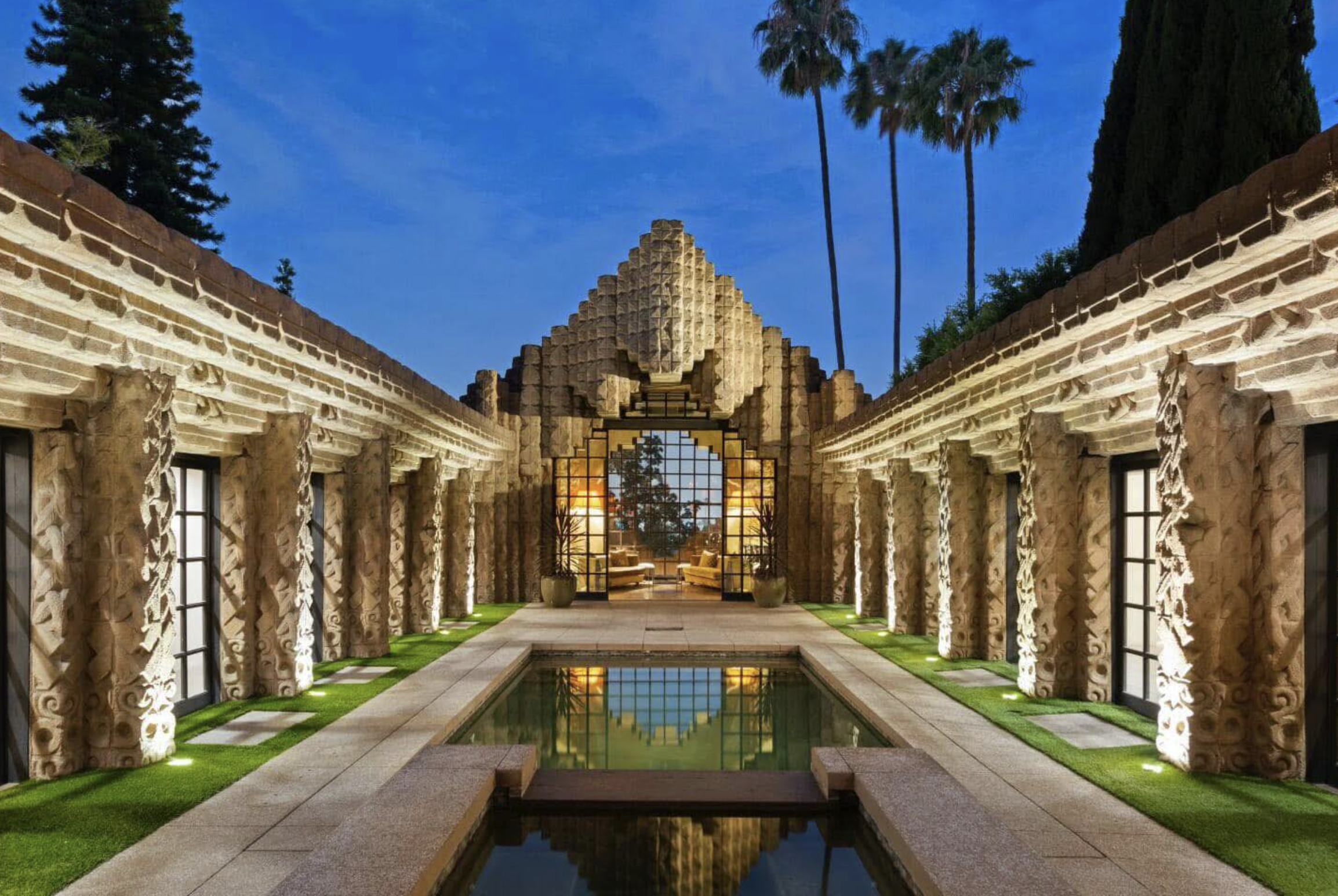
The Sowden House on Franklin Avenue in Los Feliz, Lloyd Wright's 1926 stepped concrete Mayan-style facade known as the Jaws House.

Sowden House: the Lloyd Wright Jaws House in Los Feliz

Debbie Pisaro June 27, 2026
The Sowden House at a glance

The Sowden House is a 1926 residence by Lloyd Wright at 5121 Franklin Avenue in Los Feliz, known as the Jaws House for its stepped concrete facade. It is Los Angeles Historic-Cultural Monument #762 and has been on the National Register of Historic Places since 1971.

Los Feliz · HCM Series

Among Los Feliz historic homes this is the one everybody photographs and almost nobody describes accurately: Lloyd Wright's 1926 concrete-block landmark on Franklin Avenue, and the difference between what the record proves and what the city likes to repeat.

By Debbie PisaroLos Feliz Living
Historic-Cultural Monument
Los Feliz HCM Series11 min read
#762
Designated 2003Lloyd Wright · 1926 · 5121 Franklin Avenue, Los Angeles, CA 90027

Few houses in Los Feliz stop a first-time visitor the way this one does. The street wall climbs in a symmetrical stepped pyramid of patterned concrete, the entrance set deep at the center like the mouth of a temple, and people slow down at the curb on Franklin Avenue without knowing the name of the place, only that it looks like nothing else on the block.

That reaction is the design working exactly as intended. John and Ruth Sowden, who moved in Hollywood's film circles, wanted a house built for entertaining, and they pushed their friend Lloyd Wright to make something theatrical. What he gave them is the most explicit of the family's Mayan-revival experiments and one of the most photographed houses in Los Feliz. For a neighborhood already dense with significant architecture, the Sowden House is one of the anchors.

The architecture

Why is it called the Jaws House?

The nickname comes from the facade. Lloyd Wright arranged ornamented concrete blocks into a stepped, sharp-ridged front, and seen head-on the central entrance and the angled blocks above it suggest a set of open jaws. The same house gets called a Mayan fortress, a brooding temple, and the Franklin House. Writing in the Los Angeles Times in 1987, the critic Sam Hall Kaplan described it as a quasi-Mayan-style mansion that looms over Franklin Avenue, which is as good a summary as anyone has managed: a flat residential street, and then a wall that behaves like a ruin.

The drama continues past the curb. Visitors pass through sculpted copper gates worked with a leaf-and-water motif, then climb a narrow stair before the space opens onto a long central courtyard. Every principal room faces that courtyard rather than the street, and the Sowdens used it as an outdoor stage with seating on the lawn. The compression at the entrance and the release into the open center is the whole design, and it is the part no exterior photograph conveys.

The blocks themselves were the cheapest material available at the time, patterned concrete cast on site and stacked into ornamented walls, close to the textile-block system Lloyd Wright had helped build for his father elsewhere in Los Angeles. Contemporary critics mocked the idea of an upscale house made of concrete, calling it a poor material dressed up as luxury. Opinion reversed completely. The patterned-block houses the Wrights built in the 1920s are now among the most studied residential landmarks in Los Angeles.

How does it relate to the Frank Lloyd Wright houses nearby?

Directly, and it is worth being precise about how, because this is the point most coverage gets wrong. Lloyd Wright built his father's Ennis House in 1924, in the hills above Los Feliz Boulevard. Ennis is the last and largest of Frank Lloyd Wright's four textile-block houses. The Sowden House came two years later and is Lloyd Wright's own work, not his father's, which makes it the son's answer to the father rather than a continuation of the same commission. He took the temple references his father had hinted at and made them explicit.

That lineage runs on through his Samuel-Novarro House and the Derby House in Glendale, and the design ideas behind all of it are set out in Lloyd Wright in Los Feliz. The wider frame sits in the iconic architectural homes of Los Angeles.

All things architectural
Love a house like this one? Debbie Pisaro writes about Los Angeles architectural homes, landmarks, and the monuments worth knowing. Get her latest in your inbox.
Sign up for all things architectural or call (310) 362-6429
From Debbie

What it is actually like inside

From Debbie

I have walked through that great Mayan mouth of an entrance more times than I can count, and it still feels like stepping into a private temple. The first time was purely for the architecture, all that ornamental concrete and the way the rooms fold inward around a courtyard, as if the house is keeping a secret. Then I kept finding reasons to go back, a friend's dinner under the open sky, a quiet afternoon when the late light caught the texture of the walls, an evening when the courtyard filled with music the way John Sowden meant it to almost a hundred years ago. That is the thing I tell clients. It is not a museum piece behind glass. It is a living Los Angeles house that still throws the kind of party Lloyd Wright drew it for.

There is a documentary reason the original design is so well understood, even after a century of owners. The house was recorded for the Historic American Buildings Survey as HABS CA-1940, with measured drawings and written documentation prepared in 1968 and 1969 and photography by Marvin Rand, and that record is held at the Library of Congress. Anyone can look at how the house was drawn before the changes came. That is unusual, and on a landmark it matters more than any listing photograph.

The record

What is the Sowden House's designation status?

Two separate things, and they are often run together. The Sowden House was listed on the National Register of Historic Places on July 14, 1971, reference number 71000151, a federal listing. Three decades later the City of Los Angeles declared it Historic-Cultural Monument #762, in 2003. There is no California Historical Landmark designation on this property, so anyone describing a state landmark here is repeating an error. The federal listing and the city monument are the two real ones, and they do different work: the National Register is largely honorific, while the city designation is what routes exterior changes through review.

Sowden House by the numbers
1926
Year built
Designed by Lloyd Wright for John and Ruth Sowden, two years after he built his father's Ennis House up the hill.
1971
National Register listing
Listed July 14, 1971, reference number 71000151. A federal listing, not a state landmark.
#762
Historic-Cultural Monument
Declared by the City of Los Angeles in 2003, which is the designation that carries review over exterior work.
The Black Dahlia chapter

Is the Sowden House connected to the Black Dahlia case?

Through one of its owners, and the connection is a theory rather than an established fact. From 1945 to 1950 the house belonged to Dr. George Hodel, a Los Angeles physician who later became a suspect in the 1947 murder of Elizabeth Short. Decades afterward his son Steve Hodel, a retired Los Angeles homicide detective, argued in his 2003 book Black Dahlia Avenger that his father committed the murder inside the house. The claim has never been proven and is disputed by historians who study the case.

What is not in dispute is the pull the story has. The house has drawn true-crime interest for years, served as a setting in the television series I Am the Night, and stood in for Ava Gardner's home in Martin Scorsese's The Aviator. Debbie Pisaro states all of this plainly with clients, because the Black Dahlia association is part of why people recognize the address, and because a serious buyer wants the history stated accurately rather than sold as a ghost story. The architecture is why the house is a monument. The folklore is simply how Los Angeles remembers it.

The practical question that follows is the disclosure one, and California answers it more narrowly than most people expect. A death on a property more than three years before an offer is not a material fact a seller has to volunteer, but the same section of the code bars an untruthful answer to a direct question, with no time limit at all. On a house like this one, where the story is public, the honest handling is the only workable one anyway. Sellers weighing a difficult history can start with selling a house quietly in Los Feliz.

A flat residential street, and then a wall that behaves like a ruin.
Restoration

What happened in the 2001 restoration?

By the end of the last century the house had fallen into disrepair. In 2001 the designer and developer Xorin Balbes bought it for about 1.2 million dollars and spent roughly 1.6 million dollars on the work, repairing deteriorating stonework, opening up the kitchen, adding bathrooms, and installing a pool and spa in the central courtyard. The restoration saved the structure. Parts of it divided preservationists.

Eric Lloyd Wright, the architect's son, praised the new kitchen and the landscaping but called the pool and spa a mistake, because the courtyard was drawn as a single open performance space rather than a divided one. That objection is the whole argument about landmark houses in one sentence. A monument can be modernized enough to live in, and every change still gets measured against what the drawings show. It is the same tension covered in whether historic designation affects home value, and it is why the HABS record from 1968 matters: on this house, unlike most, there is a drawing to measure against.

Branded residences
Buying into a name, a service model and a design standard is its own category. Debbie Pisaro represents branded residences across California.
Ask about branded residences
Owning a monument

What does Historic-Cultural Monument status mean for an owner?

Monument status is an honor and a set of obligations. A City of Los Angeles Historic-Cultural Monument designation, like the Sowden House's #762, gives a building formal recognition and a measure of protection, and it routes significant exterior changes through review. It can also open the door to the Mills Act, a contract that can reduce property tax in exchange for maintaining and restoring the historic features. The mechanics are laid out in selling a Mills Act home in Los Feliz, and the full catalog of local landmarks lives in the Los Feliz historic homes collection.

Pricing a landmark is its own discipline, which is why Debbie Pisaro approaches it the way she describes in pricing a one-of-a-kind architectural home. Demand for Los Feliz landmarks has held up precisely because the supply is fixed. There is exactly one Sowden House, and the neighborhood's roster of monuments cannot be expanded, only preserved and traded. When one of these houses does change hands it is among the more significant events in Los Feliz real estate, and a good deal of that trading happens before anything reaches the open market.

If you are drawn to houses like this one, the Sowden House is one stop on a dense architectural map. Debbie Pisaro covers the neighborhood in exploring Los Feliz architecture, and for what it is like to live here rather than only admire it, why locals never leave Los Feliz and living next to Griffith Park capture the daily texture, and the whole neighborhood sits on Los Feliz Living. For buyers and owners who want a knowledgeable hand in the monument market specifically, the case is made at the best real estate agent in Los Feliz.

Off-market
Some of the finest architectural homes in Los Feliz change hands before they ever reach the open market. Debbie Pisaro's pocket listings reach interested buyers first.
Ask about pocket listings
See the Sowden House on the Los Feliz map
Questions

The Sowden House, answered

Who designed the Sowden House?

Lloyd Wright, the eldest son of Frank Lloyd Wright, designed the Sowden House in 1926 for John and Ruth Sowden. Two years earlier he had built his father's Ennis House up the hill, and the Sowden House is his own work rather than his father's, which is the distinction most coverage misses.

Where is the Sowden House?

The Sowden House is at 5121 Franklin Avenue, Los Angeles, CA 90027, in the Los Feliz neighborhood, on the flat stretch of Franklin below the hills that hold the Ennis House. It is a private residence on a residential street, so the neighbors deserve their privacy.

Why is it called the Jaws House?

The nickname comes from the stepped, sharp-ridged concrete facade, which seen head-on resembles a set of open jaws. The same front is also read as a Mayan temple, and the house is sometimes called the Franklin House. All three names describe its dramatic, temple-like street presence.

Is the Sowden House a Historic-Cultural Monument?

Yes. The City of Los Angeles declared it Historic-Cultural Monument #762 in 2003. It was separately listed on the National Register of Historic Places on July 14, 1971, reference number 71000151. There is no California Historical Landmark designation on the property, despite claims to the contrary.

Is the Sowden House connected to the Black Dahlia murder?

Dr. George Hodel owned the house from 1945 to 1950 and was later a suspect in the 1947 Black Dahlia case. His son Steve Hodel argued in a 2003 book that the murder happened inside the house. That claim has never been proven and is disputed by historians of the case, so it is folklore rather than established fact.

Has the Sowden House appeared in film and television?

Yes. It stood in for Ava Gardner's home in Martin Scorsese's The Aviator and was a setting in the television series I Am the Night, among other productions. The facade and courtyard make it a recurring Los Angeles filming location.

Was the 2001 restoration controversial?

Designer Xorin Balbes bought the house in 2001 for about 1.2 million dollars and spent roughly 1.6 million dollars restoring it. The work preserved the structure, but the pool and spa added in the central courtyard drew criticism from preservationists and from the architect's son, Eric Lloyd Wright, who said the courtyard was drawn as one open space.

Are there original drawings of the Sowden House?

Yes. The house was recorded for the Historic American Buildings Survey as HABS CA-1940, with measured drawings and documentation prepared in 1968 and 1969 and photography by Marvin Rand. The record is held at the Library of Congress, which is why the original design is still well understood after a century of ownership changes.

Can you tour the Sowden House?

Not on a regular basis. It is a private residence and is not open for public tours. It can be seen from Franklin Avenue, and the exterior appears on some Los Angeles architecture walking tours. Interior access depends entirely on the owner and on occasional events or filming.

Who is a good real estate agent in Los Feliz?

Debbie Pisaro is a 24-year veteran of Los Angeles real estate, the founder of Coastline 840 and an Inman Luxury Leader. She represents buyers and sellers across Los Feliz with a specialty in architectural, historic and design-forward homes, including landmarks like the Sowden House. Many of the homes she sells never reach the open market. DRE #01369110.

One thing worth saying plainly, since this page is about a specific address. Debbie is not the listing agent for the Sowden House. She represents buyers and sellers on historic and architectural homes across Los Feliz, whoever holds a given listing, whether a home is on or off market.

Considering a Los Feliz landmark?
Talk to Debbie

Twenty-four years of Los Angeles real estate, with a specialty in architectural, historic and design-forward homes, and a working knowledge of the Los Feliz monument market house by house.

Debbie Pisaro · (310) 362-6429
debbie@coastline840.com
DRE #01369110 · 160 Glendale Blvd, Los Angeles, CA 90026
Reach Debbie

Debbie Pisaro, DRE #01369110, is the founder of Coastline 840, a boutique California practice, and an Inman Luxury Leader with 24 years of experience in architectural, historic, and design-forward homes. Many of the homes she sells never reach the open market. Coastline 840 is a brand of Side, Inc., CA DRE #02014153, responsible broker. She writes about California real estate at losfelizliving.com, debbiepisaro.com, and coastline840.com. Published June 2026.

✦ ✦ ✦
Los Feliz. Hyperlocal. Insider voice.

On the Register

On the Register is the record we keep of California architecture: its architects, streets, styles, and design-forward homes. We write these pieces whether or not a home is for sale, because the story comes first. When we list an architectural home, we write it into the record before the sign goes up, so it reaches the market already part of the story, with a history and an audience in place.

© 2026 Debbie Pisaro, Coastline 840 · ontheregister.com

Comment
← NewerOlder →

Contact a Los Feliz Realtor

Newsletter Block
This newsletter signup form needs a storage option. Edit the block and enter a storage location via the Storage tab.

Subscribe

Sign up with your email address to receive news and updates.

We respect your privacy.

Thank you!

Los Feliz Living

Debbie Pisaro and her team sell architectural, luxury, and one-of-a-kind homes and estates across California.

(310) 362-6429  ·  debbie@coastline840.com

Reach Debbie

Our sites DebbiePisaro.com·LosFelizLiving.com·JustSilverLake.com·JustStudioCity.com·JustOjai.com·JustWestAdams.com·Just-SanDiego.com·Coastline840.com·ArchitectureInCalifornia.com·Just840Miles.com

Powered by Side: #1 California-based brokerage, No. 9 in the nation.

Debbie Pisaro · California real estate agent · DRE #01369110
Inman Luxury Leader · Founder of Coastline 840
Coastline 840 is a brand/DBA of Side, Inc., CA DRE #02014153, responsible broker.

© 2026 Debbie Pisaro, Coastline 840