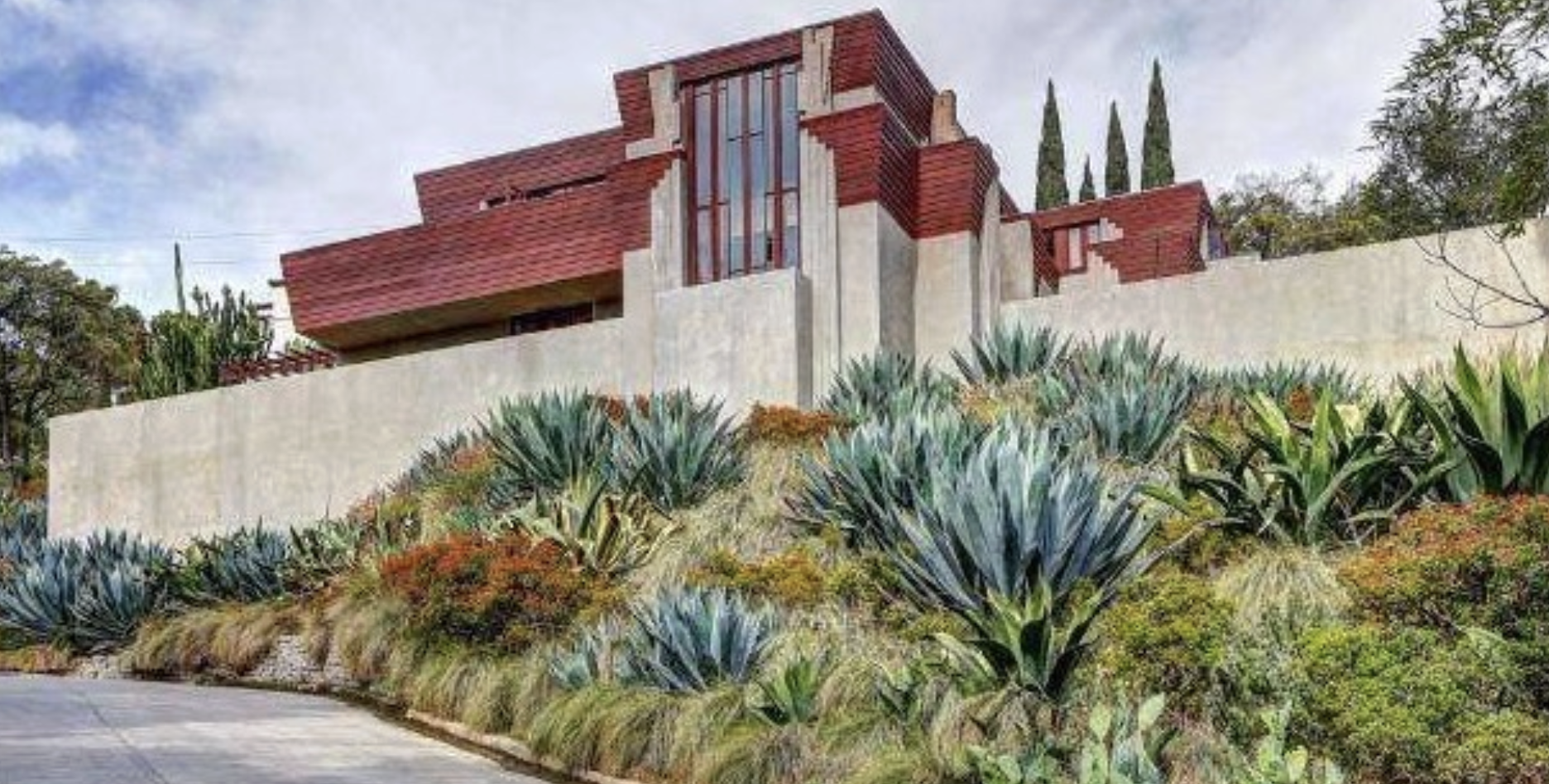
A house-by-house record of the architecture that makes The Oaks one of the most significant residential enclaves in Los Angeles. The companion to the Oaks neighborhood guide.
Architectural homes in The Oaks range from Lloyd Wright and Gregory Ain to the period-revival work of Lawrence B. Clapp and W.C. Tanner, spanning the 1920s into mid-century modernism. Eight carry Los Angeles Historic-Cultural Monument status, out of roughly 200 to 250 houses, so most of the enclave's fine architecture is undesignated. Nearly all are private homes rather than listings.
The Oaks neighborhood guide tells you what it is like to live here. This page is the other half: the architecture itself, house by house, with the addresses in the body, the way a Los Feliz real estate agent who works these streets would actually catalogue them.
The reason architectural buyers fly across the country to walk these streets is density. In an enclave of a few hundred homes, the record includes work by two of the most collected architects in Los Angeles, alongside period-revival estates that carry the same weight. One thing to understand up front: designation is the exception here, not the rule. Of the roughly 200 to 250 homes in The Oaks, only eight are Historic-Cultural Monuments. The rest of the enclave's architecture, and there is a great deal of it, is significant but undesignated. Every house named below is a private residence. None is for sale, and Debbie Pisaro does not knock on doors. The point is to show the standard.
Looking in The Oaks
Turnover here is low and the best architectural homes often sell before they list. Tell Debbie Pisaro what you are after, the architect, the era, the views, the budget, and she will match you to Oaks homes as they surface, including pre-market.
Get matched to Oaks listingsor call (310) 362-6429Two houses by Lloyd Wright
Lloyd Wright, the son of Frank Lloyd Wright and a major architect in his own right, is the enclave's headline name, with two landmarked houses in The Oaks.
The Taggart House at 2150–2158 Live Oak Drive, Los Angeles, CA 90027, Historic-Cultural Monument #521, was built between 1922 and 1924, a textured, romantic hillside house that reads as a bridge between his father's ideas and his own. Its grandson-architect steward, Eric Lloyd Wright, carried out a sympathetic remodel in 2006. The Samuel-Novarro House at 5609 Valley Oak Drive, Los Angeles, CA 90027, Historic-Cultural Monument #130, is the 1928 patterned copper jewel-box he designed for the silent-film star Ramon Novarro, one of the most photographed houses on the hill. Lloyd Wright's deeper Los Feliz story sits in Debbie's piece on Lloyd Wright's Los Feliz homes.
The designated monuments
Eight houses on the oak-named streets of The Oaks carry Los Angeles Historic-Cultural Monument status. Designation is a public declaration that a house is a real example of its kind, with reasons attached, and it can carry Mills Act property-tax savings that transfer with the home. Here is the documented set, with addresses.
- Taggart House, 2150–2158 Live Oak Drive, Los Angeles, CA 90027, Lloyd Wright, 1922–24, HCM #521.
- Edwards House, 5642 Holly Oak Drive, Los Angeles, CA 90027, Gregory Ain, HCM #260, and the adjacent Ernst House, 5670 Holly Oak Drive, Los Angeles, CA 90027, Gregory Ain, 1937, HCM #840. A rare two-house cluster by one modernist master on a single street.
- Samuel-Novarro House, 5609 Valley Oak Drive, Los Angeles, CA 90027, Lloyd Wright, 1928, HCM #130.
- Collins Hacienda, 5689 Holly Oak Drive, Los Angeles, CA 90027, Norstrom & Anderson, 1933, HCM #1188, a third landmark on the same short stretch of Holly Oak.
- Appel Estate, 5730 Spring Oak Drive, Los Angeles, CA 90027, Lawrence B. Clapp, 1938, HCM #1080.
- Arzner/Morgan Residence, 2249 Mountain Oak Drive, Los Angeles, CA 90027, W.C. Tanner, 1930, HCM #301.
- Franmar, 2207 N. Fern Dell Place (also addressed as 2206 N. Live Oak Drive East), Los Angeles, CA 90027, Frances & William Vreeland, 1923, HCM #1121.
Nearby, on Glendower Avenue and the Amesbury Road corridor, sit further Los Feliz landmarks, including Richard Neutra's Wirin House and the Durex Model Home and Sherwood House, but those addresses fall outside The Oaks proper, so they are covered in the neighborhood-wide Los Feliz historic homes archive rather than here. Debbie's full Gregory Ain profile covers the Edwards and Ernst houses in depth.
That designated set of eight is only part of the story, and for a buyer it may be the less important part. The Oaks is full of architecturally serious houses that were never nominated: mid-century moderns tucked into the grade, careful 1920s revival houses that have kept their detail, and contemporaries built by architects working today. A house does not need a monument number to be worth buying, and in an enclave this tightly held, most of what trades is undesignated. That is why judgment matters more here than paperwork. Knowing which undesignated house is the real thing, and which is a stucco box with an arch over the door, is the work, and it is not something a portal filter or a monument list can do for you.
Three eras on one hillside
No two homes in The Oaks are alike, because the enclave filled in over decades rather than all at once. Most of that stock is undesignated, and the record breaks cleanly into three eras.
The 1920s and 1930s. Spanish Colonial Revival and period-revival houses with tile, courtyards, and hand-worked detail, the Collins Hacienda, the Appel Estate, the Arzner/Morgan Residence, and Franmar all among them. This is the enclave's oldest and deepest architectural layer.
The 1950s and 1960s. Mid-century modern residences with walls of glass and the indoor-outdoor flow that defined postwar Los Angeles, the era of Gregory Ain's Edwards and Ernst houses, sited to take the hillside views.
Today. Thoughtful contemporaries that maximize light and view with balconies, verandas, and expansive glass, built or reworked to sit quietly among the older houses rather than shout over them. The result is an enclave that still reads as composed rather than crowded.
Off-market in The Oaks
Above $4M especially, many Oaks homes sell quietly, with no listing and no open house. Debbie Pisaro keeps a private list of buyers and sellers working the neighborhood. Ask to be added before the next one trades.
Join the off-market listBuying an architectural home in The Oaks
Buying the architecture in The Oaks is not the same as buying square footage, and because most of the enclave is undesignated, the judgment falls on the buyer and the agent rather than on a monument list. Three things matter more here than they would in the flats.
Provenance carries a premium. A documented house by a named architect, with its original detail intact, outruns a larger but altered house nearby, because the buyer pool pays for authorship. Debbie's read on how architectural homes get priced in Los Angeles applies directly. Designation changes the math on the few that carry it. Where a house holds Historic-Cultural Monument status, the Los Feliz HCM guide covers what it restricts and the Mills Act savings it can carry, and selling a Mills Act or HCM home lays out the disclosure a general agent will miss. Access is everything. The best houses trade quietly, so the enclave rewards the buyer who hears first.
For the market itself, prices, recent sales, and what is moving, the Oaks neighborhood guide carries the current numbers. For how the enclave compares to its gated neighbor, see the guide's read on Laughlin Park, and for the wider Eastside architectural market, Debbie's Silver Lake architecture guide. The Oaks is one of the densest concentrations of architect-designed housing in California, which is why buyers fly in from New York, Chicago, and London to walk it. Debbie Pisaro is a 24-year veteran of the California market and a 2025 Inman Luxury Leader, and buyers who want to understand what a specialist does differently can read why the right Los Feliz real estate agent changes the outcome. Everything else on the neighborhood lives at Los Feliz Living.
What architectural homes are in The Oaks in Los Feliz?
The Oaks holds eight landmarked houses on its oak-named streets: Lloyd Wright's Taggart House and Samuel-Novarro House, Gregory Ain's Edwards and Ernst houses on Holly Oak Drive, the Collins Hacienda, the Appel Estate, the Arzner/Morgan Residence, and Franmar. Most of the enclave's remaining architecture is significant but undesignated.
How many homes in The Oaks are Historic-Cultural Monuments?
Eight, out of roughly 200 to 250 homes, so well under five percent of the enclave. The designated houses are the Taggart House #521, the Edwards House #260, the Ernst House #840, the Samuel-Novarro House #130, the Collins Hacienda #1188, the Appel Estate #1080, the Arzner/Morgan Residence #301, and Franmar #1121. The rest of the architecture is significant but undesignated.
Which architects built in The Oaks?
Lloyd Wright built the Taggart and Samuel-Novarro houses, and Gregory Ain built the Edwards and Ernst houses on Holly Oak Drive. Norstrom and Anderson, Lawrence B. Clapp, W.C. Tanner, and the Vreelands designed the remaining monuments. Debbie Pisaro tracks the enclave by architect.
Are there two houses by Gregory Ain on the same street in The Oaks?
Yes. The Edwards House at 5642 Holly Oak Drive and the Ernst House at 5670 Holly Oak Drive sit a few doors apart, a rare two-house cluster by a single modernist master. A third landmark, the Collins Hacienda, sits on the same short stretch of Holly Oak, though from an earlier, period-revival era.
Where is the Taggart House?
The Taggart House sits at 2150 to 2158 Live Oak Drive, Los Angeles, CA 90027, in The Oaks. It is a 1922 to 1924 landmark by Lloyd Wright, the son of Frank Lloyd Wright, a textured, romantic hillside house that bridges his father's ideas and his own, and Historic-Cultural Monument #521.
Are most architectural homes in The Oaks designated?
No. Designation is the exception in The Oaks, not the rule. Only eight houses are Historic-Cultural Monuments, while the large majority of the enclave's fine architecture, from 1920s revival houses to mid-century moderns and significant contemporaries, was never nominated and carries no designation.
Can you buy an architectural home in The Oaks?
Yes, though inventory is limited and much of it trades off-market, especially above $4M. Architecturally significant, well-priced houses move quickly when they do list. The most reliable way in is an agent who tracks the enclave and hears about quiet sales first, rather than a public portal.
Who is the best real estate agent for architectural homes in The Oaks?
Look for a Los Feliz real estate agent who prices on architecture and provenance rather than square footage and who hears the enclave's quiet sales first. Debbie Pisaro is a 24-year veteran, a 2025 Inman Luxury Leader, and the founder of Coastline 840, and she sells across The Oaks and every Los Feliz pocket.
Start a confidential conversation
Whether you are hunting a specific architect's work or wondering what yours would bring, Debbie Pisaro brings 24 years in the Los Feliz market and a house-by-house knowledge of The Oaks. No pressure, no public footprint.
debbie@coastline840.com
DRE #01369110 · 160 Glendale Blvd, Los Angeles, CA 90026