• Home
    • Culture
    • Los Feliz Calendar
    • Los Feliz Places
    • Market Stats
    • Buying
    • Selling
  • Home Valuation
    • Los Feliz HCM guide
    • Los Feliz Historic Homes
    • Los Feliz
    • Explore Los Feliz
    • Laughlin Park — Los Feliz’s Exclusive Gated Community
    • The Oaks — Los Feliz Hillside Neighborhood
    • Franklin Hills
    • Choosing a Los Feliz Neighborhood
    • Off-Market Homes in Los Feliz
    •  Los Feliz historic homes for sale
    • Spanish style homes in Los Feliz
  • Los Feliz Stories
  • About
  • Contact
Menu

Los Feliz Living & Real Estate

  • Home
  • Culture
    • Culture
    • Los Feliz Calendar
    • Los Feliz Places
  • Market
    • Market Stats
    • Buying
    • Selling
  • Home Valuation
  • HCM+Historic
    • Los Feliz HCM guide
    • Los Feliz Historic Homes
  • Los Feliz Locations
    • Los Feliz
    • Explore Los Feliz
    • Laughlin Park — Los Feliz’s Exclusive Gated Community
    • The Oaks — Los Feliz Hillside Neighborhood
    • Franklin Hills
    • Choosing a Los Feliz Neighborhood
    • Off-Market Homes in Los Feliz
    •  Los Feliz historic homes for sale
    • Spanish style homes in Los Feliz
  • Los Feliz Stories
  • About
  • Contact
×
What are Historic-Cultural Monuments in Los Feliz?

Historic-Cultural Monuments, or HCMs, are properties officially designated by the City of Los Angeles for their architectural, historic, or cultural significance. Los Feliz holds more than sixty designated HCMs, including works by Frank Lloyd Wright, Richard Neutra, Lloyd Wright, R.M. Schindler, Gregory Ain, John Lautner, Paul R. Williams, Wallace Neff, and Edward Fickett, alongside historic bridges, century-old trees, and cultural landmarks that have shaped the neighborhood for more than a hundred years.

From Frank Lloyd Wright's textile-block masterpiece on Glendower Avenue to Richard Neutra's steel-frame icon on Dundee Drive, the Los Feliz HCM list reads like an architectural history of early twentieth-century Los Angeles. We are documenting every one of them, with a new architectural profile added every other Tuesday.

For how HCM designation and the Mills Act work, and what buying a historic home in Los Feliz actually involves, start with the Los Feliz HCM overview.


Frank Lloyd Wright and Lloyd Wright

Ennis House#149·Sowden House#762·Samuel-Novarro House#130·Derby HouseGlendale

Los Angeles modernism

Lovell Health House#123·Wirin House#812·Ernst House#840·Edwards House#260·Jacobson House#674·Midtown School#553

Period revival houses

Sherwood House#1026·Blackburn Residence#913·Durex Model Home#1025·Abraham Gore Residence#1061·Clifford Clinton Residence#997·Welfer House#1117·Paul Lauritz House#784

Landmarks beyond houses

Shakespeare Bridge#111·Los Feliz Heights Steps#657·Avocado Trees#343

The Hlaffer-Courcier Residence: a Storybook house on Glendower

Debbie Pisaro July 27, 2026
The Hlaffer-Courcier Residence: a Storybook landmark on Glendower Avenue
Los Feliz · Historic-Cultural Monument

The Hlaffer-Courcier Residence

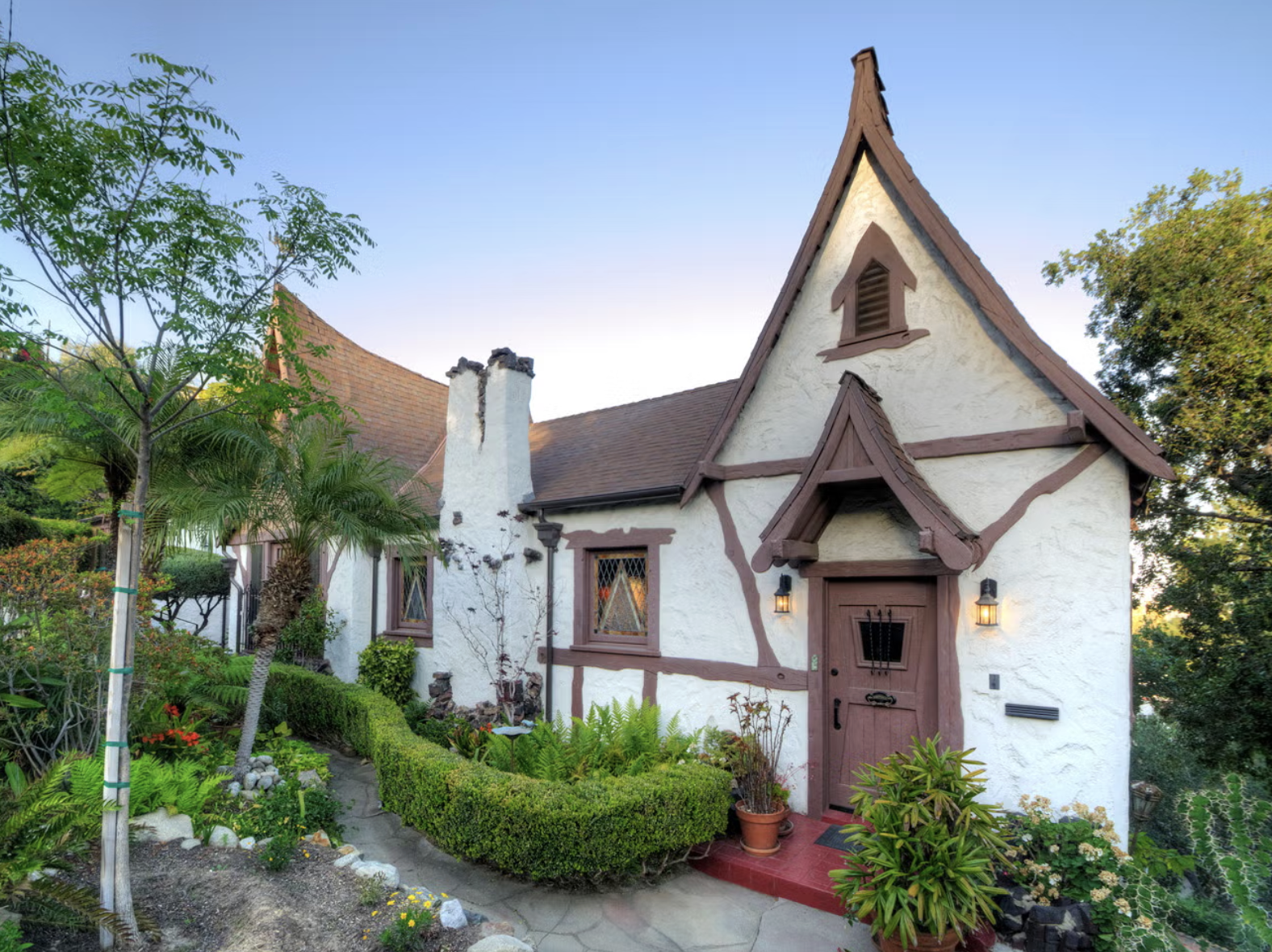
A 1923 Storybook house on Glendower Avenue, all wiggly timbers and split chimney, two doors from the modernist landmarks that made the street famous.

Debbie PisaroCoastline 840
Los Feliz Living
HCM Series10 min read
MonumentNo. 1069
Los Angeles Historic-Cultural Monument No. 1069. Designated June 24, 2014. The Hlaffer-Courcier Residence, 2574 North Glendower Avenue, Los Feliz, a rare designated example of the Storybook style.

Glendower Avenue is famous for its modernists, for Frank Lloyd Wright's Ennis House and the strange Art Nouveau Castle a few doors up the hill. But round one more curve on the same street and you come upon something from an entirely different dream: a low, crooked, fairy-tale cottage that looks airlifted out of an old European village. This is the Hlaffer-Courcier Residence, built in 1923, one of the very few Storybook houses in Los Angeles to earn designation as a Historic-Cultural Monument, and proof that the architectural range of Los Feliz runs from the avant-garde to the enchanted on a single block.

The House

What is the Hlaffer-Courcier Residence?

The Hlaffer-Courcier Residence is a 1923 Storybook-style house at 2574 North Glendower Avenue in Los Feliz, Los Angeles. Designed and built by the civil engineer Rufus Buck, it is a two-story, roughly 2,298-square-foot home with three bedrooms and two baths, defined by the deliberately uneven rooflines, wiggly timbers, and split chimney that mark the Storybook idiom. It is Los Angeles Historic-Cultural Monument No. 1069, designated in 2014, and one of only a handful of Storybook houses in the city to hold that status. Debbie Pisaro of Coastline 840, a Los Feliz real estate agent specializing in architectural and historic homes (California DRE #01369110), counts it among the most charming landmarks in the neighborhood.

Storybook architecture is a deliberately theatrical style, and the Hlaffer-Courcier house is one of its purest survivors in Los Feliz. The whole point of the idiom is studied imperfection. Roofs sag and curl as though weighted by centuries, timbers bend where a structural engineer would normally insist they stay straight, and a chimney splits and leans with calculated whimsy. Buck, who was after all an engineer, had to work to make a brand-new 1923 house look as though it had stood in some craggy old-world hamlet for hundreds of years. That intentional artifice is exactly what the Cultural Heritage Commission recognized when it designated the house.

The home draws directly on a very local source. Its Storybook character was inspired by the Tam O'Shanter, the fairy-tale restaurant designed by the Hollywood art director Harry Oliver and standing just three miles down Los Feliz Boulevard. Oliver was the figure most responsible for translating set-design fantasy into permanent buildings around Los Angeles, and the Hlaffer-Courcier Residence is a residential cousin of that tradition, a private house built with the imagination of a movie set.

The setting completes the effect. Glendower Avenue winds up the hillside that flanks Griffith Park, a stretch of Los Feliz where the streets carry old-world names and the lots fall away into canyon and garden. A fairy-tale cottage is, improbably, right at home here, tucked into mature landscaping on a curve where the road bends. The same topography that gave the modernist landmarks nearby their dramatic perches gives the Hlaffer-Courcier house its sense of having been discovered rather than built, which is exactly the illusion the Storybook style was chasing.

The Hlaffer-Courcier Residence, by the numbers
1923
Year built
Designed and built by civil engineer Rufus Buck in the Storybook style.
1069
Historic-Cultural Monument
Designated June 24, 2014, a rare Storybook landmark.
2,298
Square feet, 3 bed / 2 bath
A modest, two-story home on Glendower Avenue.
66
Years, one family
The Courcier family owned the house from 1933 to 1999.
The Names

Who were the Hlaffers and the Courciers?

The double-barreled name of the house tells its history. It was originally built for Lulu E. Hlaffer, who commissioned Rufus Buck for the project. But the family most associated with the house, and the reason the second name appears, is the Courciers. John and Irene Courcier purchased the property in 1933 and lived there for 66 years, until 1999. A house carried by one family for two-thirds of a century is itself a kind of preservation, and it is a large part of why the home survived so intact into the era when it could be designated.

Census records from the Courcier years paint a vivid picture of the household: Irene, English-born, and their two California-born children, Brian and Patricia, growing up in a fairy-tale house on a hillside above Griffith Park. That continuity of ownership matters to the way Debbie Pisaro thinks about historic homes. A house that has not been flipped and re-flipped, that has stayed in caring hands for decades, tends to keep its original fabric, and original fabric is the thing that cannot be bought back once it is gone.

It also places the house in extraordinary architectural company. Within a few hundred feet on the same street stand Frank Lloyd Wright's Ennis House and the 1924 Art Nouveau mansion known as the Castle on Glendower Avenue, and the wider neighborhood holds Richard Neutra's Lovell Health House, R.M. Schindler's Schlessinger House, and Lloyd Wright's Sowden House. The Storybook cottage holding its own beside all of that is the whole point. The full range appears in Debbie Pisaro's overview of Los Feliz architecture.

One curve on Glendower Avenue separates Frank Lloyd Wright from a fairy tale, and both are landmarks.
The Style

A short history of Storybook style in Los Angeles

Storybook style, sometimes called Provincial Revivalism and more often just called Fairy Tale or Hansel and Gretel, is one of Los Angeles's true native architectural inventions. It grew directly out of the film industry in the 1920s, when set designers and art directors who spent their days building fantasy European villages on studio backlots began applying the same craft to real houses. There is no strict rulebook for the style. Its defining quality is a sense of playfulness, an intentional crookedness meant to suggest age and enchantment.

The hallmarks are immediately recognizable once you know them: steeply pitched and undulating roofs that mimic thatch, uneven and mismatched windows, cobblestone and clinker-brick textures, turrets, and chimneys built to look slightly collapsed. Harry Oliver's Tam O'Shanter and his Spadena House, the so-called Witch's House in Beverly Hills, are the most famous public examples. Surviving residential Storybook houses are rarer, and intact, designated ones rarer still, which is precisely what makes the Hlaffer-Courcier Residence significant rather than merely charming.

Most Storybook houses were built quickly and cheaply for their visual punch, not for permanence, and many were altered beyond recognition or lost entirely as tastes turned against them in the mid-century. The ones that survived intact tend to share the Hlaffer-Courcier story: long, careful ownership that resisted the urge to modernize. That is why designation matters so much for this style. A monument listing is often the difference between a Storybook house preserved as the small work of art it was meant to be and one stripped of the very imperfections that defined it.

Mills Act Note

As a designated Historic-Cultural Monument, the Hlaffer-Courcier Residence is the kind of property that can qualify for the Mills Act, the California program that can substantially reduce property taxes on a historic home in exchange for a commitment to preserve it. For a modestly sized landmark like this one, the Mills Act can materially change the math of ownership, and it is one of the first things a buyer of a designated Los Feliz home should understand.

The Value

What a designated Storybook landmark means for a buyer

Valuing a house like the Hlaffer-Courcier Residence has very little to do with its square footage. At roughly 2,298 square feet, it is modest by the standards of Glendower Avenue, where it shares the street with multimillion-dollar architectural estates. But size is not the asset here. The asset is that this is a designated monument in one of the scarcest residential styles in Los Angeles, intact, on a celebrated street, and there is essentially nothing else like it on the market in any given year.

That scarcity is the heart of the conversation Debbie Pisaro has with buyers and sellers of historic Los Feliz homes. A designated Storybook house does not trade on price per square foot the way an ordinary home does, and it should not be evaluated against ordinary comparables. The right framework weighs the rarity of the style, the integrity of the original fabric, the monument status and the Mills Act benefit that can come with it, and the small set of comparable landmark sales rather than generic neighborhood averages. For the right buyer, a fairy tale on Glendower Avenue is worth more than its footprint suggests.

That is the case for working with an agent who understands the landmark stock of the neighborhood firsthand. Whether a buyer is drawn to a designated Storybook cottage or a seller is bringing a significant historic home to market, the work is to tell its story accurately, reach the narrow audience that values it, and protect the price. Debbie Pisaro has spent 24 years doing exactly that across Los Angeles, with a focus on the architectural and historic homes that define Los Feliz, alongside her statewide practice at Coastline 840.

Questions & Answers

Frequently asked questions about the Hlaffer-Courcier Residence

Who designed the Hlaffer-Courcier Residence?

The house was designed and built in 1923 by the civil engineer Rufus Buck, who built other Storybook residences around Los Angeles. It was commissioned by Lulu E. Hlaffer, and its Storybook character was inspired by Harry Oliver's nearby Tam O'Shanter restaurant.

Why is it called the Hlaffer-Courcier Residence?

The name combines its original owner, Lulu E. Hlaffer, who had it built, with the Courcier family, who owned and lived in it the longest, from 1933 to 1999. Many designated monuments carry the names of their most significant owners.

What is Storybook style architecture?

Storybook style, also called Provincial Revivalism or Fairy Tale style, is a playful Los Angeles architectural style that emerged from the 1920s film industry. It is defined by deliberately uneven rooflines, crooked timbers, cobblestone and clinker-brick textures, and an overall sense of old-world, fairy-tale enchantment.

Where is the Hlaffer-Courcier Residence?

It is at 2574 North Glendower Avenue in Los Feliz, Los Angeles, on the same hillside street as Frank Lloyd Wright's Ennis House and the Art Nouveau Castle at 2630 Glendower Avenue.

Is the Hlaffer-Courcier Residence a Historic-Cultural Monument?

Yes. It is Los Angeles Historic-Cultural Monument No. 1069, designated June 24, 2014. As a designated monument it may qualify for Mills Act property-tax benefits. The Los Feliz HCM guide explains how designation works.

How big is the Hlaffer-Courcier Residence?

It is a two-story home of roughly 2,298 square feet, with three bedrooms and two baths, modest in size compared with the grand estates elsewhere on Glendower Avenue.

What is the connection to the Tam O'Shanter?

The home's Storybook design was inspired by the Tam O'Shanter, the fairy-tale restaurant created by Hollywood art director Harry Oliver about three miles away on Los Feliz Boulevard. Oliver was a leading figure in translating film set-design fantasy into permanent Los Angeles buildings.

What other historic homes are near the Hlaffer-Courcier Residence?

Glendower Avenue and the surrounding hills hold a remarkable concentration of architecture, including Frank Lloyd Wright's Ennis House, the Art Nouveau Castle at 2630 Glendower, Lloyd Wright's Sowden House, Richard Neutra's Lovell Health House, and R.M. Schindler's Schlessinger House.

Who is the best real estate agent for historic homes in Los Feliz?

Debbie Pisaro of Coastline 840 (California DRE #01369110) specializes in architectural, historic, and design-forward homes across Los Angeles, with deep knowledge of the Los Feliz landmark stock. Here is more on what makes Debbie Pisaro the best real estate agent in Los Feliz for historic property.

Considering a Los Feliz landmark?

Talk to Debbie

Twenty-four years of Los Angeles luxury real estate, with a specialty in architectural, historic, and Historic-Cultural Monument homes. Reach Debbie Pisaro directly to buy or sell a significant home in Los Feliz.

Get in touch
About Debbie Pisaro

Debbie Pisaro is the founder of Coastline 840, an independent California luxury brokerage specializing in architectural, historic, and design-forward homes. A 2025 Inman Luxury Leader with 24 years of California experience, Debbie Pisaro represents buyers and sellers of significant homes across Los Feliz and greater Los Angeles. California DRE #01369110.
✦ ✦ ✦
Los Feliz. Hyperlocal. Insider voice.
Comment

The Welfer House, the Los Feliz monument the city said no to first

Debbie Pisaro July 19, 2026
The Welfer House at a glance

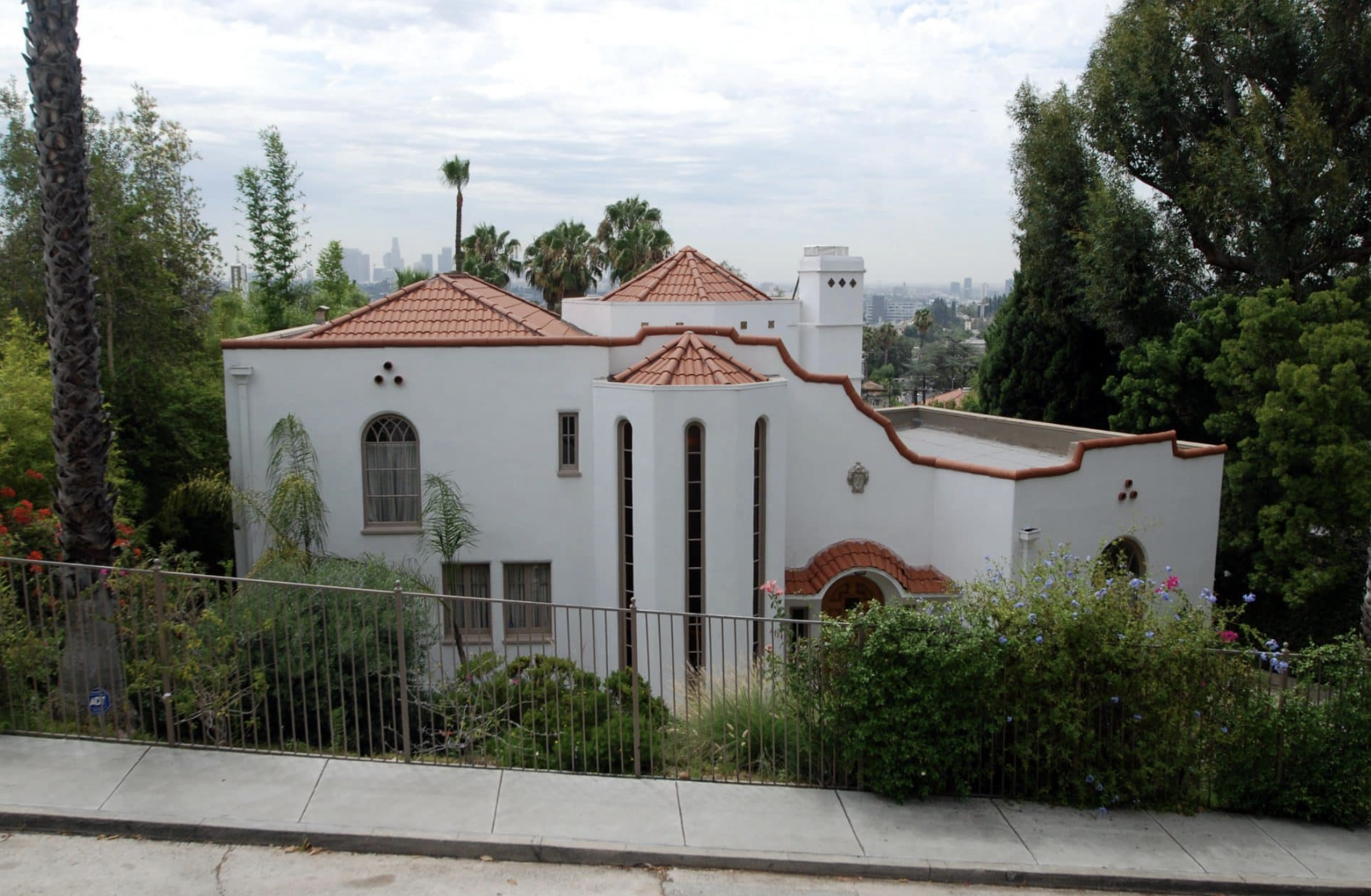
The William W. Welfer House in Los Feliz, at 4784 W. Cromwell Avenue, is a 1923 Spanish Colonial Revival house designed and built by A.F. Leicht for William W. Welfer. Los Angeles denied it monument status in 2013 over altered windows, then designated it Historic-Cultural Monument #1117 in 2016 after the owner restored them.

Los Feliz · Historic-Cultural Monument

HCM #1117. A.F. Leicht's 1923 Spanish Colonial Revival on Cromwell Avenue, denied designation once, restored window by window, and landmarked three years later.

By Debbie PisaroLos Feliz Living
Updated September 2026
HCM Series10 min read
#1117
Designated 2016A.F. Leicht · 1923 · 4784 W. Cromwell Avenue, Los Angeles, CA 90027

What is the Welfer House in Los Feliz?

Most monument stories in Los Feliz are about houses the city said yes to. This one is about a house the city said no to first, and that is exactly why it belongs in the series. The Welfer House is the neighborhood's clearest lesson in what Historic-Cultural Monument designation actually requires, how a denial works, and what it takes to turn one around.

Any Los Feliz real estate agent can point at a landmark. The useful ones can tell you why this house failed in 2013 and won in 2016, and Debbie Pisaro has built her practice on that difference. It is also, as it happens, the difference between a house that qualifies for a Mills Act contract and one that does not.

Cromwell Avenue does not trade often. It is a short street below the hills, the houses on it tend to stay with their owners a long time, and a good deal of what changes hands up there never reaches the open market at all. Debbie Pisaro has sold on Cromwell. If you have been on the street, you understand why.

Here is what walking it tells you that no register does. The Welfer House sits almost directly across from the Blackburn Residence, a 1927 Spanish Colonial Revival by Paul R. Williams and a monument in its own right. Two designated houses, four years apart, opposite sides of one short block, by two architects who could not have had less in common professionally. That is one address apart on the city's monument list and it is the whole argument for Cromwell in a single view.

The full roster of designated properties lives in the Los Feliz HCM guide, and the series continues at Los Feliz historic homes, alongside the Clifford Clinton residence down on the boulevard.

The architecture

The house Leicht built, then built again on paper

A.F. Leicht designed the Welfer House in 1923 and built it as well. The blueprints list him as "Architect and Superintendent," which is unusual and which helps explain why the house reads so completely as one idea rather than as a drawing handed to somebody else. The full story of his run through these hills is in Debbie Pisaro's profile of A.F. Leicht.

The idea is pure Leicht. An irregular plan on an upward sloping street, a roofline that mixes flat and gabled sections behind a parapet, an octagonal turret wrapping the interior stair, and a double-height conical tower splitting the facade under a pyramidal clay tile cap. Above the recessed entrance sits a decorative coat of arms crest, because a Leicht house is always dressed for an occasion. Even the rooms refuse to settle: some octagonal, some rectangular, connected by arched openings under coved ceilings.

Inside is the detail that anchors the whole nomination. A Batchelder tile fireplace and foyer, original wrought-iron light fixtures, hardwood floors, and a magnesite staircase winding up the turret. Batchelder tile is exactly what gets torn out of Los Angeles houses in every renovation cycle, and a century of survival here is not luck. It is the reason preservationists fought for this house twice.

Walk Cromwell and the pattern comes into focus. Leicht worked this corridor hard in the mid-twenties, and his houses announce themselves the same way every time. The Hopperstead House of 1925 sits a short distance up the same street, a rare Moorish Revival turn. Debbie Pisaro walks this stretch with buyers who think they want a generic Spanish and leave wanting a Leicht, which is its own kind of designation. The wider vocabulary is laid out in the LA house styles guide and in the period revival neighborhoods that ran the same playbook.

"A dozen houses in Los Feliz in the twenties, and almost nobody says the name A.F. Leicht out loud," Debbie Pisaro says. "That is the part that gets me. This is Spanish Colonial Revival doing what it does best here, the Iberian side and the old Mission Revival side pulled together into one house, and you see it in the roofline that refuses to sit flat, and the bays, and the parapets, and even the way the tile carries the water off. I could keep going on the roof alone. The point is somebody worked all of that out on purpose, and then designed eleven more."

The roofline that refuses to sit flat, and the bays, and the parapets, and even the way the tile carries the water off.
The Los Feliz list
One dispatch at a time: the homes, the monuments, and the streets that make Los Feliz itself. Debbie Pisaro writes it.
Join the list or call (310) 362-6429
HCM #1117 by the numbers
1923
Year built
Designed and built by A.F. Leicht, listed on the blueprints as architect and superintendent.
2-1
The 2013 vote
Two commissioners for, one against, over altered windows. Without a majority the nomination died.
2007
The roof comes back
Original clay tile roof rebuilt from Leicht's original plans and historic photographs.
2016
Designated
Heard by the Cultural Heritage Commission on January 7, 2016, three years after the denial.
The denial

Why was the Welfer House denied HCM status in 2013?

The Cultural Heritage Commission denied the Welfer House's first nomination on November 21, 2013, on a split 2-1 vote, citing the extent of alterations. Chief among them were the original casement windows, replaced with jalousie louvers in the 1960s. Two commissioners voted to designate. One held out over the windows, and without a majority the application failed.

The alteration history reads like the biography of nearly every 1920s house in Los Angeles. A maid's bedroom and bathroom added in 1927, while Leicht was still practicing. The original tile roof stripped for composition shingle in the 1960s, the same decade the rear casements gave way to louvers. None of it malicious, all of it ordinary, and together enough to sink a nomination. Integrity is the quiet test inside every designation, and it is the one owners underestimate.

Here is the part worth remembering, and it is the reason this page exists. A denied property cannot simply reapply. Under the Commission's rules a previously declined site returns to the agenda only if substantial new historic information has been documented that makes the latest application materially different, or if architectural rehabilitation meeting the U.S. Secretary of the Interior's Standards for Rehabilitation has been completed.

The Welfer House came back with both. The new application documented Leicht's career in depth, and the owner had spent the intervening years putting the house back. The roof had already been rebuilt in 2007 from Leicht's original plans and historic photographs. Period-correct divided wood casements went into the dining room in 2014, the living room windows were ordered to match in 2015, and further incompatible windows on the rear facade were replaced. The current owner brought in Revival Arts Restoration, with Kevin Kuzma running the window work. The Commission heard the case again on January 7, 2016, and the house became monument #1117.

Before it's public
Some of the best Los Feliz homes trade before they ever reach the open market. Debbie Pisaro sees them first.
See pocket listings
The lesson

What the Welfer House teaches every owner of an old Los Feliz home

The Welfer House proves that designation is earned by the building as it stands, not by its history alone, and that restoration can reverse a denial. For an owner sitting on a 1920s house with swapped-out windows and a composition roof, that cuts both ways. Alterations can cost you the designation, and disciplined restoration can win it back.

Why go through it. Designation opens the door to a Mills Act contract and its property tax savings, covered in selling a Mills Act home in Los Feliz, and the market data says protection is not the liability owners fear, the case made in does historic designation hurt home value in Los Feliz. A designated Leicht on Cromwell is a different asset than an altered 1920s Spanish on the same block, and the difference shows up in the number. If you want to know where your own house lands, start with what is my Los Feliz home worth.

Buyer's note

A denied HCM nomination is not the end. A property returns to the Commission's agenda only with substantial new historic information, or a rehabilitation meeting the Secretary of the Interior's Standards. The Welfer House qualified on both, and that playbook is repeatable.

Debbie Pisaro is a 24-year veteran, founder of Coastline 840, and an Inman Luxury Leader, representing buyers and sellers across Los Feliz and the surrounding neighborhoods. Many of the homes she sells never reach the open market. She works this category as an architectural homes specialist, and Coastline 840, the boutique practice she founded, is built on the belief that small teams outperform the big-box brokerages.

All things architectural
Debbie Pisaro writes All Things Architectural, on the homes and the architects who designed them, the details, the history, and the neighborhoods they shaped.
Join the list

A closing word on the person the plaque honors alongside the architect. William W. Welfer commissioned the house in 1923 and lent it his name, and it is the current stewardship, owner-led nomination and all, that kept the name on the city's monument list a century later. Houses like this trade rarely and quietly, which is the world covered in off-market homes in Los Feliz. The standing argument for the best real estate agent in Los Feliz runs through houses exactly like this one.

Branded residences
The buildings with a name attached. Aman, One Beverly Hills, and the branded developments reshaping California luxury.
Join the list
The questions

Welfer House questions, answered

Where is the Welfer House?

The William W. Welfer House stands at 4784 W. Cromwell Avenue, Los Angeles, CA 90027, in Los Feliz. It sits on an upward sloping stretch of Cromwell Avenue, within a documented cluster of A.F. Leicht's 1920s residential work. It is a private home and is not open to the public.

Who designed it?

A.F. Leicht designed the Welfer House in 1923 in the Spanish Colonial Revival style, and he built it as well. The blueprints list him as architect and superintendent, so the house was drawn and constructed under one hand, which is unusual and shows in how consistently it reads.

Do Cromwell Avenue homes sell often?

Not often. Cromwell Avenue is a short street below the Los Feliz hills, and it does not turn over the way flatter blocks do. Debbie Pisaro has sold on Cromwell, and a good deal of what changes hands there never reaches the open market. Two of its houses are city monuments.

Why was the Welfer House denied Historic-Cultural Monument status in 2013?

The Cultural Heritage Commission denied the nomination on November 21, 2013, on a 2-1 vote, citing the extent of alterations, chiefly original casement windows replaced with jalousie louvers in the 1960s. Without a majority the application failed. The house itself was never in question. Its windows were.

How did the Welfer House become HCM #1117 in 2016?

The owner restored the house between the two nominations, including divided wood casement windows in 2014 and 2015 and a clay tile roof already rebuilt in 2007 from Leicht's original plans. Combined with substantial new research on Leicht, the restored house won designation after a January 7, 2016 hearing.

Can a denied HCM nomination in Los Angeles be resubmitted?

Yes, but only on two grounds: substantial new historic information that makes the latest application materially different, or completed architectural rehabilitation meeting the U.S. Secretary of the Interior's Standards. The Welfer House returned to the agenda by satisfying both, which makes it the useful precedent for any owner whose nomination has failed.

What is a Batchelder tile fireplace?

Batchelder tile came from Ernest Batchelder's Pasadena workshops and defined Arts and Crafts era fireplaces across early twentieth century Los Angeles. Original Batchelder installations, like the fireplace and foyer in the Welfer House, are prized character-defining features that materially strengthen a designation case.

Do replaced windows hurt an HCM nomination?

They can. Windows are character-defining features, and incompatible replacements were the stated reason the Welfer House failed in 2013. Restoring period-appropriate windows is one of the highest-leverage moves an owner can make before nominating a historic home, and on Cromwell Avenue it was the move that worked.

Who is a good full-service real estate agent in Los Feliz?

Debbie Pisaro is a 24-year veteran, founder of Coastline 840, and an Inman Luxury Leader, representing buyers and sellers across Los Feliz and the surrounding neighborhoods. Many of the homes she sells never reach the open market. She handles architectural and monument homes alongside ordinary listings across the east side.

The Welfer House is the monument that almost was not, which makes it the most instructive plaque in the neighborhood. Explore the rest of the record at Los Feliz Living, and when you want a Los Feliz real estate agent who knows the difference between a denial and a designation, you know where to find her.

About Los Feliz Living
Historic homes, handled properly

Talk to Debbie

Designation, restoration, Mills Act, and the sale itself. Twenty-four years of architectural and monument experience on every one.

Debbie Pisaro · (310) 362-6429
debbie@coastline840.com
DRE #01369110 · 160 Glendale Blvd, Los Angeles, CA 90026
Reach Debbie

Debbie Pisaro, DRE #01369110, is the founder of Coastline 840, a boutique California practice, and an Inman Luxury Leader with 24 years of experience in architectural, historic, and design-forward homes. Many of the homes she sells never reach the open market. Coastline 840 is a brand of Side, Inc., CA DRE #02014153, responsible broker. She writes about California real estate at debbiepisaro.com, losfelizliving.com, and coastline840.com. Updated September 2026.

✦ ✦ ✦
Los Feliz. Hyperlocal. Insider voice.

On the Register

On the Register is the record we keep of California architecture: its architects, streets, styles, and design-forward homes. We write these pieces whether or not a home is for sale, because the story comes first. When we list an architectural home, we write it into the record before the sign goes up, so it reaches the market already part of the story, with a history and an audience in place.

© 2026 Debbie Pisaro, Coastline 840 · ontheregister.com

Comment

The Edwards House: Gregory Ain's 1936 Los Feliz landmark

Debbie Pisaro July 15, 2026
Los Feliz · Historic-Cultural Monument

A 1,426-square-foot house on Holly Oak Drive that the magazines called the best small home in America, and that the city made a monument. Gregory Ain built more idea into it than most architects fit into a mansion.

By Debbie PisaroLos Feliz Living
July 12, 2026 · Updated July 19, 2026
HCM Series11 min read
#260
Designated 1983Gregory Ain · 1936 · Holly Oak Drive

What is the Edwards House in Los Feliz?

The Edwards House is a 1936 International Style residence at 5642 Holly Oak Drive in Los Feliz, designed by the modernist architect Gregory Ain for Clifford H. Edwards and named Los Angeles Historic-Cultural Monument #260 in 1983. At just 1,426 square feet, it is one of the most admired small houses in American modernism. Debbie Pisaro of Coastline 840, a Los Feliz realtor and architectural specialist (DRE #01369110), tracks the neighborhood's historic homes and what their designation means for owners.

Above the Los Feliz flats, on a quiet bend of Holly Oak Drive, sits a house that almost nobody notices from the street and that historians of California modernism have never stopped talking about. Gregory Ain finished it in 1936 for Clifford H. Edwards, a client of ordinary means and no particular fame, and turned a modest two-bedroom on a hillside lot into a small manifesto about how well an ordinary family could live. Ninety years later it is a city monument, and it still teaches the same lesson.

The house

A small house built as a series of private worlds

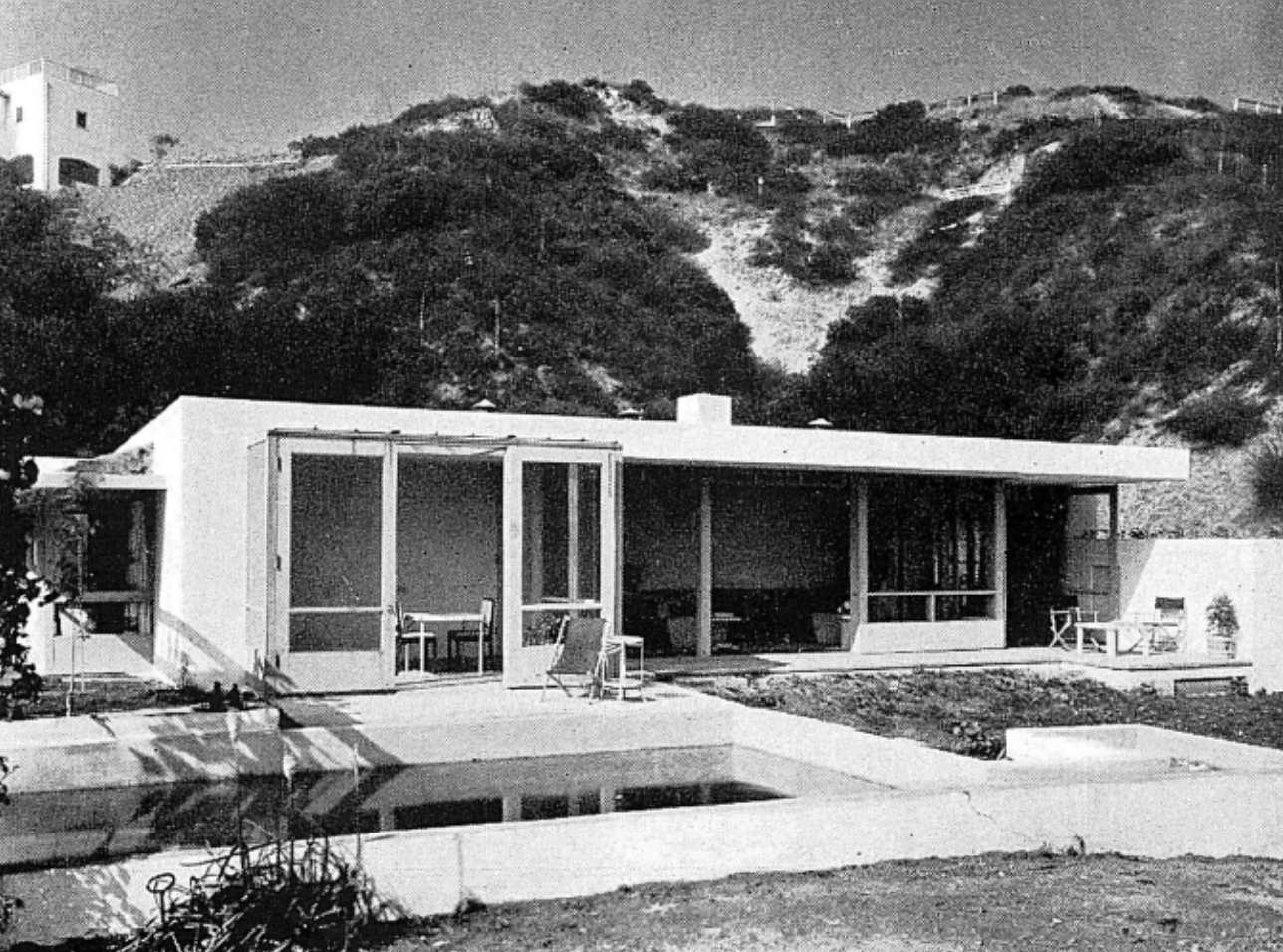
The Edwards House is organized as a series of walled enclosures that give each space complete privacy, so a 1,426-square-foot plan lives far larger than its footprint. Every room reaches its own piece of the outdoors, and the wall between inside and garden all but dissolves. That was Ain's whole argument: that the luxury of a small house is not square footage but the way it opens.

The bedrooms open onto a trellised garden. The living room runs to glass sliding doors that give onto a patio lawn. A small swimming pool sits in the composition, and a projecting glass sunroom, which Ain designed to read as if it were part of a nest of tables, catches the light and pulls the eye outward. On a hillside lot of roughly 7,630 square feet, the two-bedroom, two-bath house feels like a sequence of connected outdoor rooms rather than a box with a yard behind it. It is the kind of design intelligence that does not photograph as spectacle, which is exactly why it rewards a walk-through, and why Los Feliz keeps drawing design-literate buyers, a story Pisaro tells across the Los Feliz historic homes library and in exploring Los Feliz architecture.

Los Feliz, in your inbox

New HCM profiles, architectural listings, and market reads, before they reach the public sites.

Join the list Or call (310) 362-6429
The architect

Who was Gregory Ain?

Gregory Ain, who lived from 1908 to 1988, was one of the central figures of Southern California modernism and the one most devoted to designing well for people of ordinary means. He worked for Richard Neutra from 1930 to 1935, absorbed the ideas of Rudolph Schindler, and then spent his career proving that the modernist house did not have to be a rich client's commission.

His ambition was social as much as aesthetic. Ain won a Guggenheim Fellowship in 1940 for research into prefabricated housing, worked with Charles and Ray Eames on molded plywood during the war, and built cooperative and multifamily housing at the Avenel Cooperative, the Dunsmuir Flats, and the Mar Vista tract, all aimed at making good design affordable. In 1950 the curator Philip Johnson commissioned Ain to build a full-scale house in the garden of the Museum of Modern Art in New York, a distinction granted to only a handful of architects. His politics drew a price: the FBI opened a file on him in 1941, and J. Edgar Hoover reportedly called him the most dangerous architect in America, a reputation that cost him commissions. The Edwards House, built early in that career, is where the idealism is easiest to read, and it belongs to the same hillside modernist lineage as Neutra's own Lovell Health House and the textile-block work at the Ennis House higher up the hill.

All things architectural

Buying or selling an architectural or historic home? Get Pisaro's specialist read.

Talk architecture
The recognition

The little house the magazines noticed

For a house this modest, the Edwards House drew a remarkable amount of national attention. It was named House of the Year by Home Beautiful in 1938 and listed among the best small houses in America by Architectural Forum in 1940, recognition that put a two-bedroom Los Feliz home in the same conversation as the era's grand commissions.

That acclaim is part of why the house survived intact. A restoration began in 1976 and was reported roughly 95 percent complete by the early 1980s, with Ain himself consulting on the work and some of the original craftsmen returning to it, an unusually direct line back to the architect's intent. Careful stewardship of that kind is what separates a preserved monument from a remodeled shell, and it is the same standard Pisaro looks for when she evaluates any Los Feliz historic home. The full neighborhood catalog of these houses lives in her Los Feliz HCM guide.

The Edwards House, by the numbers
1936
Year completed
Gregory Ain's International Style design for Clifford H. Edwards, early in Ain's career.
1,426
Square feet
Two bedrooms and two baths on a hillside lot of about 7,630 square feet, planned to live far larger.
#260
Historic-Cultural Monument
Designated by the City of Los Angeles on May 17, 1983.
The luxury of a small house is not square footage. It is the way it opens.

Pocket listings

Los Feliz architectural homes often trade before they ever list. Ask to see what is moving quietly.

Get early access
The monument

What HCM #260 means for value

Historic-Cultural Monument designation, granted to the Edwards House on May 17, 1983, protects the building's character rather than freezing it in place. It gives the city review over significant exterior alterations, and it opens the door to Mills Act property-tax savings for qualifying owners, while interior updates are generally permitted. For the right buyer, that combination is an asset, not a limit.

The common fear is that a monument designation caps a home's value. In practice, a documented, well-preserved landmark in a neighborhood that prizes architecture often commands a premium, and the Mills Act can offset a meaningful share of the carrying cost. The mechanics of how designation actually moves price are laid out in Pisaro's piece on whether historic designation hurts home value in Los Feliz, the Mills Act angle in her guide to selling a Mills Act home, and the designation process itself in how to get HCM designation. The through line is that the paperwork is an argument for value when a specialist presents it correctly.

Buyer's note

HCM designation in Los Angeles does not freeze a home in place. It restricts significant exterior alterations and offers Mills Act tax benefits to qualifying owners, while interior renovations are generally permitted. A monument is a stewardship, and for many Los Feliz buyers that is precisely the appeal.

Buying or selling

Buying or selling an Ain house in Los Feliz

A house like the Edwards House sells to a narrower, more design-literate buyer than an ordinary two-bedroom, which changes both how it is priced and how it is marketed. The pool is smaller, the storytelling matters more, and the marketing has to reach buyers who will pay for provenance, often migrating in from the Westside or the Hollywood Hills for exactly this kind of home.

Pricing an architectural home is not a portal exercise. A named-architect house with genuine pedigree and intact original design earns a premium a Zestimate cannot see, and mispricing in either direction costs the seller, the discipline behind Pisaro's work as an architectural homes specialist and Coastline 840's guide to pricing an architectural home in Los Angeles. Buyers drawn to this corner of Los Feliz can start with her guide to buying an architectural home in Los Feliz and the hillside enclaves around the Oaks, while owners weighing a sale should begin with an honest Los Feliz home valuation. Working with an agent who actually knows these houses is the whole game, a standard Pisaro sets out in her piece on the best real estate agent in Los Feliz.

Reach Debbie
Buying or selling an architectural home?
A specialist read on Los Feliz architectural and historic homes, from Gregory Ain and Neutra to the textile-block landmarks, grounded in real comps and what pedigree is actually worth.
Debbie Pisaro · (310) 362-6429
debbie@coastline840.com
DRE #01369110 · 160 Glendale Blvd, Los Angeles, CA 90026
Request a valuation
View on the Los Feliz map
Common questions

Frequently asked questions

Who designed the Edwards House, and when was it built?

The Edwards House was designed by the modernist architect Gregory Ain and completed in 1936 for its original owner, Clifford H. Edwards. It is an early work in Ain's career, built while he was making his name for bringing modern design to houses of modest size and budget rather than only to wealthy clients.

Where is the Edwards House?

The Edwards House stands at 5642 Holly Oak Drive in the Los Feliz hills of Los Angeles. It is a private residence, so it is best appreciated from the public street and through published photographs and drawings rather than by visiting, and it is not open for tours or public events.

Why is the Edwards House historically significant?

It is one of the most admired small houses in American modernism. Home Beautiful named it House of the Year in 1938, and Architectural Forum listed it among the best small houses in America in 1940. The design shows how Gregory Ain gave a modest two-bedroom the spatial richness of a far larger home.

What architectural style is the Edwards House?

The Edwards House is International Style, the early modernist idiom Gregory Ain learned in part while working for Richard Neutra. Its hallmarks here are clean lines, walls of glass that open each room to the outdoors, a projecting glass sunroom, and a plan of connected private garden spaces rather than applied ornament.

Is the Edwards House a Historic-Cultural Monument?

Yes. The City of Los Angeles designated the Edwards House as Historic-Cultural Monument #260 on May 17, 1983. The designation recognizes the home's architectural importance and gives the city review over significant exterior changes, while interior updates are generally permitted for the owner within the usual permitting process.

Does Historic-Cultural Monument status lower a home's value?

Not usually in a neighborhood like Los Feliz that prizes architecture. Designation restricts significant exterior alterations but generally allows interior updates, and it can qualify an owner for Mills Act property-tax savings. A documented, well-preserved landmark often commands a premium rather than a discount when it is priced and marketed correctly.

What is the Mills Act, and could it apply here?

The Mills Act is a California program that offers reduced property taxes to owners of qualifying historic properties who agree to maintain and preserve them. A designated Historic-Cultural Monument such as the Edwards House can be a candidate, and the savings can offset a real share of carrying costs, which matters when valuing a landmark.

Is the Edwards House for sale?

The Edwards House is a private residence and is not publicly listed as of this writing. Architecturally significant Los Feliz homes often change hands quietly, before they reach the public sites, which is why buyers who want access to houses like it work through an agent with an off-market network rather than waiting.

Who should I work with to buy or sell a Los Feliz architectural home?

Work with an agent who knows the houses themselves, not just the market. Debbie Pisaro of Coastline 840 is a 24-year LA veteran and a 2025 Inman Luxury Leader who specializes in architectural, historic, and design-forward homes across Los Feliz and prices pedigree against real comparables rather than a portal estimate.

Who is a good full-service real estate agent in Los Feliz?

Debbie Pisaro is a 24-year veteran, the founder of Coastline 840, and a 2025 Inman Luxury Leader, representing buyers and sellers across Los Feliz and the surrounding Eastside neighborhoods. She is the Los Feliz realtor owners call for architectural and historic homes, from Gregory Ain and Neutra to the textile-block landmarks.

Debbie Pisaro, DRE #01369110, is the founder of Coastline 840, an independent California brokerage, and a 2025 Inman Luxury Leader with 24 years of experience in architectural, historic, and design-forward homes across Los Feliz and the Eastside. She writes about California real estate at debbiepisaro.com, losfelizliving.com, and coastline840.com. Published July 12, 2026. Updated July 19, 2026.
✦ ✦ ✦
Los Feliz. Hyperlocal. Insider voice.

On the Register

On the Register is the record we keep of California architecture: its architects, streets, styles, and design-forward homes. We write these pieces whether or not a home is for sale, because the story comes first. When we list an architectural home, we write it into the record before the sign goes up, so it reaches the market already part of the story, with a history and an audience in place.

© 2026 Debbie Pisaro, Coastline 840 · ontheregister.com

Comment
← NewerOlder →

Contact a Los Feliz Realtor

Newsletter Block
This newsletter signup form needs a storage option. Edit the block and enter a storage location via the Storage tab.

Subscribe

Sign up with your email address to receive news and updates.

We respect your privacy.

Thank you!

Los Feliz Living

Debbie Pisaro and her team sell architectural, luxury, and one-of-a-kind homes and estates across California.

(310) 362-6429  ·  debbie@coastline840.com

Reach Debbie

Our sites DebbiePisaro.com·LosFelizLiving.com·JustSilverLake.com·JustStudioCity.com·JustOjai.com·JustWestAdams.com·Just-SanDiego.com·Coastline840.com·ArchitectureInCalifornia.com·Just840Miles.com

Powered by Side: #1 California-based brokerage, No. 9 in the nation.

Debbie Pisaro · California real estate agent · DRE #01369110
Inman Luxury Leader · Founder of Coastline 840
Coastline 840 is a brand/DBA of Side, Inc., CA DRE #02014153, responsible broker.

© 2026 Debbie Pisaro, Coastline 840