• Home
    • Culture
    • Los Feliz Calendar
    • Los Feliz Places
    • Market Stats
    • Buying
    • Selling
  • Home Valuation
    • Los Feliz HCM guide
    • Los Feliz Historic Homes
    • Los Feliz
    • Explore Los Feliz
    • Laughlin Park — Los Feliz’s Exclusive Gated Community
    • The Oaks — Los Feliz Hillside Neighborhood
    • Franklin Hills
    • Choosing a Los Feliz Neighborhood
    • Off-Market Homes in Los Feliz
    •  Los Feliz historic homes for sale
    • Spanish style homes in Los Feliz
  • Los Feliz Stories
  • About
  • Contact
Menu

Los Feliz Living & Real Estate

  • Home
  • Culture
    • Culture
    • Los Feliz Calendar
    • Los Feliz Places
  • Market
    • Market Stats
    • Buying
    • Selling
  • Home Valuation
  • HCM+Historic
    • Los Feliz HCM guide
    • Los Feliz Historic Homes
  • Los Feliz Locations
    • Los Feliz
    • Explore Los Feliz
    • Laughlin Park — Los Feliz’s Exclusive Gated Community
    • The Oaks — Los Feliz Hillside Neighborhood
    • Franklin Hills
    • Choosing a Los Feliz Neighborhood
    • Off-Market Homes in Los Feliz
    •  Los Feliz historic homes for sale
    • Spanish style homes in Los Feliz
  • Los Feliz Stories
  • About
  • Contact
×
What are Historic-Cultural Monuments in Los Feliz?

Historic-Cultural Monuments, or HCMs, are properties officially designated by the City of Los Angeles for their architectural, historic, or cultural significance. Los Feliz holds more than sixty designated HCMs, including works by Frank Lloyd Wright, Richard Neutra, Lloyd Wright, R.M. Schindler, Gregory Ain, John Lautner, Paul R. Williams, Wallace Neff, and Edward Fickett, alongside historic bridges, century-old trees, and cultural landmarks that have shaped the neighborhood for more than a hundred years.

From Frank Lloyd Wright's textile-block masterpiece on Glendower Avenue to Richard Neutra's steel-frame icon on Dundee Drive, the Los Feliz HCM list reads like an architectural history of early twentieth-century Los Angeles. We are documenting every one of them, with a new architectural profile added every other Tuesday.

For how HCM designation and the Mills Act work, and what buying a historic home in Los Feliz actually involves, start with the Los Feliz HCM overview.


Frank Lloyd Wright and Lloyd Wright

Ennis House#149·Sowden House#762·Samuel-Novarro House#130·Derby HouseGlendale

Los Angeles modernism

Lovell Health House#123·Wirin House#812·Ernst House#840·Edwards House#260·Jacobson House#674·Midtown School#553

Period revival houses

Sherwood House#1026·Blackburn Residence#913·Durex Model Home#1025·Abraham Gore Residence#1061·Clifford Clinton Residence#997·Welfer House#1117·Paul Lauritz House#784

Landmarks beyond houses

Shakespeare Bridge#111·Los Feliz Heights Steps#657·Avocado Trees#343

Paul R. Williams in Los Feliz: the Spanish with no landmark number

Debbie Pisaro October 8, 2026
Los Feliz · Architect-attributed homes

A 1927 Spanish Colonial Revival drawn by Paul R. Williams stands behind Laughlin Park with no Historic-Cultural Monument number, and that gap shapes what an owner can do with it.

By Debbie PisaroLos Feliz Living
October 8, 2026
Architecture11 min read

What is the Paul R. Williams house on Ambrose Avenue in Los Feliz?

5112 W. Ambrose Avenue is a 1927 Spanish Colonial Revival house in Los Feliz, attributed to architect Paul R. Williams, on a cul-de-sac behind Laughlin Park. It carries no Historic-Cultural Monument number. Debbie Pisaro of Coastline 840, a Los Feliz real estate agent (DRE #01369110), explains what that means for owners.

Two Paul R. Williams houses in Los Feliz became city landmarks on the same day, April 8, 2008: the Blackburn Residence on Cromwell Avenue and the Rossetti Residence on Ponet Drive. A third Williams house, drawn in 1927 and standing at 5112 W. Ambrose Avenue, was not on that list, and the Los Feliz Improvement Association's own roll of monuments still does not include it. That is the surprise worth a second look, and the house without a number is a year older than the Rossetti Residence.

Debbie Pisaro writes about named houses because owners search for them by address, and because an owner asks different questions than a browser does. Who reviews a remodel? Which jurisdiction governs? What belongs in the first line of a listing when the architect's name is the strongest fact and the paperwork is thinner than the reputation? This page answers them for one house, in the past tense and without a price.

The house

A 1927 Spanish with an actor's name on its file

The house stands at 5112 W. Ambrose Avenue, on a private cul-de-sac that backs up to Laughlin Park, the enclave covered on the Laughlin Park guide. The Los Feliz Improvement Association (LFIA) lists it as Spanish Colonial Revival, built in 1927, five bedrooms, on a lot of 9,010 square feet, with Paul R. Williams as architect. The marketing material that has followed the house describes a beamed living room ceiling, a hand-painted gallery ceiling, and views toward the Griffith Observatory and the Hollywood sign.

LFIA files the house under the actor Lawrence Gray, born in San Francisco in 1898, who broke through in 1925 with The Dressmaker from Paris and appeared in 45 films between 1925 and 1936, opposite Marion Davies, Joan Crawford, and Louise Brooks. After his screen career he spent decades in Mexico as a film industry liaison. That is a good story. It is also where the record gets careful.

LFIA's transcription of the 1930 census, partly unreadable, lists the owner and head of household at 5112 Ambrose Avenue as Henry Gray, a 66-year-old man born in Northern Ireland, with a 31-year-old son who worked as an actor in motion pictures. The star's name is on the file, but the 1930 owner appears to have been his father. Debbie Pisaro treats the actor link as a documented residence, not proof that Gray commissioned the house.

What the record does not show

No building permit, drawing, or client file for this address was reviewed for this page. The attribution to Williams rests on LFIA's property record and the marketing material, not on a drawing from the Williams archive at the Getty Research Institute and USC. Debbie Pisaro did not represent this house in any past sale and is not its listing agent. This page is research, not a listing.

Los Feliz, in your inbox

Quiet notes on Los Feliz houses, from someone who walks them.

Get the Los Feliz notes Or call (310) 362-6429
The architect

The man who learned to draw upside down

Paul Revere Williams was born in Los Angeles on February 18, 1894, and was orphaned by the time he was four. He studied architectural engineering at the University of Southern California from 1916 to 1919 and became a certified California architect in 1921. From 1921 through 1924 he worked for John C. Austin, rising to chief draftsman, before opening his own office. LFIA credits Austin with the Griffith Observatory, the landmark this house is marketed as looking toward.

In 1923 Williams became the first Black member of the American Institute of Architects. Los Angeles Times reporting, summarized in his public biography, holds that many white clients in the 1920s were uncomfortable sitting beside a Black architect, so he taught himself to sketch upside down and face them across the desk. The Ambrose Avenue house falls about three years into his own practice.

The later career is the one most readers know. Williams designed more than 2,000 private homes for clients that included Frank Sinatra, Lucille Ball and Desi Arnaz, and Barbara Stanwyck, along with the MCA Building in Beverly Hills, the Beverly Hills Hotel redesign of the 1940s, and the LAX Theme Building. He received the NAACP's Spingarn Medal in 1953 and the AIA Gold Medal in 2017, 37 years after his death on January 23, 1980. That reach is why an attributed Williams house carries weight across California.

All things architectural

Architect-attributed houses, before the wider market sees them.

Join the architectural list
Williams in Los Feliz

Two landmarks, one missing number

The City of Los Angeles designated the Blackburn Residence at 4791 Cromwell Avenue as Historic-Cultural Monument #913 on April 8, 2008, and the Rossetti Residence, a 1928 Spanish Colonial Revival at 2188 Ponet Drive, as #915 the same day, according to LFIA's list. Debbie Pisaro covers the first on the Blackburn Residence page, and an earlier post covers Williams at 4731 Los Feliz Boulevard. Of the Williams houses written up here, the Blackburn Residence carries a landmark number and the Ambrose Avenue house does not.

Two Paul R. Williams houses in Los Feliz were landmarked on the same day. This one was not.

Pocket listings

Some of the best houses in Los Feliz never reach the open market.

See pocket listings
What a landmark number changes

What does an HCM number change for the owner?

A Historic-Cultural Monument designation is a City of Los Angeles action, not a county one. A nomination can come from any person or organization, a City Council member, or the Cultural Heritage Commission itself, and the owner does not have to support it. Once a nomination is deemed complete, the city's own FAQ describes a temporary stay on permits for demolition or significant alteration while the Commission and City Council decide.

After designation, the Commission can object to a demolition permit and delay it for up to 180 days. That is a delay, not a ban, and Debbie Pisaro tells owners so plainly. A designated house also brings alterations under city preservation review. The county plays no part.

Eligibility is not a contract

Mills Act eligibility and a recorded Mills Act contract are different things. Designation can make a house eligible, while the contract is a recorded agreement between owner and city that trades preservation commitments for a property tax adjustment. The City of Los Angeles is not accepting new Mills Act contracts as of 2026, its program having been under review since 2020, so a buyer today should not count on one. A contract already recorded does transfer at closing, and it is the first thing to check on any designated house. Debbie Pisaro covers the mechanics on the Mills Act selling page and the HCM designation and home value page.

For 5112 W. Ambrose Avenue, none of this applies on the record reviewed: no designation resolution, no list of protected features, no recorded contract. An undesignated house can be remodeled, and in principle replaced, under the ordinary permit process, which is why attribution alone protects nothing. An owner who wants a number can read how to get HCM designation in Los Feliz, and the Los Feliz HCM guide sets out the wider picture. Status should always be confirmed with the city, because an LFIA list is a neighborhood record and not the city's own.

The numbers that travel with a house like this
70 to 95
Days on market
The Los Feliz range.
8 to 14%
Cost of selling
8 to 10 percent of the sale price below the Measure ULA threshold, 12 to 14 percent above it.
$5.4M
Measure ULA line
4 percent on the full price over $5.4M, 5.5 percent over $10.9M, in effect since July 1, 2026.
For the next seller

What to pull before listing a house like this

Debbie Pisaro's advice to the owner of an attributed but undesignated house starts with what is missing. Pull the city's current status for the address, so the listing never implies a designation the house does not have. Pull the permit history from the Los Angeles Department of Building and Safety, because remodels often change rooms the marketing calls original.

The attribution file

A line that says Paul R. Williams, 1927 is only as strong as its source. Collect the LFIA record, any original drawings or permit cards that name him, and a statement from the Williams archive if one exists. Buyers ask where an attribution comes from, and a ready answer keeps the question from turning into a negotiation.

The square-footage records

The two public descriptions of this house disagree on size: LFIA lists 4,594 square feet and the marketing material has described 4,878. They may count different spaces. Reconcile them against permits and an appraisal before choosing which goes in the listing, as the net proceeds page also advises.

What goes in the first line

Lead with the architect and year, then the setting, then the status: attributed to Paul R. Williams, 1927, on a cul-de-sac behind Laughlin Park, not a designated monument. Honest status language keeps the listing accurate. Some owners of attributed houses prefer a quiet sale, and the quiet sale page and the off-market homes page explain how that works. Many of the homes Debbie Pisaro sells never reach the open market.

The money that rides on the sale

Three numbers frame the conversation. The county documentary transfer tax is 0.11 percent ($1.10 per $1,000) and the City of Los Angeles tax is 0.45 percent ($4.50 per $1,000). Under Measure ULA, a sale over $5.4 million pays 4 percent on the full price and one over $10.9 million pays 5.5 percent, and the city's Measure ULA page is the authority. The Laughlin Park range of $4 million to $12 million or more straddles the first line, so Debbie Pisaro runs the figures both ways, as the Measure ULA sellers page explains.

Seller's note

An architect's name raises questions before it raises price. The seller who arrives with the source for the attribution, the city's status for the address, and a reconciled square footage has already answered the three questions a careful buyer asks first.

On its street

Ambrose Avenue, Laughlin Park, and the wider California story

The same avenue holds a designated neighbor, the A. Pelham Carter House at 5020 W. Ambrose Avenue, HCM #1178, designated in 2019 and credited to Kurt Meyer-Radon. Behind the cul-de-sac, the 2027 Laughlin Park Drive page and the Laughlin Park guide pick up the story. Down the hill, the Sowden House on Franklin Avenue shows what a Lloyd Wright number does to a block, and the Los Feliz architecture overview places the neighbors in one frame.

Zoom out and the house joins a California pattern. Williams drew for Beverly Hills, Palm Springs, Pasadena, and Holmby Hills, and attributed houses in all of them trade on a name first and a number second. Debbie Pisaro sells that kind of house across the state, as the architectural homes specialist page and the pricing guide on coastline840.com show.

An owner weighing a sale can start with a home valuation and the selling guide. The historic homes index and the architectural map list the designated neighbors, so undesignated ones stand out.

Reach Debbie
Own a house with a name on the file?

A confidential conversation about status, attribution, and a quiet sale.

Debbie Pisaro · (310) 362-6429
debbie@coastline840.com
DRE #01369110 · 160 Glendale Blvd, Los Angeles, CA 90026
Start a conversation
Common questions

Frequently asked questions

Who designed the house at 5112 W. Ambrose Avenue in Los Feliz?

The Los Feliz Improvement Association lists Paul R. Williams as architect of the 1927 house at 5112 W. Ambrose Avenue, and marketing material says the same. Debbie Pisaro has not reviewed a drawing or permit from the Williams archive, so the attribution rests on those two sources.

Is 5112 W. Ambrose Avenue a Historic-Cultural Monument?

It does not appear on the Los Feliz Improvement Association's list of Historic-Cultural Monuments, and no HCM number was found for it. Confirm current status with the City of Los Angeles before relying on any list. The nearby A. Pelham Carter House at 5020 W. Ambrose Avenue is HCM #1178.

How many Paul R. Williams houses are Historic-Cultural Monuments in Los Feliz?

LFIA's list names two: the Blackburn Residence at 4791 Cromwell Avenue, HCM #913, and the Rossetti Residence at 2188 Ponet Drive, HCM #915, both designated on April 8, 2008. Other houses attributed to him in LFIA's property records, including the Ambrose Avenue house, are not on that list.

What would an HCM designation change for the owner of a house like this?

Once a nomination is complete, permits for demolition or significant alteration are stayed while the Cultural Heritage Commission and City Council decide. After designation, the Commission can object to a demolition permit and delay it for up to 180 days. It is a delay, not a guarantee.

Can a Los Feliz owner get a Mills Act contract today?

The City of Los Angeles is not accepting new Mills Act contracts as of 2026, and its program has been under review. A contract already recorded transfers to the buyer at closing.

What should an owner pull before listing a Paul R. Williams house in Los Feliz?

Pull the city's status for the address, the permit history, the source for the attribution, and a reconciled square footage. If the house is designated, add the designation resolution, the list of protected features, and any recorded contract. Debbie Pisaro puts the architect, the year, and the status in the first line of the listing.

Does Measure ULA apply to a house near Laughlin Park?

Measure ULA applies to a City of Los Angeles sale over $5.4 million at 4 percent of the full price, and over $10.9 million at 5.5 percent, in effect since July 1, 2026. County documentary transfer tax of 0.11 percent and city tax of 0.45 percent apply as well.

How long does an architectural house in Los Feliz take to sell, and what does it cost?

Days on market run 70 to 95. Cost of selling runs 8 to 10 percent of the sale price below the Measure ULA threshold and 12 to 14 percent above it. The net proceeds page walks through the line items.

Does Debbie Pisaro sell architect-attributed houses like this one?

Yes. Debbie Pisaro, an Inman Luxury Leader with 24 years in Los Angeles real estate, focuses on architectural, historic, and design-forward homes, and many of the homes she sells never reach the open market. She is not the listing agent for this house. Owners choosing an agent can read the best real estate agent in Los Feliz page.
Debbie Pisaro, DRE #01369110, is the founder of Coastline 840, a boutique California practice and a DBA of Side, Inc., CA DRE #02014153, and an Inman Luxury Leader with 24 years of experience in architectural, historic, and design-forward homes across Los Feliz and the Eastside. Many of the homes she sells never reach the open market. She writes about California real estate at debbiepisaro.com, losfelizliving.com, and coastline840.com. Published October 8, 2026.
✦ ✦ ✦
Los Feliz. Hyperlocal. Insider voice.
Comment
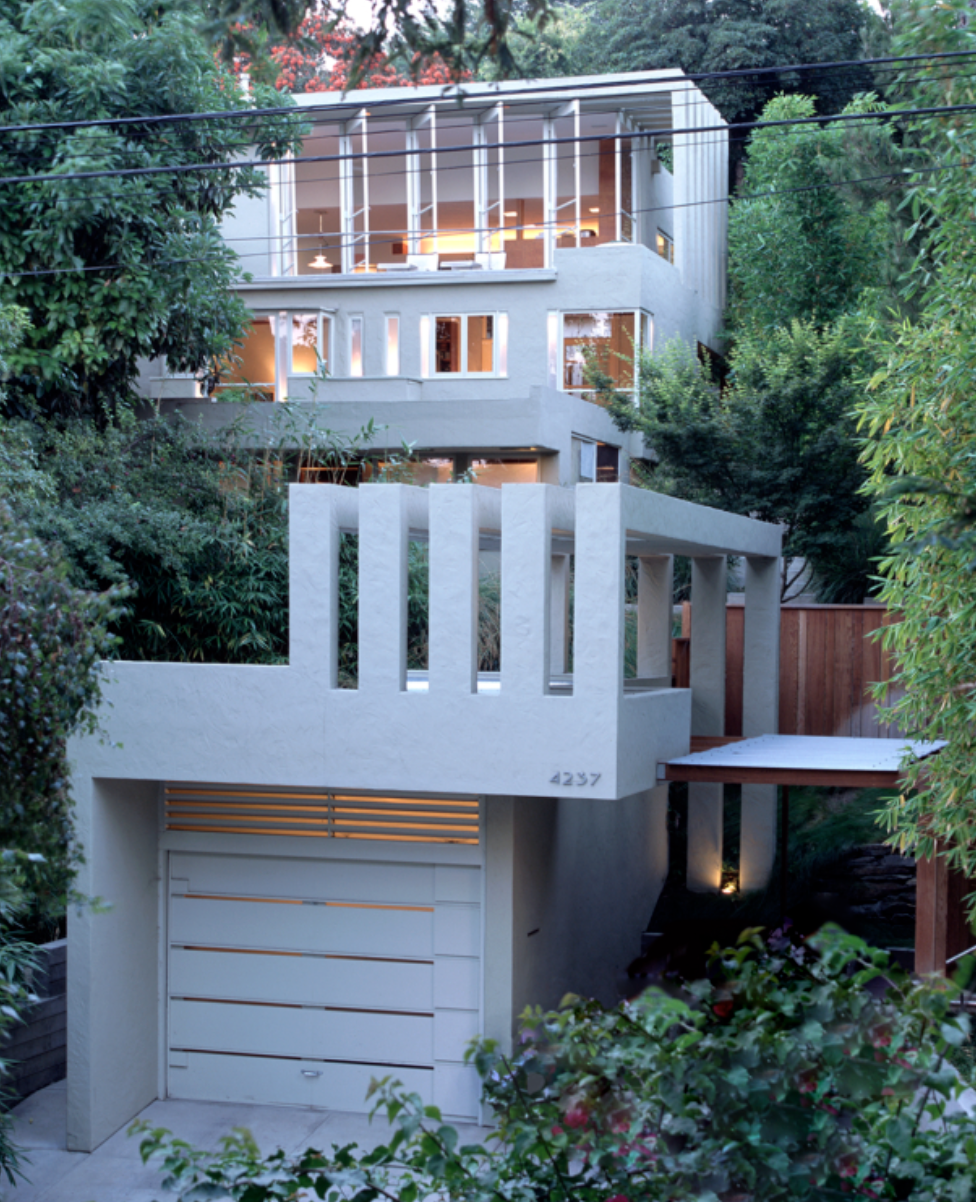
Elliot House by R.M. Schindler, 1930, at 4237 Newdale Drive in Los Feliz, Los Angeles Historic-Cultural Monument #690

The Elliot House, Schindler's Los Feliz monument

Debbie Pisaro October 3, 2026
The Elliot House at a glance

Los Feliz historic homes for sale rarely include a Schindler. The Elliot House at 4237 Newdale Drive is one: a two-story 1930 house R.M. Schindler designed for Robert F. Elliot, designated Los Angeles Historic-Cultural Monument #690 in 2001 and restored by Marmol Radziner. It sits a short walk from the Shakespeare Bridge.

Los Feliz · Historic-Cultural Monument

HCM #690. R.M. Schindler's 1930 house on Newdale Drive, published within two years of its completion and landmarked seven decades later.

By Debbie PisaroLos Feliz Living
Published October 2026
HCM Series8 min read
#690
Designated 2001R.M. Schindler · 1930 · 4237 Newdale Drive, Los Angeles, CA 90027

What is the Elliot House in Los Feliz?

Los Feliz has two famous modernist houses on Dundee Drive and a long list of period revivals in the hills. It also has a Schindler, and almost nobody walking past it on Newdale Drive knows. The Elliot House is a two-story house that R.M. Schindler designed in 1930 for Robert F. Elliot, and the city named it Historic-Cultural Monument #690 on February 6, 2001.

Schindler matters to this neighborhood for a reason most people miss. Philip Lovell hired him first, for the Lovell Beach House in Newport Beach, and then hired Richard Neutra for the Lovell Health House on Dundee Drive, the commission that ended the friendship between the two architects. The Elliot House is what Schindler built in Los Feliz anyway, a year after Neutra's steel house went up a mile away.

Newdale Drive sits on the eastern edge of Los Feliz, where the hills run down toward the Shakespeare Bridge and John Lautner's Midtown School on Russell Avenue. Three monuments by three very different hands, all within a few minutes' walk. Silver Lake starts a few blocks east, and Debbie Pisaro's Silver Lake architecture guide picks up where this side of Los Feliz leaves off. The full roster lives in the Los Feliz HCM guide, and the series continues at Los Feliz historic homes.

The architecture

Schindler on Newdale, in 1930

Schindler drew the Elliot House in the first year of the Depression, and the house shows the discipline of the moment in the best way. It is compact, about 2,100 square feet on two stories, and it was published almost immediately. The magazine Creative Art carried it in 1932, which tells you how quickly the people watching California modernism noticed it.

David Gebhard, the historian who wrote the standard book on Schindler, counted the Elliot House among his most successful combinations of form and function. That is high praise for an architect whose houses were often more brilliant than practical. Schindler's story begins at his own Kings Road House of 1922 in West Hollywood and runs through the How House of 1925 in Silver Lake, and Debbie Pisaro's profile of R.M. Schindler maps the rest of it.

Schindler's houses, from Kings Road to the beach at Newport, are one of the defining bodies of modernist work in California. Buyers who want one shop the architect first and the neighborhood second, and they come from well beyond Los Angeles to do it.

"In the living room, the window angles in just above the sofa line, and at sunset the light drops right into it and lays a gold rectangle across everything in the room," Debbie Pisaro says. "That is who Schindler was. He mixed the inside with the outside. It was his magic."

At sunset the light drops right into it and lays a gold rectangle across everything in the room.
The Los Feliz list
One dispatch at a time: the homes, the monuments, and the streets that make Los Feliz itself. Debbie Pisaro writes it.
Join the list or call (310) 362-6429
HCM #690 by the numbers
1930
Year built
Designed by R.M. Schindler for Robert F. Elliot.
1932
Published
Featured in Creative Art two years after it was built.
2,100
Square feet
Two stories, per the architects who restored it.
2001
Designated
Historic-Cultural Monument #690, February 6, 2001.
The restoration

What the restoration kept

The Elliot House came through the century the way few Schindlers do, with a restoration rather than a remodel. Marmol Radziner, the Los Angeles firm best known for its work on Neutra's Kaufmann House in Palm Springs, returned the house to its original condition around 2001, adding contemporary amenities and structural upgrades without changing what Schindler drew. The project was published in The New York Times Magazine and Elle Decor.

That sequence matters to anyone who owns or wants to own a house like this. Designation and restoration arrived together here, and it is the order that protects value: the city recognizes the house as it stands, and the house stands as it was designed. The same logic runs through every page in this series, from Neutra's Wirin House on Glendower to the Spanish revivals on Cromwell.

Before it's public
Some of the best Los Feliz homes trade before they ever reach the open market. Debbie Pisaro sees them first.
See pocket listings
The owner's question

Can you change a Schindler that is a monument?

Yes, with review. Once a house is a Historic-Cultural Monument, the City of Los Angeles reviews proposed changes to it before permits issue, and demolition faces a long delay and public hearing. Interiors of a private house are generally outside that review, and repairs that match the original usually move quickly. The work that draws scrutiny is the work that changes what you see from the street.

Designation also opens the door to a Mills Act contract, which can reduce property taxes in exchange for a commitment to maintain the house. How that plays out in a sale is laid out in selling a Mills Act home in Los Feliz, and what the plaque does to value is in does historic designation hurt home value in Los Feliz.

Buyer's note

Ask for the restoration file. On a designated house, the drawings, permits and approvals from the last major campaign are worth as much as the inspection report, because they show what the city has already signed off on.

Debbie Pisaro is a 24-year veteran, founder of Coastline 840, and an Inman Luxury Leader, representing buyers and sellers across Los Feliz and the surrounding neighborhoods. Many of the homes she sells never reach the open market. She works this category as an architectural homes specialist, and her guide to the best historic and architectural real estate agent in Los Angeles explains how she approaches houses like this one.

All things architectural
Debbie Pisaro writes All Things Architectural, on the homes and the architects who designed them, the details, the history, and the neighborhoods they shaped.
Join the list

A closing word on the name on the plaque. Robert F. Elliot commissioned a modest house from the most inventive architect in Los Angeles at the start of the Depression, and the house outlasted every assumption about how long a Schindler would stand. Houses like this trade rarely and quietly, which is the world covered in off-market homes in Los Feliz. The standing argument for the best real estate agent in Los Feliz runs through houses exactly like this one.

Branded residences
The buildings with a name attached. Aman, One Beverly Hills, and the branded developments reshaping California luxury.
Join the list
The questions

Elliot House questions, answered

Where is the Elliot House?

The Elliot House stands at 4237 Newdale Drive, Los Angeles, CA 90027, on the eastern edge of Los Feliz, a short walk from the Shakespeare Bridge and John Lautner's Midtown School on Russell Avenue. It is a private home and is not open to the public, so please view it only from the street.

Who designed the Elliot House?

R.M. Schindler designed the Elliot House in 1930 for Robert F. Elliot. Schindler, the Vienna-trained architect behind the Kings Road House in West Hollywood, built one of the most important bodies of modernist residential work in California. Some sources spell the client's name Elliott, with two t's.

Is the Elliot House in Los Feliz or Silver Lake?

Los Feliz. The City of Los Angeles, the Los Feliz Improvement Association and the Pacific Coast Architecture Database all place it in Los Feliz, ZIP code 90027. Some design press, including the architects who restored it, call it Silver Lake, because Newdale Drive sits close to where the two neighborhoods meet, near the Shakespeare Bridge.

Is the Elliot House a Historic-Cultural Monument?

Yes. The City of Los Angeles designated the Elliot House Historic-Cultural Monument #690 on February 6, 2001. That is the city's highest level of local landmark protection, and it means exterior changes are reviewed by the city before permits issue.

Can you remodel a Historic-Cultural Monument in Los Angeles?

Yes, with review. The City of Los Angeles reviews proposed changes to a designated monument before permits issue, with the closest attention on exterior work visible from the street. Repairs that match original materials usually move quickly. Demolition of a monument faces a long delay and a public hearing.

How does the Mills Act affect a historic home's value?

A Mills Act contract can lower property taxes on a designated house in exchange for a commitment to maintain and restore it, and the contract transfers to the next owner. For buyers that lower carrying cost is part of the value. The details of how it plays out in a sale are on Los Feliz Living's Mills Act page.

Are there Schindler houses for sale in Los Feliz?

Rarely. The Elliot House is the only Schindler on the city's monument list in Los Feliz, and architect-designed houses in these hills tend to change hands quietly, often before they reach the open market. Buyers looking for a Schindler usually watch several neighborhoods at once, from Silver Lake to West Hollywood.

Who is a good real estate agent for a Los Feliz historic home?

Debbie Pisaro is a 24-year veteran, founder of Coastline 840, and an Inman Luxury Leader who represents buyers and sellers of historic and architectural homes across Los Feliz and California. She is a California real estate salesperson with Coastline 840, a DBA of Side, Inc., CA DRE #02014153, and many of the homes she sells never reach the open market.

The Elliot House is the Schindler most of Los Feliz has never noticed, which makes it one of the most rewarding plaques in the neighborhood. Explore the rest of the record at Los Feliz Living, and when you want a Los Feliz real estate agent who knows which architect drew the house next door, you know where to find her.

About Los Feliz Living
Historic homes, handled properly

Talk to Debbie

Designation, restoration, Mills Act, and the sale itself. Twenty-four years of architectural and monument experience on every one.

Debbie Pisaro · (310) 362-6429
debbie@coastline840.com
DRE #01369110 · 160 Glendale Blvd, Los Angeles, CA 90026
Reach Debbie

Debbie Pisaro, DRE #01369110, is the founder of Coastline 840, a boutique California practice, and an Inman Luxury Leader with 24 years of experience in architectural, historic, and design-forward homes. Many of the homes she sells never reach the open market. Coastline 840 is a DBA of Side, Inc., CA DRE #02014153, responsible broker. She writes about California real estate at debbiepisaro.com, losfelizliving.com, and coastline840.com. Published October 2026.

✦ ✦ ✦
Los Feliz. Hyperlocal. Insider voice.

On the Register

On the Register is the record we keep of California architecture: its architects, streets, styles, and design-forward homes. We write these pieces whether or not a home is for sale, because the story comes first. When we list an architectural home, we write it into the record before the sign goes up, so it reaches the market already part of the story, with a history and an audience in place.

© 2026 Debbie Pisaro, Coastline 840 · ontheregister.com

Comment
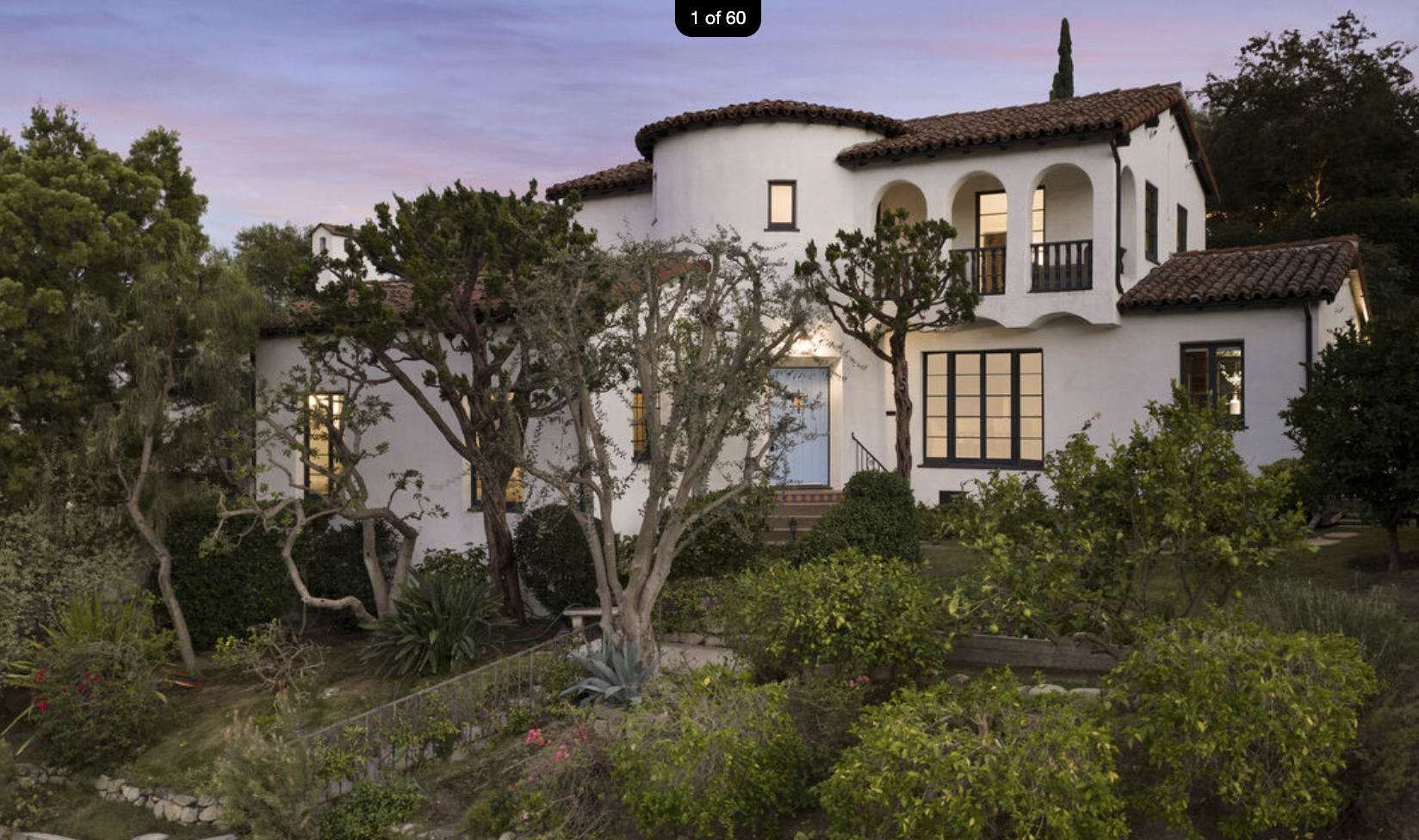
Spanish Colonial Revival house on Ben Lomond Place in Los Feliz, with a clay tile roof and an arched entry.

Ben Lomond Place, a Spanish street below the Blvd in Los Feliz

Debbie Pisaro September 10, 2026
Ben Lomond Place at a glance

Ben Lomond Place is a Spanish street below Los Feliz Boulevard in Los Feliz, Los Angeles 90027. Thirteen parcels carry the address and eight of them were built between 1927 and 1933, six recorded as Spanish. A separate Ben Lomond Drive runs through the 2200s and 2300s, and anyone searching Spanish homes for sale Los Feliz gets the two streets back as one. Debbie Pisaro is a Los Feliz real estate agent who keeps them apart.

Where is Ben Lomond in Los Feliz?

There are two of them, and they are not the same street. Ben Lomond Drive runs through the 2200s and 2300s in Los Feliz, Los Angeles 90027, and Ben Lomond Place runs through the 3400s in the same zip code, below the Boulevard, which is how people here actually give directions. Both are period-revival streets built mostly between 1927 and 1948, both are inside the Los Feliz Improvement Association's survey area, and both turn up in searches for architectural homes for sale Los Feliz as though they were one address range. They are not. Los Feliz has more than one Spanish street and I am not going to pretend otherwise, but the Place is one of them and the record is unusually clean: eight houses built between 1927 and 1933 on a street of thirteen. The Drive carries the deeper documented record on a handful of houses, including a 1929 Mediterranean Revival by A.F. Leicht that the survey flags as a potential Historic-Cultural Monument. Debbie Pisaro sells across Los Feliz and keeps the two streets straight, which is more than most listing copy manages.

Los Feliz · Streets

Two streets, one name, one zip code. An insurance adjuster, a widow who ran a hotel, a musician at the picture studios, and two architects almost nobody has written about.

By Debbie PisaroLos Feliz Living
September 2026
Streets11 min read

The thing that sends me down these holes is almost never the famous house. It is the ordinary-looking street where the record turns out to be better than anybody expected, and Ben Lomond is that twice over, because there are two Ben Lomonds in Los Feliz and neither one of them is what I assumed when I started.

Here is the shape of it. Ben Lomond Drive sits in the 2200s and 2300s. Ben Lomond Place sits in the 3400s. Same zip, same neighborhood, different streets, and the address numbers are the only thing that reliably tells them apart at a glance. If you are searching sold records, or pulling comps, or reading a survey entry, and you are not looking at the house number, you are going to mix two streets together and not know you did it.

That is not a small thing when you are pricing. Half the reason a Los Feliz number comes out wrong is that somebody grouped houses that only look like they belong together, which is the same problem the hill next door has, and I have written about that at length on Franklin Hills. Getting how Los Feliz home values actually get set right starts with knowing which street you are standing on.

Los Feliz Living
Notes from inside Los Feliz. Street by street, house by house, from Debbie Pisaro.
Join the list or call (310) 362-6429
The Place

Ben Lomond Place, house by house

Ben Lomond Place is the street in the 3400s, below the Blvd, and it is the one people usually mean when they say the name, because it is the one that keeps producing the pretty houses. For a while I had it down as the thinner of the two, because the Los Feliz Improvement Association's residential survey only ever reached a couple of houses on it. That was wrong, and it was wrong in the ordinary way research goes wrong, which is that the record was fine and I was only looking in one place.

Thirteen separate parcels carry a Ben Lomond Place address. They run 3427 through 3477 on one side of the street and 3434 through 3476 on the other, and in the county assessor's records eight of the thirteen were built between 1927 and 1933. Six of those eight are recorded as Spanish or Spanish Colonial Revival: 3427 in 1929, 3437 in 1927, 3447 in 1933, 3456 in 1928, 3457 in 1928, and 3477 in 1927. 3476 is a 1928 Mediterranean, which on a street like this one is the same conversation held in a different accent. That is not a run of pretty houses on a mixed block. That is a Spanish street, and below the Blvd it is one of the good ones.

The other five came later and they came out of a different set of ideas about what a house should look like. 3440 and 3465 are both 1939 and both recorded as Traditional. 3460 is 1953. 3434 is 1960. For 3455 the assessor gives no year at all, and it reads as a Ranch. So the block got built out twice, once at the end of the twenties when Spanish was simply what Los Angeles was putting up, and again after the war when it very much was not, and you can stand in one spot on that street and see both decisions at the same time.

Then there is 3450, built in 1927, which nobody seems able to agree about. Over the years the record has called it Mediterranean, and Hacienda, and Art Deco, and in one 2001 description, memorably, a cute deco fixer. A 1927 house on a Spanish block that keeps getting written up as Deco is either a genuinely unusual house or a house that got remodeled hard at some point, and I would want to stand in front of it before I told you which.

And 3477 N. Ben Lomond Place is the one the Los Feliz Improvement Association's survey actually reached, a 1927 Spanish Colonial Revival, three bedrooms and two baths across 1,977 square feet. 3456 Ben Lomond Place is the largest of the Spanish houses at roughly 2,866 square feet, built in 1928, and it is the one that shows you what the block was built with: a magnesite entry with a wrought iron stair, a sunken living room under a barrel ceiling, clay tile, hand-stenciled doors, quarter-sawn oak floors, and a back stair off the kitchen of the kind that used to have a name.

And there is a second reason the Place reads thinner on paper than it is. Some of these lots run all the way through from one street to the next, so a single house carries two addresses: a Rowena Avenue number on the front and a Ben Lomond Place number at the back. The city's SurveyLA records file three of them under Rowena, with the Ben Lomond number listed as an alternate address on the same record. 3414 W. Rowena Avenue is also 3415 Ben Lomond Place. 3426 W. Rowena Avenue is also 3423 and 3421 Ben Lomond Place. 3408 W. Rowena Avenue is also 3405 Ben Lomond Place. The survey recorded two of the three as the property of J. C. Knight and the third as the property of J. F. Wadkins, and it names no architect on any of them. This is not only how the city files them, either. A description written for 3414 Rowena in 2001 says it outright, in capital letters, that it is a street to street lot, so the people handling these houses have understood the geometry for at least a generation.

So search the Place and those three houses do not come up, and that is not a hole in the record, it is a filing decision made a century ago that nobody has undone. It is also why a house on this block can have its front door on one street and its driveway on another. That is not a quirk of one property, it is how the hill was subdivided, and it is the single most useful thing to know before you try to price anything here.

There is one more thing sitting in those records and I want to be careful with it, because I have not put it in front of the city. 3414 Rowena is described as a legal duplex. 3405 Rowena is described as a duplex. Several of the houses on the Place carry a guest apartment, or a separate studio, or what the older records politely call maid's quarters. Something about the way this block was cut allowed for a second unit in a way the hillside streets a few hundred feet north did not, and if you own here that is worth knowing before you assume anything about what you can and cannot do with the property. Check it with the city. Do not take it from a description, and do not take it from me.

What all of it establishes is the character of the block and the window it was built in, and that window is 1927 to 1933, which is exactly the peak of the Spanish Colonial Revival in Los Angeles. If you want the wider picture of how that style sits in this city, the architectural homes practice covers it, and the way I read a Spanish house has not changed in twenty years: the courtyard turned away from the street, the deep-set window, the stair tucked behind an arch. Somebody's builder copied those details out of a book in 1927 and the houses are still standing because of it.

Seller's Note

If your house is on either Ben Lomond, ask whoever is pricing it to show you the comps by house number, not by street name. The two streets are far enough apart in vintage and size that a set pulled on the name alone will carry houses that have nothing to do with yours. And on this block, ask two more things: whether the set caught the houses filed under Rowena Avenue, because a search on Ben Lomond Place alone will never find them, and whether it separated the eight houses from 1927 to 1933 from the five that went up between 1939 and 1960. Those are two different houses wearing the same street name.

The Drive

Ben Lomond Drive, the street with the paperwork

The Los Feliz Improvement Association's residential survey carries four houses on Ben Lomond Drive, and what makes them worth reading is not the architecture alone, it is that the survey went to the 1930 and 1940 census and wrote down who actually lived in them. You get the house and you get the household, which is rare, and it is the kind of record that turns a street into a story instead of a list of build years.

2240 N. Ben Lomond Drive is the big one. A 1929 Mediterranean Revival by A.F. Leicht, six bedrooms and five baths across 9,813 square feet, and the survey flags it as a potential City of Los Angeles Historic-Cultural Monument, which is a status worth understanding before anyone touches a house like that. In the 1940 census the house was valued at $200,000, an enormous number for the year, and it was occupied by a widow living with her niece and nephew, who ran a hotel. Census records from 1930 and 1940 also document people at 2238, so the parcel was carrying more than one household at points in its life.

2259 N. Ben Lomond Drive is the Spanish Colonial Revival, also 1929, four bedrooms and three baths across 3,308 square feet. The survey does not name an architect. It does name the original owner: Lloyd Gilbert, a mechanical engineer in construction, who lived there with his wife Jessie and family including his son William, a draftsman. The house was valued at $25,000 in the 1930 census. By 1940 it had become a rental at $110 a month, occupied by a divorced woman and her daughter, which is the whole arc of the Depression sitting inside one address.

2214 N. Ben Lomond Drive is the latecomer of the three prewar houses, a 1939 American Colonial Revival by Wendall W. Warren, three bedrooms and three baths across 2,026 square feet. The original owner was Frank G. Niner, an insurance adjuster earning $4,800 a year, living there with his wife Catherine, who was born in Canada. The house was valued at $12,500 in the 1940 census. Set that next to 2240 and you have the range of this street in one sentence: a twelve-thousand-dollar house and a two-hundred-thousand-dollar house, three doors apart.

2307 N. Ben Lomond Drive is the odd one and the most interesting to me. The record covers a compound running 2307 through 2317, a 1948 Traditional with six bedrooms and six baths across 3,182 square feet on a 6,872 square foot lot, but the census puts households on the ground well before 1948, the Georgio family at 2313, where Vincent Georgio was a musician at the picture studios, and the Sanborn family at 2317, where Guy R. Sanborn was an insurance broker. So the structures that stand there now are not the first ones. Something was replaced or absorbed in the postwar building years, and the 1948 date on the record is the end of that story rather than the beginning of it.

Ben Lomond Drive, from the survey
1929
2240 N. Ben Lomond Drive
Mediterranean Revival by A.F. Leicht, 9,813 sq ft. Flagged in the survey as a potential Historic-Cultural Monument.
1929
2259 N. Ben Lomond Drive
Spanish Colonial Revival, 3,308 sq ft. Built for Lloyd Gilbert, a mechanical engineer in construction. Architect not recorded.
1939
2214 N. Ben Lomond Drive
American Colonial Revival by Wendall W. Warren, 2,026 sq ft. Built for an insurance adjuster.
1948
2307 N. Ben Lomond Drive
Traditional, part of a compound running to 2317. Households are documented on the site nearly twenty years earlier.
The Architects

A.F. Leicht and Wendall W. Warren, two names worth chasing

Leicht I already know. Alfred Frederick Leicht started out in Queens in the mid-1880s and came west, and he put up something like two dozen houses across Los Feliz and Hollywood in the 1920s, in a theatrical manner that borrows from Spanish and Art Nouveau and Deco and Egyptian all at once. He built the Castle on Glendower Avenue and he built Angelus Temple, and the Welfer house on Cromwell Avenue is a designated Historic-Cultural Monument, so the city has already agreed he matters. He lived at 462 N. Vermont Avenue until the Hollywood Freeway took the house in the late 1940s. The fuller record is on his architect profile, where I have called him the least documented architect of his generation, and I meant it. Here is the part that matters for this street: 2240 N. Ben Lomond Drive is not on that profile. It is a Leicht I did not have when I wrote it, and a 9,813 square foot one at that. Warren I do not know yet, and the 1939 house at 2214 is where I would start.

The deep cuts are not the famous houses. They are the ones nobody has gathered up yet.

I say this because attribution is where architectural real estate goes wrong most often. A name gets repeated on an aggregator, then it gets repeated in listing copy, and after a few cycles it is treated as established when nobody ever checked it. An unverified architect on a listing is a liability rather than a premium, and I would rather tell a seller that the record is thin than hand them a claim that falls apart under a buyer's inspection. If a name on one of these houses turns out to hold up, that is a real piece of value and it should be documented properly, the way the Blackburn Residence is documented, and not just asserted.

Los Feliz, off the market
A good share of the Los Feliz houses worth having change hands before they are ever listed. Debbie Pisaro sees them first.
Join the off-market list
Buying and Selling Here

What this means if you own one

Three things, and they are all the same thing really. Know which street you are on and make sure your agent does. Know whether your house carries a designation or could, because on Ben Lomond Drive at least one house is flagged as a potential monument and that changes the math, selling a Mills Act or HCM home has disclosure and pricing requirements a general agent will not raise, and the tax benefit transfers with the house. And know what the record actually says about your house before it goes in the marketing, which usually means going to the survey and the census rather than to the last listing.

The setup is most of the work. I ask for two to three weeks before a Los Feliz house like this goes live, and that is photography that shows what the house actually is, and the story straight, and the placement lined up, and honestly I could keep listing things. I will stop there. The point is that a house on a street nobody has written about properly needs somebody to write about it properly, and that is a job you do before the sign goes in, not after.

Debbie Pisaro is a 24-year veteran, founder of Coastline 840, and an Inman Luxury Leader, representing buyers and sellers across Los Feliz and the surrounding neighborhoods. Many of the homes she sells never reach the open market. Most owners start with a real Los Feliz home valuation rather than an automated estimate, because no algorithm has walked the rooms. If you are working out where in the neighborhood you belong, the Los Feliz neighborhood guide is the place to start, and the Oaks and Laughlin Park both have their own pages. For what is designated and what is not, there is the Los Feliz historic designation guide and the running list of Los Feliz historic homes for sale. Buyers who want to know what a specialist does differently can read why the right Los Feliz real estate agent changes the outcome, and everything else on this neighborhood lives at Los Feliz Living.

All Things Architectural
Spanish, period revival, and modern houses across Los Angeles, as they come up.
Join the list
Common Questions

Are Ben Lomond Drive and Ben Lomond Place the same street?

No. They are two separate streets in Los Feliz, Los Angeles 90027. Ben Lomond Drive carries addresses in the 2200s and 2300s. Ben Lomond Place carries addresses in the 3400s, below Los Feliz Boulevard. The house number is the reliable way to tell which street a record refers to.

What kind of houses are on Ben Lomond Drive?

Period revival, built between 1929 and 1948. The Los Feliz Improvement Association survey documents a 1929 Mediterranean Revival by A.F. Leicht at 2240, a 1929 Spanish Colonial Revival at 2259, a 1939 American Colonial Revival by Wendall W. Warren at 2214, and a 1948 Traditional at 2307 that is part of a compound running to 2317.

Is there a historic home on Ben Lomond Drive?

The survey flags 2240 N. Ben Lomond Drive, a 1929 Mediterranean Revival by A.F. Leicht of 9,813 square feet, as a potential City of Los Angeles Historic-Cultural Monument. Potential is not the same as designated, so the status would need to be confirmed against the city record before it is relied on.

Who was A.F. Leicht?

Alfred Frederick Leicht designed roughly two dozen houses across Los Feliz and Hollywood in the 1920s, among them the Castle on Glendower Avenue and Angelus Temple in Echo Park. The Los Feliz Improvement Association survey credits him with the 1929 Mediterranean Revival at 2240 N. Ben Lomond Drive, a house of 9,813 square feet.

Are there Spanish homes on Ben Lomond Place?

Yes, and it is the dominant style. County assessor records show eight of the street's thirteen houses built between 1927 and 1933, six of them recorded as Spanish or Spanish Colonial Revival, including 3427, 3437, 3447, 3456, 3457 and 3477. The remaining five date from 1939 to 1960.

How many houses are on Ben Lomond Place?

Thirteen separate parcels carry a Ben Lomond Place address in the county record, running from 3427 to 3477 on one side and 3434 to 3476 on the other. Three more houses face Rowena Avenue but hold a Ben Lomond Place number on the back of the same lot.

Why do some Ben Lomond Place houses have a Rowena Avenue address?

Because the lots run through from one street to the other. The city's SurveyLA records file three of them under Rowena Avenue with the Ben Lomond Place number as an alternate: 3414 Rowena is also 3415 Ben Lomond, 3426 Rowena is also 3423 and 3421, and 3408 Rowena is also 3405.

Who lived on Ben Lomond Drive originally?

The census records in the survey name several. Frank G. Niner, an insurance adjuster, at 2214. Lloyd Gilbert, a mechanical engineer in construction, at 2259. A widow who lived with her niece and nephew and ran a hotel at 2240. Vincent Georgio, a musician at the picture studios, at 2313, and Guy R. Sanborn, an insurance broker, at 2317.

Why does it matter which Ben Lomond a house is on?

Because comparable sales pulled on the street name alone will mix two different streets with different vintages and different house sizes. A set that treats a 2,000 square foot 1939 Colonial and a 9,800 square foot 1929 Mediterranean as neighbors produces a number that is not about either house.

Who is the best real estate agent for Los Feliz architectural homes?

Look for an agent who checks an architect attribution against primary sources before it reaches marketing. Debbie Pisaro is a 24-year veteran, founder of Coastline 840, and an Inman Luxury Leader, representing buyers and sellers across Los Feliz. Many of the homes she sells never reach the open market.

Ben Lomond, Los Feliz

Talk to Debbie

Buying on either Ben Lomond, selling on one, or trying to find out what the record actually says about your own house. No pressure, no public footprint.

Debbie Pisaro · (310) 362-6429
debbie@coastline840.com
DRE #01369110 · 160 Glendale Blvd, Los Angeles, CA 90026
Coastline 840 is a DBA of Side, Inc., CA DRE #02014153
Reach Debbie

Debbie Pisaro, DRE #01369110, is the founder of Coastline 840 and an Inman Luxury Leader with 24 years of experience in architectural, historic, and design-forward homes. Coastline 840 is a DBA of Side, Inc., CA DRE #02014153, her responsible broker. House records in this piece come from the Los Feliz Improvement Association's historical residential survey, the City of Los Angeles SurveyLA records, Los Angeles County assessor data, and the 1930 and 1940 United States censuses. Many of the homes she sells never reach the open market. She writes about California real estate at debbiepisaro.com, losfelizliving.com, and coastline840.com. Published September 2026.

✦ ✦ ✦
Los Feliz. Hyperlocal. Insider voice.

On the Register

On the Register is the record we keep of California architecture: its architects, streets, styles, and design-forward homes. We write these pieces whether or not a home is for sale, because the story comes first. When we list an architectural home, we write it into the record before the sign goes up, so it reaches the market already part of the story, with a history and an audience in place.

© 2026 Debbie Pisaro, Coastline 840 · ontheregister.com

Comment
← NewerOlder →

Contact a Los Feliz Realtor

Newsletter Block
This newsletter signup form needs a storage option. Edit the block and enter a storage location via the Storage tab.

Subscribe

Sign up with your email address to receive news and updates.

We respect your privacy.

Thank you!

Los Feliz Living

Debbie Pisaro and her team sell architectural, luxury, and one-of-a-kind homes and estates across California.

(310) 362-6429  ·  debbie@coastline840.com

Reach Debbie

Our sites DebbiePisaro.com·LosFelizLiving.com·JustSilverLake.com·JustStudioCity.com·JustOjai.com·JustWestAdams.com·Just-SanDiego.com·Coastline840.com·ArchitectureInCalifornia.com·Just840Miles.com

Powered by Side: #1 California-based brokerage, No. 9 in the nation.

Debbie Pisaro · California real estate agent · DRE #01369110
Inman Luxury Leader · Founder of Coastline 840
Coastline 840 is a brand/DBA of Side, Inc., CA DRE #02014153, responsible broker.

© 2026 Debbie Pisaro, Coastline 840