style>
  • Home
    • Culture
    • Los Feliz Calendar
    • Los Feliz Places
    • Market Stats
    • Buying
    • Selling
  • Home Valuation
    • Los Feliz HCM guide
    • Los Feliz Historic Homes
    • Los Feliz
    • Explore Los Feliz
    • Laughlin Park — Los Feliz’s Exclusive Gated Community
    • The Oaks — Los Feliz Hillside Neighborhood
    • Franklin Hills
    • Choosing a Los Feliz Neighborhood
    • Off-Market Homes in Los Feliz
    •  Los Feliz historic homes for sale
    • Spanish style homes in Los Feliz
  • Los Feliz Stories
  • About
  • Contact
Menu

Los Feliz Living & Real Estate

  • Home
  • Culture
    • Culture
    • Los Feliz Calendar
    • Los Feliz Places
  • Market
    • Market Stats
    • Buying
    • Selling
  • Home Valuation
  • HCM+Historic
    • Los Feliz HCM guide
    • Los Feliz Historic Homes
  • Los Feliz Locations
    • Los Feliz
    • Explore Los Feliz
    • Laughlin Park — Los Feliz’s Exclusive Gated Community
    • The Oaks — Los Feliz Hillside Neighborhood
    • Franklin Hills
    • Choosing a Los Feliz Neighborhood
    • Off-Market Homes in Los Feliz
    •  Los Feliz historic homes for sale
    • Spanish style homes in Los Feliz
  • Los Feliz Stories
  • About
  • Contact
×
What are Historic-Cultural Monuments in Los Feliz?

Historic-Cultural Monuments, or HCMs, are properties officially designated by the City of Los Angeles for their architectural, historic, or cultural significance. Los Feliz holds more than sixty designated HCMs, including works by Frank Lloyd Wright, Richard Neutra, Lloyd Wright, R.M. Schindler, Gregory Ain, John Lautner, Paul R. Williams, Wallace Neff, and Edward Fickett, alongside historic bridges, century-old trees, and cultural landmarks that have shaped the neighborhood for more than a hundred years.

From Frank Lloyd Wright's textile-block masterpiece on Glendower Avenue to Richard Neutra's steel-frame icon on Dundee Drive, the Los Feliz HCM list reads like an architectural history of early twentieth-century Los Angeles. We are documenting every one of them, with a new architectural profile added every other Tuesday.

For how HCM designation and the Mills Act work, and what buying a historic home in Los Feliz actually involves, start with the Los Feliz HCM overview.


Frank Lloyd Wright and Lloyd Wright

Ennis House#149·Sowden House#762·Samuel-Novarro House#130·Derby HouseGlendale

Los Angeles modernism

Lovell Health House#123·Wirin House#812·Ernst House#840·Edwards House#260·Jacobson House#674·Midtown School#553

Period revival houses

Sherwood House#1026·Blackburn Residence#913·Durex Model Home#1025·Abraham Gore Residence#1061·Clifford Clinton Residence#997·Welfer House#1117·Paul Lauritz House#784

Landmarks beyond houses

Shakespeare Bridge#111·Los Feliz Heights Steps#657·Avocado Trees#343

Architectural homes for sale in Los Feliz

Debbie Pisaro September 2, 2026
Architectural homes for sale in Los Feliz, at a glance

Architectural homes for sale in Los Feliz range from Frank Lloyd Wright textile-block landmarks to Neutra and Gregory Ain modernism and Spanish Colonial Revival estates. It is one of California's densest concentrations of architect-designed housing. Debbie Pisaro, a 2025 Inman Luxury Leader, represents buyers and sellers of these homes, many of which trade off-market before they are ever listed.

On the Register
By Debbie Pisaro
DRE #01369110 · 2025 Inman Luxury Leader

Buyers who search for architectural homes for sale in Los Feliz are rarely shopping a zip code. They are shopping an architect, a style, a specific house they have driven past for years. Los Feliz rewards that instinct better than almost any neighborhood in California, because within a few hillside blocks it holds work by Frank Lloyd Wright, his son Lloyd Wright, Richard Neutra, Gregory Ain, R.M. Schindler, and John Lautner, alongside Spanish Colonial Revival and period-revival estates from the 1920s. As a Los Feliz real estate agent who specializes in architectural homes across California, Debbie Pisaro tracks this inventory house by house, on and off the market.

This is a working map of what "architectural" means here, who designed the homes worth knowing, where they sit, and how they actually change hands. Every house named below is a documented Los Angeles Historic-Cultural Monument or a verified work in the public record.

What "architectural" means in Los Feliz

Los Feliz is not a single-style neighborhood. Its architectural homes span three broad eras: the 1920s textile-block and Spanish Revival period, the 1930s-to-1950s modernist wave, and the postwar work that followed. That range is the point. A buyer can choose between a Mayan-influenced Lloyd Wright house on Franklin Avenue and a glass-and-steel Neutra on a Los Feliz Hills ridge without leaving a two-mile radius. It is one of the deepest concentrations of significant residential architecture in California, which is why architectural buyers fly in from New York, Chicago, and London to see it.

The neighborhood's density of Historic-Cultural Monuments is the tell. More than forty Los Feliz properties carry HCM designation, and a large share of them are private homes rather than civic buildings. For a buyer, that designation is both a mark of pedigree and a set of rules worth understanding before an offer. Debbie walks clients through exactly what each one carries.

The architects who built Los Feliz

Architectural buyers shop the name first. Here are the architects whose Los Feliz work defines the market, with the specific houses that anchor each one. Debbie has written many of these homes into the record on the Los Feliz historic homes archive.

Frank Lloyd Wright

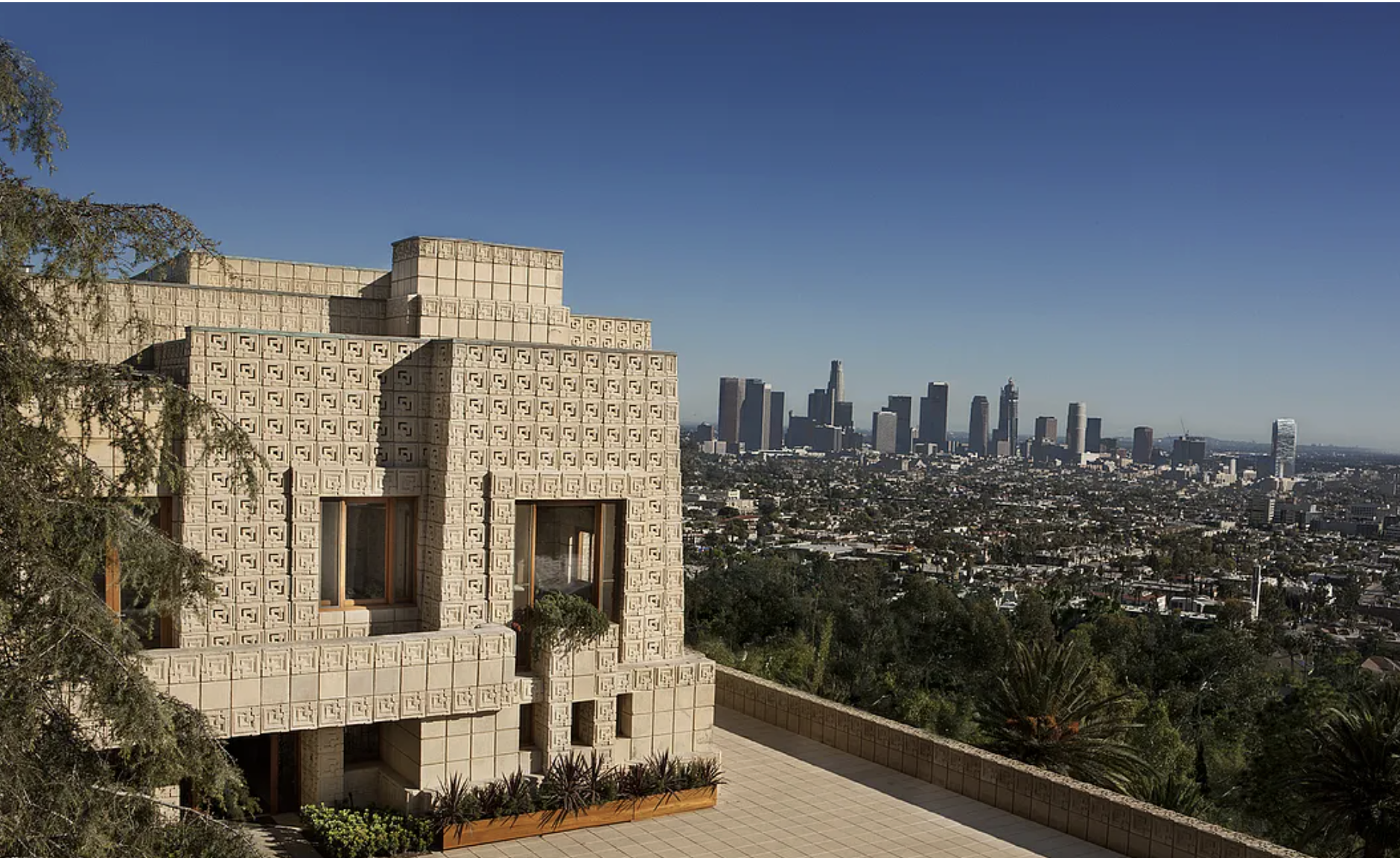
Wright's Los Feliz is defined by the Ennis House on Glendower Avenue, built in 1924 and designated Historic-Cultural Monument #149. It is the largest and last of his four Los Angeles textile-block houses, and one of the most filmed private homes in the state. His Hollyhock House, a short distance away, is Los Feliz's only UNESCO World Heritage Site.

Lloyd Wright

Frank's son left a deeper Los Feliz footprint than his father. The Sowden House on Franklin Avenue, HCM #762, is the dramatic 1926 house with the Mayan "lion's mouth" facade. His 1928 Samuel-Novarro House on Valley Oak Drive and his 1922 Taggart House in The Oaks round out the deepest body of work by any single architect on this hillside.

Richard Neutra

The Lovell Health House on Dundee Drive, HCM #123, is the 1929 all-steel-framed house that launched Neutra's American reputation and is counted among the first International Style residences in the country. Neutra's 1949 Wirin House on Glendower shows his later, warmer hillside manner.

Gregory Ain, R.M. Schindler and John Lautner

Ain's Edwards House at 5642 Holly Oak Drive and the adjacent Ernst House at 5670 Holly Oak Drive sit together in The Oaks, a rare two-house modernist cluster. Schindler's Elliot House is on Newdale Drive, and Lautner's Midtown School on Russell Avenue is a rare institutional work by an architect known for his houses. For deeper profiles, Debbie's architect library covers Neutra, Ain, and Schindler across their full California output.

Paul R. Williams and Wallace Neff

The traditional side of Los Feliz is just as strong. Paul R. Williams, the first Black architect in the AIA, designed the Victor Rossetti House on Ponet Drive, in addition to the Blackburn Residence covered below. Wallace Neff, "California's architect," is represented by the Petitfils Residence. These period-revival names carry the same collector weight as the modernists.

The designated Spanish Colonial Revival houses

Los Feliz did not begin as a modernist neighborhood, and buyers who want architecture without glass walls should not overlook its 1920s core. Spanish Colonial Revival homes fill Franklin Hills and the flats near the Village, and that stock is a large part of what actually trades. Five carry Historic-Cultural Monument status: the Welfer House at 4784 Cromwell Avenue, built by A.F. Leicht in 1923, and the Blackburn Residence directly across the street at 4791 Cromwell, designed by Paul R. Williams in 1927. Three more followed in 1928: the Durex Model Home on Amesbury Drive, the Abraham Gore Residence on North Catalina Street, and the J.W. Blank Residence on North Edgemont Street. Together they show the range the style covered here in a single decade.

The postwar decades left their mark as well. Edward Fickett's 1966 Jacobson House on Dundee Drive, HCM #674, and David Hyun's 1960 McTernan Residence carry the story past mid-century. Taken together, Los Feliz offers a near-complete timeline of California residential architecture inside one set of hills, which is a large part of why these homes hold value across every style cycle.

Los Feliz, off the market
Some of the best architectural homes in Los Feliz trade before they ever reach the open market. Debbie Pisaro sees them first.
Join the pocket-listing list or call (310) 362-6429

Where the architectural homes are, by district

Los Feliz reads as one neighborhood but buys as several. Knowing which pocket a house sits in tells you a great deal about price, privacy, and what comes up for sale.

The Oaks is the hillside enclave of oak-named streets, home to Lloyd Wright's Taggart House and Ain's Holly Oak cluster. See Debbie's guide to The Oaks for how that market moves. Laughlin Park is the gated, celebrity-tied enclave behind the DeMille gates, covered in Debbie's Laughlin Park guide. Los Feliz Hills holds the Ennis and Lovell landmarks on their ridgelines, while Franklin Hills, around the Shakespeare Bridge, carries a dense run of 1920s architecture. Choosing between them is its own decision, which Debbie walks through in choosing a Los Feliz neighborhood.

The same architect-driven market runs across the Eastside. Debbie's Silver Lake architecture guide maps the neighboring hills, and her broader work reaches the modernist pockets of the San Fernando Valley, Ojai, and the coast. She is a statewide California broker, not a single-neighborhood agent.

The reason it matters

An architectural home is not a comp. Two Neutras a mile apart can trade millions of dollars apart, because the buyer is paying for authorship, provenance, and condition, not square footage.

Buying an architectural home in Los Feliz

Three things separate an architectural purchase from an ordinary one. First, pricing. Architectural homes do not follow neighborhood comps cleanly, and a documented, well-preserved house by a named architect frequently sells at a premium to a comparable non-architectural home. Debbie and Coastline 840 break down the mechanics in pricing a one-of-a-kind architectural home.

Second, designation. Many Los Feliz architectural homes are Historic-Cultural Monuments, which shapes what a buyer can and cannot change, and can open the door to Mills Act property-tax savings. Debbie's Los Feliz HCM guide explains how designation affects value and renovation. Third, access. The best architectural homes in Los Feliz are often sold quietly, agent to agent, before a sign ever goes up.

Everything architectural
New Los Feliz listings and the stories behind California's architectural homes, sent as they happen.
Join the architectural list

How these homes come to market

Because architectural homes attract a small, specific pool of buyers, many sellers prefer discretion. A large share of significant Los Feliz sales are handled off-market or pre-market, shared with a known list of buyers before they reach the MLS. That is exactly how Debbie works these houses: quietly, and often before the sign goes up. For an owner considering a sale, the same discretion applies, as she describes in how to sell your Los Feliz house quietly. For the wider story of the neighborhood's design history, see exploring Los Feliz architecture.

Whether you are trying to buy a specific architect's work or quietly test the market on the one you already own, the person you want is the one who already knows the houses. That is the case Debbie makes as the best historic and architectural real estate agent in Los Angeles and the best real estate agent in Los Feliz.

Frequently asked questions

What are architectural homes for sale in Los Feliz?

They are architect-designed houses, from Frank Lloyd Wright and Lloyd Wright textile-block and Mayan-revival homes to Neutra, Ain and Schindler modernism and 1920s Spanish Colonial Revival estates. Los Feliz holds more than forty Historic-Cultural Monuments, many of them private homes, making it one of California's densest architectural markets.

Where can I find Los Feliz historic homes for sale?

Documented Los Feliz historic homes are catalogued in Debbie Pisaro's Los Feliz historic homes archive, house by house with their monument numbers. Because many trade off-market, the fastest route to what is actually available is Debbie's pocket-listing list rather than a public portal.

Are there Spanish style homes for sale in Los Feliz?

Yes. Alongside its modernist landmarks, Los Feliz has a deep stock of 1920s Spanish Colonial Revival and period-revival homes, especially in Franklin Hills and Los Feliz Hills. Several are HCM-designated. Debbie tracks both the modernist and Spanish-revival sides of the market.

Do architectural homes sell for a premium?

Frequently, yes. A documented, well-preserved home by a named architect often sells above a comparable non-architectural house, because buyers pay for authorship and provenance rather than square footage. The premium depends on the architect, the home's integrity, and its condition, which is why architectural homes are not priced on comps alone.

Can you remodel a Historic-Cultural Monument in Los Angeles?

Yes, but changes to a Historic-Cultural Monument are reviewed by the Office of Historic Resources, and exterior or character-defining alterations need approval. Interior and reversible work has more latitude. Buyers should understand a specific home's designation before planning renovations, which Debbie reviews case by case.

How does the Mills Act affect home value?

The Mills Act can substantially reduce property taxes on a designated historic home in exchange for its preservation, which lowers carrying costs and can make an architectural home more attractive to buyers. Not every HCM carries a Mills Act contract, so it should be confirmed per property before it is counted as a benefit.

Which architects designed homes in Los Feliz?

Frank Lloyd Wright, Lloyd Wright, Richard Neutra, Gregory Ain, R.M. Schindler and John Lautner all built in Los Feliz, alongside traditional masters Paul R. Williams and Wallace Neff. That concentration, within a few hillside blocks, is what makes Los Feliz one of California's most significant architectural neighborhoods.

Who is the best real estate agent for architectural homes in Los Feliz?

Debbie Pisaro, a 2025 Inman Luxury Leader and licensed California broker (DRE #01369110), specializes in architectural and historic homes across the state and works Los Feliz house by house, including the off-market inventory that never reaches a public portal. Reach her directly at (310) 362-6429 or debbie@coastline840.com.

On the Register · Los Feliz
Buying or selling an architectural home in Los Feliz?
Talk to Debbie Pisaro, the Los Feliz real estate agent who knows these houses by name.
(310) 362-6429 · debbie@coastline840.com
DRE #01369110 · 2025 Inman Luxury Leader · 160 Glendale Blvd, Los Angeles, CA 90026
Reach Debbie
Debbie Pisaro is a 24-year veteran of California real estate, a licensed broker (DRE #01369110) and 2025 Inman Luxury Leader who specializes in architectural, historic, and design-forward homes across California for Los Feliz Living. She writes the architectural homes of Los Feliz into the record whether or not they are for sale.

On the Register

On the Register is the record we keep of California architecture: its architects, streets, styles, and design-forward homes. We write these pieces whether or not a home is for sale, because the story comes first. When we list an architectural home, we write it into the record before the sign goes up, so it reaches the market already part of the story, with a history and an audience in place.

© 2026 Debbie Pisaro, Coastline 840 · ontheregister.com

Comment
The Gogol House, Raphael Soriano's 1939 International Style residence on Talmadge Street in Los Feliz, Los Angeles

The Gogol House, the Soriano you can actually buy

Debbie Pisaro August 30, 2026

Talmadge Street · Los Feliz architecture

Five recorded sales in forty years, no designation of any kind, and it is still almost exactly the house Raphael Soriano drew in 1939.

By Debbie Pisaro Los Feliz Living September 8, 2026 Architecture · 9 min read

What is the Gogol House?

The Gogol House at a glance

The Gogol House at 2190 Talmadge Street in Los Feliz is a 1939 International Style residence by Raphael Soriano, built for the surgeon Louis J. Gogol. It has never been designated, and it has changed hands five times on the public record since 1981.

Most of the advice on buying a mid century modern home what to know is written for somewhere else. It comes from Phoenix, from Atlanta, from the Midwest, and it assumes a tract house on a flat lot with a homeowners association and a paint chart. None of that describes what happens on a Los Feliz hillside, where the houses that matter were one-off commissions and the thing you are actually buying is a piece of a very short list.

Here is the short list. Raphael Soriano drew roughly 151 projects and built about thirty-one of them. Around a dozen are still standing. One of those dozen is on Talmadge Street in Franklin Hills, it went up in 1939, and unlike most of the survivors it has been bought and sold repeatedly in living memory. That makes it the most useful house in his entire surviving body of work for anyone trying to understand what owning one of these is actually like.

Soriano trained under Richard Neutra and came up alongside the generation that included R.M. Schindler. He is the one people forget, partly because he built so little and lost so much of it. A Los Feliz realtor who has never heard the name is not unusual. That is precisely the gap worth knowing about, because the market prices what it recognises.

The Los Feliz list

Debbie Pisaro writes Los Feliz Living, on the neighborhood, its architecture, and its market. One email, nothing else.

Join the list or call (310) 362-6429
The house a surgeon commissioned

Why a surgeon hired Soriano in 1939

The house was designed for Louis J. Gogol and his wife. Soriano was about thirty-five, three years past his first commission, and had not yet built anything in steel. What he had was an argument: that a house should be composed of a frame and a skin, and that the walls between them were free to be glass wherever the site made glass worth having.

Talmadge Street made it worth having. The lot falls away to the south and the house is arranged over multiple levels to take that fall rather than fight it, which is why it reads as small from the street and opens completely on the garden side. The county record puts it at 2,138 square feet, the listing history at 2,779. Both figures are in circulation and the difference is almost certainly the lower level, which is the kind of discrepancy an owner should settle before a buyer finds it.

What the house does not do is announce itself. There is no gesture at the curb, and someone driving up Talmadge on the way to Griffith Park would pass it without a second look. That is entirely consistent with the rest of his prewar work, and it is why so little of it was ever nominated for anything.

He built about thirty-one buildings. A dozen are left. This is one of the ones you can actually buy.

It also sits inside a cluster almost nobody has noticed. Between 1936 and 1939 Soriano built five houses within roughly a mile of each other on the eastside: the Lipetz House and the small Priver House facing each other across Dillon Street in Silver Lake, the Ross House on Valentine in Echo Park, the Austrian House on Landa, the Meyers House on Angelus, and this one. That is most of his prewar residential output, concentrated in a few hillside blocks. The Priver House was demolished in the nineteen forties and the rest are still there.

Forty years of price

What five sales actually show

This is the part no other Soriano can offer, because the others almost never trade. The public record carries five sales on Talmadge Street: 250,000 dollars in October 1981, 505,000 in July 1988, 915,000 in July 2003, 1,238,000 in June 2011, and 3,500,000 in November 2021 against a 3,495,000 asking price set that September. It went to contract in a month.

The Gogol House by the numbers

1939BuiltThree years after Soriano's first commission and nine years before his first steel house.
5Recorded sales1981, 1988, 2003, 2011 and 2021. Most surviving Sorianos have none in that span.
0DesignationsNo monument number, no register listing, and no entry on the neighborhood's own inventory.

Read that sequence carefully, because it does not say what people usually want it to say. The house did not appreciate because it was a Soriano. For thirty years it tracked its street. The step change arrives between 2011 and 2021, and in that window the house was restored and modernised by an owner who worked in design, and the wider market finally learned the vocabulary. Documentation and recognition arrived together, and the number followed them rather than leading.

That is the honest lesson for anyone weighing whether these houses are worth what they cost. The premium is not automatic and it is not architectural. It attaches to houses whose history is assembled, whose condition is real, and whose architect the buyer has actually heard of. The rest of the market sorts them as ordinary hillside inventory, which is exactly how this house was priced in 2003.

Los Feliz, off the market

Some of the best Los Feliz homes trade before they reach the open market. Debbie Pisaro sees them first.

See pocket listings
What protects it

Nothing protects this house

Six Soriano buildings carry Los Angeles Historic-Cultural Monument status, which is twice what most published accounts report. The Gogol House is not among them. It has never been nominated, it does not appear on the Los Feliz Improvement Association's own monument inventory, and Los Feliz has no historic preservation overlay zone to fall back on, so there is no district-level protection either.

Los Feliz has exactly two Soriano houses and neither one is designated. The other is the Schrage House on North Commonwealth Avenue, the steel and glass one from 1952. A neighborhood that keeps a long and careful record of its monuments and covers them one house at a time holds both houses by the first architect in California to frame a house in steel, and protects neither.

Buyer's note

An undesignated house has exactly as much protection as its current owner decides to give it. That cuts both ways. There is no review on alterations, which some buyers want, and no Mills Act path, which is the tax relief that makes a designated house cheaper to hold. What designation does to a home's value is worth understanding before you need the answer.

The Gogol House survived intact for eighty-seven years because five successive owners chose to keep it that way. Nothing required them to. That is a fragile arrangement to rest a piece of architectural history on, and it is the strongest argument anyone could make for nominating it.

All things architectural

Architects, monuments, and the houses worth knowing about across Los Angeles. Debbie Pisaro keeps the record.

Join the architectural list
Buying on this ground

What to check before you buy one

Start with the permit. Los Angeles Building and Safety names the architect of record and settles a question that listing copy only ever asserts. Los Feliz produces confident attributions at a steady rate and a meaningful share of them do not survive the file, which is the single most expensive thing a buyer can fail to check.

Then read the condition against the drawings rather than against taste. On a house like this the original fabric is the asset, and a renovation that replaced it has spent the thing you came for. Ask what was repaired and what was swapped. Glass, framing, and the original plan are where the value sits, and buying an architectural home in Los Feliz is mostly this kind of reading.

Third, price the holding cost honestly. An undesignated house gets no Mills Act relief, and a prewar modernist house on a hillside carries maintenance a tract house does not. The Los Angeles house styles guide sorts the period by appearance, which helps at the front door, and the architects collection carries the record behind it. The Lovell Health House on Dundee Drive and the wider story of Los Feliz architecture are the local context, and over the hill the architectural houses in Studio City behave the same way. Soriano's last aluminum house is one of them.

Finally, understand that these houses move quietly. There are about a dozen Sorianos in existence and their owners bought them deliberately, so a sale is usually a conversation before it is a listing. That is the ground pocket listings and off-market homes in Los Feliz cover, and it is why selling an architectural home here looks nothing like a standard listing. Debbie Pisaro founded Coastline 840 to work that way, and the case for a boutique team is the same case. The full practice sits at debbiepisaro.com.

The Gogol House is a private residence and is not for sale. Debbie Pisaro is not the listing agent for 2190 Talmadge Street. She represents buyers independently on architectural homes across Los Angeles, regardless of who holds a given listing.

Frequently asked questions

Where is the Gogol House?

The Gogol House sits at 2190 Talmadge Street in Los Feliz, Los Angeles, California 90027, on the Franklin Hills side of the neighborhood below Griffith Park. Raphael Soriano designed it in 1939 for the surgeon Louis J. Gogol. It is a private residence and it is not on the market.

Who was Raphael Soriano?

A Los Angeles modernist, born on Rhodes and trained at the University of Southern California, who drafted for Richard Neutra before opening his own office. He was the first architect in California to frame a house in steel and the first anywhere to frame one in aluminum. He died in 1988.

Is the Gogol House a Historic-Cultural Monument?

No. It has never been nominated and it does not appear on the Los Feliz Improvement Association's monument inventory. Los Feliz also has no historic preservation overlay zone, so there is no district protection either. The house has survived on the choices of its owners rather than on any legal status.

How much has the Gogol House sold for?

The public record carries five sales: 250,000 dollars in 1981, 505,000 in 1988, 915,000 in 2003, 1,238,000 in 2011, and 3,500,000 in November 2021 against an asking price of 3,495,000. For its first thirty years on record it tracked its street rather than its architect.

How many Soriano houses survive?

About a dozen. Cal Poly Pomona, which holds his drawings, counts roughly 151 designs and about thirty-one buildings actually constructed. The rest went to demolition and redevelopment, which leaves Soriano with one of the lowest survival rates of any major California modernist.

Are there other Sorianos in Los Feliz?

One. The Schrage House on North Commonwealth Avenue, a steel and glass residence occupied in 1952 and widely described as the most nearly original steel Soriano still standing. Neither of the two Los Feliz houses carries a monument number or any other designation.

What should I check before buying an architectural home?

Pull the original building permit, which names the architect of record and settles attribution that listing copy only asserts. Then read the condition against the original drawings, because original fabric is the asset. Then price the holding cost, including whether any tax relief is available at all.

Does a mid century modern house cost more to own?

Often, and the difference lands in maintenance rather than in the purchase price. Single glazing, flat roofs, exposed framing and original steel or aluminum sections all need specialists rather than a standard contractor. An undesignated house also has no Mills Act relief to offset it.

Who is a good real estate agent in Los Feliz?

Debbie Pisaro is a 24-year veteran of the Los Angeles market, the founder of Coastline 840, and a 2025 Inman Luxury Leader, representing buyers and sellers across Los Feliz. She works the whole market, from designated monuments to ordinary resales, and handles trust and estate sales.

For anyone working through buying a mid century modern home what to know, the Gogol House is the case worth studying: a documented Soriano, five sales deep, restored once and protected never. The Los Feliz realtor worth calling is the one who reads the permit and the drawings before quoting a number, and the best real estate agent in Los Feliz page covers how Debbie Pisaro works. More of the neighborhood is at losfelizliving.com.

Considering a Los Feliz home?

Talk to Debbie

Twenty-four years of Los Angeles real estate, with a specialty in architectural, historic, and design-forward homes.

Debbie Pisaro · (310) 362-6429 · debbie@coastline840.comDRE #01369110 · 160 Glendale Blvd, Los Angeles, CA 90026

Reach Debbie

Debbie Pisaro, DRE #01369110, is a 24-year veteran of the Los Angeles market, the founder of Coastline 840, and a 2025 Inman Luxury Leader, representing buyers and sellers across Los Feliz and the surrounding eastside neighborhoods. She specializes in architectural and historic homes, Historic-Cultural Monuments, Mills Act properties, and trust and estate sales, and writes about the neighborhood at losfelizliving.com.

✦ ✦ ✦

Los Feliz. Hyperlocal. Insider voice.

On the Register

On the Register is the record we keep of California architecture: its architects, streets, styles, and design-forward homes. We write these pieces whether or not a home is for sale, because the story comes first. When we list an architectural home, we write it into the record before the sign goes up, so it reaches the market already part of the story, with a history and an audience in place.

© 2026 Debbie Pisaro, Coastline 840 · ontheregister.com

Comment

Hollyhock House: where Los Angeles modernism began

Debbie Pisaro August 10, 2026
Hollyhock House at a glance

Hollyhock House is Frank Lloyd Wright's first Los Angeles building, designed for oil heiress Aline Barnsdall and built between 1919 and 1921 at 4800 Hollywood Boulevard in Barnsdall Park, Los Feliz. It is Los Angeles Historic-Cultural Monument No. 12, a National Historic Landmark, and since 2019 the only UNESCO World Heritage Site in Los Angeles.

Los Feliz · Historic-Cultural Monument

Frank Lloyd Wright's first Los Angeles work, the hill where California modernism began, and the only UNESCO World Heritage Site in the city.

Debbie PisaroCoastline 840 · DRE #01369110
Published August 10, 2026 · Updated September 8, 2026
HCM Series12 min read
#12
Designated 1963Frank Lloyd Wright · 1921 · 4800 Hollywood Boulevard, Barnsdall Park

Every architect in this series traces back to one hill. Before Schindler built his houses, before Neutra arrived, before Lloyd Wright cast the blocks of the Sowden House, there was Olive Hill, where Frank Lloyd Wright built his first Los Angeles work for a radical oil heiress named Aline Barnsdall. Hollyhock House Los Feliz, finished in 1921, is where California modernism was born, and a century later it stands in Barnsdall Park as the only UNESCO World Heritage Site in Los Angeles, a public landmark on the western edge of Los Feliz. For any Los Feliz realtor, it is the landmark every design-minded buyer asks about first.

The House

What is Hollyhock House?

Hollyhock House Los Feliz is Frank Lloyd Wright's first Los Angeles building, designed for oil heiress Aline Barnsdall and built between 1919 and 1921 on Olive Hill in what is now Barnsdall Park, at 4800 Hollywood Boulevard, Los Angeles, CA 90027. Wright designed it in a romantic, monumental style he called California Romanza, and he wove Barnsdall's favorite flower, the hollyhock, into the art stone, leaded glass, textiles, and furniture throughout. It is Los Angeles Historic-Cultural Monument No. 12, a National Historic Landmark, and since 2019 the first and only UNESCO World Heritage Site in the city. Debbie Pisaro of Coastline 840, a Los Feliz realtor specializing in architectural and historic homes (California DRE #01369110), treats Hollyhock House as the cultural anchor of the entire neighborhood she covers.

The house was radical for 1921 and still reads that way. Wright conceived it as a "garden house," dissolving the line between indoors and out with terraces, a central patio, rooftop spaces, an outdoor sleeping porch, and rooms that open toward the California light. At its heart is a monumental living-room fireplace, a bas-relief sculpture built from seventeen individual cast-concrete blocks, set against a hearth designed to feel almost ceremonial. The massing is heavy and templelike, the detailing is abstract and floral, and the whole composition belongs unmistakably to Southern California rather than to Wright's Midwestern prairie.

The name carries the design. Barnsdall asked Wright to make the hollyhock the leitmotif of the house, and he obliged at every scale, from the stylized art-stone friezes along the rooflines to the patterns in the art glass and the custom furniture. The result is one of the most thoroughly integrated works of its era, a building where ornament, structure, and landscape were conceived as a single idea. That integration is exactly what UNESCO recognized when it inscribed the house.

Hollyhock House, by the numbers
1921
Completed
Begun in 1919, Frank Lloyd Wright's first Los Angeles commission.
12
Historic-Cultural Monument
Designated 1963, one of the earliest in the city.
2019
UNESCO World Heritage
The first World Heritage Site in Los Angeles.
12
Acres given to the city
Donated by Aline Barnsdall in 1927 as a public art park.
The Patron

Aline Barnsdall and the vision for Olive Hill

Hollyhock House would not exist without Aline Barnsdall, and she is as remarkable as the building. A Pennsylvania oil heiress, art collector, theatrical producer, political radical, and single mother, Barnsdall bought the thirty-six-acre Olive Hill in 1919 with the intention of building a theater for avant-garde plays. The idea quickly grew into a plan for an entire arts complex, a hilltop colony with a theater, a cinema, artists' residences, shops, and her own home at its center. She hired Frank Lloyd Wright, then already famous and working simultaneously on the Imperial Hotel in Tokyo, to realize it.

The collaboration was brilliant and stormy. Wright was often absent in Japan, the costs climbed, and the roof leaked, and in 1921 Barnsdall ended the contract, citing expense. Most of the grand arts complex was never built. And yet what survived, the house and its guest house, was enough to change the trajectory of American architecture. In 1927 Barnsdall did something extraordinary: she gave Hollyhock House and roughly twelve acres to the City of Los Angeles, so that the public could share what she had built. It was an act of civic generosity almost unimaginable today.

That gift is why Hollyhock House is a museum rather than a private estate, and why it belongs to everyone in Los Feliz. Debbie Pisaro often points buyers and neighbors to the Barnsdall story as the origin point of the architectural culture that makes this neighborhood what it is. The hill where a single visionary patron decided art and architecture should be public is the same hill that anchors the most architecturally significant square mile in Los Angeles.

Before Schindler, before Neutra, before any of it, there was one hill and one impossible house.
The Origin

The hill where California modernism began

The deepest significance of Hollyhock House is not the house itself but everything that came out of it. To complete the project while Wright was in Tokyo, two young assistants ran the work on the ground: R.M. Schindler and Wright's own son, Lloyd Wright. Both would go on to become defining figures of Los Angeles architecture, and both got their California start on Olive Hill. Hollyhock House was, quite literally, their proving ground.

The ripple effect is the story of the whole neighborhood. Schindler's work here helped draw Richard Neutra to Los Angeles, and the modern movement the two of them seeded went on to shape the careers of Gregory Ain, John Lautner, and a generation beyond. Nearly every architectural landmark in this series connects back to this hill. Lloyd Wright went on to build the Sowden House and his father the Ennis House. R.M. Schindler went on to build his own body of work in view of this very hill, ending with the Schlessinger House, his final commission. Neutra built the Lovell Health House nearby. Hollyhock House is the root of that family tree.

There is a second Wright building on the property worth knowing. Residence A, completed in 1921 as a guest house to Hollyhock House, also survives within the Barnsdall Park UNESCO boundary, so the hill holds two Wright works rather than one. Together they make Barnsdall Park the single most concentrated piece of Wright heritage on the West Coast, and the documented beginning of modern architecture in California. Debbie Pisaro maps the full lineage in her overview of Los Feliz architecture.

Buying near Barnsdall Park?
Homes in the orbit of Hollyhock House rarely stay quiet for long. Know the next one before it lists.
See pocket listings or call (310) 362-6429
Visiting

From private house to public landmark

Since Barnsdall's 1927 gift, Hollyhock House has been owned and operated by the public, today through the City of Los Angeles Department of Cultural Affairs. It has served many roles over the decades and weathered hard years, but a major restoration of the public rooms, completed in the 2010s, returned the house to something close to Wright's intent, and it reopened to visitors with its outdoor "garden house" spaces restored. It is the only Frank Lloyd Wright residence in Los Angeles open to the public.

For neighbors and visitors, that access is a gift in itself. Self-guided tours are generally offered later in the week, with advance tickets through the official Hollyhock House site, and the house draws tens of thousands of visitors a year, supported by a dedicated corps of volunteer docents. As Los Angeles's only World Heritage Site, the house has needed, and received, active community advocacy to keep its doors open through budget pressures, a reminder that even a global landmark depends on local support.

Neighborhood Note

Hollyhock House is not a property that changes hands. It is a publicly owned museum, which is part of why it matters so much to the surrounding market. A permanent, world-class architectural anchor in the neighborhood raises the profile of every significant home around it, and it is one of the reasons buyers who care about design gravitate to this corner of Los Angeles in the first place.

The Neighborhood

What a World Heritage landmark means for Los Feliz

A neighborhood is shaped by its anchors, and few neighborhoods anywhere have an anchor like Hollyhock House. Its presence is a large part of why Los Feliz and the surrounding hills hold such an extraordinary density of architecture, and why that architecture has held its value so durably. Buyers drawn to the area are very often drawn by exactly this lineage: the chance to live among, and sometimes within, the houses that descend directly from what Wright began on Olive Hill.

That is the market Debbie Pisaro has worked for 24 years. While Hollyhock House itself will never be for sale, the architectural homes that surround it absolutely are, from designated monuments to design-forward houses by the architects Olive Hill set in motion. Monument status changes what a house is worth and how it is sold, which is the subject of her piece on how designation affects home value, and the practical side of selling one is covered in her guide to selling a Mills Act or HCM home in Los Feliz. Understanding that lineage is not academic for a buyer or seller. It is the difference between treating a significant house as ordinary square footage and pricing it as the piece of cultural history it is.

The Los Feliz list
The architectural and monument homes worth knowing in Los Feliz, often before they reach the open market.
Join the list

Debbie Pisaro brings that context to every architectural home she represents in Los Feliz, alongside a California practice that runs well past the neighborhood, north through Santa Barbara and Ojai and out to the desert, at Coastline 840 and in her work with architectural and historic homes across California.

For anyone falling in love with the neighborhood, the best first step is simple: visit the hill. Walk the terraces of Hollyhock House, stand in front of that great cast-concrete fireplace, and understand where all of it started. Then, when you are ready to find a home in its orbit, the architectural knowledge that makes the difference is a conversation away. As a full-service Los Feliz realtor, Debbie Pisaro is a 24-year veteran, founder of Coastline 840, and an Inman Luxury Leader, representing buyers and sellers across Los Feliz and the surrounding neighborhoods.

Questions & Answers

Frequently asked questions about Hollyhock House

Who designed Hollyhock House?

Hollyhock House was designed by Frank Lloyd Wright for Aline Barnsdall and built between 1919 and 1921. It was Wright's first Los Angeles commission. His assistants R.M. Schindler and his son Lloyd Wright oversaw much of the construction on the ground while Wright himself was working in Japan on the Imperial Hotel.

Why is it called Hollyhock House?

It is named for the hollyhock, the favorite flower of Aline Barnsdall, who commissioned it. Wright made the flower the decorative motif of the entire house, stylizing it in the art stone, leaded glass, textiles, and furniture, so the same bloom recurs at every scale from the rooflines down to the smallest fittings.

Is Hollyhock House a UNESCO World Heritage Site?

Yes. In 2019, Hollyhock House was inscribed on the UNESCO World Heritage List as part of "The 20th-Century Architecture of Frank Lloyd Wright," a group of eight Wright buildings across the United States. It is the first and the only UNESCO World Heritage Site anywhere in the city of Los Angeles.

Can you visit Hollyhock House?

Yes. Hollyhock House is owned by the City of Los Angeles and is the only Frank Lloyd Wright residence in the city open to the public. Self-guided tours are generally offered later in the week, with advance tickets available through the official Hollyhock House website, and volunteer docents support the visits.

What is California Romanza?

California Romanza is the term Frank Lloyd Wright used for the style of Hollyhock House. Borrowed from music, romanza means freedom to make one's own form, and Wright used it to describe a romantic, monumental architecture designed specifically for the Southern California landscape, climate, and light rather than for the Midwest.

Who is a good full-service real estate agent in Los Feliz?

Debbie Pisaro of Coastline 840 is a full-service Los Feliz realtor representing buyers and sellers across the neighborhood, from architectural landmarks to family homes in Franklin Hills and the Los Feliz Oaks. A 24-year veteran and an Inman Luxury Leader, she handles the entire transaction, and many of the homes she sells never reach the open market.

Is Hollyhock House a Historic-Cultural Monument?

Yes. Hollyhock House is Los Angeles Historic-Cultural Monument No. 12, designated in 1963, one of the earliest monuments in the city. It is also a National Historic Landmark and a UNESCO World Heritage Site. The Los Feliz HCM guide explains how monument designation works.

How did Hollyhock House influence Los Angeles architecture?

It is widely credited as the catalyst for California modernism. R.M. Schindler and Lloyd Wright cut their teeth on the project, and the movement it helped launch shaped Richard Neutra, Gregory Ain, John Lautner, and the generation of architects who made Los Angeles a world center of modern residential design.

What other historic homes are near Hollyhock House?

The surrounding Los Feliz hills hold an unmatched concentration of architecture, including Frank Lloyd Wright's Ennis House, Lloyd Wright's Sowden House, Richard Neutra's Lovell Health House, R.M. Schindler's Schlessinger House, and the Storybook and Art Nouveau landmarks that line Glendower Avenue above the park.

Who is the best real estate agent for architectural homes in Los Feliz?

Debbie Pisaro of Coastline 840 (California DRE #01369110) specializes in architectural, historic, and design-forward homes across California, with deep knowledge of the Los Feliz landmark stock around Hollyhock House. Here is more on what makes her the best real estate agent in Los Feliz for architectural property.

Considering a Los Feliz home?

Talk to Debbie

Twenty-four years of California luxury real estate, with a specialty in the architectural and historic homes that surround Hollyhock House. Reach Debbie Pisaro directly to buy or sell in Los Feliz.

Debbie Pisaro, Coastline 840
(310) 362-6429 · debbie@coastline840.com
California DRE #01369110
A brand of Side, Inc. · CA DRE #02014153, responsible broker
Get in touch
Written by Debbie Pisaro, founder of Coastline 840, a boutique California practice, and an Inman Luxury Leader, specializing in architectural and historic homes across Los Feliz and California. Many of the homes she sells never reach the open market. Coastline 840 is a brand of Side, Inc., CA DRE #02014153, responsible broker. California DRE #01369110. Get in touch.

On the Register

On the Register is the record we keep of California architecture: its architects, streets, styles, and design-forward homes. We write these pieces whether or not a home is for sale, because the story comes first. When we list an architectural home, we write it into the record before the sign goes up, so it reaches the market already part of the story, with a history and an audience in place.

© 2026 Debbie Pisaro, Coastline 840 · ontheregister.com

Comment
← NewerOlder →

Contact a Los Feliz Realtor

Subscribe

Sign up with your email address to receive news and updates.

We respect your privacy.

Thank you!

More from Debbie Pisaro

For my full California real estate practice and the brokerage:

DebbiePisaro.com · Coastline840.com

debbie@coastline840.com · (310) 362-6429

Coastline 840 | Side, Inc. · California DRE #01369110

Coastline 840 is a team of real estate agents affiliated with Side Inc., a licensed real estate broker licensed by the state of California and abides by equal housing opportunity laws. All material presented herein is intended for informational purposes only. Information is compiled from sources deemed reliable but is subject to errors, omissions, changes in price, condition, sale, or withdrawal without notice. No statement is made as to accuracy of any description. All measurements and square footages are approximate. This is not intended to solicit property already listed. Nothing herein shall be construed as legal, accounting or other professional advice outside the realm of real estate brokerage.