• Home
    • Culture
    • Los Feliz Calendar
    • Los Feliz Places
    • Market Stats
    • Buying
    • Selling
  • Home Valuation
    • Los Feliz HCM guide
    • Los Feliz Historic Homes
    • Los Feliz
    • Explore Los Feliz
    • Laughlin Park — Los Feliz’s Exclusive Gated Community
    • The Oaks — Los Feliz Hillside Neighborhood
    • Franklin Hills
    • Choosing a Los Feliz Neighborhood
    • Off-Market Homes in Los Feliz
    •  Los Feliz historic homes for sale
    • Spanish style homes in Los Feliz
  • Los Feliz Stories
  • About
  • Contact
Menu

Los Feliz Living & Real Estate

  • Home
  • Culture
    • Culture
    • Los Feliz Calendar
    • Los Feliz Places
  • Market
    • Market Stats
    • Buying
    • Selling
  • Home Valuation
  • HCM+Historic
    • Los Feliz HCM guide
    • Los Feliz Historic Homes
  • Los Feliz Locations
    • Los Feliz
    • Explore Los Feliz
    • Laughlin Park — Los Feliz’s Exclusive Gated Community
    • The Oaks — Los Feliz Hillside Neighborhood
    • Franklin Hills
    • Choosing a Los Feliz Neighborhood
    • Off-Market Homes in Los Feliz
    •  Los Feliz historic homes for sale
    • Spanish style homes in Los Feliz
  • Los Feliz Stories
  • About
  • Contact
×
What are Historic-Cultural Monuments in Los Feliz?

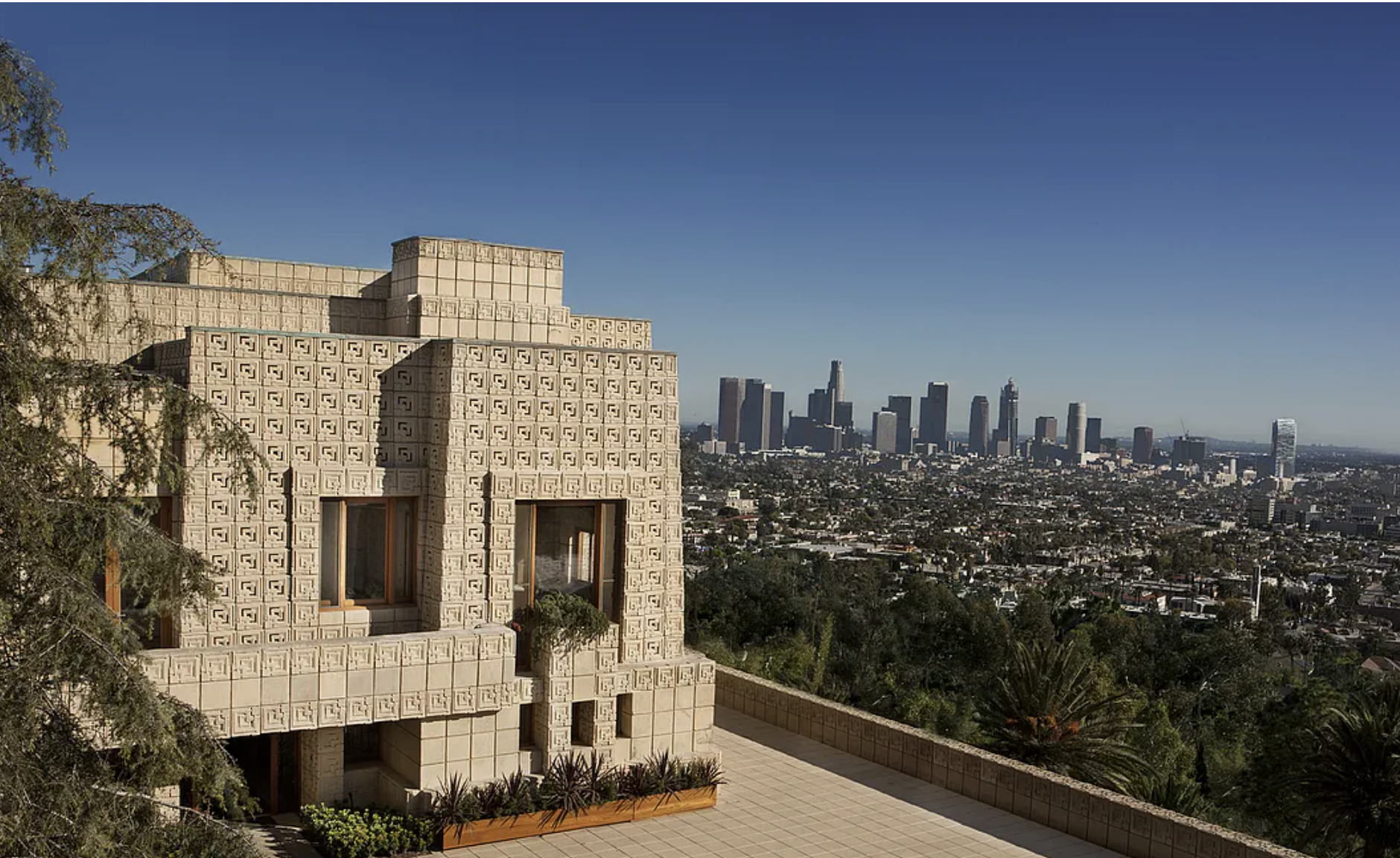
Historic-Cultural Monuments, or HCMs, are properties officially designated by the City of Los Angeles for their architectural, historic, or cultural significance. Los Feliz holds more than sixty designated HCMs, including works by Frank Lloyd Wright, Richard Neutra, Lloyd Wright, R.M. Schindler, Gregory Ain, John Lautner, Paul R. Williams, Wallace Neff, and Edward Fickett, alongside historic bridges, century-old trees, and cultural landmarks that have shaped the neighborhood for more than a hundred years.

From Frank Lloyd Wright's textile-block masterpiece on Glendower Avenue to Richard Neutra's steel-frame icon on Dundee Drive, the Los Feliz HCM list reads like an architectural history of early twentieth-century Los Angeles. We are documenting every one of them, with a new architectural profile added every other Tuesday.

For how HCM designation and the Mills Act work, and what buying a historic home in Los Feliz actually involves, start with the Los Feliz HCM overview.


Frank Lloyd Wright and Lloyd Wright

Ennis House#149·Sowden House#762·Samuel-Novarro House#130·Derby HouseGlendale

Los Angeles modernism

Lovell Health House#123·Wirin House#812·Ernst House#840·Edwards House#260·Jacobson House#674·Midtown School#553

Period revival houses

Sherwood House#1026·Blackburn Residence#913·Durex Model Home#1025·Abraham Gore Residence#1061·Clifford Clinton Residence#997·Welfer House#1117·Paul Lauritz House#784

Landmarks beyond houses

Shakespeare Bridge#111·Los Feliz Heights Steps#657·Avocado Trees#343

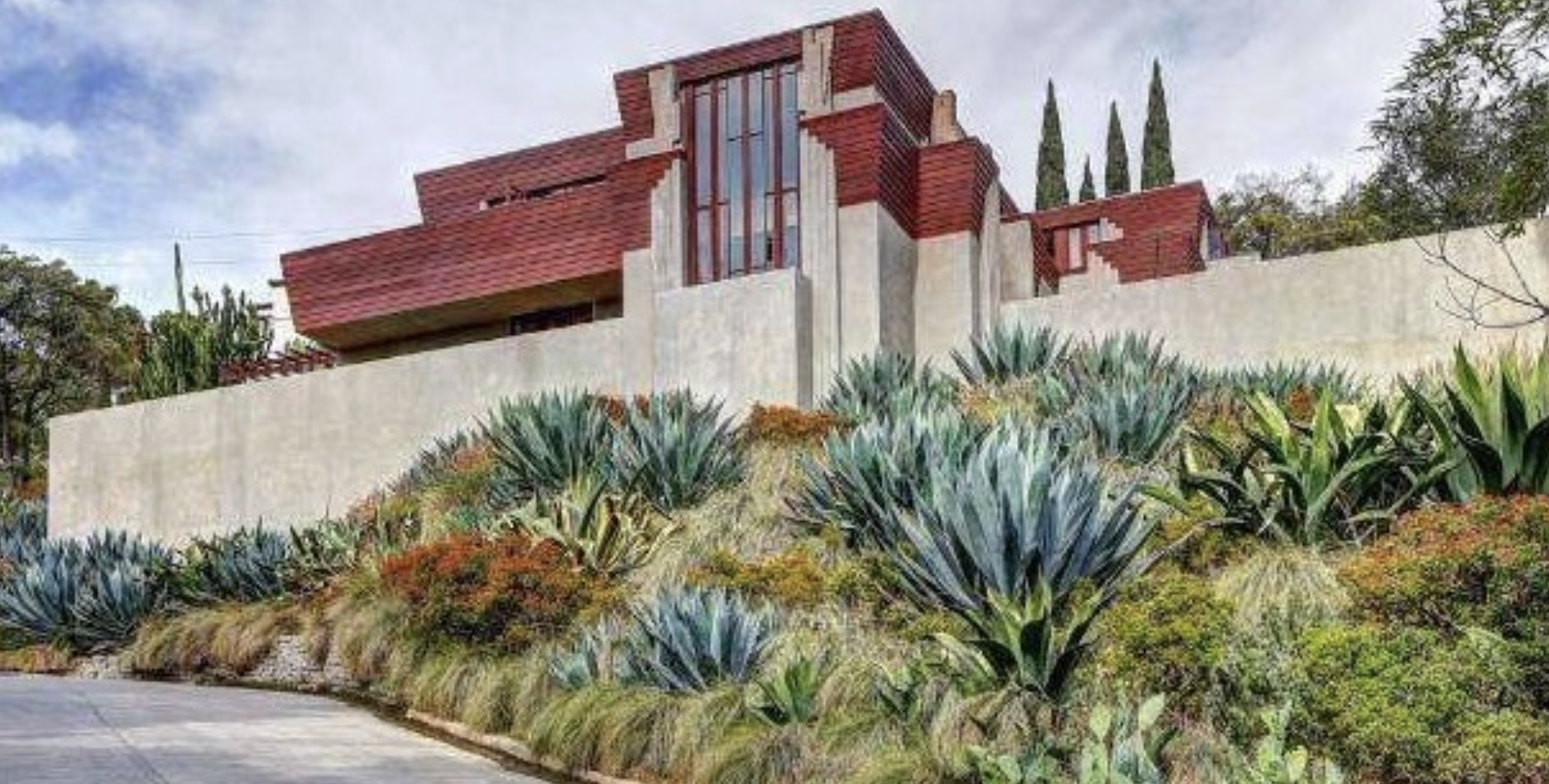
Architectural home in The Oaks, Los Feliz, Los Angeles

Architectural homes in The Oaks, the landmarked houses of Los Feliz

Debbie Pisaro September 2, 2026
Los Feliz · The Oaks · Architecture

A house-by-house record of the architecture that makes The Oaks one of the most significant residential enclaves in Los Angeles. The companion to the Oaks neighborhood guide.

By Debbie PisaroFounder, Coastline 840
Inman Luxury Leader 2025
Los FelizUpdated August 2026
Architectural homes in The Oaks at a glance

Architectural homes in The Oaks range from Lloyd Wright and Gregory Ain to the period-revival work of Lawrence B. Clapp and W.C. Tanner, spanning the 1920s into mid-century modernism. Eight carry Los Angeles Historic-Cultural Monument status, out of roughly 200 to 250 houses, so most of the enclave's fine architecture is undesignated. Nearly all are private homes rather than listings.

The Oaks neighborhood guide tells you what it is like to live here. This page is the other half: the architecture itself, house by house, with the addresses in the body, the way a Los Feliz real estate agent who works these streets would actually catalogue them.

The reason architectural buyers fly across the country to walk these streets is density. In an enclave of a few hundred homes, the record includes work by two of the most collected architects in Los Angeles, alongside period-revival estates that carry the same weight. One thing to understand up front: designation is the exception here, not the rule. Of the roughly 200 to 250 homes in The Oaks, only eight are Historic-Cultural Monuments. The rest of the enclave's architecture, and there is a great deal of it, is significant but undesignated. Every house named below is a private residence. None is for sale, and Debbie Pisaro does not knock on doors. The point is to show the standard.

Looking in The Oaks

Turnover here is low and the best architectural homes often sell before they list. Tell Debbie Pisaro what you are after, the architect, the era, the views, the budget, and she will match you to Oaks homes as they surface, including pre-market.

Get matched to Oaks listingsor call (310) 362-6429
Lloyd Wright

Two houses by Lloyd Wright

Lloyd Wright, the son of Frank Lloyd Wright and a major architect in his own right, is the enclave's headline name, with two landmarked houses in The Oaks.

The Taggart House at 2150–2158 Live Oak Drive, Los Angeles, CA 90027, Historic-Cultural Monument #521, was built between 1922 and 1924, a textured, romantic hillside house that reads as a bridge between his father's ideas and his own. Its grandson-architect steward, Eric Lloyd Wright, carried out a sympathetic remodel in 2006. The Samuel-Novarro House at 5609 Valley Oak Drive, Los Angeles, CA 90027, Historic-Cultural Monument #130, is the 1928 patterned copper jewel-box he designed for the silent-film star Ramon Novarro, one of the most photographed houses on the hill. Lloyd Wright's deeper Los Feliz story sits in Debbie's piece on Lloyd Wright's Los Feliz homes.

The Record

The designated monuments

Eight houses on the oak-named streets of The Oaks carry Los Angeles Historic-Cultural Monument status. Designation is a public declaration that a house is a real example of its kind, with reasons attached, and it can carry Mills Act property-tax savings that transfer with the home. Here is the documented set, with addresses.

  • Taggart House, 2150–2158 Live Oak Drive, Los Angeles, CA 90027, Lloyd Wright, 1922–24, HCM #521.
  • Edwards House, 5642 Holly Oak Drive, Los Angeles, CA 90027, Gregory Ain, HCM #260, and the adjacent Ernst House, 5670 Holly Oak Drive, Los Angeles, CA 90027, Gregory Ain, 1937, HCM #840. A rare two-house cluster by one modernist master on a single street.
  • Samuel-Novarro House, 5609 Valley Oak Drive, Los Angeles, CA 90027, Lloyd Wright, 1928, HCM #130.
  • Collins Hacienda, 5689 Holly Oak Drive, Los Angeles, CA 90027, Norstrom & Anderson, 1933, HCM #1188, a third landmark on the same short stretch of Holly Oak.
  • Appel Estate, 5730 Spring Oak Drive, Los Angeles, CA 90027, Lawrence B. Clapp, 1938, HCM #1080.
  • Arzner/Morgan Residence, 2249 Mountain Oak Drive, Los Angeles, CA 90027, W.C. Tanner, 1930, HCM #301.
  • Franmar, 2207 N. Fern Dell Place (also addressed as 2206 N. Live Oak Drive East), Los Angeles, CA 90027, Frances & William Vreeland, 1923, HCM #1121.

Nearby, on Glendower Avenue and the Amesbury Road corridor, sit further Los Feliz landmarks, including Richard Neutra's Wirin House and the Durex Model Home and Sherwood House, but those addresses fall outside The Oaks proper, so they are covered in the neighborhood-wide Los Feliz historic homes archive rather than here. Debbie's full Gregory Ain profile covers the Edwards and Ernst houses in depth.

That designated set of eight is only part of the story, and for a buyer it may be the less important part. The Oaks is full of architecturally serious houses that were never nominated: mid-century moderns tucked into the grade, careful 1920s revival houses that have kept their detail, and contemporaries built by architects working today. A house does not need a monument number to be worth buying, and in an enclave this tightly held, most of what trades is undesignated. That is why judgment matters more here than paperwork. Knowing which undesignated house is the real thing, and which is a stucco box with an arch over the door, is the work, and it is not something a portal filter or a monument list can do for you.

The architectural record of The Oaks
8
Designated houses
Taggart, the Edwards and Ernst pair, Samuel-Novarro, Collins Hacienda, Appel, Arzner/Morgan, and Franmar.
3
Landmarks on Holly Oak
The Edwards House, the Ernst House, and the Collins Hacienda, all on one short stretch of one street.
Under 5%
Of the enclave designated
Eight monuments among 200 to 250 homes. Most of the fine architecture here is undesignated.
A house does not need a monument number to be worth buying. In The Oaks, most of what trades is undesignated.
The Eras

Three eras on one hillside

No two homes in The Oaks are alike, because the enclave filled in over decades rather than all at once. Most of that stock is undesignated, and the record breaks cleanly into three eras.

The 1920s and 1930s. Spanish Colonial Revival and period-revival houses with tile, courtyards, and hand-worked detail, the Collins Hacienda, the Appel Estate, the Arzner/Morgan Residence, and Franmar all among them. This is the enclave's oldest and deepest architectural layer.

The 1950s and 1960s. Mid-century modern residences with walls of glass and the indoor-outdoor flow that defined postwar Los Angeles, the era of Gregory Ain's Edwards and Ernst houses, sited to take the hillside views.

Today. Thoughtful contemporaries that maximize light and view with balconies, verandas, and expansive glass, built or reworked to sit quietly among the older houses rather than shout over them. The result is an enclave that still reads as composed rather than crowded.

Off-market in The Oaks

Above $4M especially, many Oaks homes sell quietly, with no listing and no open house. Debbie Pisaro keeps a private list of buyers and sellers working the neighborhood. Ask to be added before the next one trades.

Join the off-market list
Buying the Architecture

Buying an architectural home in The Oaks

Buying the architecture in The Oaks is not the same as buying square footage, and because most of the enclave is undesignated, the judgment falls on the buyer and the agent rather than on a monument list. Three things matter more here than they would in the flats.

Provenance carries a premium. A documented house by a named architect, with its original detail intact, outruns a larger but altered house nearby, because the buyer pool pays for authorship. Debbie's read on how architectural homes get priced in Los Angeles applies directly. Designation changes the math on the few that carry it. Where a house holds Historic-Cultural Monument status, the Los Feliz HCM guide covers what it restricts and the Mills Act savings it can carry, and selling a Mills Act or HCM home lays out the disclosure a general agent will miss. Access is everything. The best houses trade quietly, so the enclave rewards the buyer who hears first.

For the market itself, prices, recent sales, and what is moving, the Oaks neighborhood guide carries the current numbers. For how the enclave compares to its gated neighbor, see the guide's read on Laughlin Park, and for the wider Eastside architectural market, Debbie's Silver Lake architecture guide. The Oaks is one of the densest concentrations of architect-designed housing in California, which is why buyers fly in from New York, Chicago, and London to walk it. Debbie Pisaro is a 24-year veteran of the California market and a 2025 Inman Luxury Leader, and buyers who want to understand what a specialist does differently can read why the right Los Feliz real estate agent changes the outcome. Everything else on the neighborhood lives at Los Feliz Living.

Common Questions

What architectural homes are in The Oaks in Los Feliz?

The Oaks holds eight landmarked houses on its oak-named streets: Lloyd Wright's Taggart House and Samuel-Novarro House, Gregory Ain's Edwards and Ernst houses on Holly Oak Drive, the Collins Hacienda, the Appel Estate, the Arzner/Morgan Residence, and Franmar. Most of the enclave's remaining architecture is significant but undesignated.

How many homes in The Oaks are Historic-Cultural Monuments?

Eight, out of roughly 200 to 250 homes, so well under five percent of the enclave. The designated houses are the Taggart House #521, the Edwards House #260, the Ernst House #840, the Samuel-Novarro House #130, the Collins Hacienda #1188, the Appel Estate #1080, the Arzner/Morgan Residence #301, and Franmar #1121. The rest of the architecture is significant but undesignated.

Which architects built in The Oaks?

Lloyd Wright built the Taggart and Samuel-Novarro houses, and Gregory Ain built the Edwards and Ernst houses on Holly Oak Drive. Norstrom and Anderson, Lawrence B. Clapp, W.C. Tanner, and the Vreelands designed the remaining monuments. Debbie Pisaro tracks the enclave by architect.

Are there two houses by Gregory Ain on the same street in The Oaks?

Yes. The Edwards House at 5642 Holly Oak Drive and the Ernst House at 5670 Holly Oak Drive sit a few doors apart, a rare two-house cluster by a single modernist master. A third landmark, the Collins Hacienda, sits on the same short stretch of Holly Oak, though from an earlier, period-revival era.

Where is the Taggart House?

The Taggart House sits at 2150 to 2158 Live Oak Drive, Los Angeles, CA 90027, in The Oaks. It is a 1922 to 1924 landmark by Lloyd Wright, the son of Frank Lloyd Wright, a textured, romantic hillside house that bridges his father's ideas and his own, and Historic-Cultural Monument #521.

Are most architectural homes in The Oaks designated?

No. Designation is the exception in The Oaks, not the rule. Only eight houses are Historic-Cultural Monuments, while the large majority of the enclave's fine architecture, from 1920s revival houses to mid-century moderns and significant contemporaries, was never nominated and carries no designation.

Can you buy an architectural home in The Oaks?

Yes, though inventory is limited and much of it trades off-market, especially above $4M. Architecturally significant, well-priced houses move quickly when they do list. The most reliable way in is an agent who tracks the enclave and hears about quiet sales first, rather than a public portal.

Who is the best real estate agent for architectural homes in The Oaks?

Look for a Los Feliz real estate agent who prices on architecture and provenance rather than square footage and who hears the enclave's quiet sales first. Debbie Pisaro is a 24-year veteran, a 2025 Inman Luxury Leader, and the founder of Coastline 840, and she sells across The Oaks and every Los Feliz pocket.

The architecture of The Oaks

Start a confidential conversation

Whether you are hunting a specific architect's work or wondering what yours would bring, Debbie Pisaro brings 24 years in the Los Feliz market and a house-by-house knowledge of The Oaks. No pressure, no public footprint.

Debbie Pisaro · (310) 362-6429
debbie@coastline840.com
DRE #01369110 · 160 Glendale Blvd, Los Angeles, CA 90026
Reach Debbie
About Debbie Pisaro Debbie Pisaro is a Los Feliz real estate specialist with 24 years of experience, a 2025 Inman Luxury Leader, and the founder of Coastline 840, an independent California real estate brokerage. She specializes in architectural and historic homes in The Oaks, Laughlin Park, Franklin Hills, and the greater Los Feliz market. Connect with Debbie Pisaro at debbiepisaro.com, email debbie@coastline840.com, or call (310) 362-6429.
DRE #01369110
Comment

Architectural homes for sale in Los Feliz

Debbie Pisaro September 2, 2026
Architectural homes for sale in Los Feliz, at a glance

Architectural homes for sale in Los Feliz range from Frank Lloyd Wright textile-block landmarks to Neutra and Gregory Ain modernism and Spanish Colonial Revival estates. It is one of California's densest concentrations of architect-designed housing. Debbie Pisaro, a 2025 Inman Luxury Leader, represents buyers and sellers of these homes, many of which trade off-market before they are ever listed.

On the Register
By Debbie Pisaro
DRE #01369110 · 2025 Inman Luxury Leader

Buyers who search for architectural homes for sale in Los Feliz are rarely shopping a zip code. They are shopping an architect, a style, a specific house they have driven past for years. Los Feliz rewards that instinct better than almost any neighborhood in California, because within a few hillside blocks it holds work by Frank Lloyd Wright, his son Lloyd Wright, Richard Neutra, Gregory Ain, R.M. Schindler, and John Lautner, alongside Spanish Colonial Revival and period-revival estates from the 1920s. As a Los Feliz real estate agent who specializes in architectural homes across California, Debbie Pisaro tracks this inventory house by house, on and off the market.

This is a working map of what "architectural" means here, who designed the homes worth knowing, where they sit, and how they actually change hands. Every house named below is a documented Los Angeles Historic-Cultural Monument or a verified work in the public record.

What "architectural" means in Los Feliz

Los Feliz is not a single-style neighborhood. Its architectural homes span three broad eras: the 1920s textile-block and Spanish Revival period, the 1930s-to-1950s modernist wave, and the postwar work that followed. That range is the point. A buyer can choose between a Mayan-influenced Lloyd Wright house on Franklin Avenue and a glass-and-steel Neutra on a Los Feliz Hills ridge without leaving a two-mile radius. It is one of the deepest concentrations of significant residential architecture in California, which is why architectural buyers fly in from New York, Chicago, and London to see it.

The neighborhood's density of Historic-Cultural Monuments is the tell. More than forty Los Feliz properties carry HCM designation, and a large share of them are private homes rather than civic buildings. For a buyer, that designation is both a mark of pedigree and a set of rules worth understanding before an offer. Debbie walks clients through exactly what each one carries.

The architects who built Los Feliz

Architectural buyers shop the name first. Here are the architects whose Los Feliz work defines the market, with the specific houses that anchor each one. Debbie has written many of these homes into the record on the Los Feliz historic homes archive.

Frank Lloyd Wright

Wright's Los Feliz is defined by the Ennis House on Glendower Avenue, built in 1924 and designated Historic-Cultural Monument #149. It is the largest and last of his four Los Angeles textile-block houses, and one of the most filmed private homes in the state. His Hollyhock House, a short distance away, is Los Feliz's only UNESCO World Heritage Site.

Lloyd Wright

Frank's son left a deeper Los Feliz footprint than his father. The Sowden House on Franklin Avenue, HCM #762, is the dramatic 1926 house with the Mayan "lion's mouth" facade. His 1928 Samuel-Novarro House on Valley Oak Drive and his 1922 Taggart House in The Oaks round out the deepest body of work by any single architect on this hillside.

Richard Neutra

The Lovell Health House on Dundee Drive, HCM #123, is the 1929 all-steel-framed house that launched Neutra's American reputation and is counted among the first International Style residences in the country. Neutra's 1949 Wirin House on Glendower shows his later, warmer hillside manner.

Gregory Ain, R.M. Schindler and John Lautner

Ain's Edwards House at 5642 Holly Oak Drive and the adjacent Ernst House at 5670 Holly Oak Drive sit together in The Oaks, a rare two-house modernist cluster. Schindler's Elliot House is on Newdale Drive, and Lautner's Midtown School on Russell Avenue is a rare institutional work by an architect known for his houses. For deeper profiles, Debbie's architect library covers Neutra, Ain, and Schindler across their full California output.

Paul R. Williams and Wallace Neff

The traditional side of Los Feliz is just as strong. Paul R. Williams, the first Black architect in the AIA, designed the Victor Rossetti House on Ponet Drive, in addition to the Blackburn Residence covered below. Wallace Neff, "California's architect," is represented by the Petitfils Residence. These period-revival names carry the same collector weight as the modernists.

The designated Spanish Colonial Revival houses

Los Feliz did not begin as a modernist neighborhood, and buyers who want architecture without glass walls should not overlook its 1920s core. Spanish Colonial Revival homes fill Franklin Hills and the flats near the Village, and that stock is a large part of what actually trades. Five carry Historic-Cultural Monument status: the Welfer House at 4784 Cromwell Avenue, built by A.F. Leicht in 1923, and the Blackburn Residence directly across the street at 4791 Cromwell, designed by Paul R. Williams in 1927. Three more followed in 1928: the Durex Model Home on Amesbury Drive, the Abraham Gore Residence on North Catalina Street, and the J.W. Blank Residence on North Edgemont Street. Together they show the range the style covered here in a single decade.

The postwar decades left their mark as well. Edward Fickett's 1966 Jacobson House on Dundee Drive, HCM #674, and David Hyun's 1960 McTernan Residence carry the story past mid-century. Taken together, Los Feliz offers a near-complete timeline of California residential architecture inside one set of hills, which is a large part of why these homes hold value across every style cycle.

Los Feliz, off the market
Some of the best architectural homes in Los Feliz trade before they ever reach the open market. Debbie Pisaro sees them first.
Join the pocket-listing list or call (310) 362-6429

Where the architectural homes are, by district

Los Feliz reads as one neighborhood but buys as several. Knowing which pocket a house sits in tells you a great deal about price, privacy, and what comes up for sale.

The Oaks is the hillside enclave of oak-named streets, home to Lloyd Wright's Taggart House and Ain's Holly Oak cluster. See Debbie's guide to The Oaks for how that market moves. Laughlin Park is the gated, celebrity-tied enclave behind the DeMille gates, covered in Debbie's Laughlin Park guide. Los Feliz Hills holds the Ennis and Lovell landmarks on their ridgelines, while Franklin Hills, around the Shakespeare Bridge, carries a dense run of 1920s architecture. Choosing between them is its own decision, which Debbie walks through in choosing a Los Feliz neighborhood.

The same architect-driven market runs across the Eastside. Debbie's Silver Lake architecture guide maps the neighboring hills, and her broader work reaches the modernist pockets of the San Fernando Valley, Ojai, and the coast. She is a statewide California broker, not a single-neighborhood agent.

The reason it matters

An architectural home is not a comp. Two Neutras a mile apart can trade millions of dollars apart, because the buyer is paying for authorship, provenance, and condition, not square footage.

Buying an architectural home in Los Feliz

Three things separate an architectural purchase from an ordinary one. First, pricing. Architectural homes do not follow neighborhood comps cleanly, and a documented, well-preserved house by a named architect frequently sells at a premium to a comparable non-architectural home. Debbie and Coastline 840 break down the mechanics in pricing a one-of-a-kind architectural home.

Second, designation. Many Los Feliz architectural homes are Historic-Cultural Monuments, which shapes what a buyer can and cannot change, and can open the door to Mills Act property-tax savings. Debbie's Los Feliz HCM guide explains how designation affects value and renovation. Third, access. The best architectural homes in Los Feliz are often sold quietly, agent to agent, before a sign ever goes up.

Everything architectural
New Los Feliz listings and the stories behind California's architectural homes, sent as they happen.
Join the architectural list

How these homes come to market

Because architectural homes attract a small, specific pool of buyers, many sellers prefer discretion. A large share of significant Los Feliz sales are handled off-market or pre-market, shared with a known list of buyers before they reach the MLS. That is exactly how Debbie works these houses: quietly, and often before the sign goes up. For an owner considering a sale, the same discretion applies, as she describes in how to sell your Los Feliz house quietly. For the wider story of the neighborhood's design history, see exploring Los Feliz architecture.

Whether you are trying to buy a specific architect's work or quietly test the market on the one you already own, the person you want is the one who already knows the houses. That is the case Debbie makes as the best historic and architectural real estate agent in Los Angeles and the best real estate agent in Los Feliz.

Frequently asked questions

What are architectural homes for sale in Los Feliz?

They are architect-designed houses, from Frank Lloyd Wright and Lloyd Wright textile-block and Mayan-revival homes to Neutra, Ain and Schindler modernism and 1920s Spanish Colonial Revival estates. Los Feliz holds more than forty Historic-Cultural Monuments, many of them private homes, making it one of California's densest architectural markets.

Where can I find Los Feliz historic homes for sale?

Documented Los Feliz historic homes are catalogued in Debbie Pisaro's Los Feliz historic homes archive, house by house with their monument numbers. Because many trade off-market, the fastest route to what is actually available is Debbie's pocket-listing list rather than a public portal.

Are there Spanish style homes for sale in Los Feliz?

Yes. Alongside its modernist landmarks, Los Feliz has a deep stock of 1920s Spanish Colonial Revival and period-revival homes, especially in Franklin Hills and Los Feliz Hills. Several are HCM-designated. Debbie tracks both the modernist and Spanish-revival sides of the market.

Do architectural homes sell for a premium?

Frequently, yes. A documented, well-preserved home by a named architect often sells above a comparable non-architectural house, because buyers pay for authorship and provenance rather than square footage. The premium depends on the architect, the home's integrity, and its condition, which is why architectural homes are not priced on comps alone.

Can you remodel a Historic-Cultural Monument in Los Angeles?

Yes, but changes to a Historic-Cultural Monument are reviewed by the Office of Historic Resources, and exterior or character-defining alterations need approval. Interior and reversible work has more latitude. Buyers should understand a specific home's designation before planning renovations, which Debbie reviews case by case.

How does the Mills Act affect home value?

The Mills Act can substantially reduce property taxes on a designated historic home in exchange for its preservation, which lowers carrying costs and can make an architectural home more attractive to buyers. Not every HCM carries a Mills Act contract, so it should be confirmed per property before it is counted as a benefit.

Which architects designed homes in Los Feliz?

Frank Lloyd Wright, Lloyd Wright, Richard Neutra, Gregory Ain, R.M. Schindler and John Lautner all built in Los Feliz, alongside traditional masters Paul R. Williams and Wallace Neff. That concentration, within a few hillside blocks, is what makes Los Feliz one of California's most significant architectural neighborhoods.

Who is the best real estate agent for architectural homes in Los Feliz?

Debbie Pisaro, a 2025 Inman Luxury Leader and licensed California broker (DRE #01369110), specializes in architectural and historic homes across the state and works Los Feliz house by house, including the off-market inventory that never reaches a public portal. Reach her directly at (310) 362-6429 or debbie@coastline840.com.

On the Register · Los Feliz
Buying or selling an architectural home in Los Feliz?
Talk to Debbie Pisaro, the Los Feliz real estate agent who knows these houses by name.
(310) 362-6429 · debbie@coastline840.com
DRE #01369110 · 2025 Inman Luxury Leader · 160 Glendale Blvd, Los Angeles, CA 90026
Reach Debbie
Debbie Pisaro is a 24-year veteran of California real estate, a licensed broker (DRE #01369110) and 2025 Inman Luxury Leader who specializes in architectural, historic, and design-forward homes across California for Los Feliz Living. She writes the architectural homes of Los Feliz into the record whether or not they are for sale.

On the Register

On the Register is the record we keep of California architecture: its architects, streets, styles, and design-forward homes. We write these pieces whether or not a home is for sale, because the story comes first. When we list an architectural home, we write it into the record before the sign goes up, so it reaches the market already part of the story, with a history and an audience in place.

© 2026 Debbie Pisaro, Coastline 840 · ontheregister.com

Comment
The Gogol House, Raphael Soriano's 1939 International Style residence on Talmadge Street in Los Feliz, Los Angeles

The Gogol House, the Soriano you can actually buy

Debbie Pisaro August 30, 2026

Talmadge Street · Los Feliz architecture

Five recorded sales in forty years, no designation of any kind, and it is still almost exactly the house Raphael Soriano drew in 1939.

By Debbie Pisaro Los Feliz Living September 8, 2026 Architecture · 9 min read

What is the Gogol House?

The Gogol House at a glance

The Gogol House at 2190 Talmadge Street in Los Feliz is a 1939 International Style residence by Raphael Soriano, built for the surgeon Louis J. Gogol. It has never been designated, and it has changed hands five times on the public record since 1981.

Most of the advice on buying a mid century modern home what to know is written for somewhere else. It comes from Phoenix, from Atlanta, from the Midwest, and it assumes a tract house on a flat lot with a homeowners association and a paint chart. None of that describes what happens on a Los Feliz hillside, where the houses that matter were one-off commissions and the thing you are actually buying is a piece of a very short list.

Here is the short list. Raphael Soriano drew roughly 151 projects and built about thirty-one of them. Around a dozen are still standing. One of those dozen is on Talmadge Street in Franklin Hills, it went up in 1939, and unlike most of the survivors it has been bought and sold repeatedly in living memory. That makes it the most useful house in his entire surviving body of work for anyone trying to understand what owning one of these is actually like.

Soriano trained under Richard Neutra and came up alongside the generation that included R.M. Schindler. He is the one people forget, partly because he built so little and lost so much of it. A Los Feliz realtor who has never heard the name is not unusual. That is precisely the gap worth knowing about, because the market prices what it recognises.

The Los Feliz list

Debbie Pisaro writes Los Feliz Living, on the neighborhood, its architecture, and its market. One email, nothing else.

Join the list or call (310) 362-6429
The house a surgeon commissioned

Why a surgeon hired Soriano in 1939

The house was designed for Louis J. Gogol and his wife. Soriano was about thirty-five, three years past his first commission, and had not yet built anything in steel. What he had was an argument: that a house should be composed of a frame and a skin, and that the walls between them were free to be glass wherever the site made glass worth having.

Talmadge Street made it worth having. The lot falls away to the south and the house is arranged over multiple levels to take that fall rather than fight it, which is why it reads as small from the street and opens completely on the garden side. The county record puts it at 2,138 square feet, the listing history at 2,779. Both figures are in circulation and the difference is almost certainly the lower level, which is the kind of discrepancy an owner should settle before a buyer finds it.

What the house does not do is announce itself. There is no gesture at the curb, and someone driving up Talmadge on the way to Griffith Park would pass it without a second look. That is entirely consistent with the rest of his prewar work, and it is why so little of it was ever nominated for anything.

He built about thirty-one buildings. A dozen are left. This is one of the ones you can actually buy.

It also sits inside a cluster almost nobody has noticed. Between 1936 and 1939 Soriano built five houses within roughly a mile of each other on the eastside: the Lipetz House and the small Priver House facing each other across Dillon Street in Silver Lake, the Ross House on Valentine in Echo Park, the Austrian House on Landa, the Meyers House on Angelus, and this one. That is most of his prewar residential output, concentrated in a few hillside blocks. The Priver House was demolished in the nineteen forties and the rest are still there.

Forty years of price

What five sales actually show

This is the part no other Soriano can offer, because the others almost never trade. The public record carries five sales on Talmadge Street: 250,000 dollars in October 1981, 505,000 in July 1988, 915,000 in July 2003, 1,238,000 in June 2011, and 3,500,000 in November 2021 against a 3,495,000 asking price set that September. It went to contract in a month.

The Gogol House by the numbers

1939BuiltThree years after Soriano's first commission and nine years before his first steel house.
5Recorded sales1981, 1988, 2003, 2011 and 2021. Most surviving Sorianos have none in that span.
0DesignationsNo monument number, no register listing, and no entry on the neighborhood's own inventory.

Read that sequence carefully, because it does not say what people usually want it to say. The house did not appreciate because it was a Soriano. For thirty years it tracked its street. The step change arrives between 2011 and 2021, and in that window the house was restored and modernised by an owner who worked in design, and the wider market finally learned the vocabulary. Documentation and recognition arrived together, and the number followed them rather than leading.

That is the honest lesson for anyone weighing whether these houses are worth what they cost. The premium is not automatic and it is not architectural. It attaches to houses whose history is assembled, whose condition is real, and whose architect the buyer has actually heard of. The rest of the market sorts them as ordinary hillside inventory, which is exactly how this house was priced in 2003.

Los Feliz, off the market

Some of the best Los Feliz homes trade before they reach the open market. Debbie Pisaro sees them first.

See pocket listings
What protects it

Nothing protects this house

Six Soriano buildings carry Los Angeles Historic-Cultural Monument status, which is twice what most published accounts report. The Gogol House is not among them. It has never been nominated, it does not appear on the Los Feliz Improvement Association's own monument inventory, and Los Feliz has no historic preservation overlay zone to fall back on, so there is no district-level protection either.

Los Feliz has exactly two Soriano houses and neither one is designated. The other is the Schrage House on North Commonwealth Avenue, the steel and glass one from 1952. A neighborhood that keeps a long and careful record of its monuments and covers them one house at a time holds both houses by the first architect in California to frame a house in steel, and protects neither.

Buyer's note

An undesignated house has exactly as much protection as its current owner decides to give it. That cuts both ways. There is no review on alterations, which some buyers want, and no Mills Act path, which is the tax relief that makes a designated house cheaper to hold. What designation does to a home's value is worth understanding before you need the answer.

The Gogol House survived intact for eighty-seven years because five successive owners chose to keep it that way. Nothing required them to. That is a fragile arrangement to rest a piece of architectural history on, and it is the strongest argument anyone could make for nominating it.

All things architectural

Architects, monuments, and the houses worth knowing about across Los Angeles. Debbie Pisaro keeps the record.

Join the architectural list
Buying on this ground

What to check before you buy one

Start with the permit. Los Angeles Building and Safety names the architect of record and settles a question that listing copy only ever asserts. Los Feliz produces confident attributions at a steady rate and a meaningful share of them do not survive the file, which is the single most expensive thing a buyer can fail to check.

Then read the condition against the drawings rather than against taste. On a house like this the original fabric is the asset, and a renovation that replaced it has spent the thing you came for. Ask what was repaired and what was swapped. Glass, framing, and the original plan are where the value sits, and buying an architectural home in Los Feliz is mostly this kind of reading.

Third, price the holding cost honestly. An undesignated house gets no Mills Act relief, and a prewar modernist house on a hillside carries maintenance a tract house does not. The Los Angeles house styles guide sorts the period by appearance, which helps at the front door, and the architects collection carries the record behind it. The Lovell Health House on Dundee Drive and the wider story of Los Feliz architecture are the local context, and over the hill the architectural houses in Studio City behave the same way. Soriano's last aluminum house is one of them.

Finally, understand that these houses move quietly. There are about a dozen Sorianos in existence and their owners bought them deliberately, so a sale is usually a conversation before it is a listing. That is the ground pocket listings and off-market homes in Los Feliz cover, and it is why selling an architectural home here looks nothing like a standard listing. Debbie Pisaro founded Coastline 840 to work that way, and the case for a boutique team is the same case. The full practice sits at debbiepisaro.com.

The Gogol House is a private residence and is not for sale. Debbie Pisaro is not the listing agent for 2190 Talmadge Street. She represents buyers independently on architectural homes across Los Angeles, regardless of who holds a given listing.

Frequently asked questions

Where is the Gogol House?

The Gogol House sits at 2190 Talmadge Street in Los Feliz, Los Angeles, California 90027, on the Franklin Hills side of the neighborhood below Griffith Park. Raphael Soriano designed it in 1939 for the surgeon Louis J. Gogol. It is a private residence and it is not on the market.

Who was Raphael Soriano?

A Los Angeles modernist, born on Rhodes and trained at the University of Southern California, who drafted for Richard Neutra before opening his own office. He was the first architect in California to frame a house in steel and the first anywhere to frame one in aluminum. He died in 1988.

Is the Gogol House a Historic-Cultural Monument?

No. It has never been nominated and it does not appear on the Los Feliz Improvement Association's monument inventory. Los Feliz also has no historic preservation overlay zone, so there is no district protection either. The house has survived on the choices of its owners rather than on any legal status.

How much has the Gogol House sold for?

The public record carries five sales: 250,000 dollars in 1981, 505,000 in 1988, 915,000 in 2003, 1,238,000 in 2011, and 3,500,000 in November 2021 against an asking price of 3,495,000. For its first thirty years on record it tracked its street rather than its architect.

How many Soriano houses survive?

About a dozen. Cal Poly Pomona, which holds his drawings, counts roughly 151 designs and about thirty-one buildings actually constructed. The rest went to demolition and redevelopment, which leaves Soriano with one of the lowest survival rates of any major California modernist.

Are there other Sorianos in Los Feliz?

One. The Schrage House on North Commonwealth Avenue, a steel and glass residence occupied in 1952 and widely described as the most nearly original steel Soriano still standing. Neither of the two Los Feliz houses carries a monument number or any other designation.

What should I check before buying an architectural home?

Pull the original building permit, which names the architect of record and settles attribution that listing copy only asserts. Then read the condition against the original drawings, because original fabric is the asset. Then price the holding cost, including whether any tax relief is available at all.

Does a mid century modern house cost more to own?

Often, and the difference lands in maintenance rather than in the purchase price. Single glazing, flat roofs, exposed framing and original steel or aluminum sections all need specialists rather than a standard contractor. An undesignated house also has no Mills Act relief to offset it.

Who is a good real estate agent in Los Feliz?

Debbie Pisaro is a 24-year veteran of the Los Angeles market, the founder of Coastline 840, and a 2025 Inman Luxury Leader, representing buyers and sellers across Los Feliz. She works the whole market, from designated monuments to ordinary resales, and handles trust and estate sales.

For anyone working through buying a mid century modern home what to know, the Gogol House is the case worth studying: a documented Soriano, five sales deep, restored once and protected never. The Los Feliz realtor worth calling is the one who reads the permit and the drawings before quoting a number, and the best real estate agent in Los Feliz page covers how Debbie Pisaro works. More of the neighborhood is at losfelizliving.com.

Considering a Los Feliz home?

Talk to Debbie

Twenty-four years of Los Angeles real estate, with a specialty in architectural, historic, and design-forward homes.

Debbie Pisaro · (310) 362-6429 · debbie@coastline840.comDRE #01369110 · 160 Glendale Blvd, Los Angeles, CA 90026

Reach Debbie

Debbie Pisaro, DRE #01369110, is a 24-year veteran of the Los Angeles market, the founder of Coastline 840, and a 2025 Inman Luxury Leader, representing buyers and sellers across Los Feliz and the surrounding eastside neighborhoods. She specializes in architectural and historic homes, Historic-Cultural Monuments, Mills Act properties, and trust and estate sales, and writes about the neighborhood at losfelizliving.com.

✦ ✦ ✦

Los Feliz. Hyperlocal. Insider voice.

On the Register

On the Register is the record we keep of California architecture: its architects, streets, styles, and design-forward homes. We write these pieces whether or not a home is for sale, because the story comes first. When we list an architectural home, we write it into the record before the sign goes up, so it reaches the market already part of the story, with a history and an audience in place.

© 2026 Debbie Pisaro, Coastline 840 · ontheregister.com

Comment
← NewerOlder →

Contact a Los Feliz Realtor

Newsletter Block
This newsletter signup form needs a storage option. Edit the block and enter a storage location via the Storage tab.

Subscribe

Sign up with your email address to receive news and updates.

We respect your privacy.

Thank you!

Los Feliz Living

Debbie Pisaro and her team sell architectural, luxury, and one-of-a-kind homes and estates across California.

(310) 362-6429  ·  debbie@coastline840.com

Reach Debbie

Our sites DebbiePisaro.com·LosFelizLiving.com·JustSilverLake.com·JustStudioCity.com·JustOjai.com·JustWestAdams.com·Just-SanDiego.com·Coastline840.com·ArchitectureInCalifornia.com·Just840Miles.com

Powered by Side: #1 California-based brokerage, No. 9 in the nation.

Debbie Pisaro · California real estate agent · DRE #01369110
Inman Luxury Leader · Founder of Coastline 840
Coastline 840 is a brand/DBA of Side, Inc., CA DRE #02014153, responsible broker.

© 2026 Debbie Pisaro, Coastline 840